Source Veterinary Handheld Slit Lamp for Animal Hospital ENT and Clinic
Find 30 Veterinary Handheld Slit Lamp options for animal hospitals, ENT clinics, and veterinary practices. Compare models with LCD displays, adjustable slit widths, and various magnification levels from Chinese manufacturers.
Key considerations
Products List


Veterinary Equipment Portable Handheld Slit Lamp Price, Ophthalmic Portable Veterinary Slit Lamp
$1000.00 - $2000.00
MOQ: 1 Pieces


Sy-V006n Cost-Effective Veterinary Hand-Held Compact Digital Used Slit Lamp
$99.00 - $819.00
MOQ: 1 Pieces


Chinese Manufacturers Medical Portable Slit Lamp Handle with Factory Price
$100.00 - $600.00
MOQ: 1 Pieces
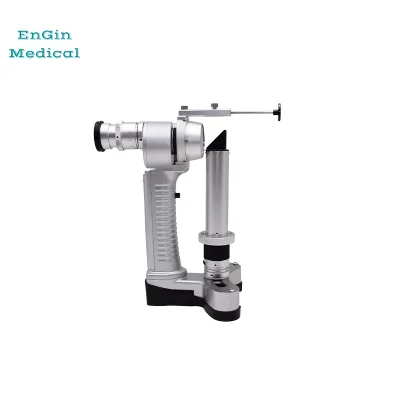
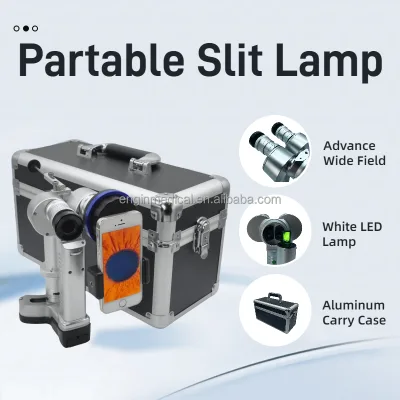

Binocular Slit Lamp Microscope Vet Handheld Mobile Veterinary Digital Slit Lamp
$700.00 - $800.00
MOQ: 1 Pieces

Ophthalmic Equipment Veterinary Human Binocular Handheld Portable Slit Lamp
$500.00 - $1500.00
MOQ: 1 Pieces

Comprehensive Sourcing Guide
Strategic Sourcing Guide for Veterinary Handheld Slit Lamps
Understanding the Core Product Category and Technical Variations
The Veterinary Handheld Slit Lamp represents a specialized diagnostic instrument designed to provide high-magnification visualization of ocular structures in animals. Unlike standard ophthalmic equipment, these devices must accommodate the unique anatomical challenges of various species, ranging from small companion animals to large livestock. The market offers distinct configurations, often categorized by their specific model identifiers and functional capabilities. Buyers must recognize that "Veterinary Handheld Slit Lamp" is a broad term encompassing devices with varying optical properties, power sources, and fixation methods.
Technical specifications are the primary differentiator in this category. A critical observation from current product listings indicates that these instruments often feature adjustable slit widths, typically ranging from 0 to 10mm. This adjustability allows the operator to control the thickness of the light beam, which is essential for examining the cornea, anterior chamber, and lens with precision. Furthermore, the optical system frequently includes a range of total magnifications, such as 10X, 16X, 25X, 40X, and 6X. The ability to switch between these magnification levels is vital for diagnosing conditions that require both broad overview and microscopic detail.
Another significant technical variable is the fixation lamp voltage. Some units operate on a 3.5V system, which is common for portable, battery-operated handheld devices. This low-voltage requirement often correlates with the inclusion of an LCD display, allowing for real-time monitoring of settings or digital integration. The working distance, a crucial ergonomic factor, is observed to be approximately 80mm to 81mm in specific models. This distance ensures that the veterinarian can maintain a comfortable posture while examining the animal's eye without the instrument touching the fur or causing distress. Additionally, the input voltage for these devices is often dual-compatible, supporting 110V/220V inputs, which facilitates use in diverse international settings where power infrastructure varies.
Compliance, Certification, and Regulatory Standards
When sourcing medical devices for veterinary use, compliance with international and regional standards is non-negotiable. The safety and efficacy of the instrument directly impact patient outcomes and the legal liability of the veterinary practice. In the current market, specific certifications are frequently cited as key indicators of quality. The CE mark is a prominent certification observed in product attributes, signifying conformity with health, safety, and environmental protection standards for products sold within the European Economic Area. This certification is a baseline requirement for many international buyers.
Beyond the CE mark, the ISOCE designation is another critical compliance marker found in product data. While the specific nuances of "ISOCE" may refer to a combination of ISO standards and CE marking, its presence suggests that the manufacturer has undergone rigorous quality management system audits. Buyers should verify that the certification documents are current and issued by accredited bodies. It is important to note that certification status is an attribute of specific product listings and may not apply uniformly across all suppliers or models. Therefore, procurement teams must request valid certification certificates for the specific model number, such as MCV0396 or SY-V006N, before finalizing a purchase.
The origin of the product also plays a role in regulatory acceptance. A significant portion of the available inventory originates from China, specifically regions like Guangdong. While this location is a major manufacturing hub, it necessitates a thorough review of the export compliance standards. Products listed with "Standard Packaging" or "Standard Package for Export" are generally prepared to meet international shipping regulations, but the buyer must ensure that the final destination country's specific medical device regulations are met. For instance, if the device is intended for use in the United States, additional FDA clearance might be required, which is not explicitly detailed in the general product attributes but must be confirmed with the supplier.
Cost Drivers and Pricing Structure Analysis
The pricing landscape for veterinary handheld slit lamps is characterized by a wide range, reflecting the diversity in features, build quality, and brand positioning. Observed market data indicates a price range spanning from $99 to $7,000 USD. This broad spectrum suggests that the cost is heavily influenced by the complexity of the optical system, the durability of the materials, and the inclusion of advanced features like LCD displays or specific filter sets.
Several factors drive the cost of these instruments. First, the material composition is a primary determinant. Units constructed with steel components generally command a higher price point due to enhanced durability and resistance to wear and tear in a clinical environment. In contrast, products utilizing plastic standards may be positioned at the lower end of the price spectrum, though they may offer less robustness over time. The inclusion of advanced lighting systems also impacts cost. For example, LED operation lights with a Color Rendering Index (CRI) of 95 and high total irradiance (up to 534W/M2) represent a premium feature set that increases the unit price.
The Minimum Order Quantity (MOQ) is another significant cost driver. The observed MOQ range varies from 1 to 1,000 units. Buyers purchasing a single unit for a small practice will likely face a higher per-unit cost compared to large chains or distributors who can leverage bulk ordering to reduce the price. The warranty period, typically listed as 1 year, is a standard industry offering that affects the total cost of ownership. A longer warranty or extended service agreement might be available as a negotiable term, potentially influencing the final price. Buyers should also consider the packaging costs; "Standard Packaging" is standard, but specialized export packaging or custom branding may incur additional fees.
Typical Applications and Operational Scenarios
The primary application of veterinary handheld slit lamps is within animal hospitals and veterinary clinics. These devices are indispensable for diagnosing a wide array of ocular conditions, including corneal ulcers, cataracts, glaucoma, and conjunctivitis. The ability to adjust the fissure angle to 5°, 10°, 15°, and 20° allows veterinarians to tailor the illumination to the specific needs of the examination, ensuring optimal visualization of the anterior segment of the eye.
The versatility of these instruments extends to various animal groups, with a specific focus on adult animals. The design accommodates the needs of different species, making them suitable for use in small animal practices, equine clinics, and even exotic animal care. The "Reusable" feature highlighted in product attributes indicates that these are durable instruments designed for repeated use in a clinical setting, rather than single-use disposables. This reusability is essential for maintaining cost-effectiveness in high-volume practices.
In addition to standard examinations, these slit lamps are often integrated into broader diagnostic workflows. For instance, the inclusion of filters such as Heat Absorption, Grey, Red-Free, and Cobalt Blue allows for specialized testing. The Cobalt Blue filter, in particular, is crucial for fluorescein staining to detect corneal abrasions. The working time of 5-6 hours in constant operation mode ensures that the device can support a full day of examinations without frequent recharging or battery changes, which is critical for busy clinics. The device's application in ENT (Ear, Nose, and Throat) contexts is also noted, suggesting potential multi-purpose utility in general veterinary medicine.
Supplier Evaluation and Quality Control Protocols
Selecting a reliable supplier for veterinary handheld slit lamps requires a rigorous evaluation process that goes beyond the basic product listing. Buyers should prioritize suppliers who provide transparent information regarding their manufacturing standards and quality control measures. The presence of specific model numbers, such as SL-PC, SL-PB, and SL-3, indicates a structured product line, which is a positive sign of a mature manufacturing operation.
Quality control should be verified through the examination of product attributes like "Standard Packaging" and "Standard Package for Export." These terms imply that the manufacturer adheres to specific packaging protocols to prevent damage during transit. However, buyers must go further by requesting detailed quality assurance documentation. This includes inspection reports, material safety data sheets, and proof of the "Standard Size" compliance mentioned in the product attributes. The material specification, such as steel construction, should be verified against the actual product to ensure it matches the description.
The supplier's location, often listed as China (Mainland) or Guangdong, China, should be considered in the context of logistics and communication. While these regions are known for efficient manufacturing, buyers must establish clear communication channels to ensure that technical specifications are met. The ability to customize the product, as indicated by the "Customization: Available" and "Customized" attributes, is a valuable trait. Suppliers offering customization should be evaluated on their ability to meet specific requirements, such as custom branding or modified technical specifications, without compromising quality.
Long-Term Procurement and Maintenance Considerations
Sourcing a Veterinary Handheld Slit Lamp is not a one-time transaction but the beginning of a long-term relationship with the supplier. Buyers must consider the total cost of ownership, which includes maintenance, repair, and potential replacement of consumables. The warranty period of 1 year is a standard baseline, but buyers should inquire about extended warranty options or service level agreements (SLAs) that cover repairs and parts replacement.
The availability of spare parts is a critical factor for long-term procurement. Devices with complex optical systems, such as those with adjustable diopters ranging from -5D to +5D, may require specialized components for repair. Buyers should verify the supplier's policy on parts availability and lead times. The "Standard Packaging" and "Carton" packaging options suggest that the devices are designed for standard logistics, but the buyer should confirm that replacement parts can be shipped with similar efficiency.
Furthermore, the operational longevity of the device depends on proper care and usage. The "Working Time" of 5-6 hours indicates the battery life or power consumption limits. Buyers should develop maintenance protocols to ensure the device operates within these parameters, preventing premature failure. The "LCD Display" feature adds a layer of complexity; buyers should ensure that the supplier provides software updates or technical support for the digital interface. Finally, the "Group: Adult" designation implies that the device is optimized for adult animals, and buyers should assess whether this limitation affects their specific practice needs or if pediatric or neonatal adaptations are required.
Comparative Analysis of Key Product Attributes
To facilitate decision-making, the following table summarizes the key technical and compliance attributes observed in the market for veterinary handheld slit lamps. This comparison highlights the variability in specifications and helps buyers identify the features most relevant to their specific operational needs.
| Attribute Category | Specific Observation | Relevance to Procurement |
|---|---|---|
| Certification | CE, ISOCE | Essential for regulatory compliance in EEA and international markets. |
| Optical Specs | Magnification: 6X-40X; Slit Width: 0-10mm | Determines diagnostic capability for various ocular conditions. |
| Power & Light | Input: 110V/220V; LED CRI: 95; Irradiance: 534W/M2 | Ensures compatibility with global power grids and high-quality imaging. |
| Physical Build | Material: Steel/Plastic; Working Distance: 80-81mm | Affects durability and ergonomics during examinations. |
| Customization | Available | Allows for tailored solutions to specific clinic requirements. |
| Warranty | 1 Year | Standard baseline; negotiable for extended coverage. |
| Origin | China (Mainland), Guangdong | Influences lead times, shipping costs, and regulatory documentation. |
| Packaging | Standard, Carton, Export Package | Impacts shipping safety and potential additional costs. |
By carefully analyzing these attributes and understanding the underlying cost drivers and compliance requirements, buyers can make informed decisions that align with their clinical needs and budgetary constraints. The goal is to secure a high-quality, reliable instrument that enhances diagnostic accuracy and supports the long-term success of veterinary practices.
FAQs
What certifications are available for veterinary handheld slit lamps?
Products often carry CE and ISOCE certifications to ensure safety and compliance. These marks indicate conformity with health and environmental standards, though specific models like MCV0396 may have distinct documentation. Buyers should verify certificates for the exact model before purchase.
How adjustable is the slit width on these instruments?
The slit width is typically adjustable from 0 to 10mm to control light beam thickness. This feature allows precise examination of the cornea and anterior chamber. Adjustability is a standard specification found in models like SY-V006N for detailed ocular diagnostics.
Can these devices be customized for specific veterinary needs?
Yes, customization is available for many Veterinary Handheld Slit Lamp models. Suppliers offer options to tailor specifications or branding to meet unique clinic requirements. This flexibility supports diverse applications ranging from small animal hospitals to larger veterinary facilities.
What is the typical working distance for these handheld units?
The working distance is generally observed between 80mm and 81mm for comfortable operation. This ergonomic spacing allows veterinarians to examine animal eyes without causing distress or touching fur. It ensures stable handling during detailed anterior segment examinations.
Which magnification levels are commonly included in these microscopes?
Common magnification levels include 6X, 10X, 16X, 25X, and 40X for versatile diagnostic needs. These ranges allow operators to switch between broad overviews and microscopic details. Specific models may offer subsets like 10X and 16X depending on the optical configuration.
How long can the device operate continuously on a single charge?
The working time is typically 5 to 6 hours in constant operation mode. This duration supports a full day of examinations without frequent recharging. It ensures reliability for busy animal hospitals requiring sustained diagnostic capabilities throughout the workday.