Source Vintage Bluetooth Headphones for Mobile, PC, and DJ
Explore 30 listings for Vintage Bluetooth Headphones featuring Bluetooth 4.0, touch controls, and voice commands. Compare models like K6 and p9 with varying battery capacities and styles to find the right fit for mobile phones, computers, and DJ setups.
Key considerations
Products List


Retro Style Over Ear True Wireless Bluetooth Headphones Deep Bass HiFi Sound
$14.57 - $16.29
MOQ: 100 Pieces
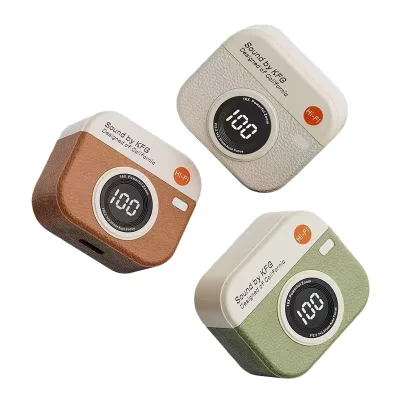


Wireless Headphones Bluetooth in-Ear Headphone Noise Canceling Earphones
$7.10 - $7.30
MOQ: 100 Pieces


Wireless Headphone Bluetooth Earphone Bt-90 with High Quality Stereo Headset
$7.67 - $7.96
MOQ: 100 Pieces


Comprehensive Sourcing Guide
Vintage Bluetooth Headphones Sourcing Guide
Sourcing vintage-style Bluetooth headphones requires balancing aesthetic nostalgia with modern wireless connectivity standards. The current market offers a diverse range of models, from in-ear designs to headband styles, often featuring classic black finishes that evoke retro sensibilities while supporting contemporary usage on mobile phones, computers, and MP3 players. Buyers must recognize that "vintage" in this context often refers to the form factor and color palette rather than the age of the technology, as these devices integrate modern Bluetooth protocols for seamless audio streaming.
Procurement decisions should focus on verifying the specific Bluetooth version and transmission capabilities to ensure compatibility with current devices. While some listings indicate Bluetooth 4.0 and Class B distance versions, others may support Class A for extended range, necessitating careful review of technical specifications before placing orders. The functional scope frequently includes multimedia playback, voice control, and power display features, but the exact implementation varies by manufacturer, requiring buyers to confirm that the device supports the specific audio formats and connection profiles needed for their intended application.
Product Scope and Observed Listing Signals
The observed product listings reveal a wide spectrum of configurations, including touch control headphones, wireless earphones, and specific models like the K6 or MODE2, each catering to different user preferences. Prices observed in the market range significantly from 1 to 16.29 USD, reflecting variations in build quality, battery capacity, and feature sets such as dual-track soundtracks or capacitive touch principles. Buyers should note that while some units support customization, others are sold as standard packages, and the minimum order quantities can vary drastically from single units to 2000 pieces depending on the supplier's production capacity.
Listing signals often highlight specific usage modes, such as aviation, call center operations, or DJ applications, which suggests that these vintage-inspired devices are engineered for professional as well as consumer environments. The physical dimensions and packaging standards also vary, with some products listed at 4.3 x 5.0 x 3.0 cm and others adhering to larger 20 x 20 x 10 cm standards, indicating differences in internal component density and shipping requirements. Procurement teams must carefully cross-reference these listing details with their specific operational needs to avoid acquiring units that lack the necessary durability or form factor for their intended deployment.
Technical Specifications to Verify
Verifying the technical specifications is critical, particularly regarding the Bluetooth version and transmission distance, as these factors directly impact user experience and device reliability. While some products explicitly state Bluetooth 4.0 and a Class B distance version, others may claim Class A capabilities or support for multiple functions including USB, RF, and infrared. Buyers must confirm the actual transmission distance, which is often cited as 10 meters, and ensure that the device supports the required audio protocols like HSP for hands-free communication or dual-track soundtracks for immersive listening experiences.
Battery performance and playing time are equally vital metrics that vary across the product range, with some units offering 10 to 24 hours of continuous playback and others specifying a 200mAh capacity. The principle of operation, such as capacitive touch controls, and the specific model type, whether wireless earphones or head-mounted devices, must be validated against the supplier's data sheet. Additionally, the jack diameter is noted as wireless for most models, but buyers should verify the absence of physical connectors if a fully wireless experience is required, ensuring the device meets the specific connectivity expectations of the end-user.
Compliance and Safety Documentation
Compliance documentation is a non-negotiable aspect of sourcing electronic audio equipment, with many suppliers providing certificates such as CE, RoHS, and FCC to demonstrate adherence to international safety and environmental standards. These certifications indicate that the products have undergone testing for electromagnetic compatibility and hazardous substance restrictions, which is essential for importing goods into regulated markets. Buyers should request valid, up-to-date copies of these certificates for each specific model, as the presence of one certification does not automatically guarantee that all variants in a product line meet the same regulatory requirements.
Beyond standard certifications, the quality assurance processes described by suppliers, such as checking and testing every single unit, provide an additional layer of confidence regarding product reliability. However, buyers must verify that these quality checks are documented and that the testing protocols align with the specific safety standards required for the target market. The origin of the products, typically listed as China, necessitates a thorough review of the supply chain to ensure that the manufacturing facilities maintain consistent quality control measures and that the final products meet the declared specifications without deviation.
Cost Drivers and Commercial Terms
The cost of Vintage Bluetooth Headphones is influenced by several factors, including the complexity of the wireless technology, the battery capacity, and the level of customization available. While the observed price range is broad, the minimum order quantity (MOQ) can significantly impact the unit cost, with some suppliers requiring orders as low as one unit while others mandate volumes up to 2000 pieces. Buyers should analyze the total cost of ownership, considering that higher MOQs often result in lower per-unit prices but require greater upfront capital and storage capacity.
Commercial terms also include the availability of samples, which are often charged at a specific cost per piece, and the duration of flight or battery life, which can affect the perceived value of the product. The packing standards, ranging from original packages to boxes, and the physical dimensions of the packaging can influence shipping costs and logistics planning. Procurement teams must negotiate clear terms regarding lead times and payment schedules, ensuring that the supplier can meet delivery deadlines while maintaining the quality standards expected for vintage-style audio equipment.
Supplier Qualification and Quality Control
Supplier qualification involves a rigorous assessment of their production capabilities, quality assurance protocols, and ability to meet specific customization requests. Many suppliers indicate that they support customization, while others do not, which can be a decisive factor for buyers seeking branded or uniquely specified products. It is essential to verify that the supplier has a robust quality control system in place, such as the one-on-one testing of all goods, to minimize the risk of receiving defective units that could damage the buyer's reputation.
The origin of the products, typically China, requires buyers to conduct due diligence on the supplier's track record and their adherence to international standards. Buyers should request references or case studies from previous clients to validate the supplier's claims regarding production capacity and quality consistency. Additionally, the specific model types, such as the p9 or MINOR3, should be evaluated for their manufacturing history and any known issues, ensuring that the supplier has a proven track record of delivering reliable products that meet the technical specifications outlined in the procurement requirements.
Long-Term Procurement Checks
Establishing long-term procurement relationships requires ongoing monitoring of product performance and supplier reliability to ensure consistent quality over time. Buyers should implement a system for tracking field performance, including battery degradation and connectivity issues, to identify any recurring problems that may indicate a need for supplier intervention or product redesign. Regular audits of the supplier's quality control processes and adherence to the agreed-upon specifications are necessary to maintain the high standards expected for vintage-style Bluetooth headphones in a competitive market.
Future procurement strategies should also account for potential changes in technology standards and market demands, ensuring that the supplier can adapt to new requirements without compromising product integrity. Buyers must maintain open communication channels with suppliers to discuss updates in Bluetooth versions, battery technologies, and safety regulations, allowing for proactive adjustments to the product lineup. By fostering a collaborative relationship based on transparency and mutual trust, buyers can secure a reliable supply chain that supports the long-term success of their vintage Bluetooth headphone offerings.
FAQs
What Bluetooth version do these vintage headphones support?
These vintage headphones support Bluetooth version 4.0 for stable wireless connectivity. They are designed to work seamlessly with mobile phones, computers, and MP3 players. The Class B distance version ensures reliable transmission within a 10-meter range for most users.
Can I customize the color or style of these headphones?
Customization is available for specific models like the K6 and MODE2, allowing buyers to request unique features. However, some standard listings indicate that support for customization is not available for all items. Buyers should verify the specific product model before placing an order.
Which certifications do these wireless headphones hold?
The products hold CE, RoHS, and FCC certifications to ensure safety and compliance. These standards verify that the headphones meet international requirements for electromagnetic compatibility and hazardous substance restrictions. This makes them suitable for export to various global markets without additional testing.
How long does the battery last on these headphones?
The playing time ranges from 10 to 24 hours depending on the specific model and usage conditions. The battery capacity is typically 200mAh, providing extended listening sessions for mobile phones and computers. This duration supports long flights or extended work sessions without frequent recharging.
What is the minimum order quantity for these products?
The minimum order quantity varies significantly, ranging from 1 piece to 2000 pieces depending on the supplier. Some vendors offer samples at a specific cost per piece, while others require bulk purchases. Buyers should check the specific listing to confirm the exact MOQ for their needs.
Where are these Vintage Bluetooth Headphones manufactured?
These headphones are manufactured in China, which is the primary origin for the listed products. The standard packaging and original package options are used for shipping. Buyers can expect standard lead times and quality assurance checks where every good is tested one by one before shipment.
Do these headphones support voice control or music playback?
Yes, many models support music playback and voice control features for enhanced user interaction. The specifications include dual track soundtracks and support for multimedia functions alongside Bluetooth connectivity. This allows users to enjoy high-quality audio while managing calls or media on their devices.