Source Vintage Cross Jewelry Organizer for Storage, Gifts, and Travel
Compare 30 listings for a Vintage Cross Jewelry Organizer featuring materials like ABS and leather with velvet lining. Buyers can evaluate customization options, sizes, and packaging methods from suppliers in China.
Key considerations
Products List


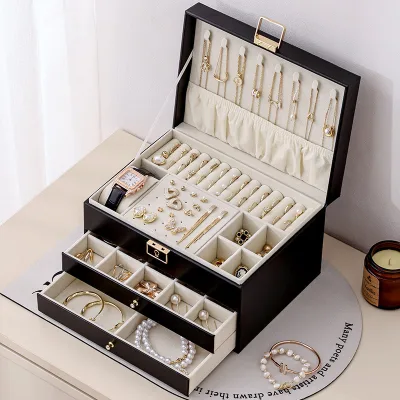
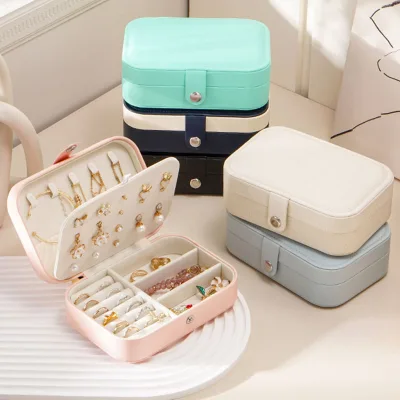

Dark Green Velvet Double Layer Jewelry Box Large Capacity Storage Organizer
$2.90 - $3.50
MOQ: 1000 Pieces


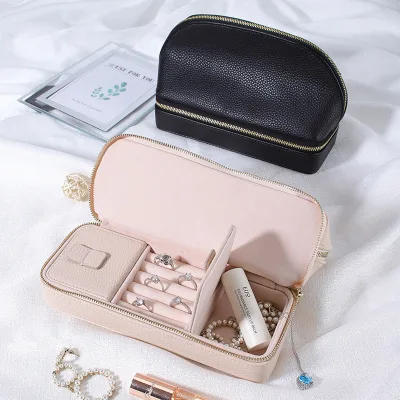


Glass Jewelry Box Storage, Glass Gold Jewelry Display Organizer Keepsake Box
$6.00 - $9.00
MOQ: 1000 Pieces

Comprehensive Sourcing Guide
Strategic Sourcing Guide for Vintage Cross Jewelry Organizers
The global market for jewelry storage solutions has seen a significant shift toward items that blend functional organization with distinct aesthetic narratives. Among these, the Vintage Cross Jewelry Organizer represents a niche segment where religious symbolism, retro styling, and practical utility converge. For B2B procurement professionals, sourcing this specific category requires a disciplined approach that separates marketing imagery from verifiable product attributes. The following guide outlines the critical technical, operational, and quality parameters necessary for a successful procurement cycle, grounded in observed market data and industry standards.
Defining Technical Specifications and Material Composition
The foundation of any successful sourcing strategy lies in the precise definition of technical specifications. When evaluating vintage cross jewelry organizers, buyers must scrutinize the material composition, as this dictates durability, weight, and the overall "vintage" feel of the product. Market observations indicate a divergence in material choices. Some listings highlight the use of Acrylonitrile Butadiene Styrene (ABS) plastic, which offers a robust, lightweight structure suitable for mass production. In contrast, other segments of the market feature exterior materials made from leather, often paired with velvet linings to enhance the tactile experience and protect delicate items.
Dimensions are equally critical, as they determine storage capacity and shipping logistics. Observed product standards reveal a wide range of sizes. For instance, specific models have been documented with dimensions such as 28.825.35.3cm, while others are compact, measuring 16115cm or 231713.5cm. The "Medium" size specification is frequently cited, but buyers must verify the exact cubic volume to ensure it meets their retail shelf requirements. Furthermore, the shape is predominantly square, which facilitates efficient palletizing and stacking. The closure mechanism is another vital technical detail; buckles are a common feature, ensuring the organizer remains secure during transit and use.
| Attribute Category | Observed Variations | Sourcing Verification Point |
|---|---|---|
| Exterior Material | ABS, Leather | Request physical samples to verify texture and durability. |
| Lining Material | Velvet | Confirm softness and resistance to snagging jewelry. |
| Dimensions | 16x11x5cm to 28.8x25.3x5.3cm | Validate internal capacity against SKU requirements. |
| Closure Type | Buckle | Test the mechanism for longevity and ease of use. |
| Shape | Square | Ensure compatibility with standard display fixtures. |
Compliance, Certification, and Safety Standards
In the B2B sector, compliance is not merely a formality but a prerequisite for market entry. While specific certification statuses for vintage cross jewelry organizers are not universally standardized in the provided data, buyers must proactively verify that products meet the safety regulations of their target markets. This includes checking for restrictions on heavy metals in paints, particularly for items with printed logos or decorative elements. The surface handling process, often noted as offset printing in similar product categories, must adhere to environmental and safety standards regarding ink toxicity.
Furthermore, the origin of the product plays a role in compliance. Many manufacturers are located in key manufacturing hubs such as Ningbo and Fuzhou in China. Sourcing from these regions requires a thorough review of the supplier's ability to provide documentation proving adherence to international safety standards. Buyers should request evidence of compliance with relevant regulations, such as REACH for European markets or CPSIA for the United States, particularly if the product is intended for a younger demographic or involves direct skin contact. The absence of a specific certification claim in a product listing should not be interpreted as a lack of compliance, but rather as a signal to request explicit documentation before proceeding.
Cost Drivers and Pricing Dynamics
Understanding the cost structure of vintage cross jewelry organizers is essential for maintaining healthy profit margins. The observed price range in the market is extensive, spanning from $0.21 to $499 per unit. This vast disparity is driven by several key factors. The primary driver is material selection; leather and velvet combinations naturally command a higher price point than ABS plastic or cardboard constructions. Additionally, the complexity of the design, such as the "Practical Holes and Hangers" feature, influences manufacturing costs.
Customization is another significant cost variable. The market data confirms that customization is available for many models, including custom sizes, logos, and packaging. While OEM and ODM services are widely offered, the unit cost will increase with the volume of custom elements. The Minimum Order Quantity (MOQ) also impacts the effective unit price, with observed ranges starting as low as 1 unit and extending up to 3,000 units. Buyers should note that smaller MOQs often come with a premium per unit, whereas larger orders may unlock volume discounts but require higher capital outlay. Packaging costs, whether standard cartons, mail boxes, or custom palletizing, must also be factored into the total landed cost.
Typical Applications and Market Segmentation
The versatility of vintage cross jewelry organizers allows them to serve multiple application scenarios. Primarily, these items are designed for jewelry storage, offering a dedicated space for necklaces, rings, and earrings. The "Built-in Storage" method and specific design features like holes and hangers are tailored to prevent tangling and organization. Beyond personal use, these organizers are frequently marketed for use in living rooms, serving as decorative storage pieces that blend functionality with home aesthetics.
The market also identifies a strong gifting application. With specifications indicating usage for "Gifts" and "Jewelry, Gifts," these products are often purchased for special occasions. The availability of logo printing and customizable packaging makes them ideal for corporate gifting or promotional campaigns. The "Fashionable" style and color options, including pink, blue, white, dark blue, black, beige, and red, allow buyers to target diverse consumer demographics. Whether for a retail store specializing in home decor or a boutique focusing on religious accessories, the product's application scenarios are broad, provided the specific model matches the intended use case.
Supplier Evaluation and Sourcing Strategy
Evaluating suppliers for vintage cross jewelry organizers requires a multi-faceted approach. Buyers should prioritize suppliers who demonstrate transparency regarding their production processes. The data indicates that some products are "Handmade" or involve "Other" processes, while others may utilize automated manufacturing. The distinction is crucial for quality consistency. Suppliers offering "Customization Service Provided" and "OEM/ODM" capabilities are generally better equipped to handle specific buyer requirements, but this flexibility must be balanced with their ability to maintain quality control at scale.
Geographic location is another factor in supplier selection. The observed origins include Ningbo and Fuzhou, both of which are established manufacturing centers. Buyers should verify the supplier's specific location to assess logistics efficiency and potential tariffs. Additionally, the availability of samples is a critical evaluation metric. The market data notes that samples are "Freely Provided" by some suppliers, which is a positive indicator of confidence in product quality. Buyers should always request physical samples to inspect the finish, the strength of the buckle, and the quality of the velvet lining before committing to a large order.
Quality Control and Inspection Protocols
Implementing a robust quality control (QC) protocol is essential to mitigate risks associated with international sourcing. Given the diverse materials involved, from plastic to leather and velvet, inspection points must be tailored to each material type. For ABS products, focus on structural integrity, color consistency, and the absence of mold lines or flash. For leather and velvet items, inspect the stitching quality, the softness of the lining, and the durability of the buckle mechanism.
The "Surface Handling" process, such as offset printing, requires specific attention to ensure that logos and designs are crisp and do not smudge or fade. Buyers should establish clear acceptance criteria for color variations, as the observed color palette includes multiple shades like green, blue, black, beige, and pink. A random sampling plan should be adopted, adhering to industry-standard Acceptable Quality Limit (AQL) levels. Furthermore, packaging integrity must be verified, especially since the product is often shipped in cartons or mail boxes. The packaging should be robust enough to protect the organizer during transit, preventing damage to the delicate velvet lining or the buckle closure.
Long-Term Procurement Considerations
Sourcing vintage cross jewelry organizers is not a one-time transaction but part of a long-term supply chain strategy. Buyers must consider the scalability of their suppliers. The observed MOQ range of 1 to 3,000 units suggests that suppliers can accommodate both trial runs and large-scale production. However, as demand grows, the supplier's ability to maintain consistent lead times and quality becomes paramount. The "Customizable" nature of the product standard and model number indicates that the supply chain must be flexible enough to adapt to changing design trends or specific customer requests.
Sustainability is also an emerging consideration. While the provided data does not explicitly mention eco-friendly materials, buyers should inquire about the recyclability of the ABS plastic or the sourcing of the leather and cardboard. The "General" application scenario suggests that these products are intended for broad consumption, making the environmental impact of their lifecycle a relevant discussion point. Finally, maintaining a strong relationship with the supplier is key to navigating potential supply chain disruptions. Regular communication, clear documentation of specifications, and a mutual understanding of quality expectations will ensure a stable and profitable procurement relationship over time.
FAQs
What materials are used for vintage cross jewelry organizers?
These organizers are commonly made from ABS plastic or leather with velvet linings. Buyers should verify the specific exterior material and lining quality in physical samples to ensure durability and tactile comfort.
Which dimensions are available for these storage units?
Available sizes range from compact 16x11x5cm models to larger 28.8x25.3x5.3cm units. The shape is predominantly square, and some models offer customizable dimensions to fit specific retail shelf requirements.
Can I request custom packaging and logo printing?
Yes, customization is available for packaging, including cartons, mail boxes, and palletizing. Logo printing with offset printing is offered, allowing for branded corporate gifting or promotional campaigns.
What is the minimum order quantity for these products?
The minimum order quantity ranges from 1 unit to 3,000 units depending on the supplier. Smaller orders may carry a higher per-unit cost, while larger volumes often unlock volume discounts.
Where are these jewelry organizers manufactured?
Manufacturing origins include Ningbo and Fuzhou in China. Buyers should verify the specific supplier location to assess logistics efficiency and potential tariffs for their target market.
How are these items packaged for shipping?
Products are typically packed in cartons, mail boxes, or on pallets for larger orders. Packaging can be customized, and buyers should verify packaging integrity to protect the velvet lining and buckle closure during transit.