Source Wall Mount Acrylic Display Cube for Stores, Exhibitions, and Homes
Compare 30 Wall Mount Acrylic Display Cube options from verified Chinese manufacturers. These customizable units support tools, cosmetics, jewelry, and ornaments in various shapes and sizes for retail and exhibition use.
Key considerations
Products List
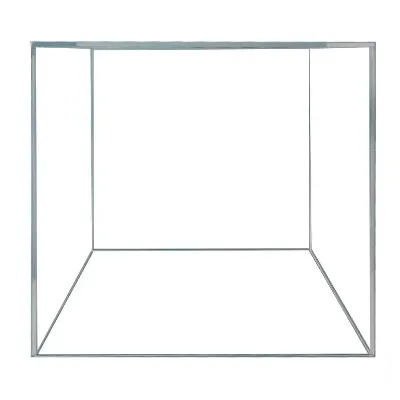


Multifunctional Clear Acrylic Museum Display Box Riser Cube for Collectibles
$1.89 - $3.65
MOQ: 100 Pieces


Stylish Lightweight Acrylic Rack Stand Contemporary Cube Exhibition Booth
$38.00 - $52.00
MOQ: 100 cartons


Comprehensive Sourcing Guide
Strategic Sourcing Guide for Wall Mount Acrylic Display Cubes
Understanding Technical Specifications and Material Integrity
When sourcing wall mount acrylic display cubes, the primary focus must be on the material composition and the structural design that ensures stability when mounted. The core material for these units is typically high-grade acrylic, a synthetic polymer known for its optical clarity and durability. In the context of the available market data, the product attributes explicitly identify "Acrylic" as the primary material, which is essential for achieving the transparent, glass-like appearance that enhances product visibility in retail environments.
The physical dimensions of these display units are rarely standardized. The observed specifications indicate that "Size" is "Customized" and "Available in Different Size." This variability is a critical technical consideration for buyers. Unlike off-the-shelf shelving, wall mount cubes often require precise measurements to fit specific product lines or architectural constraints. The shape of the unit also varies, with options including "Round," "Square," "Spiral," "Triangle," and "Rotating Adjustme" configurations. This flexibility allows procurement teams to select a geometry that maximizes floor space or aligns with a specific aesthetic theme.
Furthermore, the mounting mechanism is a defining technical feature. The product attributes describe the "Build Method" as an "Upright Column," suggesting a vertical orientation that is optimized for wall installation. The "Folded" status is noted as "Unfolded," implying that the units are delivered in a ready-to-install state, eliminating the need for on-site assembly that could compromise structural integrity. Buyers must verify the load-bearing capacity of the acrylic and the mounting hardware, as the "Usage" spans from "Supermarkets and Stores" to "Exhibition Show" and "Home," each demanding different weight tolerances. The "Display Place" is confirmed as "Indoor," which simplifies environmental stress testing but requires attention to indoor lighting conditions that might cause glare or reflection issues.
Compliance, Certification, and Quality Standards
In the B2B procurement landscape, verifying that a supplier adheres to recognized quality management systems is non-negotiable. The provided data points to specific certifications that serve as indicators of a supplier's commitment to quality. The "Certificate" field lists "SGS" and "ISO9001-2000" (also noted as "ISO9001:2000" in other entries). These are not merely marketing terms but represent adherence to international standards for quality management and third-party product testing.
SGS is a global inspection, verification, testing, and certification company. When a product carries an SGS standard, it implies that the material has undergone rigorous testing for safety and performance. The "prod_standard" is explicitly listed as "SGS," reinforcing the need for buyers to request the actual test reports associated with this certification. Similarly, ISO9001:2000 indicates that the manufacturing process follows a systematic approach to quality control. However, buyers should note that ISO9001 standards have been updated (e.g., to the 2015 version), so the presence of the 2000 version in the data suggests an older certification or a specific legacy standard. Procurement teams should verify if the supplier has transitioned to newer iterations of the standard to ensure their quality management system is current.
Additionally, the "Feature" attributes highlight "Good Quality," "Eco-Friendly," and "Durable." While these are positive observations, they must be substantiated. The "Eco-Friendly" claim should be backed by specific material composition data, such as the percentage of recycled content, which is also listed as a feature ("Recycled"). Buyers should not accept these claims at face value but should request documentation proving the environmental impact of the acrylic used. The "Antitheft" attribute is explicitly stated as "Not Antitheft," which is a crucial compliance detail for high-value retail environments. Buyers must understand that these units do not integrate electronic security features and will require separate security measures if used for high-value items.
Cost Drivers and Pricing Variables
The pricing structure for wall mount acrylic display cubes is highly dynamic and influenced by several variable factors. The observed price range in the market data spans from $1.35 to $52 USD. This wide disparity is not indicative of a single product line but rather reflects the complexity of customization. The lower end of the spectrum likely corresponds to standard, off-the-shelf sizes with minimal branding, while the upper end reflects custom dimensions, complex shapes, and advanced finishing techniques.
The "Customization" attribute is a primary cost driver. When a buyer requests a "Customized Size" or "Customized Color," the production process shifts from mass manufacturing to job-shop production. This shift increases labor costs, material waste, and setup time. The "Design" attribute notes that suppliers "Offer Design and Drawing Artwork," which often incurs additional engineering fees. Furthermore, the "Logo" customization options, including "Silk-Screening," "UV," and "Engraving," add significant per-unit costs. The complexity of the "Design" process, such as "Carving and Cutting," also escalates the price due to the precision required in machining acrylic.
Packaging is another hidden cost factor. The data lists various packaging methods, including "Bubble Bag, Foam Pad and Five Layers Master Carton," "Carton," and "Inner Box and Carton." The choice of packaging directly impacts the shipping weight and volume, which are critical for international freight costs. A "Five Layers Master Carton" offers superior protection but is more expensive than a simple "Carton." Buyers must balance the cost of packaging against the risk of damage during transit. The "MOQ" (Minimum Order Quantity) range of 1 to 300 units also influences the unit price. Higher volumes typically reduce the per-unit cost, but the flexibility to order as few as one unit allows for smaller, more agile procurement strategies, albeit at a higher price point.
Typical Applications and Usage Scenarios
Wall mount acrylic display cubes serve a diverse range of applications, dictated by the "Display Products" and "Usage" attributes. The data indicates these units are versatile, suitable for displaying "Tools," "Cosmetics," "Jewelry," and "Ornaments." This versatility makes them a staple in various retail sectors. In "Supermarkets and Stores," they are used to organize small items like cosmetics or tools, providing clear visibility and easy access for customers. The "Indoor" placement requirement aligns with these retail environments, where lighting is controlled and environmental factors are minimal.
For "Exhibition Show" and "Speciality Stores," the aesthetic and functional flexibility of the cubes is paramount. The "Shape" options, including "Flowers" and "Rotating Adjustme," allow for creative displays that attract attention in trade show booths. The "Usage" for "Home" suggests a growing market for residential organization, where these cubes can serve as decorative storage for ornaments or personal collections. The "Feature" of being "Eco-Friendly" and "Durable" is particularly relevant for specialty stores that market themselves on sustainability and long-term value.
The "Display Place" being "Indoor" is a critical constraint. Buyers must ensure that the intended location does not expose the acrylic to direct sunlight for prolonged periods, which can cause yellowing or brittleness over time. The "Antitheft" status being "Not Antitheft" means that for high-value items like jewelry, the display unit itself does not provide security. Instead, the focus should be on the placement of the unit within a monitored area or the use of supplementary security measures. The "Serviceability" is listed as "Common Use," indicating that these units are designed for general retail traffic rather than heavy industrial use.
Supplier Evaluation and Production Capabilities
Evaluating a supplier for wall mount acrylic display cubes requires a deep dive into their operational capabilities and geographic logistics. The "place of origin" is listed as "Guangdong, China" and "Xiamen, Fujian Province, China." These regions are known for their robust manufacturing ecosystems, particularly in plastics and acrylic processing. However, the presence of multiple origin locations suggests a fragmented supply chain. Buyers should verify the specific factory location for their order to ensure consistency in quality and to assess logistics costs.
The "Production Lead Time" is a critical metric for supply chain planning. The data specifies "3-15 Days for Samples" and "25-40 Days for Production." This range highlights the variability in production schedules based on order complexity. For custom orders involving "Carving and Cutting" or "UV" printing, the lead time will likely lean toward the higher end of the spectrum. Buyers must factor this into their inventory planning, especially for time-sensitive retail launches or exhibition preparations.
Supplier reliability can be assessed through their "prod_packing" standards. The use of "Five Layers Master Carton" and "Foam Pad" indicates a supplier that prioritizes product protection, which is a proxy for their attention to detail. Conversely, a supplier offering only basic "Carton" packaging might be cutting corners. The "Design" capability, including the offer of "Drawing Artwork," suggests a supplier that can collaborate with buyers on product development, adding value beyond simple manufacturing. Buyers should request case studies or references to verify these capabilities, particularly for complex customizations like "Rotating Adjustme" mechanisms.
Quality Control and Long-Term Procurement Considerations
Ensuring long-term value in acrylic display procurement requires a robust quality control (QC) strategy. The "Feature" attributes of "Good Quality" and "Durable" must be validated through a rigorous QC process. This includes checking for surface imperfections, such as scratches or bubbles, which are common in acrylic manufacturing. The "Color" consistency is another critical QC point, especially for "Customized Color" orders. Buyers should request color swatches or sample batches to ensure the final product matches the desired hue, as acrylic can vary in transparency and tint.
The "Certificate" of "SGS" and "ISO9001:2000" provides a baseline for quality, but buyers should implement their own incoming inspection protocols. This includes verifying the thickness of the acrylic, the strength of the mounting hardware, and the accuracy of the "Customized Size." The "Folded" status being "Unfolded" simplifies inspection, as the unit should arrive in its final form, ready for immediate installation.
Long-term procurement considerations also involve the lifecycle of the product. Acrylic is susceptible to scratching and chemical degradation. Buyers should inquire about the specific grade of acrylic used, as some grades are more resistant to wear and tear than others. The "Eco-Friendly" feature suggests a potential for sustainability initiatives, which can be a strategic advantage for brands looking to reduce their environmental footprint. However, the "Recycled" claim should be verified to ensure it meets the buyer's sustainability goals.
Finally, the "MOQ" range of 1 to 300 offers flexibility for testing the market. Buyers can start with a small order to validate the quality and design before committing to larger volumes. This approach minimizes risk and allows for iterative improvements based on customer feedback. By combining technical verification, certification checks, and strategic supplier evaluation, buyers can secure a reliable supply of wall mount acrylic display cubes that meet their specific operational and aesthetic requirements.
FAQs
What certifications do wall mount acrylic display cubes have?
These units typically hold SGS and ISO9001:2000 certifications. Buyers should verify the specific test reports associated with these standards to ensure the acrylic meets safety and quality management requirements before placing large orders.
How can I customize the size and shape of the display?
Customized sizes and shapes like round, square, or spiral are available. Suppliers offer design and drawing artwork services, allowing you to specify dimensions and geometries such as flowers or rotating adjustments to fit your specific retail needs.
What is the production lead time for these acrylic cubes?
Samples require 3 to 15 days, while full production takes 25 to 40 days. This timeline varies based on the complexity of customization, such as carving, cutting, or applying logos via silk-screening or UV printing.
Can I order a single unit of the Wall Mount Acrylic Display Cube?
Yes, the minimum order quantity can be as low as one unit. This flexibility allows for small-scale procurement or sampling, though the unit price may be higher compared to bulk orders starting at 300 units.
Where are the manufacturers of these display cubes located?
Manufacturers are located in Guangdong and Xiamen, Fujian Province, China. Buyers should verify the specific factory origin for their order to ensure consistency in quality and to accurately assess logistics costs for international shipping.
Do these display cubes include anti-theft features?
No, these units are not equipped with anti-theft mechanisms. Buyers must implement separate security measures for high-value items like jewelry, as the display itself is designed for decoration and organization without integrated electronic security.