Source Wall Mount Automatic Tire Inflator for Cars, Trucks, and Bikes
Explore 30 options for the Wall Mount Automatic Tire Inflator suitable for cars, trucks, and motorcycles. Buyers can compare specifications like pressure ratings, voltage, and packing details to find the right equipment for their fleet or workshop needs.
Key considerations
Products List


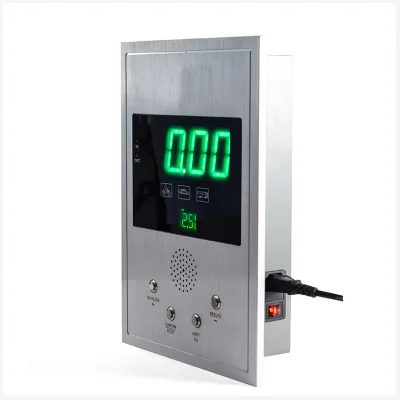


Best Selling High Purity Nitrogen Tyre Inflator
$460.00 - $500.00
MOQ: 1 Pieces
Guangzhou Huawei Automobile Electronic Testing Equipment Co., Ltd.

Gray Color Digital Tyre Inflator Tyre Inflation
$150.00 - $169.00
MOQ: 1 Pieces
Guangzhou Huawei Automobile Electronic Testing Equipment Co., Ltd.


Comprehensive Sourcing Guide
Strategic Sourcing Guide for Wall-Mount Automatic Tire Inflators
Procuring industrial-grade air compression equipment requires a disciplined approach that balances technical performance with regulatory compliance and supply chain reliability. For buyers seeking a wall-mount automatic tire inflator, the market presents a diverse array of configurations, from compact digital units to heavy-duty industrial systems. This guide synthesizes available product data and industry standards to provide a structured framework for evaluating potential suppliers and specifications. The focus remains on evidence-based criteria, ensuring that procurement decisions are grounded in verifiable attributes rather than marketing assertions.
Technical Specifications and Performance Parameters
The core functionality of a wall-mount automatic tire inflator hinges on its pressure generation capabilities, power requirements, and physical integration. Based on observed product data, the market offers units with varying maximum pressure ratings. Buyers must verify the specific pressure range required for their application, as observed listings include models rated for 101-150 Psi, 151-250 Psi, and high-performance units exceeding 350 Psi. Some specifications explicitly note a "Double L101-150psi" configuration, suggesting dual-stage or dual-hose capabilities that may be relevant for specific fleet maintenance needs.
Power supply is another critical technical variable. The data indicates the availability of both 12V and 220V models. A 12V unit is typically suited for automotive or mobile workshop environments where battery power is the primary source, whereas a 220V model is designed for fixed industrial installations connected to the main electrical grid. The selection between these voltage types dictates the wiring infrastructure required at the installation site.
Physical dimensions and weight are essential for wall-mounting feasibility. Observed product standards list a wide range of dimensions, from compact units measuring 40cm30cm18cm to larger industrial frames reaching 68cm72cm150cm. Weight also varies significantly, with some units recorded at 15 Kg, while others are described by packaging standards like 0.65KG. When specifying a wall-mount system, the buyer must confirm the unit's weight against the load-bearing capacity of the mounting surface. Furthermore, the "Wall mounted" specification is a distinct product model category, indicating that the design includes integrated mounting hardware or a specific form factor intended for vertical installation.
Compliance, Certification, and Safety Standards
In the B2B procurement of pneumatic equipment, certification is not merely a formality but a prerequisite for operational safety and legal compliance. The supplied data highlights several certification types associated with tire inflators, with CE marking appearing frequently across multiple product entries. Some listings also include RoHS (Restriction of Hazardous Substances) and ISO certifications.
Buyers should treat these certifications as observations of specific product batches rather than universal guarantees for all wall-mount units. A robust procurement strategy involves requesting current certification documentation for the specific model under consideration. The presence of a CE mark indicates conformity with health, safety, and environmental protection standards for products sold within the European Economic Area, but the buyer must verify the scope of this certification. Similarly, ISO certification suggests adherence to quality management systems, which can be a proxy for manufacturing consistency.
Safety standards for pressure vessels and electrical components are paramount. While the data mentions a "Standard" classification for some units, it does not provide specific ISO or ANSI standard numbers for pressure testing. Therefore, buyers must explicitly request the applicable safety standard numbers (e.g., ISO 12100 for machinery safety) from the supplier. The "Standard Ocean Shipping Package" and "Sea Worth Package" mentioned in the data suggest that the manufacturer considers logistics safety, but this does not replace the need for on-site safety compliance verification.
Cost Drivers and Pricing Dynamics
Understanding the cost structure of wall-mount tire inflators requires analyzing the relationship between specifications, materials, and market positioning. The observed price range in the market spans from $2.8 to $3,000 USD. This vast disparity reflects differences in build quality, pressure capacity, voltage requirements, and included features.
The lower end of the price spectrum likely corresponds to basic digital tire gauges or simple inflators with lower pressure ratings and minimal materials. In contrast, the higher price points are associated with industrial-grade units featuring metal construction, high-pressure capabilities (over 350 Psi), and advanced automation. The material composition is a significant cost driver; the data confirms that many units are constructed from Metal, which offers durability but increases material costs compared to plastic alternatives.
Minimum Order Quantity (MOQ) is another critical factor influencing unit economics. The observed MOQ range is 1 to 1000 units. For buyers seeking a single unit for a pilot project or a small workshop, suppliers with an MOQ of 1 are essential. However, for large-scale fleet deployments, negotiating an MOQ closer to 1000 can significantly reduce the per-unit cost. Buyers should also consider the "Customization: Available" attribute. Customization, such as branding, specific voltage configurations, or unique fitting types, often incurs additional tooling or setup costs, which must be factored into the total cost of ownership.
Typical Applications and Functional Requirements
Wall-mount automatic tire inflators serve diverse applications ranging from automotive repair shops to heavy industrial facilities. The functional requirements vary based on the intended use case. The data identifies several key functions, including "Automatic inflation," "Check tire pressure," and "for Testing Tire Pressure."
For automotive service centers, the "Digital Tire Gauge" and "Portable" carry way are valuable features, allowing for quick, accurate pressure checks before inflation. The availability of "2 Types Available" for tire chucks and options like "Quick Coupler or Male Connector" enhances versatility, allowing the unit to service various vehicle types, from passenger cars to light trucks.
In industrial settings, the focus shifts to reliability and high-volume throughput. Units with a "Working Pressure" of 0-150 psi or "Max. Pressure" of 220 psi are suitable for standard tire maintenance. However, facilities handling heavy machinery or specialized equipment may require the high-pressure units exceeding 350 Psi. The "Update Method: by Email" feature suggests connectivity options for modern fleet management systems, allowing for remote monitoring of pressure data and maintenance alerts. This feature is particularly relevant for large logistics operations where real-time data is critical for safety and efficiency.
Supplier Evaluation and Origin Verification
Selecting a reliable supplier is as important as selecting the right product. The supplied data indicates that products originate from specific regions in China, including Guangzhou, Guangdong, and Wenzhou. These regions are known for their manufacturing clusters, but the specific origin can influence logistics costs and lead times.
When evaluating suppliers, buyers should verify the "prod_origin" details provided in the product listing. A supplier claiming to be from Guangzhou but shipping from a different location may indicate a trading company rather than a manufacturer, which can impact pricing and communication efficiency. The "Condition: New" attribute is a standard expectation, but buyers should explicitly confirm that units are factory-fresh and not refurbished or overstock items.
The packaging method is also an indicator of supplier professionalism. The data lists "Paper Box," "in Foam," "blister," and "Standard Ocean Shipping Package." For international procurement, the "Sea Worth Package" and "Standard Ocean Shipping Package" are crucial to ensure the equipment arrives without damage. Buyers should request photos of the actual packaging to verify that the internal protection (such as foam) is sufficient for the weight and fragility of the unit.
Quality Control and Long-Term Procurement Considerations
Quality control (QC) is essential to mitigate the risks associated with industrial equipment procurement. Given the variation in observed specifications, such as the "Standard" ranging from 40cm30cm18cm to 900*100 D400 40T, buyers must implement a rigorous QC protocol. This includes verifying that the delivered unit matches the ordered specifications regarding pressure, voltage, and dimensions.
For long-term procurement, the availability of spare parts and after-sales support is critical. The "Customization: Available" attribute suggests that suppliers may offer tailored solutions, but buyers should ensure that custom parts are not proprietary or difficult to source. The "Fittings" and "Tire Chucks" should be standardized to ensure compatibility with existing tools and hoses.
Buyers should also consider the "Update Method" for digital units. If a unit relies on email updates or software integration, the supplier must provide clear documentation and support for maintaining this connectivity over the product's lifespan. Finally, the "Working Pressure" and "Max Pressure" ratings should be tested upon receipt to ensure they meet the advertised performance. Regular maintenance schedules should be established to ensure the longevity of the wall-mount system, particularly for units operating at higher pressures where wear and tear are more pronounced.
Comparative Analysis of Product Attributes
To facilitate decision-making, the following table summarizes key observed attributes and their implications for procurement:
| Attribute Category | Observed Values | Procurement Implication |
|---|---|---|
| Max Pressure | 101-150 Psi, 151-250 Psi, >350 Psi | Must match vehicle/fleet tire requirements; higher pressure units cost more. |
| Voltage | 12V, 220V | Determines electrical infrastructure needs; 12V for mobile, 220V for fixed. |
| Material | Metal | Indicates durability; essential for industrial environments. |
| Certification | CE, RoHS, ISO | Verify specific certificates for the model; CE is common but scope varies. |
| Origin | Guangzhou, Guangdong, Wenzhou, China | Impacts logistics and potential tariffs; verify actual factory location. |
| Packing | Paper Box, Foam, Sea Worth Package | "Sea Worth" is critical for international shipping to prevent damage. |
| Customization | Available | Allows for tailored solutions but may increase lead time and cost. |
| Condition | New | Ensure units are not refurbished; request proof of new condition. |
By adhering to these evidence-based guidelines, buyers can navigate the complexities of sourcing wall-mount automatic tire inflators. The focus on verified specifications, certification checks, and supplier evaluation ensures that the final procurement decision supports operational efficiency and safety standards.
FAQs
What certifications do wall mount automatic tire inflators typically have?
Many units carry CE certification, with some models also including RoHS and ISO marks. Buyers must verify specific certificates for the exact model, as these are observations of batches rather than universal guarantees for all wall-mount units.
Which voltage options are available for wall mount automatic tire inflators?
The market offers both 12V and 220V models to suit different environments. A 12V unit is suitable for mobile workshops, while a 220V model is designed for fixed industrial installations connected to the main electrical grid.
How does the maximum pressure vary across different wall mount units?
Observed listings include models rated for 101-150 Psi, 151-250 Psi, and high-performance units exceeding 350 Psi. Buyers must verify the specific pressure range required for their application before selecting a supplier.
Can I find wall mount automatic tire inflators with customization options?
Yes, customization is available for many products, allowing for tailored solutions like specific voltage configurations. However, buyers should note that customization often incurs additional tooling costs and may increase lead times.
What packaging methods are used for shipping wall mount automatic tire inflators?
Products are shipped in various packages including Paper Box, in Foam, blister packs, and Standard Ocean Shipping Package. For international procurement, Sea Worth Package is crucial to ensure the equipment arrives without damage.
Which materials are commonly used to construct wall mount automatic tire inflators?
Many units are constructed from Metal, which offers durability suitable for industrial environments. This material choice increases costs compared to plastic alternatives but ensures longevity for heavy-duty applications.
What is the typical price range for wall mount automatic tire inflators?
The observed price range spans from 2.8 to 3000 USD depending on build quality and capacity. Lower prices often correspond to basic digital gauges, while higher points reflect industrial-grade units with metal construction and high pressure.
Where are wall mount automatic tire inflators typically manufactured?
Products originate from regions in China including Guangzhou, Guangdong, and Wenzhou. Buyers should verify the specific origin details provided in the listing to confirm if the supplier is a direct manufacturer or a trading company.