Source Wall Mounted Bamboo Basket for Storage, Laundry, and Home Decor
Compare 30 listings for Wall Mounted Bamboo Basket options featuring customizable designs, eco-friendly materials, and varied applications. Buyers can evaluate specifications like dimensions, packing, and lead times from suppliers in China to find suitable storage solutions.
Key considerations
Products List
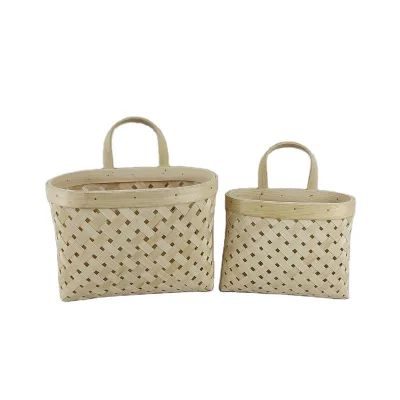


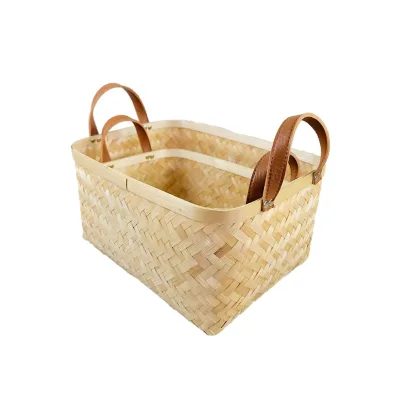


Customized Eco-Friendly Decorative Handwoven Picnic Bamboo Storage Basket
$1.20 - $1.90
MOQ: 100 Pieces


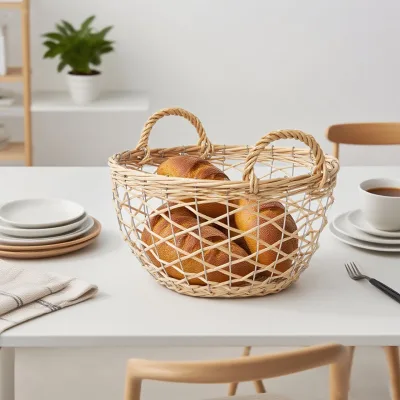

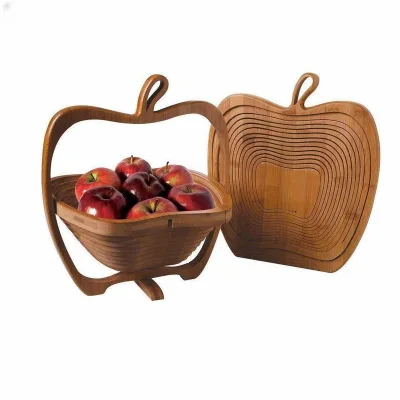
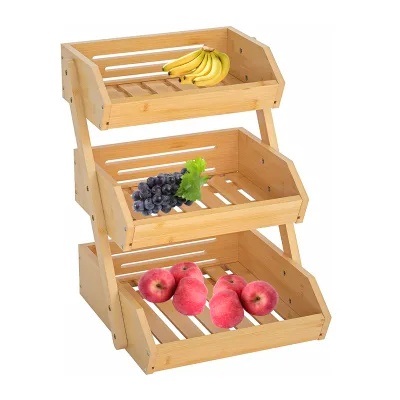

Bamboo Foldable Hand-Held Fruit Creative Multi-Functional Vegetable Storage Basket
$4.69 - $5.31
MOQ: 1000 Pieces


Round Bamboo Fruit Snacks Food Basket
$0.30 - $0.50
MOQ: 10 Pieces
Nanping Jianyang Heng Xinwang Bamboo and Wooden Products Co., Ltd.


Comprehensive Sourcing Guide
Strategic Sourcing Guide for Wall Mounted Bamboo Baskets
The global demand for sustainable storage solutions has elevated the profile of wall-mounted bamboo baskets within the B2B procurement landscape. These items serve a dual purpose, functioning as practical organizational tools while simultaneously acting as aesthetic elements that bridge the gap between rustic charm and modern interior design. For procurement professionals, sourcing these products requires a nuanced understanding of material properties, manufacturing processes, and the specific logistical constraints associated with customizing natural fiber goods. This guide provides a comprehensive framework for evaluating suppliers and defining product specifications to ensure a successful sourcing strategy for wall-mounted bamboo baskets.
Material Composition and Manufacturing Processes
The foundational element of any bamboo basket is the raw material itself. In the context of the current market, bamboo is frequently cited as the primary material due to its rapid renewability and structural integrity. When evaluating potential suppliers, it is critical to verify that the bamboo used is processed correctly to ensure durability. The supply data indicates that the production process for these items is predominantly "Handmade" or involves other artisanal techniques. This distinction is vital because handmade production often results in slight variations in weave density and finish, which can be a feature rather than a defect for buyers seeking an authentic, artisanal look. However, for applications requiring strict uniformity, buyers must clarify the acceptable tolerance levels during the negotiation phase.
The material is often treated to achieve specific aesthetic outcomes. While the natural state of bamboo is a light, organic hue, suppliers offer customization options that include colors such as brown, grey, and wash white. This flexibility allows buyers to align the product color with specific interior design themes, ranging from modern art to antique styles. The "Eco-friendly" attribute is a common selling point, but procurement teams must verify the specific treatments used to achieve these colors to ensure they do not compromise the material's natural biodegradability or introduce harmful chemicals, especially for products intended for food or nursery use.
Technical Specifications and Customization Capabilities
One of the most significant advantages of sourcing wall-mounted bamboo baskets is the high degree of customization available. The product model is often listed as "Customizable," allowing buyers to dictate dimensions, shapes, and functional features. The observed specifications reveal that dimensions can range from standard sizes like 302012cm to fully bespoke requests. For buyers requiring precise fitment within a specific architectural space, the dimensional tolerance of less than ±1mm is a critical specification to verify. This level of precision is particularly important for wall-mounted units where gaps between the basket and the wall or adjacent fixtures must be minimized for both aesthetic and safety reasons.
The shape of the basket is another variable that can be tailored. The market offers "Customized Shape" options, enabling the creation of unique silhouettes that deviate from traditional rectangular or circular forms. Furthermore, the functional design can be enhanced with features such as detachable components, foldability, and the inclusion of handles. While some models are designed as "Foldable" for easy storage when not in use, others are intended to remain in a "Unfolded" state permanently. The choice between these styles depends heavily on the intended application scenario. For instance, a basket intended for a hotel laundry room might prioritize a rigid, non-foldable structure for heavy loads, whereas a home storage basket might benefit from a collapsible design to save space.
Compliance, Certification, and Safety Standards
In the B2B sector, compliance with international standards is non-negotiable, particularly for products that may come into contact with food, bedding, or items used in healthcare environments. While specific certification bodies like FSC or ISO 14001 are often associated with sustainable bamboo products, buyers must not assume a supplier possesses these credentials without direct verification. The procurement process should include a request for valid, up-to-date certification documents before placing any order.
The product standard is often listed as "Customizable," which implies that the manufacturing process can be adapted to meet specific regional or industry requirements. However, buyers must explicitly define the required standard during the initial inquiry. For example, if the baskets are intended for use in a nursing home or hospital, the materials must meet specific hygiene and fire safety standards. The "Industrial Use" category for these products spans a wide range, including packaging, bedding, bathroom storage, and travel. Each of these applications may trigger different regulatory requirements regarding chemical leaching, structural load-bearing capacity, and fire resistance.
Cost Drivers and Pricing Dynamics
Understanding the cost structure of wall-mounted bamboo baskets is essential for budgeting and margin analysis. The observed price range in the market is substantial, spanning from $0.03 to $17.55 per unit. This wide variance is driven by several factors, including the complexity of the design, the quality of the bamboo, the level of customization, and the packaging requirements. A simple, off-the-shelf basket will naturally fall at the lower end of this spectrum, while a custom-designed, handcrafted piece with specific color treatments and precise dimensions will command a premium price.
The Minimum Order Quantity (MOQ) is another significant cost driver. The observed MOQ range is between 10 and 2000 units. For small businesses or those testing a new product line, a lower MOQ of 10 units may be available, though the per-unit cost will likely be higher. Conversely, larger orders can leverage economies of scale to reduce the unit price. However, the supply data also indicates a specific attribute where the MOQ is listed as 200 units for certain configurations. Buyers must clarify the MOQ for their specific custom requirements, as custom shapes or colors may necessitate a higher minimum order to justify the setup costs for the manufacturer.
Supplier Evaluation and Supply Chain Reliability
Selecting the right supplier involves more than just comparing prices; it requires a thorough assessment of their production capacity and logistical capabilities. The supply ability for bamboo baskets is typically cited as 1000 sets per month. This figure serves as a baseline for evaluating whether a supplier can meet the volume demands of a large-scale project. If a buyer requires a bulk order exceeding this monthly capacity, they must discuss phased delivery schedules or alternative sourcing strategies with the supplier.
The lead time is a critical factor in supply chain planning. The observed lead times indicate a period of 7-15 days for sample production and 60-65 days for bulk orders. This extended lead time for bulk production is common for handmade items, as it accounts for the time required for material preparation, weaving, drying, and finishing. Buyers must factor this timeline into their inventory planning to avoid stockouts. Additionally, the port of dispatch is frequently listed as Shenzhen, a major logistics hub in China. This location offers robust shipping infrastructure, but buyers should still verify the specific shipping terms and the reliability of the supplier's freight forwarders to ensure timely delivery.
Quality Control and Inspection Protocols
Given the handmade nature of bamboo baskets, implementing a rigorous quality control (QC) protocol is essential to ensure consistency. The weight tolerance is specified as less than ±1%, which is a measurable metric that can be used during the inspection phase. Buyers should include this tolerance in their inspection criteria to ensure that the finished products meet the agreed-upon weight specifications, which can affect shipping costs and structural stability.
Visual inspection is equally important. Buyers should verify the uniformity of the weave, the absence of splinters, and the consistency of the color finish. Since the color can be customized, a color match sample should be approved before mass production begins. The packaging is another area requiring attention, with options ranging from individual inner boxes to carton and palletizing for bulk shipments. The "Carton/Palletizing" option is crucial for protecting the baskets during long-distance transit, especially given the fragility of the woven material.
Long-Term Procurement and Application Scenarios
The versatility of wall-mounted bamboo baskets makes them suitable for a diverse array of application scenarios. They are commonly used for storage in general settings, but the data also highlights specific use cases such as nursing homes, hospitals, hotels, and laundry facilities. In these environments, the baskets may be used to store sundries, food, apparel, books, tools, bedding, tableware, and shoes. The "All-Season" attribute suggests that these products are durable enough to withstand varying environmental conditions, making them suitable for both indoor and semi-outdoor applications.
For long-term procurement, buyers should consider the lifecycle of the product. Bamboo is a renewable resource, and the "Eco-friendly" nature of the product aligns with corporate sustainability goals. However, buyers must ensure that the supplier maintains a consistent supply of high-quality bamboo to prevent fluctuations in product quality over time. Establishing a long-term relationship with a supplier who understands the nuances of bamboo processing can lead to better pricing, improved lead times, and more consistent product quality.
Summary of Key Sourcing Parameters
To facilitate a clear comparison of the key parameters discussed, the following table summarizes the critical specifications and attributes that buyers should prioritize during the sourcing process.
| Parameter | Observed Range / Value | Procurement Action |
|---|---|---|
| Material | Bamboo | Verify source and treatment methods. |
| Process | Handmade/Other | Define acceptable tolerance for manual variation. |
| Color | Natural, Brown, Grey, Wash White | Approve color samples before bulk production. |
| Size | Customer Size / Specific (e.g., 302012cm) | Confirm dimensional tolerance (<±1mm). |
| MOQ | 10 - 2000 units | Negotiate based on order volume and customization. |
| Lead Time | 7-15 days (Sample), 60-65 days (Bulk) | Plan inventory cycles accordingly. |
| Packaging | Box, Carton, Palletizing | Select based on shipping volume and fragility. |
| Origin | China | Verify port of dispatch (e.g., Shenzhen). |
| Supply Ability | 1000 sets per Month | Assess capacity for large-scale orders. |
By adhering to these guidelines and maintaining a focus on verified facts rather than assumptions, procurement professionals can effectively navigate the complexities of sourcing wall-mounted bamboo baskets. This approach ensures that the final product meets the functional, aesthetic, and compliance requirements of the end-user while maintaining cost efficiency and supply chain reliability.
FAQs
What customization options are available for wall mounted bamboo baskets?
Customization is available for size, shape, color, and design. Buyers can request specific dimensions like 30*20*12cm or choose from natural, brown, grey, and wash white finishes to match their interior style.
How long does it take to produce a bulk order of bamboo baskets?
Bulk orders typically require 60 to 65 days for production. Sample production is faster, taking between 7 and 15 days, which allows buyers to verify quality before committing to larger quantities.
Can I find wall mounted bamboo baskets with a low minimum order quantity?
Yes, minimum order quantities range from 10 to 2000 units depending on the configuration. Some specific setups may require an MOQ of 200 units, while smaller trials can start with as few as 10.
What is the supply capacity for Wall Mounted Bamboo Basket manufacturers?
Suppliers generally offer a supply ability of 1000 sets per month. This capacity supports steady demand but may require phased delivery schedules for orders exceeding the monthly production limit.
Which packaging methods are used for shipping wall mounted bamboo baskets?
Packaging options include individual inner boxes, cartons, and palletizing for bulk shipments. The choice depends on the order volume and the need to protect the fragile woven material during transit.
What are the dimensional tolerances for custom wall mounted bamboo baskets?
The dimensional tolerance is specified as less than plus or minus 1 millimeter. This precision ensures a tight fit for wall-mounted units where gaps between the basket and the wall must be minimized.
Can wall mounted bamboo baskets be used in hospitals and nursing homes?
Yes, these baskets are suitable for use in nursing homes, hospitals, hotels, and laundry facilities. They are designed to store sundries, food, apparel, and other items in various industrial and home settings.