Source Warehouse Pallet Handling Electric Forklift for Cold Storage, Indoor Warehouse, and Material Transport
Explore 30 Warehouse Pallet Handling Electric Forklift options with varying load capacities from 1 to 5 tons and lift heights up to 5000mm. Buyers can compare specifications including battery types, fork sizes, and turning radii to find suitable units for indoor or cold storage applications.
Key considerations
Products List


Electric Warehouse Forklift with AC Motor Drive for Pallet Handling Tasks
$12000.00 - $17333.00
MOQ: 1 Pieces

Energy Saving Electric Forklift for Standard Warehouse Handling Tasks
$12000.00 - $17333.00
MOQ: 1 Pieces

Compact Electric Forklift for High Moisture Warehouse Handling Applications
$12000.00 - $17333.00
MOQ: 1 Pieces

Energy Efficient Electric Forklift for Multi-Zone Warehouse Facilities
$12000.00 - $17333.00
MOQ: 1 Pieces


Electric Forklift for Warehouse Efficient Pallet Lifter for Logistics & Storage
$5650.00 - $5750.00
MOQ: 1 Pieces


Compact Design Warehouse Electric Forklift for Easy Storage and Transport
$3800.00 - $4500.00
MOQ: 1 Pieces
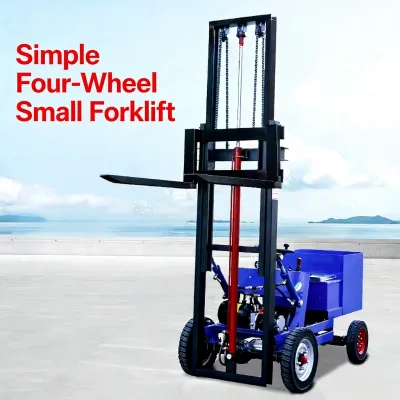


Mini Electric Forklifts for Efficient Warehouse Operations and Logistics
$5000.00 - $5300.00
MOQ: 1 Pieces


Comprehensive Sourcing Guide
Strategic Sourcing Guide for Warehouse Pallet Handling Electric Forklifts
Selecting the right electric forklift for warehouse pallet handling requires a disciplined approach that balances technical specifications, operational constraints, and supply chain reliability. The market for these industrial vehicles is diverse, with manufacturers offering a wide spectrum of configurations to suit different load capacities, lift heights, and environmental conditions. Buyers must navigate a complex landscape where product attributes vary significantly between models, ranging from compact units designed for narrow aisles to heavy-duty machines capable of handling substantial loads at significant heights. This guide provides a structured framework for evaluating potential procurement opportunities, ensuring that the selected equipment aligns with specific operational needs while adhering to safety and quality standards.
Technical Specifications and Operational Capabilities
The core of any forklift procurement decision lies in understanding the precise technical specifications of the equipment. For warehouse applications, the load capacity is a primary determinant, with observed market offerings ranging from 1 ton to 5 tons. Buyers must verify the specific load center, as this dimension directly impacts the rated capacity of the machine. In many standard configurations, the load center is specified as greater than 500mm, which is critical for calculating safe lifting limits. The lift height is another vital parameter; while some units are designed for standard racking, others offer lift heights exceeding 5000mm, suitable for high-bay storage facilities.
The physical dimensions of the forklift, including the turning radius and overall length, dictate its suitability for specific warehouse layouts. Data indicates that turning radii can vary significantly, with some models offering a radius of approximately 1550mm for enhanced maneuverability in tight spaces, while others may have a radius of 2385mm. The mast tilt angle is another technical feature to consider, with typical specifications showing a range of 6/12 degrees, allowing for precise load positioning. Fork dimensions are equally important; standard fork lengths observed in the market range from 1070mm to 1520mm, with widths and thicknesses varying to accommodate different pallet types.
Power systems are a defining characteristic of electric forklifts. The majority of units in this category utilize AC motors, which offer superior torque control and energy efficiency compared to DC alternatives. Battery technology is a critical sub-component, with options including Lead-Acid or Lithium batteries. Buyers should note that battery capacity can vary widely, with observed specifications including voltages such as 76.8V and capacities ranging from 150Ah to 410Ah. The choice between battery types often depends on the operational shift pattern and charging infrastructure available at the facility.
Compliance, Standards, and Certification Verification
Ensuring that the forklift meets relevant safety and industry standards is a non-negotiable aspect of the procurement process. While specific certification statuses like CE are often referenced in the broader market, buyers must verify the actual compliance of the specific unit they intend to purchase. The industry relies on established standards such as I.T.A. or FEM for design and manufacturing. Additionally, mounting classes are often categorized under ISO or FEM standards, with observed classifications including "a a Ba a B" and "a a Ba a B," which indicate the structural integrity and safety margins of the chassis and mast.
When evaluating a supplier, it is essential to request documentation that confirms adherence to these standards. The product standard itself may be listed as "199510903940" in some contexts, though this likely refers to specific dimensional or model identifiers rather than a universal safety code. Buyers should prioritize suppliers who can provide clear evidence of compliance with local and international safety regulations. The absence of a specific certification claim in a product listing does not necessarily imply non-compliance, but it does require a more rigorous verification process before finalizing a purchase.
Cost Drivers and Pricing Structures
The pricing of electric forklifts is influenced by a multitude of factors, including load capacity, lift height, battery technology, and customization options. The observed price range in the market spans from 190 USD to 36,000 USD, reflecting the vast difference between basic models and high-specification units. Several key drivers contribute to these cost variations. First, the battery type and capacity significantly impact the initial price; Lithium-ion batteries generally command a higher upfront cost than Lead-Acid alternatives but may offer lower long-term operating expenses.
Customization is another major cost driver. Products listed as "Customized" or with "Customization Available" often carry a premium. This can include modifications to the color, cab location (adjustable vs. not adjustable), or specific structural reinforcements. The packing method also plays a role in the final cost; options range from "Nude Package" to "Steel Pallet" or "Wooden Case," with export-standard packaging typically adding to the logistics expense. Furthermore, the origin of the product, such as units manufactured in China or Hebei, can influence pricing due to variations in labor costs, material sourcing, and shipping logistics.
Buyers should also consider the Minimum Order Quantity (MOQ) when budgeting. The observed MOQ range is between 1 and 20 units. Purchasing a single unit for immediate operational needs will differ in unit cost from a bulk purchase of 20 units. Understanding the supplier's MOQ policy is essential for negotiating favorable terms, especially for small to medium-sized enterprises that may not require large fleet expansions immediately.
Typical Applications and Environmental Suitability
Electric forklifts are primarily designed for indoor environments, but specific models are engineered for more demanding conditions. The "Application" attribute often specifies suitability for "Cold Storage / Indoor Warehouse," indicating that certain units are built to withstand lower temperatures and higher humidity levels. These specialized forklifts may feature waterproof designs to prevent electrical components from failing in damp or freezing environments. The design type, such as a "Three-Point" design, is often chosen for its stability and compact footprint, making it ideal for narrow aisles and high-density storage areas.
The cab location is another factor that determines the forklift's application. Some models feature an adjustable cab location, allowing the operator to choose between a standing or sitting position based on the task and personal preference. Others have a fixed, non-adjustable cab. For high-lift applications, the overhead guard height is critical; observed specifications show heights around 2300mm, which must be compatible with the warehouse ceiling clearance to ensure safe operation. The minimum ground clearance, typically around 120mm, is also a key specification for navigating uneven warehouse floors or thresholds.
Supplier Evaluation and Origin Considerations
Evaluating potential suppliers requires a focus on their manufacturing capabilities and geographic location. The supply chain for electric forklifts is heavily concentrated in specific regions, with "China" and "Hebei" frequently cited as the origin points for these products. While these regions are known for competitive manufacturing, buyers must conduct due diligence to ensure that the supplier maintains consistent quality control standards. The condition of the product is listed as "New," which is standard for new procurement, but buyers should verify the manufacturing date and storage conditions to ensure the equipment has not been sitting in inventory for extended periods.
Supplier reliability is often reflected in their packing and shipping practices. The use of "Export-Standard Package," "Steel Pallet," or "Wooden Case" indicates a commitment to protecting the equipment during transit. A supplier that offers "Nude Package" might be less concerned with long-distance shipping protection, which could lead to damage upon arrival. Additionally, the availability of customization services suggests a more flexible manufacturing process, which can be beneficial for buyers with unique operational requirements.
Quality Control and Long-Term Procurement Considerations
Quality control is paramount when sourcing industrial equipment. Buyers should insist on a comprehensive inspection process that covers the structural integrity of the mast, the functionality of the AC motor, and the reliability of the battery system. The "Condition" of the product being "New" is a baseline, but it does not guarantee long-term performance. Buyers should request test results or performance data, particularly regarding the lift height consistency and the stability of the load center under various conditions.
Long-term procurement considerations extend beyond the initial purchase price. The availability of spare parts, such as forks of varying lengths (1070-1520mm) and batteries with different capacities, is crucial for maintaining operational uptime. The "prod_model" designations, such as CPD20, FB20, FB35, and specific tonnage models (1.0 ton, 2.5 tons, 4.0 tons), serve as identifiers for compatibility with existing maintenance protocols. Buyers should also consider the lead time for replacement parts and the supplier's ability to provide technical support.
| Feature Category | Observed Specification Range | Procurement Verification Point |
|---|---|---|
| Load Capacity | 1T - 5T | Verify rated capacity at specific load center |
| Lift Height | >5000mm or 3000~5000mm | Check clearance against warehouse racking |
| Battery Type | Lead-Acid or Lithium | Assess charging infrastructure and cycle life |
| Turning Radius | Approx. 1550 mm to 2385 mm | Match with aisle width requirements |
| Fork Size | 107012550mm (Length varies) | Ensure compatibility with pallet types |
| Origin | China, Hebei | Verify manufacturing standards and logistics |
Finalizing the Procurement Strategy
In conclusion, sourcing warehouse pallet handling electric forklifts requires a meticulous analysis of technical specifications, compliance standards, and supplier capabilities. The wide range of observed prices, from 190 USD to 36,000 USD, underscores the importance of defining clear operational requirements before engaging with suppliers. Buyers must prioritize units that meet the specific load, lift, and maneuverability needs of their facility while ensuring that the equipment adheres to recognized standards like I.T.A. or FEM.
The decision-making process should also account for the long-term costs associated with battery technology, maintenance, and spare parts availability. By focusing on verified attributes such as the AC motor type, battery capacity, and packing standards, buyers can mitigate risks associated with equipment failure and operational downtime. Ultimately, a successful procurement strategy relies on a deep understanding of the product's technical nuances and a rigorous evaluation of the supplier's ability to deliver high-quality, compliant, and reliable electric forklifts tailored to the specific demands of the warehouse environment.
FAQs
What load capacities are available for warehouse pallet handling electric forklifts?
Available load capacities range from 1 ton to 5 tons for these units. Specific models include 1.0 ton, 2.5 tons, and 4.0 tons, with a standard load center greater than 500mm to ensure safe lifting limits during operation.
Can these forklifts operate in cold storage environments?
Yes, specific models are designed for cold storage and indoor warehouse applications. These units often feature waterproof designs and are built to withstand lower temperatures and higher humidity levels found in such demanding environments.
Which battery types are offered for these electric forklifts?
Buyers can choose between Lead-Acid or Lithium battery options. Battery capacities vary widely, with specifications including voltages like 76.8V and amp-hour ratings ranging from 150Ah up to 410Ah depending on the specific model configuration.
How does the lift height vary across different models?
Lift heights vary significantly, with some units offering heights between 3000mm and 5000mm. Other high-bay capable models provide lift heights exceeding 5000mm, allowing them to reach higher racking systems in warehouse facilities.
What standards do these forklifts comply with?
These units typically comply with I.T.A. or FEM standards for design and manufacturing. Structural integrity is often categorized under ISO or FEM mounting classes, ensuring safety margins are met for industrial operations.
Are customization options available for these electric forklifts?
Customization is available for various attributes including color and cab location. Buyers can request specific modifications to the unit, though customized orders may involve different packing methods like steel pallets or wooden cases.
What is the typical turning radius for these warehouse forklifts?
Turning radii vary by model, with some offering approximately 1550mm for tight spaces. Other larger units may have a turning radius of around 2385mm, so buyers must match this dimension to their specific aisle width requirements.