Source Warehouse Storage Rack for Industrial, Supermarket, and Tool uses
Explore 30 options for Warehouse Storage Rack systems designed for industrial, supermarket, and tool applications. Buyers can compare specifications, materials, and customization features to find the right solution for their facility needs.
Key considerations
Products List


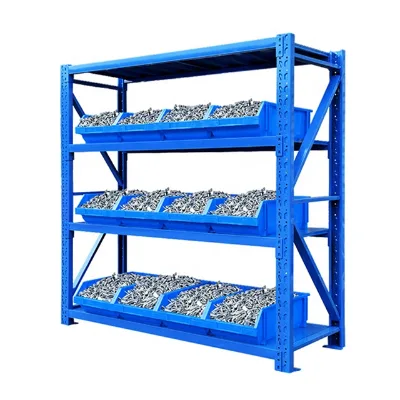
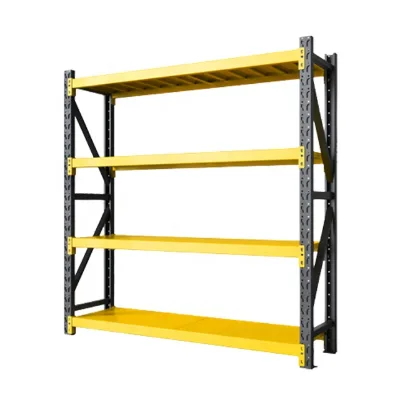


Comprehensive Sourcing Guide
Strategic Sourcing Guide for Warehouse Storage Racks
Selecting the appropriate Warehouse Storage Rack is a critical decision that directly impacts operational efficiency, safety compliance, and long-term capital expenditure. The global market for industrial racking systems is vast, ranging from simple boltless shelving to complex, multi-level mezzanine structures. For procurement professionals, the challenge lies in navigating a landscape where product attributes vary significantly between suppliers. This guide synthesizes observed market data and technical requirements to provide a disciplined framework for sourcing warehouse storage racks. Buyers must prioritize verifying specific product attributes against their operational needs rather than relying on generic category descriptions.
Technical Specifications and Structural Configurations
The technical foundation of any warehouse storage system lies in its structural configuration, material composition, and dimensional specifications. Observed market data indicates a diverse range of structural types, including "Layer Frame," "Rack," and "Shelf" configurations. The "Type" attribute frequently distinguishes between "Pallet Racking," "Selective Pallet Racking," "Multi-Level Racking," and "Gravity racking." Each type serves a distinct logistical function. For instance, "Selective Pallet Racking" offers direct access to every pallet position, whereas "Gravity racking" utilizes inclined rollers for first-in, first-out (FIFO) inventory management.
Material composition is a primary determinant of load-bearing capacity and durability. The supplied data consistently identifies "Steel" as the core material, with specific grades such as Q235B, Q235D, and SS400 appearing in technical descriptions. These steel grades are standard in the industry, but buyers must verify the exact grade specified in the purchase order, as mechanical properties vary between them. Surface treatment is equally critical for corrosion resistance, particularly in environments with humidity or temperature fluctuations. "Powder Coated" is the most commonly observed finish, providing a durable layer that protects the underlying steel.
Dimensional flexibility is a key differentiator in the racking market. Height specifications observed in the market range from "0-5m" for lighter shelving units to "5-15m" for high-bay pallet racking systems. The "Pitch," or the vertical spacing between beam levels, is often standardized at "50mm," allowing for precise load placement. However, buyers should note that some systems offer "Customized" sizes, with standard beam dimensions listed as "6050mm" or varying profiles like "5080," "50100," "50120," "50140," "60160," and "60*180." The "Mobility" attribute also varies, with options ranging from "Fixed" to "Adjustable" and "Mobile" systems. Mobile racking, while space-efficient, introduces mechanical complexity that requires specific floor load calculations and maintenance protocols.
Compliance, Certification, and Safety Standards
Safety and regulatory compliance are non-negotiable in warehouse operations. When evaluating suppliers, buyers must verify that the racking systems meet recognized international standards. The most frequently cited certifications in the market data include "CE" and "ISO9001." The "CE" marking indicates conformity with health, safety, and environmental protection standards for products sold within the European Economic Area. "ISO9001" certifies that the manufacturer has a quality management system in place to ensure consistent product quality. Additionally, "ISO14001" is sometimes referenced, indicating adherence to environmental management standards.
It is crucial for buyers to understand that the presence of a certification mark on a supplier's website does not automatically guarantee that a specific order will be certified. Certification often applies to the manufacturing process or a specific product line rather than every individual unit shipped. Therefore, procurement documents must explicitly require the supplier to provide valid certification documentation for the specific batch of racking ordered. Furthermore, while some background data mentions "ISO 3834" (a standard for quality requirements for fusion welding of metallic materials), this should be treated as a reference for welding quality rather than a mandatory requirement unless the specific application demands it.
Buyers should also verify the "Standard" attribute against local building codes. The market data lists standards such as "60*50mm" and "material:steel Q235B," but these are often dimensional or material specifications rather than comprehensive safety standards like EN 15635 or RMI (Rack Manufacturers Institute) guidelines. In the absence of explicit local code references in the provided data, buyers must mandate that the supplier's design team confirms compliance with the specific jurisdiction's safety regulations.
Cost Drivers and Pricing Dynamics
The pricing of warehouse storage racks is influenced by a complex interplay of factors, including material costs, customization levels, and logistical requirements. The observed price range in the market is extensive, spanning from $0.6 to $1250 USD. This wide variance reflects the difference between small, single-tier shelving units and large, multi-level racking systems with custom engineering. The lower end of the spectrum typically corresponds to "Boltless/Rivet Racking" or standard "Shelving" units, which are mass-produced and require minimal assembly. The higher end encompasses "rack supported mezzanine" systems and "Multi-Level Racking" solutions that involve complex structural engineering and heavy-duty materials.
Several specific cost drivers should be scrutinized during the sourcing process. First, the "Customization" level significantly impacts price. While "Standard" accessories and "Plastic Wrap" packaging are common, requests for "Customized" packaging or non-standard dimensions will incur additional charges. The "Drawing Design" service is often offered as "Free," but this usually applies to standard configurations. Complex designs requiring custom engineering calculations or specialized "Installation Teams" will add to the overall cost.
The "MOQ" (Minimum Order Quantity) is another critical financial factor. The observed MOQ range is "1-1000," indicating that suppliers cater to both small-scale buyers and large industrial projects. However, ordering near the lower limit of the MOQ may result in a higher unit price due to setup costs. Conversely, larger orders may benefit from economies of scale but require significant upfront capital and storage space for the goods before installation. Buyers should also consider the "Place of Origin," which is frequently listed as "China" or specific regions like "Dongtai City, Jiangsu Province." While these regions offer competitive manufacturing costs, buyers must factor in shipping, import duties, and lead times into their total cost of ownership calculations.
Typical Applications and Usage Scenarios
Warehouse storage racks are designed to serve a wide array of industries, and selecting the right system requires matching the rack's capabilities to the specific usage environment. The market data lists diverse usage scenarios, including "Warehouse Rack," "Industrial," "Supermarket," "Food," "Beverage," "Clothing," and "Tools." Each application imposes different requirements regarding hygiene, load distribution, and accessibility.
For "Food" and "Beverage" industries, the surface treatment and material cleanliness are paramount. "Powder Coated" steel is generally preferred for its ease of cleaning and resistance to corrosion from spills or cleaning agents. In "Supermarket" environments, the aesthetic appeal and visibility of the racks are important, often favoring lighter colors and "Optional" color finishes. For "Industrial" and "Tool" storage, the focus shifts to durability and high load capacity, where "Heavy Duty" or "Middle Duty" classifications become relevant. The "Feature" attribute in the data mentions "Middle Duty," suggesting a specific load class that buyers must verify against their actual inventory weights.
The "Structure" of the rack also dictates its suitability for different applications. "Layer Frame" structures are often used for lighter, bulk storage, while "Rack" structures are essential for palletized goods. "Gravity racking" is particularly effective for high-turnover items in "Warehouse Rack" applications where FIFO inventory rotation is critical. Buyers should ensure that the "Usage" claim of the supplier aligns with their specific operational needs. For example, a rack marketed for "Clothing" storage may not have the necessary load capacity for "Industrial" tool storage, even if the physical dimensions appear similar.
Supplier Evaluation and Serviceability
Evaluating a supplier for warehouse racking requires a holistic approach that goes beyond price and product specifications. The "Serviceability" attribute in the market data is described as "Common Use," which implies that the products are intended for general industrial applications rather than highly specialized, one-off projects. However, the availability of support services is a critical differentiator. The data highlights "Installation Teams Availiable" and "Free" drawing design services as key value-adds. Buyers should verify the scope of these services: does the installation team handle site preparation, or is it limited to assembly? Is the design service truly free for complex, custom layouts, or are there hidden engineering fees?
The "Brand Name" "Yuanda" appears in the data, but buyers should not limit their search to specific brands. Instead, they should evaluate the supplier's overall capability to deliver on the "Development" attribute, which ranges from "Conventional" to "New Type." Suppliers offering "New Type" developments may provide innovative solutions that improve space utilization or safety, but these may also carry higher risks if the technology is not yet proven. Conversely, "Conventional" developments offer reliability and familiarity.
When assessing suppliers, buyers must also consider the "Product Origin." The data points to "Dongtai City, Jiangsu Province" and "China (Mainland)" as common origins. While these regions have a robust manufacturing base, buyers should verify the supplier's track record in exporting to their specific region. The "Lead Time" and "MOQ" are also vital; a supplier with a low MOQ but a long lead time may not be suitable for urgent projects. Buyers should request detailed production schedules and verify the supplier's ability to meet deadlines.
Quality Control and Long-Term Procurement Considerations
Ensuring the long-term viability of a warehouse storage investment requires rigorous quality control (QC) measures. The "Features" of the racks, such as "Versatility, Stability and Durability," are claims that must be validated through testing and inspection. Buyers should request third-party test reports or evidence of load testing to verify the stability claims. The "Standard" attribute, which includes specific dimensions and material grades, should be cross-referenced with the actual delivered goods. Any deviation from the specified "Steel Q235B" or "50mm Pitch" could compromise the structural integrity of the system.
Packaging is another aspect of quality control. The data mentions "Plastic Wrap" and "Package Is Customized" as options. Proper packaging is essential to prevent damage during transit, especially for long, slender components like beams and uprights. Buyers should specify packaging requirements in the contract to ensure that the goods arrive in pristine condition.
Long-term procurement considerations also include the availability of spare parts and accessories. The "Accessories" are listed as "Standard," but buyers should confirm the availability of replacement parts such as safety locks, beam connectors, and column protectors. The "Development" of the product line should also be considered; a supplier that offers "New Type" developments may be more likely to support future upgrades or expansions. Finally, buyers should plan for the "Installation" phase, ensuring that the "Installation Teams" provided are qualified and that the site is prepared to receive the racking system.
Conclusion
Sourcing warehouse storage racks is a multifaceted process that demands careful attention to technical specifications, compliance, cost drivers, and supplier capabilities. By leveraging the observed market data and applying rigorous due diligence, buyers can select racking systems that meet their operational needs while ensuring safety and durability. The wide range of options, from "Boltless/Rivet Racking" to "rack supported mezzanine," offers flexibility, but it also requires a disciplined approach to verification. Buyers must prioritize clear communication of requirements, rigorous quality control, and a thorough evaluation of supplier serviceability to achieve a successful procurement outcome.
FAQs
What certifications do warehouse storage racks typically have?
Warehouse storage racks typically carry CE, ISO9001, and ISO14001 certifications. These marks indicate compliance with safety and quality management standards, though buyers must verify that specific batches are covered by valid documentation rather than assuming all units are certified.
How high can warehouse storage racks be built?
Warehouse storage racks can be built with heights ranging from 0 to 15 meters depending on the type. Lower shelving units often fall between 0 and 5 meters, while high-bay pallet racking systems can reach up to 15 meters for maximizing vertical space.
Which materials are used to construct warehouse storage racks?
Steel is the primary material used to construct warehouse storage racks, often in grades like Q235B, Q235D, or SS400. These steel grades provide the necessary durability and load-bearing capacity required for industrial and warehouse environments.
Can warehouse storage racks be customized for specific needs?
Yes, warehouse storage racks can be customized regarding size, color, and packaging. While standard accessories and plastic wrap are common, buyers can request customized dimensions and finishes, though this may affect the final unit price and lead time.
What surface treatments are available for warehouse storage racks?
Powder coating is the most common surface treatment applied to warehouse storage racks. This finish provides a durable layer that protects the underlying steel from corrosion, making it suitable for various environments including food and beverage storage areas.
How is the pitch or beam spacing determined for racks?
The pitch for warehouse storage racks is often standardized at 50mm for precise load placement. However, some systems offer customizable beam dimensions, allowing buyers to adjust spacing based on their specific inventory heights and storage requirements.
What installation support is available for warehouse storage racks?
Installation teams are available to assist with the setup of warehouse storage racks. Buyers should verify the scope of these services, as they may range from basic assembly to comprehensive site preparation depending on the supplier and project complexity.