Source Warp Suede Knitted Upholstery Fabric for Shoes, Garment, Home Textile
Find 30 listings of Warp Suede Knitted Upholstery Fabric suitable for shoes, garment, and home textile applications. Compare specifications including fiber types, weights, and delivery times from verified Chinese manufacturers.
Key considerations
Products List


High Color Fastness 100% Polyester Warp Knitted Suede Fabric for Composite Sofa Upholstery Material
$1.62 - $4.25
MOQ: 50 Square Meters

High Color Fastness Elastic Knitted Suede Fabric for Composite Sofa Upholstery Furniture Material
$1.62 - $4.25
MOQ: 50 Square Meters


Home Textile Polyester Brushed Suede Fabric for Upholstery Furniture Sofa Cushion
$1.60 - $2.20
MOQ: 800 Meters


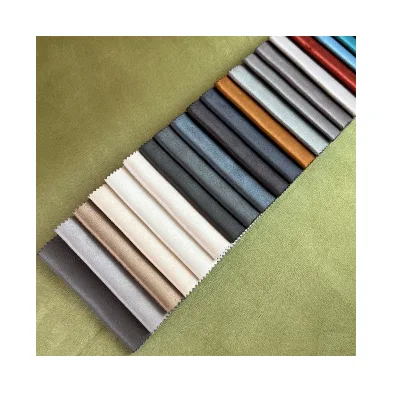

Polyester Fabric Surface with PU Base Suede Textile Fabric Upholstery Fabrics
$3.88 - $3.98
MOQ: 500 Meters


Strong Weave Upholstery Polyster Textile Fabric for Sofa Covers Chair Cushion
$3.31 - $3.41
MOQ: 1000 Meters


Comprehensive Sourcing Guide
Strategic Sourcing Guide for Warp Suede Knitted Upholstery Fabric
Understanding Technical Specifications and Material Composition
When sourcing Warp Suede Knitted Upholstery Fabric, buyers must first establish a clear understanding of the underlying technical architecture. The core product category is defined as knitted fabrics, specifically utilizing tricot knitting techniques. This method produces a fabric with a distinct texture that mimics the softness and durability associated with suede, making it highly suitable for upholstery applications where tactile comfort is paramount. The fiber composition is a critical variable; observed data indicates a prevalence of short fiber types, often processed into 100% polyester or blends containing 95% polyester and 5% spandex. The inclusion of spandex suggests a design intent focused on elasticity and recovery, which is essential for upholstery that undergoes frequent flexing and compression.
The physical characteristics of the fabric must be scrutinized against the intended end-use. While some listings describe the fiber cross-section as "GOAT," this likely refers to a specific textural classification or a proprietary naming convention rather than the presence of actual animal fiber, especially given the dominant polyester standards. The fabric width is typically standardized at 57/58 inches, a common dimension for industrial weaving and knitting machinery that facilitates efficient cutting patterns for furniture manufacturing. Weight is another significant specification, with observed ranges falling between 200 and 340 GSM (grams per square meter). This weight class indicates a medium-to-heavy fabric, providing the necessary structural integrity for chair seats, backs, and automotive interiors without being overly bulky.
The surface finish is described as "plain" in style, yet the functional attributes often include windproof and waterproof capabilities. This combination suggests a specialized treatment or a tight knit structure that prevents air and moisture penetration while maintaining breathability. Buyers should verify the specific finish applied, as "suede" in a synthetic context often implies a mechanical brushing or chemical etching process to raise the nap. The formaldehyde content is a critical safety metric, with some specifications noting "not detected," which is a vital compliance point for indoor furniture and automotive applications where off-gassing must be minimized.
Compliance, Certification, and Quality Verification
Navigating the compliance landscape for synthetic upholstery fabrics requires rigorous verification of certifications and standards. The market data indicates that suppliers may claim adherence to international standards such as SGS, ITS, and IAF. These organizations provide third-party validation for material quality, but buyers must ensure that the specific tests conducted align with their regional regulatory requirements. For instance, the presence of an ISO certification implies a commitment to quality management systems, though the specific ISO standard (e.g., ISO 9001) should be confirmed in the supplier's documentation.
Colorfastness is a primary quality metric for upholstery, as furniture is subject to significant exposure to light, friction, and cleaning agents. Observed data points to a colorfastness grade of 4-5, which represents a high level of resistance to fading and rubbing. This range is generally acceptable for commercial and residential applications, but buyers should request test reports that specify the testing method used (e.g., ISO 105 or AATCC standards) to ensure the grade is comparable to industry benchmarks. Similarly, pilling resistance is listed at 4-5, indicating that the fabric is unlikely to develop unsightly fuzz balls after extended use, a common failure mode in lower-quality knitted synthetics.
Environmental and safety compliance extends beyond chemical content. The "Eco-Friendly" attribute observed in some product descriptions suggests the use of recycled fibers or non-toxic dyes, but this claim requires substantiation. Buyers should ask for specific environmental certifications or declarations of conformity regarding the absence of harmful substances like formaldehyde, which has been noted as undetected in certain batches. Additionally, the "Anti-Static" and "Shrink-Resistant" functions listed in the specifications are crucial for maintaining the aesthetic and dimensional stability of the fabric over time. These properties are not inherent to all polyester knits and depend heavily on the finishing processes employed by the manufacturer.
Cost Drivers and Pricing Dynamics
The pricing structure for Warp Suede Knitted Upholstery Fabric is influenced by a complex interplay of material costs, production complexity, and order volume. The observed price range in the market spans from $0.50 to $19.90 per unit, a wide variance that reflects differences in fiber quality, functional treatments, and order quantities. At the lower end of the spectrum, prices likely correspond to basic 100% polyester variants with standard knitting techniques and minimal functional finishes. Conversely, the higher price points are associated with specialized blends, such as those incorporating spandex for stretch, or fabrics with advanced treatments like waterproofing, windproofing, and eco-friendly certifications.
Minimum Order Quantity (MOQ) is a significant cost driver in this sector. Data indicates that MOQs can range from 1 meter to 5,000 meters, with a common threshold of 1,000 meters per color. This high-volume requirement for color customization can impact the total cost of ownership for buyers with smaller production runs or those requiring frequent color changes. The "Customization: Available" attribute confirms that suppliers are willing to tailor the fabric, but this service often incurs additional setup costs or higher per-unit prices. Buyers must balance the desire for unique specifications against the economies of scale provided by standard stock items.
Lead times also play a role in the overall cost structure. Delivery times vary from 10-15 days to 20-25 days after the order is placed, depending on the complexity of the order and the supplier's current production load. Expedited shipping or rush orders may carry premium charges. Payment terms, such as L/C (Letter of Credit) or T/T (Telegraphic Transfer), are standard, and the choice of payment method can affect the negotiated unit price. Buyers should factor in the cost of samples, which are often offered for free, to ensure that the final selected fabric meets all technical and aesthetic requirements before committing to a large order.
Typical Applications and Functional Performance
The versatility of Warp Suede Knitted Upholstery Fabric makes it suitable for a diverse range of applications beyond traditional furniture. While the primary application is identified as "Shoes" in some contexts, the functional attributes strongly support its use in "Garment," "Home Textile," "Curtain," "Lining," and "Bedding" sectors. The fabric's windproof and waterproof characteristics make it particularly valuable for outdoor furniture, automotive interiors, and protective covers where exposure to the elements is a concern. The breathability feature ensures that even with these protective qualities, the fabric does not trap heat, enhancing user comfort.
In the automotive industry, the combination of low strength (which may refer to a specific tensile characteristic suitable for flexible applications) and high abrasion resistance is ideal for seat covers and door panels. The spandex content in certain blends provides the necessary stretch to accommodate the complex curves of vehicle seats. For home textiles, the fabric's anti-static and shrink-resistant properties are highly desirable for curtains and bedding, ensuring that the material remains dimensionally stable and does not attract dust or lint. The "Plain" style and available color options allow for seamless integration into various interior design schemes, from modern minimalist to classic traditional.
The "Heat-Insulation" function adds another layer of utility, making the fabric suitable for applications where thermal regulation is important. This could include automotive headliners or specialized home insulation textiles. The "Low Strength" attribute observed in some listings requires careful interpretation; in the context of upholstery, this may refer to the fabric's ability to drape and conform rather than a lack of durability. However, buyers must verify that the tensile strength meets the specific load-bearing requirements of their intended application, especially for heavy-duty commercial furniture.
Supplier Evaluation and Production Capabilities
Selecting the right supplier for Warp Suede Knitted Upholstery Fabric requires a thorough evaluation of their production capabilities and operational transparency. The origin of the fabric is consistently noted as China, with specific production hubs identified in Shengze, Jiangsu, a region known for its textile manufacturing infrastructure. This geographic concentration suggests a mature supply chain with access to raw materials and specialized machinery. Buyers should verify the supplier's capacity to handle their required volume, as the observed MOQs can be substantial.
The production technology is a key differentiator. The use of tricot knitting techniques and the ability to produce both 100% polyester and polyester-spandex blends indicate a flexible manufacturing base. Suppliers that offer "Roll Packing" or "Rolls on Tough Tubes, and Packaged in Plastic Bags" demonstrate attention to logistics and product protection during transit. The "According to Customer" color and packing options highlight a customer-centric approach, but buyers must ensure that the supplier has the quality control systems in place to manage these customizations without compromising consistency.
Certification status is another critical factor in supplier evaluation. While some suppliers list standards like MTL, SGS, and ITS, buyers should request evidence of these certifications and verify their validity. The presence of an ISO certification suggests a commitment to quality management, but it does not guarantee that every batch will meet specific performance criteria. Buyers should conduct a site audit or request detailed production reports to assess the supplier's ability to maintain consistent quality over time. The "Sample: Free" offering is a positive indicator of supplier confidence, allowing buyers to physically test the fabric before placing a large order.
Quality Control and Long-Term Procurement Considerations
Implementing a robust quality control (QC) protocol is essential for mitigating risks in the procurement of Warp Suede Knitted Upholstery Fabric. Given the wide range of observed specifications, buyers must establish clear acceptance criteria before production begins. Key QC checkpoints should include visual inspection for defects such as uneven dyeing, knitting errors, or surface irregularities. Physical testing should be conducted to verify the claimed GSM, width, and stretch properties. The colorfastness grade of 4-5 and pilling resistance of 4-5 should be validated through independent laboratory testing to ensure they meet the buyer's standards.
Long-term procurement considerations involve building a sustainable relationship with suppliers who can adapt to changing market demands. The "Customization: Available" attribute suggests that suppliers are willing to collaborate on product development, but this requires clear communication and documentation of all specifications. Buyers should maintain a detailed record of all test results, certifications, and production parameters for each batch received. This documentation is crucial for troubleshooting any quality issues that may arise in the future and for ensuring compliance with evolving regulatory requirements.
The lead time variability, ranging from 10 to 25 days, necessitates careful inventory planning. Buyers should maintain a buffer stock to account for potential delays, especially when ordering custom colors or specialized blends. The payment terms, such as L/C or T/T, should be negotiated to balance cash flow needs with supplier security. Finally, buyers should regularly review the supplier's performance against key metrics such as on-time delivery, defect rates, and responsiveness to quality concerns. This proactive approach ensures a reliable supply chain and minimizes the risk of production disruptions.
Comparative Analysis of Fabric Variants
To assist buyers in making informed decisions, the following table compares key attributes of the observed fabric variants based on the provided data. This comparison highlights the differences in composition, functionality, and specifications that influence sourcing decisions.
| Attribute | Variant A (Standard) | Variant B (Stretch) | Variant C (Specialized) |
|---|---|---|---|
| Fiber Composition | 100% Polyester | 95% Polyester, 5% Spandex | Short Fiber (Polyester) |
| Knitting Technique | Tricot | Tricot | Tricot |
| Width | 57/58" | 57/58" | 57/58" |
| Weight (GSM) | 200-340 | 200-340 | 200-340 |
| Key Functions | Heat-Insulation, Plain | Heat-Insulation, Stretch | Windproof, Waterproof |
| Certifications | SGS, IAF | SGS, ITS | ISO, SGS |
| MOQ | 1000 M/Color | 1000 M/Color | 1000 M/Color |
| Delivery Time | 20-25 Days | 10-15 Days | 20 Days |
| Colorfastness | 4-5 | 4-5 | 4-5 |
This comparison underscores that while the base knitting technique and width remain consistent, the fiber composition and functional treatments vary significantly. Buyers should select the variant that best aligns with their specific application requirements, balancing performance needs with cost and lead time constraints. The consistent colorfastness and pilling resistance across variants suggest a baseline quality level, but the functional differences dictate the final selection.
FAQs
What is the standard width for this fabric?
The standard width is typically 57/58 inches, which facilitates efficient cutting for furniture manufacturing. This dimension is common for industrial knitting machinery and supports various upholstery patterns.
Can I customize the color and packaging?
Yes, customization is available for both color and packaging according to customer requirements. Buyers can specify colors and choose between roll packing or rolls on tough tubes in plastic bags.
What are the typical delivery times for orders?
Delivery times generally range from 10 to 25 days after placing the order. The specific duration depends on the order complexity and the supplier's current production load.
What certifications do the suppliers typically hold?
Suppliers often hold certifications from SGS, ITS, and IAF to validate material quality. Some listings also mention ISO compliance, indicating a commitment to quality management systems.
What is the minimum order quantity per color?
The minimum order quantity is commonly 1000 meters per color for custom orders. However, some suppliers may accept orders starting from 1 meter for specific stock items.
Which fiber types are used in this fabric?
The fabric is primarily made from short fiber types, often 100% polyester or blends with 5% spandex. The inclusion of spandex provides elasticity essential for upholstery applications.