Source Water-Cooled Two Stroke Diesel Engine for Generators Pumps and Construction
Find 30 listings for Water-Cooled Two Stroke Diesel Engine options suitable for generators, pumps, and construction machinery. Buyers can compare specifications including cylinder arrangement, cooling methods, and power output from verified suppliers in China.
Key considerations
Products List


6 Cylinders Water Cooled Diesel Engine for Generator Diesel Generator Engine
$1900.00 - $2800.00
MOQ: 1 Pieces


China Low Speed Water Cooling Diesel Engine for Engineering Machinery
$5600.00 - $8000.00
MOQ: 1 Pieces

Diesel Engine 2021 Custom Design Water Cooled 22HP 4 Cylinders Diesel Engine
$3000.00 - $5000.00
MOQ: 5 Pieces


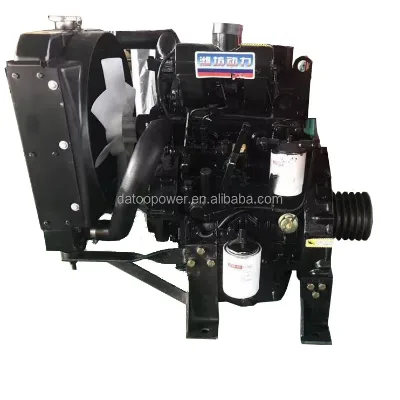


Water Cooled Diesel Engine/ Marine Engine/Pump Engine with CE Certificate
$3550.00 - $9890.00
MOQ: 1 SET


38HP Small Diesel Engine Water Cooled Two Cylinder Diesel Engine for Sale
$760.00 - $800.00
MOQ: 1 Pieces
Comprehensive Sourcing Guide
Strategic Sourcing Guide for Water Cooled Two Stroke Diesel Engines
The procurement of industrial power units requires a rigorous distinction between theoretical market categories and the specific attributes available in the current supply chain. While the core keyword "Water-Cooled Two Stroke Diesel Engine" defines a specific mechanical architecture, a detailed analysis of the actual product data reveals a complex landscape where attribute overlap and specification variations are common. Buyers must navigate a market where "two-stroke" diesel configurations are often juxtaposed with four-stroke variants, electric motors, and naturally aspirated or supercharged systems within the same catalog listings. This guide provides an evidence-based framework for evaluating these assets, ensuring that procurement decisions rely on verified observations rather than generalized assumptions about engine cycles or cooling methods.
Technical Architecture and Specification Verification
The fundamental challenge in sourcing this category lies in the precise definition of the combustion cycle. The supplied product data presents a mix of attributes that must be carefully parsed. While the search term specifies a "two-stroke" engine, the high-confidence facts explicitly list "Four-Stroke" as a primary attribute for several units, including the 4D22 model series. Furthermore, the data indicates the presence of "Rotary" piston movement and "Electric Ignition" modes, which are distinct from the traditional "Reciprocating" and "Compression-Ignition" characteristics of standard diesel engines.
When evaluating a potential supplier, the buyer must demand explicit confirmation of the stroke count. The observed data shows "Double-Cylinder" and "4-Cylinder" configurations, with cylinder arrangements ranging from "L" to "R" forms. Cooling is consistently described as "Water-Cooled" or "Water Cooling," which aligns with the core keyword, but the aspiration methods vary significantly between "Naturally Aspirated," "Supercharged," and "Turbocharged." The bore size is observed at 84mm for specific models, with a displacement of 2.2L, yet other entries list engines like the NTA855, KTA19, and KTA38, which possess vastly different displacement profiles.
Buyers should construct a verification matrix that cross-references the following critical attributes:
- Combustion Cycle: Must be explicitly stated as Two-Stroke or Four-Stroke. The presence of "Four-Stroke" in the data suggests that many listings may not match the specific two-stroke requirement.
- Ignition Mode: Diesel engines typically rely on "Compression-Ignition." Listings mentioning "Electric Ignition" may indicate a different fuel type or a mislabeled product.
- Piston Movement: Standard diesel engines utilize "Reciprocating" motion. "Rotary" movement suggests a different engine architecture entirely.
- Cooling System: Confirm "Water-Cooled" status, as air-cooled variants are common in smaller applications but do not meet the specific keyword criteria.
Compliance, Certification, and Regulatory Standards
Navigating the regulatory landscape is essential for international procurement. The product data indicates a wide array of certifications, including TSRoHS, E-Mark, CE, ISOCOP, and CCC. These certifications suggest that some units in the market have undergone testing for environmental compliance, electromagnetic compatibility, and safety standards. However, the presence of these labels in the data does not guarantee that every listed unit possesses them. Buyers must treat these as observed attributes of specific SKUs rather than universal standards for the entire category.
The "Standard Component" attribute and the mention of "ISO" standards imply that certain units adhere to international manufacturing norms. The "CE" certification is frequently cited in the background data, but its specific application to the two-stroke diesel variant must be verified on a per-unit basis. Additionally, the "CCC" (China Compulsory Certification) is relevant for domestic sales in China but may require conversion or equivalent recognition for export markets.
Buyers should request a Certificate of Conformity (CoC) for the specific engine model being purchased. The documentation must clearly map the engine's technical specifications to the claimed certifications. For instance, if a supplier claims E-Mark compliance, the buyer should verify that the engine's emission levels and noise output meet the specific directives associated with that mark. Similarly, the "TSRoHS" designation indicates compliance with restrictions on hazardous substances, which is critical for environmental regulations in the European Union and other regions.
Cost Drivers and Pricing Dynamics
The observed price range in the market spans from 1 USD to 50,000 USD, a variance that reflects the diversity of engine types, sizes, and configurations available. This wide spectrum suggests that the "Water-Cooled Two Stroke Diesel Engine" is not a single product but a category containing entry-level components, mid-range industrial units, and heavy-duty power plants. The Minimum Order Quantity (MOQ) ranges from 1 to 100 units, indicating that the market accommodates both single-unit procurement for testing or replacement and bulk orders for fleet deployment.
Several factors drive the cost of these engines. The "Material" composition, specifically "Iron," is a standard baseline, but the complexity of the "Press" technics and the "Customization" availability can significantly impact the final price. Units with "Supercharged" or "Turbocharged" aspiration systems generally command higher prices than "Naturally Aspirated" versions due to the added complexity of the intake and exhaust systems. Furthermore, the "Arrangement" of cylinders, such as the "6 Cylinder" configuration observed in some data, typically results in higher displacement and cost compared to "4-Cylinder" or "Double-Cylinder" units.
Buyers should be wary of price points that seem abnormally low, as they may indicate a mismatch in specifications, such as a four-stroke engine being listed under a two-stroke search term. The "Weight" of the unit, observed at 1160kgs for specific models, is another cost driver, influencing shipping and handling expenses. The "Packing" method, whether "Wooden Package," "Plywood Package," or "Wooden Box," also adds to the overall landed cost.
Typical Applications and Operational Context
The operational context of these engines is diverse, ranging from general power generation to specialized industrial applications. The data explicitly mentions "Usage: for Generating Set," indicating that a significant portion of the market is dedicated to backup power and primary power generation. The "Vertical in-Liner" engine type and "Direct Injection" combustion type are particularly suited for high-efficiency applications where fuel economy and reliability are paramount.
The "Color" options of White, Grey, and Red suggest that these engines are often integrated into larger machinery or generator sets where aesthetic consistency with the host equipment is required. The "Style: Customer Demend" attribute highlights the flexibility of the supply chain, allowing for customizations that may be necessary for specific industrial environments.
However, the presence of "Electric Motor" attributes in the data serves as a cautionary note. Buyers must ensure that the application requires a combustion engine and not an electric drive system. The "Four-Stroke" designation in the data further complicates the application mapping, as two-stroke and four-stroke engines have different maintenance schedules, lubrication requirements, and power delivery characteristics.
Supplier Evaluation and Geographic Considerations
Geographic origin plays a significant role in the sourcing strategy. The data lists "Beijing," "Shanghai," and "China" as production origins. While these locations indicate a strong manufacturing base in China, buyers must verify the specific factory capabilities and quality control measures. The "Made in China" label is a broad indicator, but the specific city of origin can influence logistics, lead times, and the availability of after-sales support.
Supplier evaluation should focus on the ability to provide detailed technical documentation and the transparency of their certification claims. The "OEM: Can" attribute suggests that some suppliers are capable of Original Equipment Manufacturer services, which is valuable for buyers looking to integrate these engines into their own product lines. The "Standard Component" status implies that some units are off-the-shelf, while others may require custom engineering.
Buyers should assess the supplier's capacity to handle the "Customization" requests, particularly regarding the "Style" and specific technical requirements. The ability to provide "Plywood Package" or "Wooden Box" packing is a logistical consideration that can affect the safety of the unit during transit.
Quality Control and Long-Term Procurement
Quality control is paramount when dealing with combustion engines. The "Standard Component" and "ISO" references suggest that some units meet established quality benchmarks, but buyers must verify these claims through third-party testing or on-site audits. The "Test results" mentioned in the background data should be scrutinized to ensure they reflect the specific engine model and configuration.
Long-term procurement considerations include the availability of spare parts and the durability of the "Iron" construction. The "Water-Cooled" system requires regular maintenance to prevent corrosion and scaling, which can impact the engine's lifespan. Buyers should inquire about the recommended maintenance intervals and the availability of replacement parts such as pistons, cylinders, and cooling system components.
The "Low-Speed" attribute observed in the data suggests that these engines are designed for applications where high RPM is not required, which can translate to lower wear and tear over time. However, the "Rotary" piston movement noted in some listings may require specialized maintenance procedures that differ from traditional reciprocating engines.
Conclusion
Sourcing a water-cooled two-stroke diesel engine requires a meticulous approach to verifying technical specifications, compliance, and supplier capabilities. The market data reveals a complex mix of attributes, including four-stroke engines, electric motors, and rotary systems, which necessitates careful filtering to identify the correct product. Buyers must prioritize explicit confirmation of the combustion cycle, ignition mode, and cooling method to avoid mismatches. By adhering to a rigorous evaluation framework that includes certification checks, cost analysis, and supplier assessment, buyers can navigate this diverse market effectively and secure reliable power solutions for their specific applications. The wide range of prices and MOQs offers flexibility, but the complexity of the specifications demands a disciplined procurement strategy to ensure that the final product meets all operational and regulatory requirements.
FAQs
What is the combustion cycle of the 4D22 engine model?
The 4D22 engine model operates on a four-stroke cycle, not a two-stroke cycle. This distinction is critical as the product data explicitly lists four-stroke attributes for this specific model series, indicating it differs from the two-stroke search keyword.
Can I find water cooled two stroke diesel engines with electric ignition?
Some listed units feature electric ignition modes, but standard diesel engines typically use compression ignition. The presence of electric ignition in the data suggests these may be mislabeled products or different engine types that require verification before purchase.
Which certifications are available for the listed diesel engine products?
Available certifications include TSRoHS, E-Mark, CE, ISOCOP, and CCC for specific units. Buyers must verify that these labels apply to the exact engine model purchased, as they are observed attributes of specific SKUs rather than universal standards for the entire category.
How does the cylinder arrangement vary across the product listings?
Cylinder arrangements vary from L form to R form, with configurations including double-cylinder, four-cylinder, and six-cylinder setups. The data shows diverse mechanical architectures, so buyers must confirm the specific arrangement required for their application rather than assuming a standard layout.
What is the typical price range for these engine units?
The observed price range spans from 1 USD to 50,000 USD depending on the unit type and specifications. This wide variance reflects the mix of entry-level components, mid-range industrial units, and heavy-duty power plants available in the current supply chain.
Where are the water cooled diesel engines manufactured?
Manufacturing origins listed include Beijing, Shanghai, and general China locations. Buyers should verify the specific factory capabilities and quality control measures associated with these geographic origins to ensure reliable sourcing and after-sales support.
What customization options are available for these engine products?
Customization is available for style and specific technical requirements, allowing for tailored solutions. The data indicates that suppliers can accommodate customer demands, but buyers must explicitly confirm the scope of customization to ensure it meets their operational needs.