Source Water Supply HDPE Pipes and Fittings for irrigation, construction, and drainage
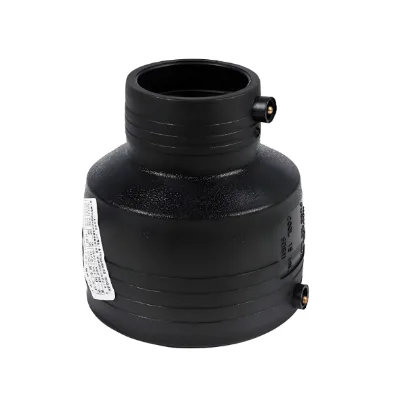
Explore 30 listings for Water Supply HDPE Pipes and Fittings with customizable sizes and materials. Buyers can compare specifications including tensile strength, dimensions, and certifications from multiple Chinese manufacturers.
Key considerations
Products List


High Quality Environmental Water Supply Pipe/HDPE Pipe/PE Pipe/HDPE Pipe
$0.18 - $0.21
MOQ: 100 Meters




Comprehensive Sourcing Guide
Strategic Sourcing Guide for Water Supply HDPE Pipes and Fittings
Procuring high-density polyethylene (HDPE) pipes and fittings for water supply infrastructure requires a disciplined approach that balances technical performance, regulatory compliance, and supply chain reliability. The global market for thermoplastic piping is vast, with products originating primarily from manufacturing hubs in China. Buyers must navigate a landscape where material grades, dimensional standards, and certification requirements vary significantly between suppliers. This guide provides a structured framework for evaluating potential vendors, ensuring that the selected materials meet the rigorous demands of potable water distribution and industrial fluid transport.
Material Composition and Physical Properties
The foundation of any successful HDPE procurement strategy lies in verifying the raw material composition. The supplied product data indicates that the core material is consistently identified as HDPE, with specific references to PE80 and PE100 grades. These designations are critical as they denote the minimum required strength of the polyethylene resin, directly influencing the pipe's pressure rating and longevity. While some listings describe the material simply as "PE," the distinction between PE80 and PE100 is essential for high-pressure applications.
Beyond the base resin, buyers must scrutinize the physical attributes that define the pipe's performance under stress. The observed tensile strength values in the market data show a wide variance, ranging from 3.9 MPa to as high as 130 MPa depending on the specific product model and intended application. For standard water supply lines, the lower end of this spectrum may suffice, but high-pressure networks require verification of the higher strength thresholds. Similarly, the extension rate at break is a vital indicator of ductility; observed data suggests a minimum threshold of 350%, ensuring the pipe can withstand ground movement without fracturing.
Thermal and environmental stability are equally important. The longitudinal reversion rate, measured at 110°C, is observed to be less than or equal to 3% in compliant products, indicating resistance to shape distortion under heat. Water absorption rates are typically low, with data points showing values between 0.1% and 0.3%, or even as low as 0.01% for specific grades, confirming the material's impermeability. The melt mass flow rate is another technical parameter, with acceptable variations noted as ±20% from the processing baseline, which affects the extrusion quality and wall uniformity.
Dimensional Standards and Product Specifications
Dimensional consistency is paramount for the installation of water supply systems, as mismatched fittings can lead to leaks and system failures. The market data reveals a broad spectrum of available specifications. Product models range from small-diameter tubing at 16mm to large-scale infrastructure pipes reaching 1000mm or even 2500mm in diameter. The standard designation "DN20-DN2500" appears frequently, aligning with international naming conventions for nominal diameter.
Thickness and length specifications also vary by supplier and application. Wall thicknesses are observed between 2mm and 50mm, allowing for customization based on pressure requirements. Standard lengths for these pipes are typically offered in 10-meter, 12-meter, and 15-meter increments, though some suppliers may offer continuous lengths for specific projects. The color of the pipes is another specification to note; black is the standard for UV protection, often accompanied by blue stripes to denote potable water use, though "nature" or customized colors are available upon request.
When evaluating product models, buyers should look for specific identifiers such as "HDPE0101" or "IR-P" and "PE-P" to distinguish between different manufacturing lines or product families. The surface finish is generally described as smooth, which minimizes friction loss and prevents sediment buildup inside the pipe. The shape is consistently round, which is optimal for withstanding internal pressure.
Compliance, Certification, and Regulatory Alignment
Navigating the certification landscape is a critical step in the sourcing process. The provided data highlights that compliant products often carry CE and ISO9001 certifications. These are not merely marketing terms but indicators of a supplier's adherence to quality management systems and European safety standards. The presence of these certifications suggests that the manufacturing process is monitored and that the products have undergone specific testing protocols.
Furthermore, inspection services such as SGS are frequently mentioned as part of the quality assurance process. Buyers should verify that third-party inspection reports are available for the specific batch of pipes being purchased. While the data mentions standards like ASME, DIN, and ISO, it is crucial to note that specific standard numbers like ISO 4427 or EN 12201 are listed in background contexts. Buyers must confirm that the specific pipes they order explicitly meet the relevant ISO 4427 standards for water supply, rather than assuming compliance based on general category knowledge.
The origin of the product is also a factor in regulatory compliance. The majority of the observed products originate from China, with specific manufacturing hubs identified in Zhejiang, Dalian, and Baoding in Hebei Province. While these regions are established manufacturing centers, buyers must ensure that the local factory certifications align with the import regulations of their destination country.
Cost Drivers and Procurement Economics
Understanding the cost structure of HDPE pipes is essential for budgeting and negotiation. The observed price range in the market is extensive, spanning from $0.18 to $2400 per unit. This wide disparity is driven by several factors, including the diameter, wall thickness, material grade (PE80 vs. PE100), and the complexity of the fitting. Smaller diameter pipes for residential use will naturally fall at the lower end of this spectrum, while large-diameter pipes for municipal infrastructure will command significantly higher prices.
Minimum Order Quantities (MOQ) are another economic variable, ranging from as low as 1 unit to 3000 units. Suppliers with lower MOQs may be more suitable for small-scale projects or initial testing, whereas large-volume orders can often negotiate better unit pricing. The packaging method also influences cost; options range from simple bagging to "Standard Seaworthy Packing" or "Masked Film and Packed by Wooden Pallet." The latter is more expensive but necessary for international shipping to prevent damage.
Lead times are described as "Very Quick" in the provided data, but this should be treated as a general observation rather than a guaranteed metric. Buyers must confirm specific delivery schedules based on current production capacity and logistics availability. The customization of the product, such as specific colors or non-standard lengths, may also incur additional costs and extend the lead time.
Supplier Evaluation and Quality Assurance
Selecting the right supplier requires a multi-faceted evaluation process. The data indicates that suppliers offer customization services, which is a positive sign of flexibility and technical capability. However, buyers should not rely solely on the "Available" status of customization but must verify the supplier's ability to maintain quality during the customization process.
Quality control measures should be rigorous. The presence of SGS inspection is a strong indicator, but buyers should request detailed test reports covering tensile strength, water absorption, and longitudinal reversion. The observed tensile strength values vary widely, so buyers must ensure the supplier provides data that matches the specific requirements of their project. For instance, if a project requires a tensile strength of 81-130 MPa, a supplier offering only 3.9 MPa products is unsuitable.
The origin location of the supplier can also be a factor in logistics and communication. Suppliers located in Dalian, Zhejiang, or Baoding may have different logistical advantages depending on the port of entry for the buyer. Buyers should evaluate the supplier's ability to provide "Standard Seaworthy Packing" to ensure the pipes arrive in perfect condition. Additionally, the "Easy" installation attribute mentioned in the data suggests that the supplier's products are designed for user-friendly installation, but this should be verified through technical documentation or installation guides provided by the vendor.
Typical Applications and Long-Term Procurement Strategy
HDPE pipes and fittings are versatile and are used in a wide range of applications, from residential water supply to large-scale municipal infrastructure. The smooth interior surface and high ductility make them ideal for trenchless installation methods, such as directional drilling, which is increasingly common in urban environments. The low water absorption rate ensures that the pipes do not degrade over time when exposed to moisture, making them suitable for long-term burial.
For long-term procurement, buyers should consider the lifecycle cost of the pipes. While the initial purchase price is important, the durability and maintenance requirements of the system are equally critical. The high extension rate at break and low longitudinal reversion suggest that these pipes can withstand environmental stresses for decades. Buyers should also consider the availability of fittings; the data confirms that HDPE fittings are available, which is essential for completing the piping network.
When planning for future expansion, buyers should ensure that the selected pipes and fittings are compatible with existing infrastructure. The standardization of dimensions, such as the DN20-DN2500 range, facilitates this compatibility. However, buyers must be cautious of mixing different material grades or standards, as this can lead to system failures. A consistent approach to sourcing, focusing on suppliers with proven track records and robust quality control, is the best strategy for ensuring the longevity and reliability of the water supply system.
In conclusion, sourcing HDPE pipes and fittings for water supply requires a detailed understanding of material properties, dimensional standards, and supplier capabilities. By carefully evaluating the technical specifications, verifying certifications, and understanding the cost drivers, buyers can make informed decisions that ensure the success of their projects. The wide range of available products offers flexibility, but it also demands a rigorous selection process to identify the most suitable materials for specific applications.
FAQs
What materials are used for water supply HDPE pipes?
The core material is HDPE, specifically PE80 and PE100 grades. These designations denote the minimum required strength, directly influencing the pipe's pressure rating and longevity for water infrastructure.
Which certifications should I look for in HDPE pipe suppliers?
Compliant products often carry CE and ISO9001 certifications. These indicate adherence to quality management systems and European safety standards, ensuring the manufacturing process is monitored and tested.
How do I verify the tensile strength of HDPE pipes?
Tensile strength values vary widely, ranging from 3.9 MPa to 130 MPa depending on the product model. Buyers must ensure the supplier provides data matching the specific pressure requirements of their project.
What are the standard dimensions for water supply HDPE pipes?
Product models range from 16mm to 1000mm or even 2500mm in diameter. Standard lengths are typically offered in 10, 12, or 15-meter increments with wall thicknesses between 2mm and 50mm.
Can I customize the color and size of HDPE pipes?
Customization is available for specific colors like black, blue, or nature, as well as non-standard lengths. Buyers should verify the supplier's ability to maintain quality during the customization process.
Where are these HDPE pipes typically manufactured?
The majority of observed products originate from China, with hubs in Zhejiang, Dalian, and Baoding. Buyers must ensure local factory certifications align with the import regulations of their destination country.