Source Water Supply PVC Pipe Fittings for drainage, joining lines, and water systems
Explore 30 listings for Water Supply PVC Pipe Fittings featuring PVC and PE 100 materials with options for welding or socket connections. Buyers can compare specifications like pressure ratings, wall thickness, and certifications including ASME, DIN, and CE ISO to find suitable components for water supply, drainage, and joining pipeline applications.
Key considerations
Products List


$0.20 - $480.00
MOQ: 100 Meters


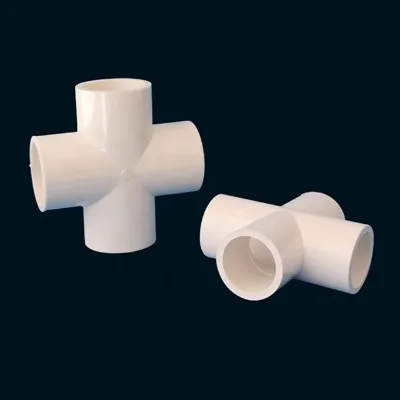


Comprehensive Sourcing Guide
Strategic Sourcing Guide for Water Supply PVC Pipe Fittings
Procuring Water Supply PVC Pipe Fittings requires a disciplined approach that balances technical compatibility, regulatory compliance, and supply chain reliability. The market for these components is vast, with variations in material composition, pressure ratings, and manufacturing techniques that directly impact long-term performance. Buyers must navigate a landscape where product attributes are often presented as observations rather than universal guarantees. This guide provides a structured framework for evaluating potential suppliers and selecting the right fittings for specific infrastructure projects, ensuring that procurement decisions are grounded in verified facts and industry standards.
Technical Specifications and Material Composition
The foundation of any successful procurement strategy lies in a precise understanding of the technical specifications required for the intended application. For water supply systems, the material composition is paramount. The supplied data indicates that products are frequently manufactured from PVC, specifically noted as PVC-M pipe in certain contexts, which suggests a modified PVC formulation often used for enhanced impact resistance. The raw material is also identified in some listings as PE 100, highlighting the need for buyers to verify the exact polymer type, as PVC and PE have distinct thermal and mechanical properties.
Dimensional consistency is another critical technical factor. The observed specifications reveal a wide range of sizes, with some listings citing a full specification range of 20mm to 800mm, while others reference specific nominal diameters like DN15 to DN200. Wall thickness is equally variable, with documented ranges spanning from 2.0mm to 50mm, and specific schedules such as Sch40 being mentioned. Buyers must ensure that the selected fittings match the pipe schedule and diameter of the existing or planned piping system to prevent leaks or structural failures.
Manufacturing techniques also influence the final product quality. The data points to "Hot-pressed" and "Injection Molding" as primary production methods. Hot-pressing is often associated with specific shaping requirements, while injection molding is standard for complex geometries like elbows and tees. The shape of the fittings is typically "Equal," and the head code is often "Round," but variations exist, such as 45-degree and 90-degree angles. Understanding these geometric constraints is essential for designing efficient piping layouts that minimize pressure drops and flow resistance.
Compliance, Certification, and Standards Verification
In the water supply sector, regulatory compliance is not merely a formality but a safety imperative. The supplied facts list several certifications and standards that buyers should look for, including ASME, DIN, CE, ISO, and JIS. However, it is crucial to treat these as observations of specific product listings rather than universal attributes of all available stock. A supplier may offer a product with ASME certification while another offers DIN compliance; the buyer must verify which standard applies to their specific project requirements.
Standards such as Bsen 1452 and general DIN standards are referenced in the data. These standards often dictate the testing protocols for pressure resistance, dimensional tolerances, and material purity. For instance, the pressure ratings observed in the data range from 0.6MPa to 2.5MPa, with specific pressure classes like Pn16 also noted. Buyers must confirm that the pressure rating of the fitting matches or exceeds the maximum operating pressure of the water system, including surge pressures.
Furthermore, the origin of the product plays a role in compliance. The data indicates origins in China, with specific mentions of Changzhou as a production hub. While this provides context for logistics, it does not guarantee compliance with local regulations in the buyer's region. Buyers should request valid, up-to-date certification documents for the specific batch of goods being purchased, ensuring that the certifications are issued by recognized bodies and are applicable to the specific product model, such as the IR-F or H200 models mentioned in the listings.
Cost Drivers and Pricing Dynamics
The pricing of water supply PVC fittings is influenced by a complex interplay of factors, including raw material costs, manufacturing complexity, and order volume. The observed price range in the market spans from $0.01 to $480 USD, a variance that reflects the difference between small, simple fittings and large, high-pressure assemblies. This wide range underscores the importance of defining exact requirements before requesting quotes to avoid budget discrepancies.
Minimum Order Quantity (MOQ) is a significant cost driver. The data shows an MOQ range from 1 to 10,000 units. For small-scale projects or maintenance repairs, suppliers with low MOQs are essential, though they may carry a higher per-unit cost. Conversely, large infrastructure projects can leverage high-volume orders to negotiate better pricing, but they must manage the associated inventory costs and storage requirements.
Additional cost factors include packaging and logistics. The data mentions various packing methods, including cartons, seaworthy packing, and bulk options. Seaworthy packing is often required for international shipping to prevent damage during transit, which can add to the overall cost. The length of the pipes, ranging from 5 to 15 meters, also impacts shipping efficiency and freight charges. Buyers should calculate the total landed cost, including freight, insurance, and duties, rather than focusing solely on the unit price.
Typical Applications and Usage Scenarios
Water supply PVC fittings are versatile components used across a spectrum of applications. The primary usage identified is for water supply pipes, but the data also highlights applications in drainage and joining pipe lines. The specific product attributes, such as being "Hollow" and having a "Hard Tube" hardness, make them suitable for pressurized systems where structural integrity is critical.
The lifespan of these fittings is a key consideration for long-term planning. Some data points suggest a lifespan of up to 50 years underground, provided the installation conditions are appropriate. This longevity is supported by material properties such as low water absorption (less than 0.01%) and high corrosion resistance, which are critical for preventing degradation in aggressive soil environments or when transporting treated water.
The connection type is another determinant of application suitability. The data lists both "Welding" and "Socket" connections. Socket connections are common for residential and light commercial applications due to their ease of installation, while welding may be preferred for larger diameter pipes or industrial settings where a more permanent and robust joint is required. The choice of connection method should align with the available installation tools and the skill level of the construction crew.
Supplier Evaluation and Customization Capabilities
Selecting the right supplier involves more than just comparing prices; it requires a thorough evaluation of their capabilities and reliability. The data indicates that customization is available, with suppliers offering OEM (Original Equipment Manufacturer) and ODM (Original Design Manufacturer) support. This is particularly valuable for projects with unique requirements, such as specific color codes (e.g., Dark Grey) or non-standard dimensions.
Buyers should assess the supplier's ability to meet specific technical demands, such as the "Contraction Percentage" of 0.4% to 1.4%, which affects the dimensional stability of the fittings during temperature changes. Suppliers that can provide detailed technical data sheets and demonstrate experience with the specific product models (e.g., dn20-1000) are preferable.
The origin of the supplier, such as Changzhou, China, can be a factor in lead times and communication. While the region is a major manufacturing hub, buyers should verify the supplier's production capacity and quality control processes. The ability to provide "Standard Seaworthy Packing" or "Cartons" depending on the order size is also a sign of a mature supplier capable of handling diverse logistics needs.
Quality Control and Long-Term Procurement Considerations
Quality control is the final barrier against product failure. Buyers must implement rigorous inspection protocols upon receipt of goods. Key attributes to verify include the wall thickness, which should fall within the specified range of 2.0mm to 50mm, and the pressure rating, which must match the system requirements of 0.6MPa to 2.5MPa. Visual inspections should check for defects such as cracks, voids, or inconsistent coloring, which could indicate manufacturing issues.
Long-term procurement considerations involve establishing a relationship with a supplier who can provide consistent quality over time. The "Lifespan" of 50 years underground is a theoretical maximum that depends on proper installation and maintenance. Buyers should request warranty information and after-sales support to ensure that any issues arising during the product's lifecycle can be addressed promptly.
Additionally, the "Feature" of being corrosion-resistant is a critical long-term benefit. Buyers should verify that this feature is backed by material testing results, as the "Raw Material" composition directly influences this property. For projects in coastal areas or regions with high soil acidity, the corrosion resistance of the PVC material becomes even more critical.
Summary of Key Product Attributes
To assist in the final selection process, the following table summarizes the key attributes observed in the market data. This comparison helps buyers quickly identify which product specifications align with their project needs.
| Attribute Category | Observed Values | Relevance to Procurement |
|---|---|---|
| Material | PVC, PVC-M, PE 100 | Determines chemical resistance and flexibility. |
| Pressure Rating | 0.6MPa ~ 2.5MPa, Pn16 | Must match system operating pressure. |
| Size Range | 20mm ~ 800mm, DN15 ~ DN200 | Ensures compatibility with existing pipes. |
| Wall Thickness | 2.0mm ~ 50mm, Sch40 | Critical for structural integrity and pressure rating. |
| Connection Type | Welding, Socket | Dictates installation method and tools required. |
| Certifications | ASME, DIN, CE, ISO, JIS | Verifies compliance with regional and international standards. |
| Origin | China (e.g., Changzhou) | Influences lead time, shipping costs, and logistics. |
| Customization | Available (OEM/ODM) | Allows for tailored solutions for specific project needs. |
By adhering to these guidelines and focusing on verified facts rather than marketing claims, buyers can navigate the complex market for Water Supply PVC Pipe Fittings with confidence. The goal is to secure high-quality components that ensure the safety, efficiency, and longevity of the water supply infrastructure.
FAQs
What materials are used for Water Supply PVC Pipe Fittings?
These fittings are primarily manufactured from PVC or PVC-M pipe materials, with some listings specifying PE 100 as the raw material. Buyers must verify the exact polymer type for each order, as PVC and PE have distinct thermal and mechanical properties that affect system performance.
Which certifications should I look for in these fittings?
Common certifications observed include ASME, DIN, CE, ISO, and JIS, along with standards like Bsen 1452. These are specific to certain product listings rather than universal guarantees, so buyers must request valid documents for the specific batch to ensure compliance with project requirements.
How large are the available sizes for these fittings?
Available sizes range from 20mm to 800mm, with some specific models covering DN15 to DN200. Wall thickness varies from 2.0mm to 50mm, and specific schedules like Sch40 are documented, requiring buyers to match these dimensions to their existing piping systems.
Can I customize the fittings for my specific project needs?
Yes, customization is available with OEM and ODM support offered by suppliers. This allows for tailored solutions regarding dimensions, colors like Dark Grey, and specific technical requirements such as contraction percentages, provided the supplier has the necessary production capacity.
What is the typical lifespan of underground water supply fittings?
Some data points suggest a lifespan of up to 50 years underground if installed correctly. This longevity relies on material properties like low water absorption and corrosion resistance, but actual performance depends on installation conditions and maintenance practices.
Which connection types are available for these pipe fittings?
The fittings support both Welding and Socket connection types. Socket connections are common for residential applications due to ease of installation, while welding is often preferred for larger diameter pipes or industrial settings requiring more permanent and robust joints.