Source Waterproof Flame Retardant Taffeta Fabric for Garments, Bags, Sportswear
Compare 30 listings of Waterproof Flame Retardant Taffeta Fabric from Huzhou and Suzhou manufacturers. Buyers can evaluate specifications like 260T and 300T weights, custom colors, and delivery times ranging from 15 to 30 days for garment, bag, and sportswear applications.
Key considerations
Products List


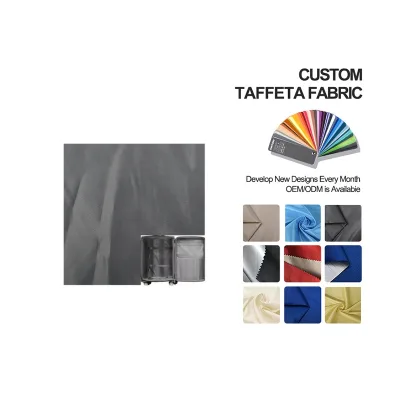

300t Polyester Taffeta Silk Fabric Waterproof Fabric Taffeta Lining Fabric
$0.26 - $0.27
MOQ: 2000 Meters


Great Price 170t 190t 210t Polyester Waterproof Taffeta Fabric for Lining Fabric
$0.51 - $2.00
MOQ: 1200 Meters

Good Quality Waterproof Dyed Woven Lightweight 210t Polyester Taffeta Fabric
$0.45 - $0.80
MOQ: 1500 Meters


Comprehensive Sourcing Guide
Strategic Sourcing Guide for Waterproof Flame Retardant Taffeta Fabric
Understanding the Material Composition and Technical Profile
The foundation of a successful procurement strategy for Waterproof Flame Retardant Taffeta Fabric begins with a precise understanding of the material's inherent composition and structural characteristics. Based on available market data, the core substrate for this category is predominantly 100% Polyester. This synthetic fiber choice is critical as it provides the necessary tensile strength and chemical resistance required for functional finishes. The fabric structure is typically identified as woven, utilizing a specific weave density that often ranges from 260T to 300T, where "T" denotes the thread count per inch. This density directly influences the fabric's durability and its ability to hold functional coatings without compromising the weave integrity.
The physical attributes of the fabric vary significantly based on the intended application. Buyers will encounter options ranging from lightweight to medium-weight classifications. The width of the material is generally standardized at 57/58 inches, a common dimension in the global textile trade that facilitates efficient pattern cutting for garment and bag manufacturing. The surface finish is often described as plain or plain dyed, though the "Coated Type" is frequently noted as solid dye, indicating a uniform color application that penetrates the fiber or sits atop the weave to ensure color consistency.
A critical technical observation is the diversity in functional features. While the core keyword specifies "waterproof" and "flame retardant," the market data reveals a broader spectrum of performance capabilities. These fabrics are frequently engineered to be windproof, breathable, and down-proof, making them suitable for high-performance outerwear. Additional features observed include anti-static properties, anti-bacterial treatments, and mothproofing. The "Microfiber" structure is also a notable variant, offering a softer hand feel and enhanced barrier properties. Buyers must verify that the specific product listing confirms the "Flame Retardant" status, as this is not a universal attribute of all polyester taffeta, even if the base material is identical.
Functional Specifications and Performance Verification
When evaluating waterproof flame retardant taffeta, the buyer must distinguish between the base fabric properties and the applied functional finishes. The "Waterproof" claim is often supported by specific coating technologies, though the exact chemical composition is rarely detailed in standard listings. Instead, verification relies on performance metrics such as "Anti-Hydraulic Pressure" resistance. This indicates the fabric's ability to withstand water penetration under pressure, a crucial factor for rainwear and industrial covers.
The flame retardant requirement is a specialized performance trait. In the context of the provided data, this is often grouped with other safety features like "Tear-Resistant" and "Shrink-Resistant" capabilities. The "Functions" listed in supplier catalogs frequently include "Tear-Resistant, Waterproof, Flame Retardant," suggesting a multi-functional finish. However, buyers should be aware that "Flame Retardant" is a regulatory and safety-critical attribute. It is not sufficient to rely on a general label; the specific testing standard must be confirmed. The data mentions "Standard: 1.5M" in one context, which may refer to a specific weight or thickness benchmark, but it does not explicitly define a fire safety standard like UL94 or EN 13501. Therefore, the procurement process must include a direct request for the specific fire safety certification documents that correspond to the target market's regulations.
Color fastness is another critical performance metric. The observed data indicates a "Colour Fastness: 3-4 Grade." This range suggests a moderate level of resistance to fading from washing or light exposure. For applications requiring high durability, such as outdoor gear or heavy-use industrial covers, buyers should verify if a higher grade (4-5) is available or if the 3-4 grade meets the specific usage requirements. The "Customed" finishing process implies that the fabric can be treated to meet specific performance thresholds, but this customization must be explicitly defined in the technical agreement to ensure the flame retardant and waterproof properties are not compromised during the dyeing or coating process.
Compliance, Certification, and Regulatory Alignment
Navigating the compliance landscape for waterproof flame retardant fabrics requires a rigorous approach to verification. Unlike general textiles, flame retardant materials are subject to strict regulatory frameworks depending on the end-use application, such as children's sleepwear, automotive interiors, or industrial safety gear. The provided information lists "Standard: CUSTOMED" and "Standard: 1.5M," but these are generic descriptors rather than specific international certifications.
Buyers must not assume that a fabric labeled "Flame Retardant" automatically complies with the regulations of their destination market. For instance, the European Union has specific directives for personal protective equipment (PPE), while the United States has standards set by organizations like the National Fire Protection Association (NFPA). The absence of explicit certification names in the general product descriptions means the buyer's responsibility is to demand proof of compliance. This involves requesting third-party test reports that validate the flame retardant performance against the relevant standard (e.g., ASTM D6413, ISO 15025, or EN 13501).
Furthermore, the "Eco-Friendly" feature noted in the product attributes adds another layer of compliance complexity. If the fabric is marketed as eco-friendly, it may need to adhere to standards regarding chemical restrictions, such as REACH in Europe or Oeko-Tex certification. The "Anti-Bacterial" and "Down-Proof" features also imply chemical treatments that must be disclosed for safety and environmental compliance. Buyers should verify that the supplier can provide a Material Safety Data Sheet (MSDS) and a declaration of conformity for all chemical finishes applied to the fabric. Without these documents, the risk of non-compliance and subsequent product recalls is significant.
Cost Drivers and Economic Considerations
The pricing structure for waterproof flame retardant taffeta is influenced by a complex interplay of material costs, processing complexity, and order volume. The observed price range in the market spans from $0.20 to $12.80 per unit, a wide variance that reflects differences in thread count, coating quality, and functional complexity. A fabric priced at the lower end of this spectrum likely represents a basic polyester taffeta with standard waterproofing, while the higher end suggests advanced flame retardant treatments, higher thread counts (e.g., 300T vs. 260T), or specialized finishes like microfiber structures.
Minimum Order Quantity (MOQ) is a primary cost driver. The data indicates an MOQ range of 100 to 50,000 units. For buyers seeking small batches or prototypes, the higher per-unit cost is often unavoidable due to the setup costs associated with custom dyeing and coating. Conversely, larger orders can leverage economies of scale to reduce the unit price. The "Make-to-Order" supply type further impacts cost, as it eliminates inventory holding costs for the supplier but may introduce a premium for the flexibility and customization required.
Payment terms also play a role in the overall financial planning. The standard terms observed are "30% T/T Advance or L/C at Sight." This requires the buyer to have sufficient liquidity to cover the initial deposit before production begins. For large orders, the advance payment can be a significant cash flow commitment. Additionally, the "Freight Collect" option for samples means that buyers must budget for shipping costs when evaluating potential suppliers, even if the sample itself is free.
Typical Applications and End-Use Suitability
The versatility of waterproof flame retardant taffeta makes it suitable for a diverse range of industries. The "Usage" and "Application" data points highlight several key sectors. In the garment industry, this fabric is ideal for "Garments Processing-Lining," particularly for outerwear that requires protection against the elements. The "Down-Proof" and "Windproof" features make it a prime candidate for jackets, coats, and sportswear where thermal retention and weather resistance are paramount.
Beyond apparel, the fabric finds extensive use in the bag and luggage industry. The "Tear-Resistant" and "Waterproof" properties are essential for backpacks, duffel bags, and travel gear that must withstand rough handling and exposure to moisture. The "Security" function mentioned in the attributes suggests potential use in specialized bags or cases where durability and protection are critical.
Industrial and institutional applications are also significant. The "Hospital" and "Industry" usage tags indicate suitability for medical drapes, protective covers, and industrial workwear. The "Anti-Bacterial" and "Wash and Wear" features are particularly valuable in healthcare settings where hygiene and ease of maintenance are required. The "Shoes" application points to the use of this fabric in waterproof footwear uppers or linings. The "Bags, Hospital, Shoes, Industry, Garment" list underscores the fabric's adaptability, but buyers must ensure that the specific flame retardant rating matches the safety requirements of the specific application, as a fabric suitable for a fashion bag may not meet the stringent fire codes for hospital curtains.
Supplier Evaluation and Quality Assurance Protocols
Selecting the right supplier for waterproof flame retardant taffeta requires a thorough evaluation of their capabilities and quality control systems. The data indicates that the primary business type is "Manufacturer/Factory," which is advantageous for buyers seeking direct control over the production process. The "R&D Capacity: OEM" and "ODM/OEM: Accept" attributes suggest that suppliers are equipped to handle custom designs and specifications, which is essential for specialized flame retardant requirements.
Geographic concentration is another factor to consider. The product origins listed include "Huzhou," "Suzhou China," and generally "China." These regions are known for their textile manufacturing clusters, offering a robust supply chain and competitive pricing. However, buyers should verify the specific factory location to assess logistics and potential lead times. The "Delivery Time" ranges from 15 to 30 days, which is a standard window for custom textile production but requires careful planning to avoid supply chain disruptions.
Quality control is paramount, especially for functional fabrics. Buyers should implement a multi-stage inspection process. First, verify the "Sample" availability; the data confirms that free samples are available, though freight is usually collected. This allows for physical testing of the fabric's hand feel, weight, and initial performance. Second, conduct lab testing on the actual production batch to confirm the "Waterproof," "Flame Retardant," and "Tear-Resistant" claims. Third, inspect the "Packing" method. The data lists "Bag Packing," "Roll," and "Roll Packages" as common methods. Ensuring that the fabric is rolled and packed correctly prevents creasing and damage during transit, which can affect the final appearance and performance of the material.
Long-Term Procurement and Supply Chain Stability
Sourcing waterproof flame retardant taffeta is not merely a transactional activity but a strategic partnership that requires long-term planning. The "Customized Color" and "Customization: Available" attributes highlight the importance of maintaining a consistent relationship with the supplier to ensure color and performance consistency across multiple production runs. The "Production Standard: CUSTOMED" implies that each order may have unique specifications, making clear communication and detailed technical agreements essential.
Lead time management is critical for maintaining inventory levels. With delivery times ranging from 15 to 30 days, buyers should factor in potential delays due to raw material shortages or production bottlenecks. Establishing a buffer stock or a staggered ordering schedule can mitigate these risks. Additionally, the "Payment: 30% T/T Advance" term requires a stable financial relationship with the supplier to ensure smooth transactions.
Finally, buyers should consider the sustainability and environmental impact of the fabric. The "Eco-Friendly" feature suggests a growing trend towards greener manufacturing processes. In the long term, suppliers who invest in eco-friendly technologies and hold relevant environmental certifications will be better positioned to meet evolving regulatory requirements and consumer expectations. By focusing on suppliers with strong R&D capabilities and a commitment to quality, buyers can secure a reliable supply of high-performance waterproof flame retardant taffeta that meets both current and future market demands.
Comparative Analysis of Fabric Specifications
To assist in the decision-making process, the following table summarizes the key technical and commercial attributes observed in the market for waterproof flame retardant taffeta. This comparison helps buyers identify the specific parameters that align with their project requirements.
| Attribute Category | Common Observation | Variance / Notes |
|---|---|---|
| Material | 100% Polyester | Standard base; verify fiber blend if specific properties are needed. |
| Weave Density | 260T - 300T | Higher T-count generally implies better barrier properties and durability. |
| Thickness | Lightweight to Medium | Select based on end-use; lightweight for linings, medium for outerwear. |
| Width | 57/58" | Standard industry width; affects cutting efficiency. |
| Color Options | Extensive (Green, Red, Black, etc.) | "Customized Color" is available; verify color fastness (3-4 Grade). |
| Key Features | Waterproof, Flame Retardant, Windproof | Verify specific fire rating; other features like Anti-Static may vary. |
| MOQ | 100 - 50,000 Units | High variance; negotiate based on order volume and customization. |
| Lead Time | 15 - 30 Days | Standard for custom orders; confirm exact timeline before commitment. |
| Packing | Roll, Bag, Standard Package | Ensure protective packaging to prevent damage during shipping. |
| Origin | Huzhou, Suzhou, China | Major textile hubs; verify factory location for logistics planning. |
This structured approach ensures that buyers can navigate the complexities of sourcing waterproof flame retardant taffeta with confidence, relying on verified data and established best practices rather than unverified claims.
FAQs
What is the standard width for Waterproof Flame Retardant Taffeta Fabric?
The standard width is typically 57/58 inches. This dimension facilitates efficient pattern cutting for garment and bag manufacturing applications.
Can I get customized colors for this polyester taffeta fabric?
Yes, customized colors are available upon request. Suppliers offer a wide range of options including green, red, yellow, and lavender to match specific design needs.
What is the typical delivery time for orders of this fabric?
The delivery time generally ranges from 15 to 30 days. This lead time applies to the make-to-order production process for custom specifications.
Which minimum order quantity is required for this product?
The minimum order quantity varies between 100 and 50,000 units. Specific MOQs depend on the supplier and the customization level required for the order.
How is the fabric typically packed for shipment?
The fabric is commonly packed in rolls or bags. Standard packaging options include roll packages, though all types of packaging are often available upon request.
What payment terms are accepted for purchasing this material?
Accepted payment terms usually include 30% T/T advance or L/C at sight. These terms ensure financial security for both the manufacturer and the buyer.
Can I request a free sample before placing a large order?
Free samples are available, but freight charges are typically collected from the buyer. This allows evaluation of the fabric quality before committing to a bulk purchase.