Source Waterproof Heat Resistant Placemat for Home Restaurant Cafe
Find 30 options for Waterproof Heat Resistant Placemat with features like polyester composition and easy cleaning. Buyers can compare models such as RBJP004 and LK76090 across various shapes and sizes for home, restaurant, or cafe use.
Key considerations
Products List

Kitchen Dining Table Tableware Place Mats Oil-Proof Heat Resistant Placemat
$0.51 - $0.53
MOQ: 4000 Pieces

Practical Multi Function Place Mat Heat Insulation Table Protection Placemat
$0.90 - $1.00
MOQ: 3000 Pieces

High Temperature Resistant Table Mat Kitchen Dining Table Protector Placemat
$0.38 - $0.48
MOQ: 3000 Pieces


Premium Heat Resistant Waterproof Kitchen Table Placemats for Easy Cleaning
$0.64 - $0.74
MOQ: 3000 Pieces


Vintage Waterproof Round Placemats for Home - Customizable Heat-Resistant Mats
$0.85 - $9.90
MOQ: 200 Pieces

Burn-Proof Minimalist Placemats: Waterproof, Heat-Resistant for Home Tableware
$0.85 - $9.90
MOQ: 200 Pieces


Heat-Resistant Sublimation Round Placemats for Home with Waterproof Coating
$0.50 - $9.90
MOQ: 200 Pieces


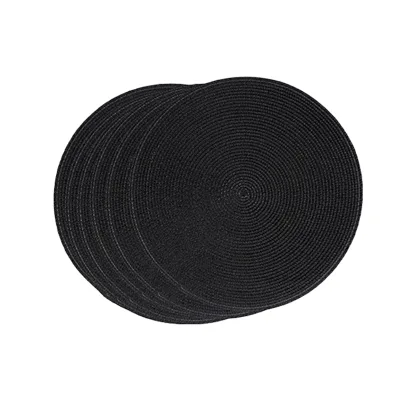


New Arrivals High Quality Heat Resistant Decorative Custom PVC Placemat
$0.38 - $0.45
MOQ: 1000 Pieces
Comprehensive Sourcing Guide
Strategic Sourcing Guide for Waterproof Heat Resistant Placemats
Understanding Product Specifications and Material Composition
When sourcing waterproof heat-resistant placemats, the primary objective is to identify products that balance durability with functional performance. Based on current market observations, the core material composition for these items is predominantly 100% polyester. This synthetic fiber is selected for its inherent resistance to moisture and its ability to withstand elevated temperatures without degrading, making it suitable for high-traffic dining environments. The material properties observed indicate that these placemats are designed to be machine washable, a critical feature for maintaining hygiene in both residential and commercial settings.
The physical dimensions of the placemats vary significantly depending on the specific model and intended use case. Available specifications include rectangular formats with standard measurements such as 45x33cm, 30x40cm, and 30x45cm. Some models offer more specialized dimensions, such as 30x45x1.7cm, suggesting a thicker profile or a specific design requirement for certain table setups. Additionally, circular and oval shapes are available, with diameters specified as 38cm or 15 inches. The weight of these products ranges from approximately 55g to 136g per unit, indicating a variance in material density and thickness. Buyers must verify the exact weight and dimensions against their specific table sizing requirements, as the "Customized" diameter option suggests that non-standard sizes may be available upon request, though this requires direct supplier negotiation.
Functional Attributes and Design Versatility
The functional capabilities of these placemats extend beyond simple protection. The core attribute of being waterproof and heat-resistant is often paired with burn-proof capabilities, ensuring that hot cookware can be placed directly on the surface without causing damage to the underlying table. This makes them particularly suitable for restaurants, cafes, and home dining areas where temperature fluctuations are common. The "Easy to Clean" attribute is a direct result of the polyester composition and the printed or striped patterns, which do not absorb liquids or food stains easily.
Design diversity is a significant factor in the procurement of these items. The market offers a wide array of styles, ranging from Modern to Minimalist aesthetics. Color options are diverse, with Red and Green being prominent examples, though the "Customized" attribute implies that color selection can be tailored to brand identity or interior design themes. Patterns vary from Printed designs to Striped motifs, allowing for visual differentiation in catering to different customer demographics. The shape of the placemat is equally varied, including Rectangular, Round, Oval, and Square configurations. This variety ensures that buyers can source products that align with specific table shapes and dining styles, whether for a formal restaurant setting or a casual home environment.
Compliance, Certification, and Safety Verification
In the realm of food-contact products, compliance and safety are paramount. While specific certification data for every listed product is not universally provided in the general observations, buyers must be vigilant regarding material safety standards. The presence of "OEKO-TEX" as a background reference indicates that this certification is a relevant benchmark in the industry for textiles that are free from harmful substances. However, buyers should not assume that every listed product holds this status without explicit verification from the supplier.
The "prod_standard" field often lists dimensions rather than safety certifications, which means that buyers must actively request documentation regarding chemical safety, heat resistance testing, and food-contact compliance. For products intended for commercial use, verifying that the materials meet local food safety regulations is essential. The "Anti Scratch" attribute is noted as "Normal Level," which suggests that while the surface is durable, it may not be indestructible. Buyers should inquire about specific abrasion resistance tests to ensure the product will maintain its appearance over time. Furthermore, the "Washing Type" being "Machine Washable" implies that the product must withstand repeated laundering cycles without losing its structural integrity or color fastness, a claim that should be validated through sample testing.
Cost Drivers and Pricing Dynamics
The pricing of waterproof heat-resistant placemats is influenced by several key factors, including material quality, customization level, and order volume. The observed price range in the market spans from $0.20 to $13.99 USD, a wide disparity that reflects differences in size, thickness, design complexity, and order quantity. Lower-priced items typically correspond to standard sizes with minimal customization, while higher-priced units may feature specialized dimensions, premium printing techniques, or thicker materials.
Minimum Order Quantity (MOQ) is another critical cost driver, with observed ranges spanning from 2 to 4,000 units. Small MOQs allow for flexibility in testing the market or fulfilling immediate needs, but they often come with a higher unit cost. Conversely, larger orders can leverage economies of scale to reduce the per-unit price. The "Qty/CTN" (Quantity per Carton) is listed as "Tba" (To Be Advised) for some models, indicating that packaging efficiency can vary by supplier and order size. Buyers should consider the total landed cost, including shipping and packaging, when evaluating the price range. The "prod_packing" methods, such as "Plastic Bag + Carton" or "Hangtag," also contribute to the overall cost structure, as more robust packaging may be required for international shipping to prevent damage.
Supplier Evaluation and Production Capabilities
Selecting the right supplier requires a thorough evaluation of their production capabilities and reliability. The origin of these products is consistently listed as China, a major hub for textile manufacturing. When evaluating suppliers, buyers should focus on their ability to meet the "Customized" requirements for diameter and other specifications. The availability of "Logo Printing" is noted as "Without Logo Printing" for some items, suggesting that branding services may be an optional add-on or require a specific order configuration.
Suppliers should be assessed on their capacity to handle the full range of attributes observed, including the variety of shapes, colors, and patterns. A supplier that can offer both standard and customized products demonstrates greater flexibility. The "prod_model" codes, such as RBJP004, LK76090, and SIL04-091537, serve as unique identifiers for specific product lines. Buyers should request samples corresponding to these model numbers to verify quality before committing to a large order. Additionally, the "Use Cases" listed as "Home, Restaurant, Outdoor and Kids Use" indicate that the products are versatile, but suppliers should be able to provide evidence of their suitability for these specific environments, particularly regarding durability and safety for children.
Quality Control and Long-Term Procurement Strategy
Implementing a robust quality control (QC) strategy is essential for maintaining product consistency. Given the "Normal Level" of anti-scratch resistance and the "Heat-Resistant" claims, buyers should establish clear acceptance criteria for performance testing. This includes verifying the heat resistance limits, water repellency, and color fastness after washing. The "Weight" variations, ranging from 55g to 136g, suggest that material density is a key quality indicator. Buyers should ensure that the weight of the delivered goods matches the specifications of the ordered model to avoid receiving substandard or under-filled products.
For long-term procurement, building a relationship with a supplier who can consistently meet the "All Season" requirement is vital. This implies that the products must perform well in various environmental conditions, from hot summers to cold winters. The "Style" and "Pattern" consistency across batches is also crucial for maintaining brand image in commercial settings. Buyers should negotiate clear terms regarding lead times, as these can vary based on order size and customization needs. The "prod_packing" method should be agreed upon to ensure that products arrive in good condition, minimizing the risk of damage during transit.
Comparative Analysis of Product Attributes
To facilitate decision-making, the following table summarizes the key attributes observed across different product models, highlighting the diversity in specifications and potential use cases.
| Attribute | Observation Range / Specifics | Relevance to Procurement |
|---|---|---|
| Material | 100% Polyester | Ensures waterproof and heat-resistant properties. |
| Shape | Rectangular, Round, Oval, Square | Matches table geometry and dining style. |
| Dimensions | 30x40cm to 45x33cm, D38CM, 15in | Critical for table fit and coverage. |
| Weight | 55g to 136g | Indicates material density and durability. |
| Color | Red, Green, Customized | Aligns with branding and interior design. |
| Pattern | Printed, Striped | Aesthetic appeal and visual differentiation. |
| Function | Heat-Resistant, Waterproof, Burn-Proof | Core safety and utility features. |
| Washing | Machine Washable | Essential for maintenance and hygiene. |
| Origin | China | Standard manufacturing hub for textiles. |
| Packing | Plastic Bag + Carton, Hangtag, Carton | Impacts shipping costs and product protection. |
This comparative view underscores the need for buyers to carefully match product specifications to their specific operational needs. The wide range of options allows for tailored sourcing strategies, but it also necessitates rigorous verification of each product's capabilities against the intended application. By focusing on these core attributes and maintaining a disciplined approach to supplier evaluation and quality control, buyers can secure a reliable supply of high-performance waterproof heat-resistant placemats.
FAQs
What material is used for waterproof heat resistant placemats?
These placemats are primarily made from 100% polyester. This synthetic fiber provides inherent resistance to moisture and elevated temperatures, making them suitable for high-traffic dining environments while remaining machine washable.
Which shapes are available for these heat resistant placemats?
Available shapes include rectangular, round, oval, and square configurations. Specific dimensions range from 30x40cm to 45x33cm, with circular options having a diameter of 38cm or 15 inches to match various table geometries.
Can these placemats withstand high temperatures without damage?
Yes, they are designed to be heat-resistant, waterproof, and burn-proof. This ensures that hot cookware can be placed directly on the surface without damaging the underlying table or degrading the polyester material.
How much does a Waterproof Heat Resistant Placemat weigh?
The weight per unit ranges from approximately 55g to 136g depending on the specific model. This variance indicates differences in material density and thickness, which buyers should verify against their specific table sizing requirements.
What is the minimum order quantity for these placemats?
The observed minimum order quantity ranges from 2 to 4,000 units. Lower MOQs allow for market testing, while larger orders leverage economies of scale to reduce the per-unit price significantly.
Are custom colors and sizes available for these placemats?
Customization is available for diameter and other specifications, though standard colors like red and green are common. Buyers must verify exact weight and dimensions against requirements as non-standard sizes may require direct supplier negotiation.
Where are these polyester placemats manufactured?
The products originate from China, a major hub for textile manufacturing. Buyers should evaluate supplier capabilities to meet customized requirements and ensure consistent quality across batches for long-term procurement.