Source Waterproof Inkjet Coating Polycarbonate Film for Printing
Find 30 listings for Waterproof Inkjet Coating Polycarbonate Film suitable for plate making, silkscreen printing, and press applications. Buyers can compare thickness, ink support, and packing options across multiple suppliers.
Key considerations
Products List


Clear Self Adhesive Waterproof Inkjet Transparency Film for Inkjet Printing
$1.25 - $1.50
MOQ: 10 Square Meters


A2 A4 Pet Waterproof Polycarbonate Inkjet Clear Transparency Film Printable
$1.25 - $1.40
MOQ: 1 Square Meters

Silk Inkjet Waterproof Transparency Screen Printing Film for Inkjet Printers
$1.25 - $1.40
MOQ: 1 Square Meters

Waterproof Clear or Milky Transparency Inkjet Film for Inkjet Printers
$1.25 - $1.40
MOQ: 1 Square Meters




Comprehensive Sourcing Guide
Strategic Sourcing Guide for Waterproof Inkjet Coating Polycarbonate Film
The global demand for high-performance digital printing substrates has driven the need for specialized materials that combine durability with precise ink adhesion. While the core keyword often references "polycarbonate film," the actual market landscape for waterproof inkjet coating products frequently utilizes Polyethylene Terephthalate (PET) as the primary base material due to its superior dimensional stability and chemical resistance. Buyers must navigate a complex array of specifications, ranging from thickness variations and surface finishes to specific ink compatibility requirements. This guide provides a disciplined approach to sourcing these materials, ensuring that procurement decisions are grounded in verified technical attributes and realistic supply chain expectations.
Understanding Material Composition and Technical Specifications
The foundation of any successful procurement strategy lies in a precise understanding of the material composition. In the context of waterproof inkjet films, the supplied data indicates a prevalence of PET (Polyethylene Terephthalate) rather than polycarbonate. The material is consistently described with a thickness of 100 microns, though variations exist, with observed ranges extending from 100 to 130 microns, or 4 to 5 mils. Specifically, products are noted with a thickness of 130±3 microns (5 mil) or 120 microns (4 mil), and some specifications list a broader range of 0.1mm to 0.5mm.
Surface characteristics are equally critical for print quality. The observed market offers a spectrum of finishes, including semi-glossy, glossy, smooth, matte, and polished textures. The choice between a semi-glossy and a matte surface often depends on the intended application, such as plate making or silkscreen printing. Furthermore, the coating thickness is a vital parameter, with specific listings noting a coating thickness of 20 microns. This coating is essential for ensuring that the film can accept water-based dye and pigment inks without bleeding or smearing. Buyers should verify the actual coating thickness and uniformity, as this directly impacts the sharpness of the printed image and the longevity of the output.
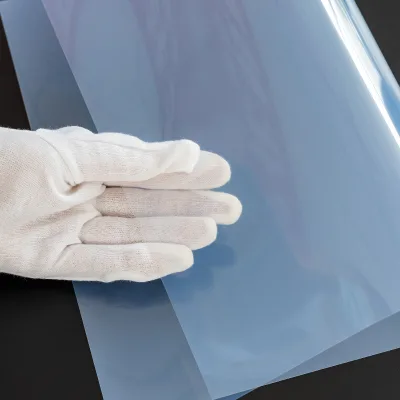
Transparency levels also vary significantly across available products. Some films are described as translucent with a milky white color, while others are fully transparent. This distinction is crucial for applications requiring light transmission, where observed ranges indicate a light transmission capability between 8% and 80%. The weight of the material is another observable attribute, with listings citing weights around 175 g/cm² or 180±5g. These physical properties must be matched against the specific requirements of the printing press and the final product's intended use.
Ink Compatibility and Printer Integration
One of the most significant technical challenges in sourcing inkjet films is ensuring compatibility with the specific inks and printers used in the production environment. The supplied facts highlight a strong emphasis on versatility in ink support. The films are designed to accommodate water-based dye and pigment inks, which are standard for many digital printing applications. However, some listings also indicate support for solvent-based inks, suggesting a broader range of chemical resistance.
The compatibility extends to the hardware itself. The observed data lists support for a wide array of printer brands, including HP, Epson, Canon, Roland, Mimaki, and Mutoh. This broad compatibility suggests that the coating technology is designed to handle the varying droplet sizes and drying mechanisms of different print heads. For buyers, this means that a single film type might serve multiple production lines, reducing inventory complexity. However, it is imperative to verify that the specific film batch is certified for the exact ink formulation being used, as "water-based" and "solvent-based" inks have different chemical interactions with the film surface.
The imaging type is another critical factor. The data specifies that the film supports "positive" imaging, which is standard for many plate-making and silkscreen applications. This implies that the film is designed to be exposed to light in a specific manner to create the desired pattern. Buyers must ensure that their exposure equipment aligns with the film's sensitivity profile, which is described as "high-sensitivity film." This high sensitivity allows for faster production cycles but requires careful handling to prevent accidental exposure during storage or transport.
Application Scope and Industry Use Cases
The versatility of waterproof inkjet coating films allows them to be deployed across a diverse range of industrial applications. The primary use cases identified include plate making, silkscreen printing, and use in printing presses. The ability to function as a substrate for silkscreen printing machines indicates that these films can withstand the mechanical stress of the squeegee and the chemical exposure of the ink wash.
In the context of plate making, the film's transparency and coating quality are paramount. The ability to produce high-resolution plates for various printing processes relies on the film's ability to hold fine details without distortion. The observed standard sizes, such as A3, A4, A3+, 12", 17", 18", 22", 24", 26", and custom rolls up to 30m or 50m in length, demonstrate the flexibility of the product line to meet different workflow requirements. Whether the application requires standard office sizes or large-format industrial rolls, the availability of these dimensions ensures that the film can be integrated into existing workflows without significant modification.
Furthermore, the waterproof feature is a key differentiator for these films. This attribute ensures that the printed output remains legible and intact even when exposed to moisture, making these materials suitable for outdoor signage, industrial labels, and applications in humid environments. The "milky white" and "multicolor" options provide additional aesthetic flexibility, allowing for creative designs that require specific background colors or translucency levels.
Cost Drivers and Procurement Economics
When evaluating the cost of waterproof inkjet coating films, several factors influence the final price. The observed price range in the market spans from $0.18 to $35 per unit, a wide variance that reflects differences in material quality, thickness, coating technology, and packaging. Thicker films with specialized coatings, such as the 20-micron coating mentioned, will naturally command a higher price point than standard 100-micron variants.
The Minimum Order Quantity (MOQ) is another significant cost driver. The data indicates an MOQ range from 1 to 10,000 units, with specific listings citing an MOQ of 100 pieces or 100 sheets. For small-scale operations or prototyping, the ability to order low quantities is essential, but it may result in a higher per-unit cost. Conversely, large-scale procurement can leverage economies of scale, reducing the unit price significantly. Buyers should consider their production volume and storage capabilities when negotiating MOQs.
Packaging also plays a role in cost and logistics. The films are typically packed in export cartons, with variations such as 4, 6, or 8 rolls per carton, or 100 sheets in a bag. Proper packaging is critical to prevent damage during transit, especially for materials that are sensitive to moisture and physical stress. The choice between sheet and roll formats can also impact the cost, as roll formats often require specialized handling equipment but may offer better efficiency for high-volume printing.
Supplier Evaluation and Quality Assurance
Selecting the right supplier requires a rigorous evaluation process that goes beyond price comparisons. The origin of the product is a key factor, with the supplied data indicating that the films are manufactured in China. While this provides access to a vast manufacturing base, buyers must ensure that the supplier adheres to consistent quality standards. The "PET inkjet film" standard is mentioned, but buyers should verify if the supplier has specific certifications or quality management systems in place, such as ISO 9001, to ensure consistent production.
Quality control should be a priority throughout the procurement process. Buyers should request samples to test the film's performance with their specific printers and inks. Key tests should include adhesion checks, water resistance verification, and dimensional stability assessments. The observed attributes, such as the "soft" molding method and "casting plastic" process, suggest that the film's physical properties are controlled during manufacturing. However, batch-to-batch consistency must be verified to ensure that the film performs reliably over time.
Lead times are another critical consideration. The data indicates a delivery time of 3-7 working days, which is relatively short and suggests a responsive supply chain. However, buyers should confirm this lead time for their specific order volume and packaging requirements. Delays in delivery can disrupt production schedules, so it is advisable to maintain a buffer stock or establish a reliable relationship with the supplier to mitigate potential risks.
Long-Term Procurement and Sustainability Considerations
For long-term procurement, buyers should focus on building a sustainable supply chain that ensures consistent quality and availability. The "export carton" and "carton box" packaging options suggest that the films are designed for international shipping, but buyers should verify the environmental impact of the packaging materials. Sustainable sourcing practices, such as using recyclable packaging or minimizing waste, can align with corporate sustainability goals.
Additionally, the compatibility of the film with future technologies should be considered. As printing technology evolves, the demand for new ink types and higher resolution prints may increase. Buyers should choose suppliers who are committed to innovation and can adapt their products to meet emerging standards. The "high-sensitivity" and "water-based" attributes indicate that the current market is moving towards more environmentally friendly and efficient printing solutions.
In conclusion, sourcing waterproof inkjet coating films requires a detailed understanding of the material specifications, ink compatibility, and application requirements. By carefully evaluating the technical attributes, cost drivers, and supplier capabilities, buyers can make informed decisions that ensure high-quality results and operational efficiency. The wide range of available options, from thickness and surface finish to packaging and delivery times, provides flexibility for various industrial needs. However, the key to success lies in rigorous quality control and a strategic approach to supplier selection.
Comparative Analysis of Film Attributes
To facilitate a clearer understanding of the variations available in the market, the following table summarizes the key attributes observed in the supplied data. This comparison highlights the diversity in specifications that buyers must consider when selecting the appropriate film for their specific needs.
| Attribute | Observed Range/Option | Typical Application Context |
|---|---|---|
| Base Material | PET (Polyethylene Terephthalate) | General digital printing, plate making |
| Thickness | 100, 115, 120, 125, 130 Microns (4-5 Mil) | Varies by print head and durability needs |
| Surface Finish | Semi-Glossy, Glossy, Matte, Smooth, Polished | Depends on desired print texture and light reflection |
| Transparency | Translucent (Milky White), Full Transparent | Affects light transmission and background visibility |
| Ink Support | Water-Based Dye/Pigment, Solvent-Based | Determines chemical compatibility and drying time |
| Printer Compatibility | HP, Epson, Canon, Roland, Mimaki, Mutoh | Ensures hardware integration |
| Packaging | Export Carton, Sheet, Roll (4-8 rolls/carton) | Influences storage and handling logistics |
| MOQ | 1 to 10,000 Units (Commonly 100 PCS) | Affects initial investment and inventory levels |
| Lead Time | 3-7 Working Days | Impacts production scheduling and urgency |
| Standard Sizes | A3, A4, 12", 17", 22", 24", 26", 30m/50m Rolls | Matches specific print job dimensions |
This table serves as a reference for buyers to quickly identify the specific attributes that align with their operational requirements. By cross-referencing these attributes with their internal standards, buyers can streamline the selection process and minimize the risk of procurement errors.
FAQs
What material is used for Waterproof Inkjet Coating Polycarbonate Film?
The film primarily uses PET (Polyethylene Terephthalate) rather than polycarbonate, with a thickness of 100 microns. Some variants offer thicknesses ranging from 100 to 130 microns to ensure dimensional stability and chemical resistance for printing applications.
Which printers are compatible with this waterproof inkjet coating film?
The film supports a wide range of printer brands including HP, Epson, Canon, Roland, Mimaki, and Mutoh. This broad compatibility allows the film to handle varying droplet sizes and drying mechanisms across different digital printing production lines.
Can the film be used with water-based dye and pigment inks?
Yes, the film is designed to accommodate water-based dye and pigment inks without bleeding or smearing. Some listings also indicate support for solvent-based inks, providing versatility for different chemical formulations and printing environments.
What is the typical lead time for delivery of this film?
The standard delivery time is 3 to 7 working days for most orders. Buyers should confirm this lead time for specific order volumes and packaging requirements to ensure production schedules are not disrupted by potential delays.
What are the available thickness options for the inkjet film?
Thickness options range from 100 microns to 130 microns, with specific listings showing 120 microns or 0.1mm to 0.5mm. These variations allow buyers to select the optimal film weight and durability for their specific plate making or silkscreen printing needs.
How is the film packaged for export and shipping?
The film is typically packed in export cartons containing 4, 6, or 8 rolls per carton, or 100 sheets in a bag. Proper packaging is critical to prevent damage during transit, especially for materials sensitive to moisture and physical stress.