Source Waterproof Insulated Rotomolded Cooler for Picnics Hiking Camping
Source a Waterproof Insulated Rotomolded Cooler from 30 verified listings. Compare capacities from 35 to 145 liters, ice retention up to 7 days, and delivery times ranging from 20 to 45 days for food transport and outdoor trips; compare the available evidence and request quotations based on your requirements.
Key considerations
Products List


Insulated Type Rotomolded Coolers Ice Chest Cooler Box, Plastic Cooler Box
$52.00 - $54.00
MOQ: 50 Pieces


Custom Rotomolded Ice Cooler PE Plastic Ice Box Coolers Heat Resistant Plastic Box
$100.00 - $106.00
MOQ: 50 Pieces


60L Hard Sided Plastic Rotomolded Fish Box Cooler Portable Ice Cooler Box
$38.00 - $50.00
MOQ: 1 Pieces


Portable 60L Hard Sided Plastic Rotomolded Fish Box Cooler Ice Cooler Box
$38.00 - $50.00
MOQ: 1 Pieces

High Quality 60L Hard Sided Plastic Rotomolded Fish Box Cooler Ice Cooler Box
$38.00 - $50.00
MOQ: 1 Pieces
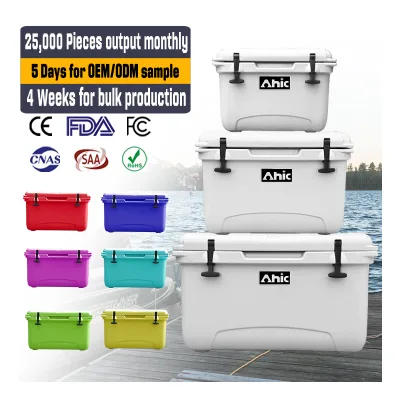


$3500.00 - $10000.00
MOQ: 1 Pieces
Guangzhou Junjian Kitchen Appliances & Refrigeration Equipment Co., Ltd.


Comprehensive Sourcing Guide
Waterproof Insulated Rotomolded Cooler Sourcing Guide
Procuring waterproof insulated rotomolded coolers requires a strategic approach that balances thermal performance with rugged durability. These units are engineered for demanding environments, offering superior ice retention compared to standard injection-molded alternatives. Buyers must prioritize materials and construction methods that ensure long-term reliability in outdoor or commercial settings.
The sourcing process involves evaluating specific technical attributes such as capacity, insulation type, and structural integrity. Understanding the distinction between various model series and their corresponding weight capacities is essential for matching product specifications to intended use cases. This guide outlines the critical verification steps necessary for successful procurement.
Product Scope and Observed Listing Signals
The current market landscape for these coolers includes a diverse range of capacities, from compact 50-liter units to large 145-liter and 200-500-liter industrial models. Observed listings indicate a strong emphasis on versatility, with products designed for picnics, hiking, camping, and beach trips. The availability of multiple color options, including red, purple, pink, orange, green, gray, and blue, allows for brand customization or personal preference alignment.
Key product attributes observed include foam insulation types and waterproof features that ensure contents remain fresh. The units are generally non-disposable and feature latch-closed designs with integrated handles for easy carrying. Net weights vary significantly by size, ranging from 9.5 kg for smaller models to 31 kg for larger variants, reflecting the robustness of the rotomolded construction.
Technical Specifications to Verify
Buyers must verify critical technical specifications to ensure the cooler meets operational requirements. Key parameters include the insulation type, which is typically foam-based, and the temperature range, which can extend from -20℃ to 10℃. It is essential to confirm the ice holding time, with some models claiming up to seven days of cold retention, and soaking times exceeding six hours for optimal performance.
Capacity and weight metrics are vital for logistics planning. Models such as the G1-65L and G4-145L offer specific volume standards, while bearing capacities exceed 10 kg. Carton dimensions and gross weights, such as 1025853cm for larger units, must be checked to determine shipping efficiency and storage requirements. Verifying these details prevents mismatches between product expectations and physical constraints.
Compliance and Safety Documentation
While specific certification statuses may vary by supplier, buyers should request documentation for relevant safety and quality standards. Trusted category knowledge suggests that certifications such as BSCI, CE, and RoHS are often relevant for international trade, particularly for products intended for food contact or consumer use. ISO 9001 compliance indicates a manufacturer’s adherence to quality management principles, which can be a strong indicator of production consistency.
Procurement teams must ensure that all materials used in construction, such as HDPE or general plastics, are safe for their intended applications. Documentation should confirm that the coolers are suitable for transporting frozen foods and beverages without leaching harmful substances. Requesting test reports or material safety data sheets (MSDS) provides additional assurance of product safety and regulatory compliance.
Cost Drivers and Commercial Terms
Several factors influence the final cost of waterproof insulated rotomolded coolers, including material quality, insulation thickness, and customization options. The observed price range spans from $0.09 to $100,000, reflecting the vast difference between small consumer units and large industrial-grade containers. Buyers should analyze cost structures based on capacity and feature sets rather than comparing absolute prices across disparate product categories.
Commercial terms such as Minimum Order Quantity (MOQ) and delivery times are critical for supply chain planning. Observed MOQs range from 50 to 100 pieces, while delivery times can vary from 20 to 45 days. Understanding these terms helps in budgeting for inventory holding costs and aligning production schedules with market demand. Negotiating favorable terms can significantly impact overall procurement efficiency.
Supplier Qualification and Quality Control
Evaluating supplier qualifications is essential to ensure consistent product quality and reliable delivery. Buyers should assess the manufacturer’s production capabilities, particularly their expertise in rotomolding processes, which are crucial for creating seamless, durable coolers. Suppliers located in manufacturing hubs like Zhejiang, China, often have established supply chains for raw materials such as HDPE and foam insulation.
Quality control measures should include inspections of latch mechanisms, handle integrity, and insulation uniformity. Buyers must verify that the packing methods, such as carton and PE bag combinations, protect the products during transit. Establishing clear quality acceptance criteria and conducting pre-shipment inspections can mitigate risks associated with defects or non-conforming products.
Long-Term Procurement Checks
Long-term procurement success depends on establishing strong relationships with suppliers who can support ongoing needs. Buyers should monitor supplier performance metrics, including on-time delivery rates and product defect frequencies. Regular audits of production facilities and quality management systems help maintain high standards and identify areas for improvement.
Continuous evaluation of product performance in the field is also crucial. Feedback from end-users regarding ice retention, durability, and ease of use can inform future purchasing decisions. By staying informed about market trends and technological advancements in cooler design, buyers can make strategic decisions that enhance their competitive advantage and customer satisfaction.
FAQs
What insulation types are available for waterproof insulated rotomolded coolers?
Foam insulation is the standard type used in these coolers to maintain internal temperatures effectively. This material ensures that contents remain fresh for extended periods, often up to seven days depending on external conditions. The design supports various usage scenarios including food delivery and frozen food transport while keeping items cold.
Can I customize the capacity of a Waterproof Insulated Rotomolded Cooler?
Yes, customization is available for various capacity options ranging from 50 liters to over 200 liters. Specific models include capacities such as 69 quarts and 145 liters to suit different storage needs. Buyers can select the appropriate size based on their specific requirements for picnics, hiking, or commercial food transport applications.
What is the typical lead time for ordering waterproof insulated rotomolded coolers?
The delivery time typically ranges from 20 to 45 days depending on the order volume and specific model selected. Standard production cycles allow for timely fulfillment of bulk orders. Buyers should confirm the exact timeline with suppliers during the inquiry phase to ensure alignment with their logistical schedules and project deadlines.
Which materials are used to construct waterproof insulated rotomolded coolers?
These coolers are primarily constructed using durable plastic materials, including HDPE for robustness and longevity. The construction ensures the cooler is non-disposable and capable of withstanding heavy loads with a bearing capacity exceeding 10 kg. The material choice supports waterproof features and long-term usability in outdoor environments.
What are the standard packaging methods for waterproof insulated rotomolded coolers?
Standard packaging typically involves a combination of PE bags and carton boxes to protect the product during transit. Some models may use carton plus PE bag configurations to ensure safety. The packaging is designed to accommodate the gross weight of the units, which varies by model size, ensuring secure delivery to the destination.
How much does a Waterproof Insulated Rotomolded Cooler cost per unit?
The observed price range for these coolers is between 0.09 and 100,000 USD, depending heavily on capacity and specifications. Smaller units are priced lower, while larger commercial-grade models command higher prices. Buyers should request specific quotes based on their desired capacity and quantity to receive accurate pricing information from suppliers.