Source Waterproof IP65 Marine Rocker Switch for Boats Vehicles Machinery
Find 30 verified options for the Waterproof IP65 Marine Rocker Switch suitable for boats, vehicles, and machinery. Compare specifications like voltage, current, and mechanical life to select the right component for your electrical appliance needs.
Key considerations
Products List


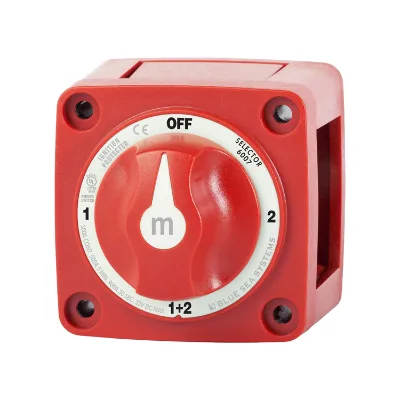


Black 6 Pin Rocker Switch 16A 250VAC on on Marine Boat Switch Rocker Switch
$1.50 - $2.50
MOQ: 1000 Pieces


Waterproof Rocker Switch Rocker Switch T125 55 Wireless Remote Power Switch 230V
$0.35 - $0.65
MOQ: 500 Pieces


Comprehensive Sourcing Guide
Strategic Sourcing Guide for Waterproof IP65 Marine Rocker Switches
Sourcing waterproof rocker switches for marine and heavy-duty vehicle applications requires a rigorous approach to technical verification and supplier evaluation. The core keyword "Waterproof IP65 Marine Rocker Switch" implies a component designed to withstand harsh environmental conditions, specifically immersion or exposure to water jets. While the market offers a wide array of options, buyers must distinguish between generic waterproof claims and verified IP65 performance. This guide synthesizes observed market data and standard industry requirements to provide a disciplined framework for procurement. The following sections detail the technical specifications, compliance checks, cost drivers, and quality control measures essential for securing reliable components.
Technical Specifications and Environmental Ratings
The primary technical differentiator for marine rocker switches is the Ingress Protection (IP) rating. An IP65 rating signifies that the device is dust-tight (the first digit '6') and protected against water jets from any direction (the second digit '5'). In marine environments, this is critical for preventing short circuits caused by splashing waves or high-pressure cleaning. When evaluating products, buyers should verify the specific construction materials that enable this rating. Observed market data indicates that high-quality switches often utilize ABS material with anti-corrosion properties or a blend of ABS and PC (Polycarbonate). These materials provide the necessary structural integrity to maintain the seal under vibration and pressure.
Electrical ratings are equally vital for ensuring safety and longevity. The observed data highlights a common rating voltage range of 12V to 24V, which aligns with standard marine and automotive electrical systems. However, buyers must also scrutinize the rating current. Listings show variations such as 10A, 12A, or dual ratings of 10A/20A. Selecting a switch with a current rating that exceeds the expected load by a safety margin is a prudent engineering practice. Furthermore, the mechanical life of the switch is a key performance indicator. While some entries mention a mechanical life of 10,000 cycles, others specify 100,000 cycles. For marine applications where reliability is paramount, targeting the higher cycle count ensures the switch can withstand frequent operation over years of service.
The physical dimensions and installation requirements must also be matched precisely to the application. Data points reveal panel cutout dimensions such as 114.59683mm or 93X160mm, and overall dimensions like 120X183mm. Mismatches in these specifications can lead to installation failures or the need for custom fabrication, which increases costs. Additionally, the presence of an integrated lamp is a common feature, with LED colors ranging from green, blue, and red to amber and white. The choice of LED color often serves as a status indicator, and the waterproof nature of the lens must be verified to ensure the light does not compromise the IP65 seal.
Compliance and Certification Verification
In the B2B procurement of electrical components, certification is not merely a formality but a legal and safety requirement. The observed product listings frequently cite a combination of certifications including ISO, RoHS, CE, GS, SGS, CSA, VDE, and CCC. These acronyms represent different aspects of compliance: ISO for quality management systems, RoHS for restricting hazardous substances, and CE for European conformity. For marine applications, specific regional standards may apply, and buyers should verify that the supplier holds valid certificates for the target market.
It is crucial to understand that certifications are not uniform across all products in a supplier's catalog. One listing may display "ISO, RoHS, CE," while another shows "CE, RoHS, SGS, CSA." This variation suggests that certification status is product-specific rather than a blanket attribute of the manufacturer. Buyers must request current, verifiable certificates for the specific model number they intend to purchase. Relying on a general claim of compliance without checking the specific product documentation can lead to regulatory non-compliance in the destination country.
Furthermore, the "Standard" attribute observed in the data, such as "Standard" or specific codes like "CE RoHS SGS," indicates adherence to baseline manufacturing norms. However, for marine-grade switches, buyers should look for additional industry-specific standards that address saltwater corrosion and UV resistance. While the provided data does not explicitly list salt-spray test results, the presence of anti-corrosion materials like ABS is a positive indicator. Buyers should explicitly ask suppliers for test reports regarding salt fog resistance and UV stability, as these are critical for long-term marine performance and are not always guaranteed by general certifications like ISO or CE alone.
Cost Drivers and Pricing Dynamics
The price range observed in the market for these components spans from $0.15 to $28.13 USD. This significant variance is driven by several factors, including the complexity of the design, the quality of materials, and the level of certification. The lower end of the spectrum likely corresponds to basic, non-lit switches with standard plastic housings and lower mechanical life ratings. Conversely, the higher price points are associated with advanced features such as integrated waterproof LEDs, higher current ratings (20A), robust mechanical lives (100,000 cycles), and comprehensive certification suites.
Material composition is a primary cost driver. Switches constructed from ABS+PC blends with anti-corrosion treatments command a premium over those made from standard plastics. The inclusion of a lamp, particularly one with multiple color options (Blue, Red, Amber, Clear, Green), adds to the manufacturing complexity and cost. Additionally, the packaging method influences the unit price. Bulk packaging, such as 10 pieces in a polybag or 500 pieces in a normal carton, is more cost-effective per unit than individual blister boxes. Buyers should evaluate their volume requirements against the packaging options to optimize total cost of ownership.
Minimum Order Quantity (MOQ) also plays a role in pricing. The observed MOQ range is 1 to 1000 units. Suppliers offering lower MOQs may charge a higher unit price to cover setup and handling costs. For large-scale procurement, negotiating based on higher volumes can significantly reduce the per-unit cost. However, buyers must balance cost savings with inventory holding costs. It is essential to analyze the total landed cost, including shipping and duties, rather than focusing solely on the unit price.
Typical Applications and Usage Scenarios
The versatility of waterproof rocker switches is evident in their diverse usage categories. The observed data lists applications ranging from vehicles and digital products to electrical appliances, machinery, and communication equipment. In the marine sector, these switches are indispensable for controlling navigation lights, bilge pumps, battery isolators, and cabin lighting. The IP65 rating makes them suitable for both interior and exterior installations on boats, where exposure to moisture and salt spray is constant.
Beyond marine environments, the "Vehicle" usage category indicates suitability for automotive and heavy machinery applications. In trucks, agricultural equipment, and construction vehicles, switches must withstand vibration, dust, and occasional water exposure. The "Digital Products" and "Electrical Appliance" categories suggest use in consumer electronics and industrial control panels. The "Mechanical Life" of 10,000 to 100,000 cycles determines the suitability for high-frequency switching tasks. For instance, a switch controlling a frequently used pump on a boat requires a higher mechanical life rating than one used for a rarely accessed circuit breaker.
The "Function" attribute, typically "on-off," is standard, but the integration of indicators (LEDs) adds a layer of functionality for status monitoring. The ability to choose from various LED colors allows for intuitive system design, where different colors can denote different system states or voltage levels. Buyers should ensure that the switch's voltage rating (12V-24V) matches the specific application's electrical system to prevent premature failure or damage to the control circuitry.
Supplier Evaluation and Quality Control
Evaluating suppliers requires a focus on transparency and consistency. The observed data shows origins in various locations within China, including Dongguan City and Guangdong. While these regions are known for manufacturing hubs, buyers should not assume uniform quality across all suppliers in these locations. A robust supplier evaluation process should include a review of their quality management systems, specifically looking for ISO certification. The presence of "Condition: New" in the data confirms that the products are intended as fresh inventory, but buyers should verify the storage conditions to ensure components have not degraded due to humidity or age.
Quality control should extend beyond the final product to the manufacturing process. Buyers should inquire about the supplier's testing protocols for IP ratings. Since the IP65 rating is a critical specification, the supplier should be able to demonstrate how they test for water ingress and dust tightness. The "Insulation Resistance" of 100ohm mentioned in the data is a specific electrical parameter that must be maintained. Buyers should request test reports to verify that this resistance level is consistent across batches.
Additionally, the "Warranty" period is a strong indicator of supplier confidence. Listings show warranties ranging from 12 months to 1 year. A longer warranty period often correlates with higher quality materials and better manufacturing controls. However, the terms of the warranty must be clear regarding what constitutes a defect versus normal wear and tear. For marine applications, where environmental stress is high, a warranty that covers corrosion-related failures is particularly valuable.
Long-Term Procurement Considerations
Sourcing waterproof rocker switches is not a one-time transaction but a long-term partnership that impacts the reliability of the end product. Buyers should consider the availability of spare parts and the consistency of product specifications over time. The "Standard" attribute suggests that products adhere to a baseline, but changes in material suppliers or manufacturing processes can affect performance. Establishing a contract with a supplier that guarantees consistent specifications and material grades is essential for maintaining product quality.
The "Customization" attribute observed in the data offers flexibility for specific project needs. Buyers can leverage this to request custom packaging, specific color codes, or tailored dimensions. However, customization often comes with higher MOQs and longer lead times. It is crucial to balance the need for customization with the urgency of the project timeline. Suppliers should be evaluated on their ability to manage custom orders without compromising quality or delivery schedules.
Finally, buyers should plan for the lifecycle of the product. The "Mechanical Life" and "Temperature" range (-25~85°C) are critical for long-term durability. In extreme marine environments, temperature fluctuations can stress materials. Ensuring that the switch operates reliably within the specified temperature range is vital. Regular audits of the supply chain and periodic quality checks on incoming batches will help mitigate risks and ensure that the procurement strategy remains effective over the long term. By adhering to these disciplined sourcing practices, buyers can secure high-quality waterproof rocker switches that meet the demanding requirements of marine and industrial applications.
FAQs
What certifications are available for waterproof ip65 marine rocker switches?
Available certifications include ISO, RoHS, CE, GS, SGS, CSA, VDE, and CCC. Buyers must verify specific certificates for each model, as compliance varies by product rather than applying to the entire manufacturer catalog.
Which voltage ratings are common for these marine rocker switches?
Common rating voltages range from 12V to 24V, suitable for standard marine and automotive electrical systems. Selecting a switch with a voltage rating that matches the application prevents premature failure or circuit damage.
How long is the mechanical life of high-quality marine rocker switches?
Mechanical life typically ranges from 10,000 to 100,000 cycles depending on the specific model. For marine applications requiring frequent operation, targeting the higher 100,000 cycle count ensures long-term reliability and durability.
Can I find waterproof ip65 marine rocker switches with LED indicators?
Yes, many models feature integrated lamps with LED colors including green, blue, red, amber, and white. The waterproof lens design maintains the IP65 seal while providing clear status indication for navigation lights or cabin controls.
What is the typical MOQ for sourcing these marine switches?
The observed minimum order quantity ranges from 1 to 1000 units depending on the supplier and packaging. Lower MOQs may incur higher unit prices, while bulk orders often allow for better cost optimization per piece.
Which materials are used for anti-corrosion in these switches?
High-quality switches often use ABS material with anti-corrosion properties or an ABS plus PC blend. These materials provide structural integrity to maintain the seal under vibration and pressure in harsh marine environments.
What warranty periods are offered for these electrical components?
Warranty periods typically range from 12 months to 1 year for new products. A longer warranty often indicates higher quality materials and better manufacturing controls, though terms regarding corrosion coverage should be verified.