Source waterproof multi-function digital storage bag for Travel, Bedding, Leisure
Compare 30 listings of waterproof multi-function digital storage bag options from verified Chinese manufacturers. Buyers can evaluate features like foldability, material types, and customization availability for travel, bedding, and leisure applications.
Key considerations
Products List


Data Cable Travel USB Multifunctional Storage Bag
$0.61 - $0.80
MOQ: 130 Pieces
Jinhua Hengyang Cross-Border Trade Limited Liability Company


Large-Capacity Multi-Functional Waterproof Portable Hand-Carrying Storage Bag
$1.09 - $1.29
MOQ: 500 Pieces


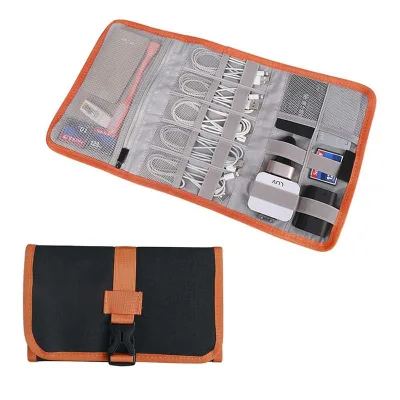
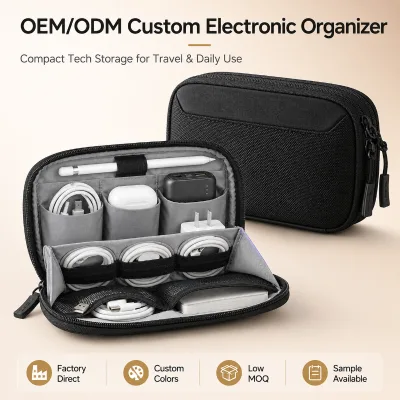


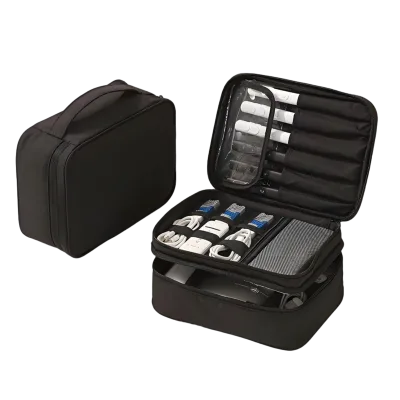


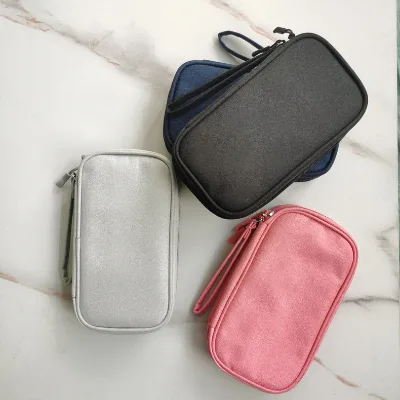

Multi-Layer Digital Accessories Storage Bag Portable Electronic Organizer Bag
$2.38 - $3.58
MOQ: 500 Pieces

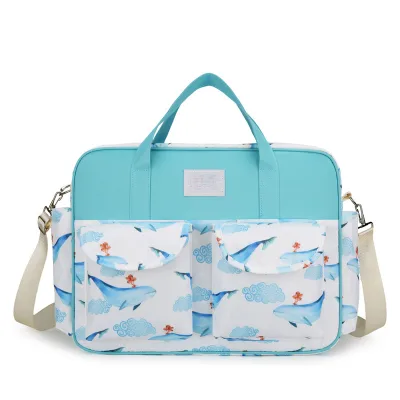


Wholesale Travel Storage Bag Hot Selling Digital Bag Cable Storage Organizer Bag
$1.84 - $2.21
MOQ: 500 Pieces
Comprehensive Sourcing Guide
Strategic Sourcing Guide for Waterproof Multi-Function Digital Storage Bags
Understanding Product Attributes and Core Specifications
When sourcing a waterproof multi-function digital storage bag, buyers must first distinguish between general storage solutions and specialized equipment designed for electronic protection. The market offers a diverse array of materials and construction methods, ranging from simple plastic enclosures to advanced neoprene and PU (Polyurethane) lined cases. Based on observed product data, the term "digital storage bag" often overlaps with broader categories such as "Car Accessories Electronic Ignition Control Module" housings or general "Storage Bags" intended for bedding and leisure use. This semantic overlap requires rigorous verification of the specific item's intended application.
The core physical attributes of these bags vary significantly across suppliers. Observed specifications indicate a wide range of dimensions, with standard sizes including 12x8x2 cm, 20x12x2 cm, 20x20x5 cm, and larger formats like 30x38x18 cm. Buyers should not assume a single standard size applies to all "digital storage" products. Instead, the selection process must align the bag's internal capacity with the specific dimensions of the digital device being stored. For instance, a bag with a standard of 5L capacity may be suitable for larger tablets or power banks, whereas a compact 12x7x16.5 cm case might be intended for smaller peripherals or ignition control modules.
Material composition is another critical variable. The supply chain features bags constructed from Plastic, Oxford fabric, Neoprene, Dacron, and PU. Each material offers distinct trade-offs regarding durability, flexibility, and water resistance. Neoprene and PU are frequently associated with shock absorption and a degree of water resistance, while Oxford fabric often provides a balance of strength and weight. Plastic variants may offer rigid protection but lack the flexibility required for multi-function storage. Buyers must verify that the material selected matches the environmental conditions the bag will encounter, particularly if the "waterproof" claim is a primary requirement.
Technical Verification of Waterproof Claims and Construction
The claim of "waterproof" capability requires careful scrutiny, as product listings often present conflicting data regarding this attribute. While some observed product profiles explicitly list "Waterproof" as a key feature, others clearly state "Not Waterproof" as a defining characteristic. This discrepancy highlights the necessity for buyers to treat "waterproof" as a specific, verified attribute rather than a general assumption for all digital storage bags.
To validate waterproof claims, buyers should request detailed technical documentation regarding the closure mechanisms. The data indicates that some products utilize an "Open" closure type, which inherently limits water resistance unless paired with a specific sealing mechanism like a zipper or roll-top that is not always explicitly detailed in basic listings. In contrast, products designed for high-moisture environments often incorporate specialized sealing technologies. Buyers must verify the IP (Ingress Protection) rating or equivalent water resistance testing results provided by the manufacturer. Without specific test data, the presence of a "Foldable" or "With Lock" feature does not guarantee that the bag will protect sensitive digital electronics from water ingress.
Furthermore, the construction process plays a vital role in waterproof integrity. Products utilizing "Heat Transfer" or "Thermal Transfer" printing processes may have seams that are sealed differently than those with traditional stitching. Buyers should inquire about seam sealing techniques, such as welded seams or taped seams, which are essential for maintaining a watertight barrier. The hardness of the material, noted as "Soft" in some profiles, suggests flexibility that might compromise structural rigidity unless reinforced. A bag that is too soft may not maintain its shape when wet, potentially exposing the contents to moisture. Therefore, the verification process must include a physical inspection of the closure, seams, and material density to ensure the "waterproof" label is substantiated by engineering design.
Compliance, Certification, and Regulatory Standards
Navigating the regulatory landscape for digital storage bags involves checking for compliance with international safety and quality standards. While specific certification names are not universally mandated for all storage bags, products intended for automotive applications, such as the "Car Accessories Electronic Ignition Control Module" mentioned in the data, may require adherence to stricter industry standards. These products often fall under the purview of automotive safety regulations, necessitating verification of OEM (Original Equipment Manufacturer) acceptance and specific automotive-grade certifications.
For general consumer digital storage, buyers should look for evidence of material safety compliance. The use of materials like Neoprene, Dacron, and PU raises questions regarding chemical content, particularly if the bags are intended for use in close proximity to users or in environments with high humidity. Buyers should request Material Safety Data Sheets (MSDS) or compliance certificates confirming that the materials do not contain harmful substances such as phthalates or heavy metals. Additionally, if the bags are marketed for use in specific regions like the United States, which is noted as a "Hot Selling Market," compliance with local consumer safety regulations is essential.
The "Sanitary Box Approved" usage mentioned in some product profiles suggests that certain bags may be subject to health and safety inspections, particularly if they are used for storing items that come into contact with food or personal hygiene products. While this may not apply to all digital storage bags, it serves as a reminder that the intended application dictates the required compliance framework. Buyers must ensure that the supplier can provide documentation proving that the product meets the relevant standards for its specific use case, whether that be automotive, general consumer, or sanitary storage.
Cost Drivers and Pricing Dynamics
The pricing of waterproof multi-function digital storage bags is influenced by several key factors, including material quality, manufacturing complexity, and order volume. The observed price range in the market spans from $0.33 to $8.00 USD, reflecting the vast difference between basic plastic or fabric pouches and high-end, specialized protective cases. Lower-priced items typically utilize simpler materials like basic plastic or unlined fabric, while higher-priced options often feature premium materials such as neoprene or PU with advanced waterproofing technologies.
Order Volume (MOQ) is another significant driver of cost. The market data indicates an MOQ range from 5 to 5,000 units. Suppliers offering low MOQs, such as 5 or 1000 pieces, may charge a premium per unit due to the lack of economies of scale. Conversely, buyers committing to larger volumes, such as 5,000 units, may negotiate lower unit prices but must consider the financial risk of holding inventory. The "Customization" availability is also a cost factor; products that can be customized with specific logos, colors, or dimensions often incur additional setup fees and higher per-unit costs compared to standard off-the-shelf items.
Packaging requirements further impact the final cost. The data shows variations in packing methods, including "Box," "Carton," and "1PC/OPP Bag, 30PCS/Carton." More elaborate packaging, such as individual boxes or custom cartons, adds to the overall cost but may be necessary for retail presentation. Buyers should evaluate the total landed cost, including packaging, shipping, and any customization fees, rather than focusing solely on the base unit price. Understanding these cost drivers allows buyers to make informed decisions that balance budget constraints with quality requirements.
Supplier Evaluation and Quality Control Protocols
Selecting the right supplier for waterproof digital storage bags requires a comprehensive evaluation of their capabilities, production processes, and quality control measures. The supply base is primarily located in China, with specific hubs in Guangdong, a region known for its manufacturing expertise in electronics and accessories. Buyers should verify the supplier's location and capacity to ensure they can meet demand and lead time requirements.
Quality control is paramount, especially when dealing with products that claim to be waterproof. Buyers should implement a rigorous inspection protocol that includes pre-production sample approval, in-process quality checks, and final random inspections. Key quality metrics to monitor include material consistency, seam integrity, and closure functionality. The "Gross Weight" of the product, noted as greater than 0.3 kg for some items, can serve as a proxy for material density and construction quality; significantly lighter products may indicate the use of inferior materials that could compromise durability.
Suppliers should also demonstrate a commitment to continuous improvement and defect reduction. Buyers can request data on defect rates, return rates, and customer feedback to gauge the supplier's reliability. Additionally, the ability to provide "OEM" services indicates a supplier's flexibility and capacity to produce custom solutions. Buyers should assess the supplier's responsiveness to quality issues and their willingness to implement corrective actions. A supplier that proactively addresses quality concerns and maintains transparent communication is more likely to deliver consistent results over the long term.
Long-Term Procurement Considerations and Application Scenarios
The long-term viability of sourcing waterproof multi-function digital storage bags depends on aligning the product with specific application scenarios and future market trends. The data highlights diverse applications, including "Travel," "Bedding," "Leisure," and "Car Accessories." Each application presents unique requirements regarding durability, size, and protection level. For example, travel bags must be lightweight and compact, while automotive accessories may require higher resistance to temperature fluctuations and vibration.
Buyers should consider the lifecycle of the product and the potential for repeat orders. Products with high customization potential and broad application appeal, such as those with "Multi-layer" functionality and "Simplicity" style, are more likely to sustain long-term demand. The "Foldable" and "Unfolded" states of the bags also suggest versatility, which can enhance their utility across different use cases. Buyers should evaluate the supplier's ability to scale production and adapt to changing market needs, ensuring a steady supply of high-quality products.
Furthermore, the "Hot Selling Market" data indicates that the United States is a key destination for these products. Buyers targeting this market should ensure that their suppliers are familiar with US consumer preferences and regulatory requirements. This includes understanding the demand for eco-friendly materials, specific design aesthetics, and functional features that align with local trends. By focusing on long-term strategic partnerships and maintaining a clear understanding of application-specific needs, buyers can secure a reliable supply chain for waterproof multi-function digital storage bags that meets both current and future demands.
Comparative Analysis of Product Specifications
To facilitate informed decision-making, the following table summarizes key product attributes observed in the market, highlighting the variations in materials, dimensions, and features that buyers should consider.
| Product Attribute | Observed Variations | Sourcing Implication |
|---|---|---|
| Material | Plastic, Oxford, Neoprene, Dacron, PU | Select based on required durability and water resistance; Neoprene/PU often better for electronics. |
| Dimensions | 12x8x2 cm to 30x38x18 cm | Match internal capacity to specific device size; verify fit before bulk ordering. |
| Waterproof Status | Waterproof vs. Not Waterproof | Critical verification point; do not assume all "storage bags" are waterproof. |
| Closure Type | Open, Lock, Zipper (implied) | Ensure closure mechanism aligns with protection needs; "Open" may require additional sealing. |
| MOQ Range | 5 to 5,000 PCS | Balance inventory risk with unit cost; lower MOQs often carry higher per-unit prices. |
| Origin | China, Guangdong | Verify logistics capabilities and lead times from this manufacturing hub. |
| Customization | Available | Leverage for branding and specific functional requirements; confirm additional costs. |
This comparative analysis underscores the importance of detailed specification review. Buyers must navigate the diverse landscape of digital storage bags by matching specific product attributes to their unique operational needs, ensuring that the final selection delivers the promised performance and value.
FAQs
What materials are used for waterproof digital storage bags?
Materials include plastic, Oxford, Neoprene, Dacron, and PU. Neoprene and PU offer shock absorption and water resistance, while Oxford balances strength and weight, and plastic provides rigid protection without flexibility.
How do I verify if a storage bag is truly waterproof?
Check for explicit waterproof features and closure types like zippers or seals. Some products list not waterproof, so verify IP ratings or seam sealing techniques like welding to ensure a watertight barrier for electronics.
Which dimensions are available for these storage bags?
Available sizes range from 12x8x2 cm to 30x38x18 cm. Select a size matching your device, such as 5L capacity for larger tablets or compact cases for smaller peripherals and ignition control modules.
Can I customize the storage bags with my logo?
Customization is available for logos, colors, and dimensions. Custom orders often incur setup fees and higher per-unit costs compared to standard off-the-shelf items, so factor this into your budget planning.
What is the minimum order quantity for these bags?
MOQs range from 5 to 5,000 units depending on the supplier. Lower MOQs like 5 or 1,000 pieces may cost more per unit, while larger volumes allow for better pricing but require higher inventory commitment.
Where are these products manufactured and shipped from?
Products originate from China, specifically Guangdong. Buyers should verify supplier location and capacity to ensure they can meet demand and lead time requirements for their specific procurement needs.
How does pricing vary for different bag types?
Prices range from $0.33 to $8.00 USD based on material and complexity. Basic plastic pouches are cheaper, while premium neoprene or PU cases with advanced waterproofing cost more due to higher material and manufacturing expenses.