Source Waterproof Outdoor Pergola with Electric Blinds for Garden Patio Commercial
Compare 30 listings for a Waterproof Outdoor Pergola with Electric Blinds featuring aluminum frames, IP67 ratings, and motorized operation. Buyers can evaluate wind resistance, snow loading, and customization options for garden, patio, or commercial use.
Key considerations
Products List

Garden Luxury Aluminum Waterproof Electric Pergola with Remote Control and Windproof Blinds
$165.00 - $175.00
MOQ: 9 Square Meters

Waterproof Electric Remote Aluminum Bioclimatic Electric Waterproof Motorized Pergola Garden Outdoor
$165.00 - $175.00
MOQ: 9 Square Meters


Modern Outdoor Pergola Electric Gazebo Aluminum Pergola Outdoor Waterproof Sunshade Aluminum Pergola
$75.00 - $139.00
MOQ: 9 Square Meters


Premium Waterproof Outdoor Electric Pergola with Retractable Roof
$79.99 - $169.99
MOQ: 5 Square Meters

Stylish Aluminum Pergola with Electric Waterproof Shade System
$100.00 - $140.00
MOQ: 18 Square Meters

Outdoor Waterproof Electric Aluminum Pergola for Barbecue Design
$190.00 - $299.00
MOQ: 9 Square Meters


Garden Bioclimatic Electric Awning Modern Design Outdoor Waterproof Louvered Pergola
$80.00 - $275.00
MOQ: 4 Square Meters

Garden Aluminum Bioclimatic Pergolaremote Control Electric Aluminum Outdoor Sun Shade Pergola
$225.00 - $300.00
MOQ: 5 Square Meters

Modern Design Waterproof Louvre Roof Gazebo Outdoor Aluminium Electric Pergola
$80.00 - $275.00
MOQ: 4 Square Meters

$225.00 - $300.00
MOQ: 5 Square Meters

China New Design White Color Waterproof Electric Pergola for Outdoor Garden Pergola
$80.00 - $275.00
MOQ: 9 Square Meters

Fully Automatic Sunshade Electric Garden Pavilion Outdoor Waterproof Pergola with Blind
$85.00 - $280.00
MOQ: 12 Square Meters

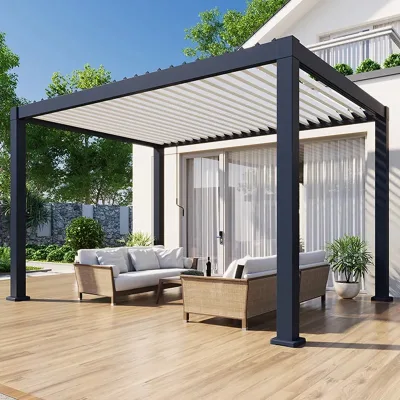

Outdoor Garden Aluminum Pergola Adjustable Louvers Remote Control Electric Waterproof Pergola
$99.00 - $150.00
MOQ: 10 Square Meters


Luxury Outdoor Pergola with Electric Louver Roof and Waterproof
$250.00 - $280.00
MOQ: 2 Square Meters


Waterproof Motorized Pergola with LED Lights for Patio and Garden
$250.00 - $280.00
MOQ: 2 Square Meters

Factory Electric Adjustable Roof Outdoor Waterproof Motorized Outdoor Louvered Pergola
$180.00 - $240.00
MOQ: 9 Square Meters

High Quality Waterproof Electric Garden Awninhs Outdoor Modern Pergola
$180.00 - $240.00
MOQ: 9 Square Meters


Outdoor Shade Retractable Roof Awning Electric Retractable Roof Pergola
$80.00 - $100.00
MOQ: 10 Square Meters
Comprehensive Sourcing Guide
Strategic Sourcing Guide for Waterproof Outdoor Pergolas with Electric Blinds
Understanding Core Technical Specifications and Structural Integrity
When sourcing a waterproof outdoor pergola equipped with electric blinds, the primary objective is to identify a unit capable of withstanding environmental stressors while providing reliable automation. The structural foundation of these systems typically relies on aluminum or aluminum alloy frames, chosen for their high strength-to-weight ratio and resistance to corrosion. In the current market, the frame finishing process is critical; powder coating is the standard method observed for protecting the aluminum substrate against the elements, ensuring longevity in outdoor environments.
The operational mechanism is a defining feature of this product category. Buyers should look for systems that offer motorized operation, often controlled via remote control switches or integrated smart home interfaces. This automation allows for precise adjustment of the louvers or slats, which is essential for managing light and water ingress. The angle of these louvers is a key technical variable; some units support an adjustable range from 0 to 100 degrees, enabling full closure for total waterproofing or full opening for ventilation. The cover material itself is frequently PVC coated, providing a durable, flexible barrier that is both rot-proof and waterproof.
Waterproofing capabilities are quantified by specific ratings and physical load tolerances. High-performance units often carry an IP67 rating, indicating complete protection against dust and temporary immersion in water. However, buyers must verify the specific wind and snow loading capacities of any unit under consideration. Observed market data suggests wind resistance capabilities ranging from 80 km/h to as high as 220 km/h, while snow loading capacities can vary significantly, with some units rated for up to 80 cm of snow accumulation or specific weight limits like 30 kg per square meter. These figures are not universal; they depend entirely on the specific model and engineering design. Therefore, the procurement strategy must prioritize verifying these exact numerical limits against the local climate conditions of the installation site.
Compliance, Certification, and Safety Standards
Navigating the regulatory landscape is a non-negotiable step in the procurement of electric outdoor structures. The integration of electrical components, such as motors and lighting systems, introduces specific safety requirements that must be met. Buyers should demand evidence of compliance with major international safety and environmental standards. Common certifications observed in this sector include CE, FCC, and RoHS. The CE mark indicates conformity with health, safety, and environmental protection standards for products sold within the European Economic Area. FCC certification is relevant for the electromagnetic compatibility of the motorized control systems, ensuring they do not interfere with other electronic devices. RoHS compliance ensures that the product is manufactured without specific hazardous materials, which is increasingly important for global supply chains.
Beyond electrical safety, the structural integrity of the pergola must align with local building codes. While specific national standards vary, the presence of a certified design drawing is a strong indicator of a supplier's commitment to engineering rigor. Many reputable suppliers offer 3D design drawings as a standard service, allowing buyers to visualize the integration of the pergola into their specific architectural context. This documentation should also detail the anchoring methods, whether the system is designed as a freestanding unit or a wall-mounted installation. The choice between these insertion types affects the structural load requirements and the necessary foundation work.
Buyers must also scrutinize the warranty terms provided by the supplier. A guarantee period of 15 years is a notable benchmark observed in the industry, suggesting confidence in the durability of the frame and the cover material. However, this warranty should be explicitly detailed in the contract, covering specific components such as the motor, the fabric, and the frame finish. It is crucial to understand that "New" condition is the standard for these products, but the longevity of the "New" state depends heavily on the quality of the initial manufacturing and the robustness of the protective coatings applied during the finishing process.
Cost Drivers and Pricing Dynamics
The pricing of waterproof outdoor pergolas with electric blinds is influenced by a complex interplay of factors, resulting in a wide observed price range from approximately $69 to $7,650. This variance is not arbitrary but reflects differences in scale, customization, and component quality. The most significant cost driver is the size of the installation. While some units are available in standard sizes, many are fully customized to fit specific patio or commercial dimensions. Customization extends beyond mere dimensions to include color options, which can range from standard white, black, and brown to bespoke color requests.
The complexity of the automation system also impacts cost. Basic manual operation is less expensive than fully motorized systems with remote controls. Furthermore, the inclusion of optional items significantly alters the final price. Features such as LED lighting integration, zipper screens, sliding glass doors, or fan beams add to the material and labor costs. The type of packing required for shipping is another factor; while some units are packed in solid plywood boxes or wooden boxes, others may require specialized packaging like bubble wrap and cartons for full container load (FCL) shipments to prevent damage during transit.
Minimum Order Quantity (MOQ) is a critical financial consideration for buyers. The market shows MOQs ranging from a single unit to larger commercial quantities, with some suppliers setting thresholds at 24 square meters. For smaller projects, buyers may need to negotiate or look for suppliers with lower entry barriers. The production capacity of the supplier, often measured in square meters per month (e.g., 1,000 square meters), can also influence pricing and lead times. High-volume production often allows for better economies of scale, whereas highly customized, low-volume orders may carry a premium. Buyers should request detailed quotations that break down the costs of the frame, the cover material, the motor, and any accessories to ensure transparency in the pricing structure.
Typical Applications and Functional Versatility
Waterproof outdoor pergolas with electric blinds are designed for a diverse array of applications, spanning residential, commercial, and hospitality sectors. In residential settings, these structures are ideal for patios, gardens, and doorways, transforming outdoor living spaces into all-weather extensions of the home. The ability to provide sun and rain protection makes them particularly valuable in regions with unpredictable weather patterns. The motorized operation allows homeowners to adjust the environment instantly in response to changing conditions, enhancing comfort and usability.
Commercial applications are equally significant. Restaurants, hotels, and retail spaces utilize these pergolas to create inviting outdoor dining or shopping areas that remain operational regardless of rain or intense sunlight. The durable and waterproof nature of the PVC-coated covers ensures that these commercial spaces can generate revenue year-round. The aesthetic flexibility, including color customization and the option for 3D design integration, allows businesses to align the pergola with their brand identity and architectural style.
The functional versatility of these units is further enhanced by their adaptability. Whether the installation requires a freestanding structure for a garden island or a wall-mounted solution for a building facade, the engineering supports both. The inclusion of accessories like LED lights and fans adds layers of functionality, extending the usability of the space into the evening hours and providing cooling in warmer climates. The "Quad" shape observed in some models offers a specific geometric configuration that may be preferred for certain architectural layouts, while other models may offer different shapes to suit unique site requirements.
Supplier Evaluation and Geographic Considerations
Evaluating potential suppliers requires a focus on their manufacturing capabilities, geographic location, and logistical reliability. The majority of the observed supply chain originates from China, with specific manufacturing hubs identified in Guangdong and Shan Dong Wei Fang. These regions have established ecosystems for aluminum processing and PVC manufacturing, which can facilitate efficient production and competitive pricing. However, the geographic origin should not be the sole determinant; buyers must assess the supplier's ability to meet specific project timelines and quality standards.
Supplier evaluation should include a review of their production standards and capacity. A supplier claiming a monthly production standard of 1,000 square meters demonstrates a significant operational scale, which can be reassuring for large commercial projects. Conversely, suppliers with lower capacities may be better suited for bespoke, small-scale residential projects. The availability of 3D design drawing services is a strong indicator of a supplier's technical competence and customer service orientation. It suggests that they are willing to engage in the design phase to ensure the final product meets the buyer's exact specifications.
Logistics and packaging are also critical evaluation criteria. The method of packing, whether solid plywood boxes, wooden boxes, or specialized cartons, directly impacts the risk of damage during shipping. Buyers should verify that the packaging is robust enough to protect the motorized components and the delicate PVC coating. Additionally, the supplier's experience with international shipping and their ability to handle customs documentation for products originating from China should be confirmed. A reliable supplier will provide clear information on lead times and shipping terms, ensuring that the project timeline remains on track.
Quality Control and Long-Term Procurement Considerations
Ensuring long-term value requires a rigorous approach to quality control (QC) and post-procurement planning. The durability of the pergola is contingent on the quality of the materials and the precision of the assembly. The "Powder Coated" finish on the aluminum frame must be uniform and free of defects to prevent corrosion. The PVC cover material should be inspected for consistency in coating and resistance to tearing or fading. The motorized system must be tested for smooth operation and reliability under various load conditions.
Buyers should implement a multi-stage QC process. This includes pre-production inspections to verify material specifications, in-process inspections during manufacturing to ensure adherence to design drawings, and final inspections before shipment. The inclusion of a 15-year guarantee is a strong signal of quality, but it must be backed by a clear service protocol. Buyers should inquire about the availability of spare parts, such as replacement motors or fabric panels, and the supplier's policy for warranty claims.
Long-term procurement considerations also involve the scalability of the solution. As a business or residential property expands, the ability to add more units or upgrade existing systems is valuable. Suppliers that offer standardized components and modular designs facilitate easier expansion. Furthermore, buyers should consider the maintenance requirements of the electric blinds and motors. Regular cleaning of the PVC cover and periodic inspection of the electrical connections are necessary to maintain optimal performance. Selecting a supplier that provides comprehensive maintenance guidelines and technical support ensures that the investment remains a functional asset for years to come.
Comparative Analysis of Key Product Attributes
To assist in the decision-making process, the following table summarizes the key attributes observed across the product range, highlighting the variability buyers must navigate.
| Attribute Category | Observed Range / Options | Key Verification Points |
|---|---|---|
| Frame Material | Aluminum, Aluminum Alloy | Verify alloy grade and powder coating thickness. |
| Cover Material | PVC, PVC Coated | Check for rot-proof and waterproof certifications. |
| Operation | Motorized (Remote), Manual | Confirm voltage compatibility and remote range. |
| Waterproof Rating | IP67 | Verify seal integrity and drainage design. |
| Wind Resistance | 80 km/h to 220 km/h | Match rating to local wind zone maps. |
| Snow Loading | 30 kg/sqm to 80 cm depth | Ensure structural load capacity matches local snowfall. |
| Certifications | CE, FCC, RoHS | Request valid certificates for all electrical components. |
| Warranty | Up to 15 years | Clarify coverage scope and claim procedures. |
| Packing | Plywood Box, Wooden Box, Cartons | Inspect packaging for damage prevention. |
| Origin | Guangdong, Shan Dong Wei Fang | Assess logistics costs and lead times from origin. |
This comparative overview underscores the necessity of detailed specification checks. No single product satisfies all criteria universally; the buyer must align the specific attributes of the selected unit with the unique demands of their project. By rigorously evaluating these factors, buyers can secure a high-quality, durable, and compliant Waterproof Outdoor Pergola with Electric Blinds that delivers long-term value.
FAQs
What frame materials are used for these pergolas?
These pergolas typically use aluminum or aluminum alloy frames. The frames are finished with powder coating to ensure durability and resistance to corrosion in outdoor environments.
How are the electric blinds operated?
The blinds are operated via motorized systems controlled by remote control switches. Some models also offer manual operation options for flexibility during power outages.
Can these units withstand heavy snow loads?
Yes, specific models can handle snow loads ranging from 30 kg per square meter up to 80 cm of accumulation. Buyers must verify the exact rating against local climate conditions.
What certifications do the electrical components have?
The electrical components often carry CE, FCC, and RoHS certifications. These marks ensure compliance with safety standards and environmental regulations for international markets.
Which sizes are available for customization?
Both standard sizes and customized dimensions are available for these pergolas. Suppliers can provide 3D design drawings to visualize the specific fit for your project requirements.
How are the units packed for shipping?
Units are packed in solid plywood boxes, wooden boxes, or bubble wrap with cartons depending on the order size. This packaging protects the motorized parts and PVC coating during transit.
What is the typical warranty period offered?
A warranty period of up to 15 years is observed for some models. This guarantee typically covers the frame and cover material to ensure long-term performance.