Source Solar Powered Steel Space Capsule for Villa Hotel Warehouse
Find 30 verified listings for Solar Powered Steel Space Capsule units designed for villas, hotels, and warehouses. Compare customization options, certifications, and pricing from suppliers in China to identify the best fit for your project needs.
Key considerations
Products List


2024 Solar Wind-Powered Capsules Custom House Space Capsule That Uses Green Energy
$500.00 - $600.00
MOQ: 1 Square Meters


Prefab House Space Capsule Capsule House Space Modular Space Capsule
$13400.00 - $35000.00
MOQ: 1 Sets

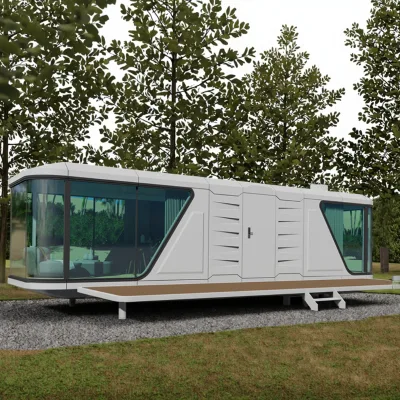


Durable Galvanized Steel Frame Space Capsule for Efficient Separation
$18000.00 - $18300.00
MOQ: 1 Pieces


Mobile Space Capsule House Prefabricated House Mobile Space Capsule Portable House Capsule Cabin
$30000.00 - $36000.00
MOQ: 1 Pieces


Modern Space Capsule Prefab Capsule House Modular Space Capsule House Vessel House
$30000.00 - $36000.00
MOQ: 1 Pieces

Compact and Space-Saving Mobile Space Capsule Unit for Small Spaces
$30300.00 - $36000.00
MOQ: 1 Pieces


Relaxation Space Capsule Compact Mobile Residence and Prefabricated Structure Space Capsule
$15190.00 - $36090.00
MOQ: 1 Pieces

Modern Luxurious Space Capsule with Intelligent Control System Camping Capsule
$11000.00 - $34000.00
MOQ: 1 Pieces
Comprehensive Sourcing Guide
Strategic Sourcing Guide for Solar Powered Steel Space Capsule Units
Understanding the Product Category and Core Attributes
The "Solar Powered Steel Space Capsule" represents a specialized segment within the prefabricated and modular construction industry. These units are distinct from traditional housing due to their compact, often cylindrical or capsule-like geometry, which maximizes structural integrity while minimizing material usage. Based on observed market data, the primary structural material for these units is consistently identified as steel structure, often utilizing galvanized steel frames combined with aluminum components to ensure durability against corrosion and environmental stress. The customization capabilities are extensive, with suppliers offering custom sizes, custom styles, and the ability to integrate custom logos and brands. This flexibility allows buyers to tailor the units for specific applications ranging from temporary offices and workshops to permanent villas and hotels.
The design aesthetic varies, with observed examples including European style and modern designs, yet the underlying engineering remains focused on rapid deployment. Key attributes observed in the market include fast installation capabilities, which are critical for projects with tight timelines. The units are designed to be easily movable and flexibly combinable, allowing for scalable expansion of a site. Furthermore, the product features emphasize resilience, with claims of wind resistance, earthquake resistance, and waterproofing. Thermal insulation and moisture-proofing are also standard expectations, ensuring the units remain habitable in diverse climates. The integration of smart home systems as configuration equipment suggests a move toward automated, energy-efficient living spaces, which aligns with the solar-powered aspect of the core keyword.
Technical Specifications and Structural Integrity
When evaluating the technical specifications of a space capsule unit, buyers must scrutinize the dimensions, weight, and structural composition. The market data indicates that dimensions can vary significantly, with specific observed standards ranging from compact footprints like 8.5m x 3.3m x 3.2m to larger configurations such as 11.5m x 3.3m x 3.4m. The weight of these units is a critical factor for logistics; observed data points to a unit weight of approximately 9.5 tons for larger models, which necessitates heavy-lift transportation planning. The structural frame is predominantly steel, providing the necessary rigidity to support the capsule shape and withstand external loads.
The packaging and shipping standards are equally vital for the procurement process. Units are typically packed in export packages, with some configurations utilizing wooden box packaging or complete set packaging to prevent damage during transit. For steel structure houses, container loading is a standard method of transport. Buyers should verify that the specific model they select, whether designated as a "Space Capsule House" or a specific model number like "cxa-34" or "FC38C," meets the dimensional requirements of their intended site. The standard for the product itself is often listed as "customized size," meaning the buyer must define the exact length, width, and height during the ordering phase. Additionally, the door configuration is often a wooden door, which must be compatible with the overall thermal and security requirements of the unit.
Compliance, Certification, and Safety Standards
Compliance with international standards is a non-negotiable aspect of sourcing steel space capsules, particularly when the units are intended for commercial or long-term residential use. The observed market data highlights several key certifications that buyers should look for. ISO certification is frequently mentioned, indicating adherence to international quality management standards. CE certification is another critical mark, signifying that the product meets EU safety, health, and environmental requirements. Some listings specifically note "ISOCE" or "CE Certification," which serves as a baseline for market entry in Europe and other regions requiring similar conformity.
Beyond general certifications, buyers must verify specific safety standards related to the structural integrity of the steel frame. The product features list "Earthquake Resistant" and "Wind Resistance" as key attributes, but these claims must be backed by engineering calculations and test results provided by the supplier. The standard for the product is often listed as "custom," which implies that the specific engineering standard (such as ASCE or Eurocode) must be agreed upon during the contract phase. For solar integration, the electrical components must comply with local grid codes and safety standards, which may require additional certifications not always explicitly listed in general product summaries. Buyers should request the specific test reports for wind load, seismic performance, and thermal insulation values to ensure the unit meets the regulatory requirements of the destination country.
Cost Drivers and Pricing Structures
The pricing for solar powered steel space capsules is highly variable, driven by the level of customization, the size of the unit, and the complexity of the solar integration. The observed price range in the market spans from $500 to $38,000 USD, a wide spectrum that reflects the difference between basic, small-scale units and fully equipped, large-scale capsules with advanced smart home systems. The minimum order quantity (MOQ) is also a significant cost driver, with observed ranges between 1 and 20 units. Purchasing a single unit often incurs a higher per-unit cost due to setup and logistics, whereas bulk orders of 20 units may benefit from economies of scale.
Several factors influence the final cost. The "Custom Size" and "Custom Style" options allow for unique designs but increase manufacturing time and cost. The inclusion of advanced features such as a "Smart Home System" or specific "Configuration Equipment" will significantly elevate the price point. The material composition, specifically the use of galvanized steel and aluminum, adds to the base cost but ensures longevity. Additionally, the "Fast Installation" advantage, while reducing on-site labor costs, may come at a premium in the manufacturing price. Buyers should be aware that the "Environmental Protection Low Cost Recycle" advantage is a value proposition rather than a direct cost reducer, though it may impact long-term operational expenses. The warranty period, observed as either 3 years or 5 years, also correlates with the price; longer warranties often indicate higher confidence in the product's durability and may command a higher initial investment.
Typical Applications and Use Cases
The versatility of steel space capsules allows them to serve a wide array of applications, making them suitable for diverse industries. The observed usage data includes warehouse storage, villa construction, temporary offices, and workshops. This indicates that the units are robust enough for industrial use while being aesthetically pleasing enough for residential purposes. The "Hotel" application is particularly prominent, suggesting that these units are increasingly used as eco-friendly glamping pods or boutique hotel rooms. The "Outdoor Travelling" usage points to their suitability as mobile homes or vacation retreats.
For commercial developers, the "Apartment" application highlights the potential for these units to be stacked or arranged in clusters to create multi-unit housing solutions. The "Fast Installation" feature makes them ideal for emergency housing or rapid-deployment projects where traditional construction timelines are not feasible. The "Eco-Friendliness" and "Recycle" advantages align with the growing demand for sustainable building materials in the hospitality and tourism sectors. Whether used as a standalone "Space Capsule" for a single occupant or as part of a larger complex, the modular nature of the steel structure allows for flexible arrangement. The "Custom Logo" and "Custom Brand" options further enhance their utility for corporate branding in temporary office setups or hospitality venues.
Supplier Evaluation and Quality Control Protocols
Selecting the right supplier requires a rigorous evaluation process that goes beyond the initial product listing. Buyers should prioritize suppliers who can demonstrate a clear origin, with "China" and specifically "Shandong, China" being common locations for these manufacturers. The presence of a specific brand name, such as "FULLKING," or a model number like "BIOGREEN-LUCAS" can help in tracking the supplier's history and reputation. However, buyers must verify that the supplier's claims regarding "ISO" and "CE" certifications are current and valid for the specific batch of products being ordered.
Quality control should be a central part of the procurement strategy. Buyers must verify the "5 Years Quality Warranty" or "3 Years" warranty terms in writing, ensuring that the warranty covers structural defects, solar panel performance, and smart system functionality. The "After-Sale Service" of "Online Technical Support" is a positive indicator, but buyers should also inquire about the availability of on-site support for installation and maintenance. The "Customized" nature of the product means that the production process is unique for each order; therefore, factory audits or third-party inspections during the manufacturing phase are highly recommended. Buyers should also check the "prod_packing" details to ensure that the "Container Loading" or "Wooden Box Packaging" meets international shipping standards to prevent damage.
Long-Term Procurement and Lifecycle Considerations
Long-term procurement considerations for solar powered steel space capsules extend beyond the initial purchase price. The "Environmental Protection Low Cost Recycle" advantage suggests a lower total cost of ownership over time, but this depends on the quality of the materials and the efficiency of the solar system. Buyers should evaluate the lifecycle of the solar panels and the battery storage system, which are critical for the "solar powered" functionality. The "Thermal Insulation" and "Waterproof" features are essential for maintaining energy efficiency, reducing the load on the solar system and minimizing maintenance costs.
The "Fast Installation" feature reduces the time the unit is exposed to the elements before being operational, which can protect the investment. However, the "Easily Movable" attribute implies that the units may be relocated, requiring a robust foundation system that can be dismantled and reassembled without compromising the structural integrity. Buyers should consider the "Custom Size" and "Custom Style" options as long-term investments that may need to be adapted for future site changes. The "Smart Home System" integration offers the potential for remote monitoring and energy management, which can optimize the solar usage and reduce operational costs. Finally, the "Warranty" period is a key indicator of the manufacturer's confidence in the product's longevity; a 5-year warranty is generally preferable to a 3-year warranty for critical infrastructure projects.
Comparative Analysis of Key Product Attributes
To facilitate decision-making, the following table summarizes the key attributes observed in the market for steel space capsules, highlighting the variations buyers may encounter.
| Attribute Category | Observed Variations | Procurement Implication |
|---|---|---|
| Material | Steel Structure, Galvanized Steel Frame, Aluminium | Verify corrosion resistance and structural load capacity. |
| Certification | ISO, CE, ISOCE | Ensure certifications match the destination country's regulations. |
| Size/Standard | Custom Size, 8.5x3.3x3.2m, 11.5x3.3x3.4m | Define exact dimensions early to avoid custom manufacturing delays. |
| Warranty | 3 Years, 5 Years | Longer warranties may indicate higher quality but increase initial cost. |
| Usage | Hotel, Villa, Warehouse, Temporary Office | Match the unit's features (e.g., insulation, smart systems) to the use case. |
| Packing | Container Loading, Wooden Box, Export Package | Confirm packaging meets shipping requirements for the specific route. |
| Origin | China, Shandong, China | Consider logistics costs and lead times based on the specific location. |
| Features | Wind Resistance, Earthquake Resistant, Fast Installation | Verify test data for these claims to ensure safety compliance. |
In conclusion, sourcing a Solar Powered Steel Space Capsule requires a balanced approach that weighs the high degree of customization against the need for standardized quality and compliance. By carefully evaluating the technical specifications, verifying certifications, and understanding the cost drivers, buyers can secure a product that meets their specific operational needs while ensuring long-term reliability and sustainability.
FAQs
What certifications do solar powered steel space capsules have?
These units typically hold ISO and CE certifications to ensure safety and quality. Some listings also mention ISOCE compliance, which is essential for entering regulated markets. Buyers should verify specific batch certifications before purchase.
Can buyers customize the size and style of these capsules?
Yes, customization is available for size, style, logo, and brand. Units can be tailored to specific dimensions like 8.5m by 3.3m or 11.5m by 3.3m. This flexibility supports various applications from villas to temporary offices.
How long is the warranty period for these steel structures?
Warranty periods observed range from 3 years to 5 years of quality coverage. The specific duration depends on the supplier and model selected. Buyers must confirm the exact warranty terms in writing to ensure structural and system protection.
What is the typical price range for a Solar Powered Steel Space Capsule?
The market price ranges from 500 to 38,000 USD depending on customization and features. Costs vary based on size, smart home integration, and material quality. Bulk orders may offer better pricing compared to single unit purchases.
Which materials are used to construct these space capsule units?
The primary structure is made of steel, often with galvanized steel frames and aluminum components. This combination ensures durability and resistance to corrosion. Some units also feature wooden doors and specific packing for export.
How fast can these units be installed on a site?
These units are designed for fast installation and are easily movable. The modular steel structure allows for rapid deployment compared to traditional construction. This feature makes them ideal for temporary offices, workshops, or emergency housing projects.