Source Waterproof Quilted Nylon Handbag for Travel Beach Daily
Compare 30 listings for the Waterproof Quilted Nylon Handbag featuring solid colors, zipper closures, and chain decorations. Buyers can evaluate options from Fujian and Hebei suppliers with varying sizes and customization availability for travel, beach, and daily use.
Key considerations
Products List
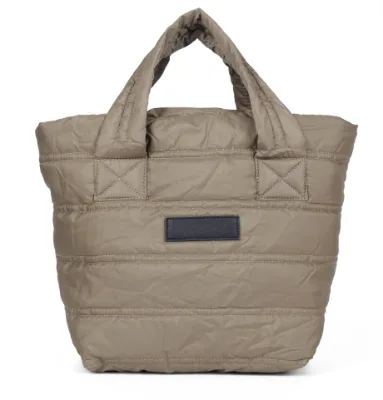


Comprehensive Sourcing Guide
Waterproof Quilted Nylon Handbag Sourcing Guide
Sourcing waterproof quilted nylon handbags requires a nuanced understanding of material science, manufacturing capabilities, and commercial terms that vary significantly across global supply chains. The intersection of "waterproof" performance and "quilted" aesthetics presents specific technical challenges, as the quilting process can compromise the integrity of waterproof membranes if not executed with precision. Buyers must navigate a market where terminology is often loosely applied, distinguishing between water-resistant coatings, fully waterproof laminates, and merely durable water-repellent (DWR) finishes. This guide provides a structured approach to evaluating suppliers, verifying technical claims, and securing reliable supply chains for this specialized accessory category.
The procurement strategy must account for the diverse applications of these bags, ranging from daily urban commuting to outdoor travel and beach activities. While the core keyword emphasizes waterproofing, the quilted design often targets fashion-forward consumers who prioritize aesthetic versatility alongside functional durability. Consequently, sourcing decisions should balance technical performance metrics with design flexibility, including customization options for logos, colors, and hardware. Understanding the specific use case is critical, as it dictates the necessary level of waterproofing, the type of nylon weave required, and the appropriate closure mechanisms to ensure product longevity and customer satisfaction.
Product Scope and Observed Listing Signals
The observed market landscape for waterproof quilted nylon handbags reveals a wide variance in product specifications, pricing, and minimum order quantities (MOQs). Listings indicate a price range from $0.19 to $960 USD, reflecting a spectrum from basic, mass-produced items to high-end, designer-inspired replicas or premium branded goods. This disparity suggests that buyers must carefully define their target market segment, as the sourcing strategy for a budget-friendly daily tote differs vastly from that of a luxury-style accessory. The observed MOQs range from 1 to 3,000 pieces, indicating that suppliers cater to both small-batch testers and large-scale wholesale distributors, allowing for flexible entry points depending on inventory risk tolerance.
Key attributes observed in current listings include solid color patterns, zipper closures, and specific dimensions such as 22x14x9 cm or 20x14x11 cm. Materials cited often include nylon, PU leather, and polyester linings, with some products explicitly claiming waterproof status while others note non-waterproof characteristics. This inconsistency highlights the importance of verifying material composition and construction methods directly with suppliers. Additionally, features such as chain decorations, stitching details, and medium-soft hardness are common design elements that influence both the aesthetic appeal and the functional durability of the final product. Buyers should treat these observed attributes as starting points for negotiation rather than guaranteed specifications.
Technical Specifications to Verify
Verifying the technical integrity of the waterproof claim is the most critical step in sourcing quilted nylon handbags. Buyers must distinguish between water-resistant coatings and fully waterproof construction, as the quilting process involves stitching through multiple layers, which can create needle holes that compromise waterproofing unless sealed. It is essential to request detailed information on the lamination process, the type of waterproof membrane used (e.g., TPU or PVC), and whether the seams are taped or welded. Suppliers should provide clear documentation on how they maintain waterproof integrity despite the perforations caused by quilting, as this is a common point of failure in lower-quality products.
Material composition and hardware quality are equally important technical factors to verify. The outer material should be specified as high-denier nylon for durability, while the lining should be polyester or a similar quick-drying fabric. Buyers should confirm the hardness of the bag, as options range from soft to medium-soft, impacting the bag's structure and capacity. Additionally, the closure type, typically a zipper, must be evaluated for smooth operation and corrosion resistance, especially if the bag is intended for beach or travel use. Dimensions should be confirmed against standard sizes, such as 26x10x21 cm or 8-inch formats, to ensure compatibility with intended contents and retail packaging requirements.
Compliance and Safety Documentation
Compliance and safety documentation are essential for ensuring that the sourced handbags meet international regulatory standards, particularly regarding chemical safety and material toxicity. Buyers should request certificates of conformity (CoC) and test reports from accredited laboratories to verify that the nylon, PU leather, and polyester materials are free from harmful substances such as phthalates, lead, and azo dyes. This is especially important for products marketed for daily use or travel, where prolonged skin contact is likely. Suppliers should be able to provide evidence that their materials comply with relevant standards, such as REACH in Europe or CPSIA in the United States, depending on the target market.
Environmental and ethical compliance is another critical aspect of documentation. Buyers should inquire about the supplier's adherence to environmental management systems and labor standards, particularly if sourcing from regions with varying regulatory enforcement. While specific certifications may not be universally listed, requesting information on the supplier's quality control processes, including pre-production and during-production checks, can provide insight into their commitment to compliance. Additionally, buyers should verify that the packaging materials, such as PP bags or cardboard boxes, are recyclable or meet local waste disposal regulations to avoid potential compliance issues in the destination country.
Cost Drivers and Commercial Terms
The cost of waterproof quilted nylon handbags is influenced by several key drivers, including material quality, manufacturing complexity, and order volume. The use of high-denier nylon, waterproof membranes, and durable hardware increases the base cost, while the quilting process adds labor and time to production. Buyers should expect higher prices for products with complex designs, such as those with chain decorations or custom stitching, as these require additional craftsmanship. The observed price range of $0.19 to $960 USD reflects these variations, with lower prices typically associated with simpler designs and higher volumes, while premium prices correspond to specialized features and smaller order quantities.
Commercial terms, including MOQs, lead times, and shipping options, significantly impact the total cost of ownership. Suppliers with MOQs as low as 10 pieces offer flexibility for testing and small-batch orders, but may charge higher unit prices. Lead times typically range from 9 to 12 days for production, with shipping times varying from 5-7 days by express to 25-30 days by sea. Buyers should factor in these logistics costs when calculating the final landed cost, especially for time-sensitive orders. Additionally, customization options, such as logo printing or custom packaging, may incur additional fees, so it is important to clarify all potential charges upfront to avoid unexpected costs.
Supplier Qualification and Quality Control
Supplier qualification is a critical step in ensuring the reliability and consistency of the sourced handbags. Buyers should conduct thorough due diligence on potential suppliers, verifying their business licenses, production capacity, and past performance. It is advisable to request samples to evaluate the quality of materials, construction, and waterproofing performance before committing to a larger order. Suppliers with established quality control processes, including pre-production and during-production checks, are more likely to deliver consistent quality. Buyers should also assess the supplier's communication responsiveness and ability to provide timely updates, as this is indicative of their overall professionalism and reliability.
Quality control measures should be clearly defined and agreed upon before production begins. This includes specifying acceptable defect rates, inspection criteria, and procedures for handling non-conforming products. Buyers should consider hiring third-party inspection services to conduct pre-shipment inspections, ensuring that the final products meet the agreed-upon specifications. Additionally, suppliers should provide clear information on their warranty and return policies, allowing buyers to address any issues that arise after delivery. By establishing robust quality control protocols, buyers can minimize the risk of receiving substandard products and maintain customer satisfaction.
Long-Term Procurement Checks
Long-term procurement success depends on continuous monitoring and evaluation of supplier performance. Buyers should establish key performance indicators (KPIs) to track metrics such as on-time delivery, product quality, and responsiveness to issues. Regular audits and reviews of supplier performance can help identify areas for improvement and ensure that the supplier remains aligned with the buyer's standards. Additionally, maintaining open communication channels and fostering a collaborative relationship with suppliers can lead to better problem-solving and innovation over time. Buyers should also stay informed about market trends and technological advancements in materials and manufacturing, allowing them to adapt their sourcing strategies as needed.
Risk management is another critical aspect of long-term procurement. Buyers should diversify their supplier base to mitigate the risk of supply chain disruptions, such as production delays or quality issues. Developing contingency plans for potential disruptions, such as alternative sourcing options or safety stock, can help ensure business continuity. Additionally, buyers should regularly review and update their contracts to reflect changes in market conditions, regulatory requirements, and business needs. By proactively managing risks and maintaining strong supplier relationships, buyers can secure a reliable and cost-effective supply of waterproof quilted nylon handbags for the long term.
FAQs
What materials are used for the Waterproof Quilted Nylon Handbag?
The handbag is constructed from Nylon and PU materials with a Polyester lining. Some variants feature Matte Suede Leather as the main material. These durable components ensure the bag is suitable for daily use and travel while maintaining a soft to medium soft hardness.
Can I customize the logo on the Waterproof Quilted Nylon Handbag?
Yes, customization is available for the logo on these handbags. Buyers can request specific branding to be applied to the product. This service allows for personalized designs while maintaining the standard production quality and lead times associated with the manufacturing process.
Which sizes are available for the Waterproof Quilted Nylon Handbag?
Available sizes include 8IN, 22*14*9CM, 20*14*11CM, and 26cm X 10cm X21cm. These dimensions cater to various needs such as travel, beach, and daily shopping. The specific size depends on the model number selected, such as YS02-820 or ST-6658.
How long is the production time for the Waterproof Quilted Nylon Handbag?
The standard production time ranges from 9 to 12 days. This duration covers the pre-production and during-production quality control checks. Buyers should account for this lead time when planning their orders to ensure timely delivery for their specific market needs.
What is the minimum order quantity for the Waterproof Quilted Nylon Handbag?
The minimum order quantity varies, with observed ranges from 1 to 3000 units. Some specific listings require a minimum of 10 pieces. Buyers should verify the exact MOQ for their chosen model to ensure it aligns with their purchasing volume and budget constraints.
Where are the waterproof quilted nylon handbags manufactured?
These handbags originate from locations including Fujian and Hebei in China. Specific production sites are noted in Baigou, Hebei. The place of origin is a key factor for buyers considering shipping logistics and regional manufacturing capabilities for their sourcing requirements.
How is the Waterproof Quilted Nylon Handbag packaged for shipping?
Packaging options include PP bags, cardboard boxes, and polyester bags. Some configurations contain 20 to 30 pieces per box. The transport packaging is designed to protect the product during transit, whether by express or sea freight, ensuring the items arrive in good condition.