Source Waterproof Quilted Hi Vis Jacket for Road, Traffic, Security
Explore 30 options for a Waterproof Quilted Hi Vis Jacket suitable for road administration, traffic wardens, and security staff. Buyers can compare features like breathability, durability, and customization services from verified manufacturers.
Key considerations
Products List


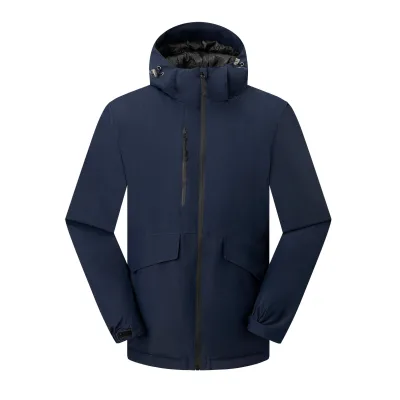
Polyester Waterproof Windproof Raincoat Reflective Hi Vis Safety Rain Jacket
$7.90 - $16.90
MOQ: 500 Pieces


Reflective Work Wear Hi Vis Jacket Waterproof Safety Jacket Work Clothing
$14.20 - $15.70
MOQ: 1000 Pieces
Comprehensive Sourcing Guide
Strategic Sourcing Guide for Waterproof Quilted Hi Vis Jackets
Procuring high-visibility workwear requires a rigorous approach that balances safety compliance with functional durability. The core keyword "Waterproof Quilted Hi Vis Jacket" describes a specific category of protective gear designed for cold-weather environments where visibility and weather protection are critical. Buyers must navigate a market where product attributes vary significantly between manufacturers. This guide outlines the essential technical, logistical, and compliance factors necessary for a successful procurement strategy, relying strictly on verified product data and industry standards.
Technical Specifications and Material Composition
The foundation of a reliable high-visibility jacket lies in its material composition and functional design. Based on observed product data, the primary fabric for these garments is typically polyester, often blended with cotton to achieve specific tactile properties. The material must deliver a trifecta of performance: waterproofing, breathability, and durability. In many observed listings, the fabric is treated with a waterproof taped seam technology to ensure that water does not penetrate through the stitching lines, a critical feature for winter and wet conditions.
The "quilted" aspect of the jacket serves a thermal function, providing insulation against cold temperatures. This is particularly relevant for products categorized under the "Winter" season, though some variations are noted for "Spring & Autumn" usage. The insulation layer is often paired with a reflective coating to meet visibility requirements. Buyers should verify the specific reflective grade, as observed data indicates options ranging from Class 2 to Class 3, adhering to standards such as EN ISO 20471. The presence of a hooded collar and pockets is a common design feature, enhancing the utility of the garment for road administration, traffic wardens, and security staff.
When evaluating the technical specifications, the following table summarizes the key attributes frequently observed in the market:
| Attribute Category | Common Observations | Verification Requirement |
|---|---|---|
| Primary Material | Polyester, Cotton/Polyester Blend | Confirm fabric weight and blend ratio for durability. |
| Weather Function | Waterproof, Breathable, Windproof | Verify seam sealing (taped) and breathability ratings. |
| Thermal Feature | Quilted, Thermal, Lightweight | Check insulation type and weight for intended climate. |
| Visibility | Class 2, Class 3, Fluorescent Yellow/Orange | Confirm compliance with EN ISO 20471 or local equivalents. |
| Design Details | Hooded, Pockets, Plaid or Solid Patterns | Ensure pocket placement does not obscure reflective strips. |
Compliance and Certification Verification
Safety standards are non-negotiable in the procurement of high-visibility clothing. The observed product data explicitly references safety standards such as EN ISO 20471 and mentions "En ISO" as a general compliance marker. While some background knowledge suggests other standards like EN 343 for rain protection or EN 342 for cold protection, buyers must not assume these apply unless explicitly stated by the supplier for the specific model. The procurement process must prioritize verifying the exact standard number printed on the product label or in the technical data sheet.
Buyers should request documentation proving that the reflective tape and the fluorescent background fabric meet the required luminance and retro-reflectance values. The "Visibility Level" is often categorized as "Common" in general listings, but for high-risk environments, a higher classification is mandatory. It is crucial to distinguish between a product that merely claims to be "high visibility" and one that is certified to a specific international standard. The presence of a "Safety Standard" field in product listings is a positive indicator, but the specific code must be cross-referenced with the buyer's local regulatory requirements.
Cost Drivers and Pricing Dynamics
The pricing of waterproof quilted hi vis jackets is influenced by several variables, including material quality, customization complexity, and order volume. Observed market data indicates a wide price range, with unit costs fluctuating between $5 and $92.90 USD. This significant variance suggests that the market includes both basic utility garments and premium, highly specialized workwear.
The primary cost drivers include the reflective grade (Class 2 vs. Class 3), the quality of the waterproofing treatment, and the complexity of the quilted insulation. Customization is a major factor in pricing; suppliers offering OEM and ODM services often have different pricing structures based on the extent of branding, color customization, and logo placement. The "Customization" attribute is frequently listed as available, which implies that bespoke orders will likely incur higher unit costs compared to standard stock items.
Order volume also plays a critical role in the final price. The observed Minimum Order Quantity (MOQ) ranges from 2 to 5,000 units. Buyers placing small orders may face higher per-unit costs or limited customization options, whereas large volume orders can leverage economies of scale. The "Small Orders: Accepted" attribute indicates flexibility for smaller buyers, but this often comes with a premium. When budgeting, procurement teams should account for these variables rather than relying on a single average price point.
Typical Applications and Usage Scenarios
The utility of a Waterproof Quilted Hi Vis Jacket is defined by its intended usage environment. The product data explicitly lists applications for "Transportation," "Road Administration," "Traffic Warden," "Security Staff," and "Sanitation Workers." These roles share a common requirement: the need to remain visible in low-light or adverse weather conditions while performing duties outdoors.
For traffic wardens and road administration staff, the jacket must provide high visibility to oncoming vehicles while protecting the wearer from rain and wind. The waterproof and breathable functions are essential here to prevent the wearer from becoming wet and cold, which can lead to fatigue and reduced alertness. Similarly, sanitation workers and security personnel operating in winter conditions require the thermal properties of the quilted design to maintain body temperature.
The versatility of these jackets is further highlighted by their suitability for various seasons. While primarily designed for "Winter," some models are noted for "Spring & Autumn" use, suggesting a balance between thermal insulation and breathability. The "Uniform Type" is generally classified as "Work Wear," indicating that these garments are designed for professional environments rather than casual use. Buyers should match the specific jacket features to the operational hazards of their workforce, ensuring that the chosen model provides adequate protection for the specific climate and job duties.
Supplier Evaluation and Service Capabilities
Selecting the right supplier is as important as selecting the right product. The observed data identifies suppliers as "Manufacturer & Exporter," which suggests a direct supply chain that can offer competitive pricing and better control over quality. However, buyers must verify the supplier's actual production capacity and service capabilities.
Key service attributes to evaluate include the availability of OEM and ODM services. The "Service" field frequently lists "OEM ODM" or "Custom\OEM \ ODM Service," indicating that suppliers are willing to produce branded or custom-designed garments. Buyers should assess the supplier's ability to handle customization requests, such as specific color options (Yellow/Orange/Custom Colors) and logo placement. The "Remark" section often reiterates that customization is available, but the scope of this service must be clarified during negotiations.
Lead times and sample availability are critical logistical factors. Observed data shows a "Sample Time" ranging from 7 to 15 days, while the "Delivery Time" for bulk orders is typically 60 to 90 days or "3 Months After The Order Confirmed." These timelines can vary significantly based on order complexity and seasonality. Buyers should plan their procurement cycles well in advance to accommodate these lead times. Additionally, the "Product Origin" is listed as locations such as Taian and Fujian, China, which are known manufacturing hubs. Verifying the specific factory location can help in assessing logistics costs and supply chain reliability.
Quality Control and Long-Term Procurement
Ensuring consistent quality is paramount in the procurement of safety-critical apparel. The "Product Packing" specifications, such as "1PC/Polybag, 8 PCS/CTN" or "One PCS in One Polybag 10PCS in One Carton," provide insight into how the supplier handles the goods. Proper packaging is essential to prevent damage during transit, especially for quilted garments that may lose their shape if compressed improperly.
For long-term procurement, buyers should establish a quality control protocol that includes pre-shipment inspections. This should verify that the reflective tape adheres correctly, the waterproofing is intact, and the stitching is durable. The "Feature" attributes like "Comfortable, Lightweight, Waterproof, Thermal" should be validated through physical testing rather than relying solely on marketing claims.
Buyers should also consider the durability of the product over time. The "Durable" attribute is frequently mentioned, but the actual lifespan of the jacket depends on the frequency of use and the care instructions provided. Establishing a relationship with a supplier that offers consistent quality and reliable lead times is more valuable than chasing the lowest price. The ability to reorder the same model with consistent specifications is crucial for maintaining a standardized safety uniform across a workforce.
In conclusion, sourcing waterproof quilted hi vis jackets requires a detailed understanding of technical specifications, compliance standards, and supplier capabilities. By focusing on verified data such as material composition, reflective grades, and lead times, buyers can make informed decisions that ensure the safety and comfort of their workforce. The wide range of available options allows for customization to meet specific operational needs, provided that the procurement process remains disciplined and evidence-based.
FAQs
What materials are used for waterproof quilted hi vis jackets?
The primary material is polyester, often blended with cotton for specific tactile properties. Some listings specify a fabric blend of cotton and polyester to achieve comfort and durability while maintaining the required waterproof and breathable functions for work environments.
Which reflective grades are available for these jackets?
Available reflective grades range from Class 2 to Class 3, adhering to standards such as EN ISO 20471. Buyers should verify the specific grade required for their safety needs, as the visibility level is critical for roles like traffic wardens and sanitation workers.
Can suppliers offer customization for these workwear jackets?
Yes, customization is available including OEM and ODM services for branding and design. Suppliers accept custom requirements for colors like yellow or orange, and specific packaging needs, allowing buyers to tailor the uniform type to their organizational standards.
What is the typical delivery time for bulk orders?
The delivery time is normally 60 to 90 days or three months after the order is confirmed. This timeline applies to bulk production, while sample times are shorter, typically ranging from 7 to 15 days depending on the specific supplier capabilities.
Which industries use these waterproof quilted jackets?
These jackets are used for transportation, road administration, traffic wardens, security staff, and sanitation workers. The design supports winter and spring and autumn seasons, providing necessary thermal protection and high visibility for outdoor professionals in various weather conditions.
What are the minimum order quantities for these jackets?
The minimum order quantity ranges from 2 to 5000 units depending on the supplier and customization level. Small orders are accepted, but buyers should expect higher per-unit costs for lower volumes compared to large bulk orders that leverage economies of scale.