Source Waterproof Round Toe EVA Slippers for indoor, outdoor, and summer use
Find 30 options for Waterproof Round Toe EVA Slippers suitable for indoor, outdoor, and summer applications. Buyers can compare features like anti-slip soles, lightweight materials, and customization availability across multiple models.
Key considerations
Products List




Comprehensive Sourcing Guide
Strategic Sourcing Guide for Waterproof Round Toe EVA Slippers
The global B2B market for footwear has seen a significant shift toward versatile, low-maintenance indoor and outdoor solutions. Among these, Waterproof Round Toe EVA Slippers have emerged as a high-demand category, driven by their durability, lightweight nature, and suitability for humid environments. For procurement professionals, sourcing this specific product requires a nuanced understanding of material science, supply chain logistics, and quality assurance protocols. This guide synthesizes observed market data and technical specifications to provide a structured approach for acquiring these items without relying on unverified claims or speculative data.
Understanding Material Composition and Structural Integrity
The core of the waterproof round toe EVA slipper lies in its material composition. Ethylene Vinyl Acetate (EVA) is the primary material cited in the observed product attributes, offering a unique balance of flexibility and water resistance. Unlike traditional rubber or leather, EVA is a closed-cell foam that inherently repels water, making it ideal for the "Waterproof" attribute frequently observed in this category. However, buyers must distinguish between products that are fully waterproof and those that are merely water-resistant. The provided data indicates a mix of attributes where some listings specify "Waterproof" while others note "Not Waterproof," necessitating rigorous verification of the specific SKU.
The construction typically involves a single-piece molding process or a multi-layer assembly. The upper and sole are often integrated from EVA, which eliminates stitching points where water could penetrate. In some configurations, the sole material is a composite of EVA and PVC (Polyvinyl Chloride). This combination enhances the durability of the outsole while maintaining the lightweight characteristics of the upper. The "OutSole: PVC" and "Material: EVA+PVC" observations suggest that for heavy-duty or outdoor applications, a hybrid sole is preferred to prevent wear and tear. The "Round Toe" style is a standard design feature, ensuring comfort and preventing toe injury, which is critical for both indoor and outdoor use cases.
Technical Specifications and Sizing Standards
When evaluating technical specifications, precision in sizing and model identification is paramount. The market data reveals a variety of model numbers, such as 18M086, 19M014, 18M102, and MC079, indicating that different manufacturers or product lines utilize distinct coding systems. Procurement teams must align their internal inventory codes with these specific model numbers to avoid confusion during the ordering process.
Sizing standards vary significantly across suppliers. Observed data points to a range of "EUR36-50/ US5-50" and "EUR36-50/ US5-13" or customized options. This discrepancy highlights the importance of verifying the size chart for every specific order. The "Standard" attribute often includes a broad range, but the actual production run may be limited to specific increments. Buyers should confirm whether the supplier offers "Customized" sizing, as this is a frequently mentioned attribute. Additionally, the "Close Pattern: Foot" and "Toe Style: Round toe" are consistent features that define the silhouette of the product. The "Lining Material" is noted as "other" in some instances, which requires clarification to ensure the internal comfort layer meets the buyer's hygiene and comfort standards.
Compliance, Certification, and Safety Verification
In the B2B sector, compliance is not merely a formality but a critical risk management tool. While the provided facts do not list specific certification bodies (such as CE, ISO, or REACH), the presence of attributes like "Anti-slip," "Durable," and "Waterproof" implies that the products are designed to meet safety expectations for footwear. Buyers must independently verify that the slippers comply with the safety regulations of the destination market.
The "Anti-slip" feature is particularly relevant for indoor and outdoor environments where wet surfaces are common. To validate this claim, procurement teams should request third-party test reports detailing the coefficient of friction (COF) of the outsole material. Similarly, the "Waterproof" claim requires verification through water immersion or hydrostatic pressure tests. Since the data shows conflicting information regarding waterproof capabilities (some items listed as "Not Waterproof"), it is essential to treat all marketing claims as observations until proven by test data. The "Hand Made" attribute suggests a level of craftsmanship that may influence quality consistency, but it also introduces variability that must be managed through strict quality control protocols.
Cost Drivers and Pricing Dynamics
The pricing landscape for Waterproof Round Toe EVA Slippers is influenced by several factors, including material costs, manufacturing complexity, and order volume. The observed price range in the market spans from 0.2 to 5 USD, a wide spectrum that reflects differences in quality, branding, and customization levels. Lower-priced items often utilize basic EVA formulations and standard packaging, while higher-priced variants may feature advanced "Fashion Trend" elements, superior "Soft" comfort layers, or complex branding.
The "MOQ" (Minimum Order Quantity) range of 2 to 5000 units further dictates the cost structure. Small orders, which are explicitly noted as "Accepted," allow for lower initial investment but typically come with a higher unit cost due to setup and handling fees. Conversely, bulk orders of 5000 units can leverage economies of scale to reduce the per-unit price. The "Selling Units: Single item" attribute indicates that some suppliers offer sample or retail-ready packaging, which can impact the overall cost structure. Buyers should analyze the total landed cost, including shipping and duties, rather than focusing solely on the unit price. The "Customization: Available" attribute is a significant cost driver; adding custom logos, colors (such as Beige, Khaki, Black), or packaging (1 Pair in 1 Box, 10 Boxes in 1 Carton) will increase the unit price and potentially the lead time.
Supplier Evaluation and Operational Capabilities
Selecting the right supplier requires a holistic evaluation of their operational capabilities and reliability. The "Place of Origin: Guangdong, China" is a common location for footwear manufacturing, known for its robust supply chain and expertise in EVA processing. However, the specific location does not guarantee quality; buyers must assess the supplier's production capacity, quality control systems, and logistical efficiency.
Key evaluation criteria include the supplier's ability to handle "Small Orders" if the buyer is testing the market, and their capacity to scale up to "5000" units or more for peak seasons. The "Brand Name" varies, with "NEWONE" and "MC" being observed examples. While brand recognition can be a factor, the focus should remain on the manufacturer's track record for delivering consistent quality. The "Hand Made" aspect suggests that the supplier may rely on skilled labor, which can be a double-edged sword: it ensures attention to detail but may limit production speed. Buyers should inquire about the ratio of automated to manual processes to gauge scalability. Additionally, the "Season" attributes (Summer, Spring/Autumn) indicate that these products are often seasonal, requiring suppliers to have flexible production schedules to meet demand spikes.
Quality Control and Long-Term Procurement Strategy
Implementing a robust quality control (QC) strategy is essential for maintaining product integrity. Given the "Non-Disposable" nature of the slippers, durability is a key performance indicator. QC checks should focus on the bond strength between the EVA upper and PVC sole, the consistency of the "Round Toe" molding, and the effectiveness of the "Anti-slip" texture. Visual inspections for defects such as air bubbles, uneven coloring, or misaligned patterns are also critical.
For long-term procurement, buyers should establish a partnership model that emphasizes continuous improvement. This includes regular audits of the supplier's facility, feedback loops for product refinement, and clear communication channels for addressing issues. The "Customization" capability should be leveraged to differentiate the product in the market, but it must be balanced against the risk of production delays. Buyers should also consider the environmental impact of EVA production and inquire about the supplier's sustainability practices, as this is an increasingly important factor in global procurement.
Typical Applications and Market Positioning
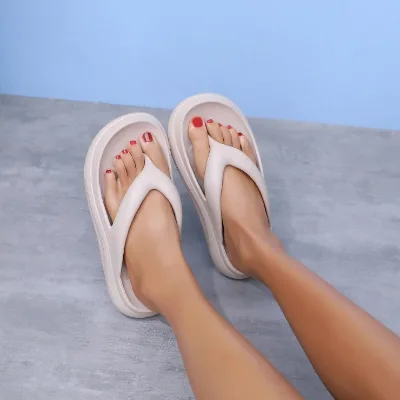
Waterproof Round Toe EVA Slippers serve a diverse range of applications, from residential use to commercial settings. The "Indoor" and "Outdoor" style attributes indicate versatility, making them suitable for bathrooms, pools, hotels, and spas. The "Casual slippers" and "Flip flops" classifications suggest a broad appeal to consumers seeking comfort and convenience. The "Fashion Trend" and "Model" elements highlight the product's potential as a lifestyle accessory, appealing to buyers who value aesthetics alongside functionality.
The "Lightweight" and "Quick-Drying" features are particularly valuable for applications involving water exposure. These attributes ensure that the slippers remain comfortable and hygienic even after repeated use in wet conditions. The "Deodorization" feature, observed in some listings, adds a layer of value for users concerned with hygiene. By understanding these applications, buyers can tailor their sourcing strategy to meet the specific needs of their target market, whether it be mass-market retail, hospitality supply, or specialized medical facilities.
Conclusion
Sourcing Waterproof Round Toe EVA Slippers requires a meticulous approach that balances technical specifications, cost considerations, and quality assurance. By leveraging the observed data on materials, sizing, and manufacturing capabilities, buyers can make informed decisions that mitigate risk and ensure product success. The wide range of prices, MOQs, and customization options offers flexibility, but it also demands careful evaluation of each supplier's capabilities. Ultimately, a successful procurement strategy relies on clear communication, rigorous testing, and a commitment to long-term partnership with reliable manufacturers.
FAQs
What materials are used for Waterproof Round Toe EVA Slippers?
The primary material is Ethylene Vinyl Acetate (EVA), often combined with PVC for the outsole to enhance durability. Some listings also specify Linen for lining or other materials, while others confirm a non-disposable construction suitable for repeated use.
Can I order small quantities of Waterproof Round Toe EVA Slippers?
Yes, small orders are accepted with a minimum order quantity ranging from 2 to 5000 units depending on the supplier. This flexibility allows buyers to test the market without committing to large bulk purchases immediately.
Which styles are available for Waterproof Round Toe EVA Slippers?
Available styles include casual slippers, flip flops, indoor slippers, and outdoor slippers with a round toe design. Seasonal options cover summer, spring, and autumn, catering to various weather conditions and usage environments.
How is the pricing structured for Waterproof Round Toe EVA Slippers?
The observed price range spans from 0.2 to 5 USD per unit, influenced by customization and order volume. Lower prices typically reflect basic EVA formulations, while higher costs may include fashion trends or specific branding like NEWONE or MC.
Where are Waterproof Round Toe EVA Slippers manufactured?
Products originate from China, specifically from the Guangdong region, which is known for robust footwear supply chains. Buyers should verify specific factory locations as the general origin is listed as China with various model numbers available.
What customization options exist for Waterproof Round Toe EVA Slippers?
Customization is available for logos, colors such as beige, khaki, and black, and packaging configurations like one pair per box. Buyers can also request customized sizing standards, though specific model numbers like 18M086 may have fixed attributes.