Source Weatherproof Retractable Glasshouse Enclosure for farms, greenhouses, and sunrooms
Explore 30 listings for a Weatherproof Retractable Glasshouse Enclosure designed for agricultural and residential use. Buyers can compare aluminum and steel structures, glass types, and customization options to find suitable solutions for various climates.
Key considerations
Products List

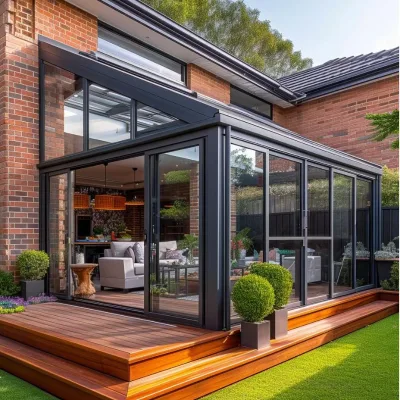


Sturdy Glass Greenhouse with Steel Frame for Agriculture and Horticulture
$7.00 - $12.00
MOQ: 200 Square Meters

Tempered Glass Greenhouse with Steel Structure for Outdoor Farming
$110.00 - $170.00
MOQ: 10 Square Meters


Portable Temporary Sunroom for Outdoor Backyard Greenhouse Enclosure
$100.00 - $150.00
MOQ: 49 Square Meters

Folding Door All Season Conservatory Modern Glass House Sunroom Glass Container House
$100.00 - $150.00
MOQ: 49 Square Meters

High Reputation Durable Prefabricated Glass Houses for Garden Sunroom
$100.00 - $150.00
MOQ: 49 Square Meters

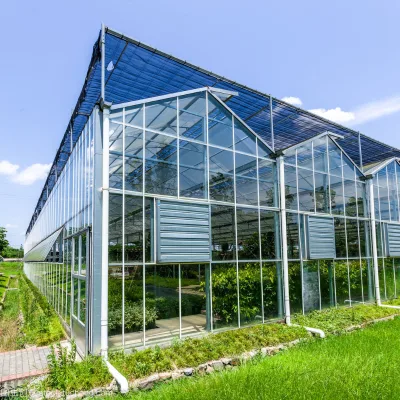

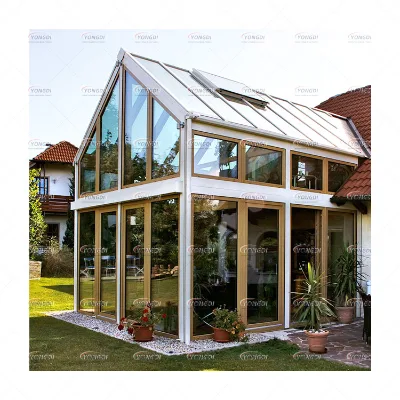

Modern Style Glass Greenhouse for Yard
$15.00
MOQ: 200 Square Meters
Cangzhou Zhuotai Greenhouse Equipment Manufacturing Co., Ltd.

Small Glass Greenhouse for Home Backyard
$15.00
MOQ: 200 Square Meters
Cangzhou Zhuotai Greenhouse Equipment Manufacturing Co., Ltd.

Garden Glass Greenhouse with Ventilation Window
$15.00
MOQ: 200 Square Meters
Cangzhou Zhuotai Greenhouse Equipment Manufacturing Co., Ltd.


Compact Glass Greenhouse with Stable Structure
$15.00
MOQ: 200 Square Meters
Cangzhou Zhuotai Greenhouse Equipment Manufacturing Co., Ltd.

Comprehensive Sourcing Guide
Strategic Sourcing Guide for Weatherproof Retractable Glasshouse Enclosures
Procuring a Weatherproof Retractable Glasshouse Enclosure requires a rigorous approach that balances structural integrity with functional adaptability. Buyers entering this market must navigate a complex landscape of material specifications, environmental certifications, and customization capabilities. The following guide outlines the essential technical, commercial, and operational factors necessary for a successful procurement strategy, grounded in verified product attributes and industry standards.
Technical Specifications and Structural Composition
The foundation of any reliable glasshouse enclosure lies in its structural composition and material selection. Modern units typically utilize a hybrid approach to ensure durability against varying weather conditions. The primary frame material is often aluminum alloy, chosen for its high strength-to-weight ratio and resistance to corrosion. In many high-performance models, the structure incorporates thermal break aluminum, which significantly enhances insulation properties by preventing heat transfer through the metal frame. This is critical for maintaining internal temperature stability, particularly in climates with extreme seasonal variations.
The roofing and glazing systems are equally vital. The roof material frequently consists of tempered glass, which offers superior impact resistance compared to standard glass. In some configurations, the roof features a double-tempered glass specification, providing an additional layer of safety and thermal efficiency. The light transmittance rate for these enclosures is often designed to exceed 90%, ensuring optimal natural lighting for plant growth or interior illumination. The frame may also integrate hot-dip galvanized steel or hot galvanized steel components to reinforce the structural skeleton, particularly in larger spans.
Regarding the mechanical operation, the enclosure must support a retractable mechanism. The opening pattern is typically horizontal, allowing the roof or side panels to slide open or close smoothly. The design style is generally modern, featuring a combined roof sunroom aesthetic that blends seamlessly with architectural surroundings. The structure is often described as having a multi-span capability, allowing for the construction of large, continuous enclosures without intermediate support columns. The surface treatment usually involves a powder-coated smooth finish, which protects the metal from oxidation and allows for color customization, including black, brown, or bespoke shades.
Compliance, Certification, and Safety Standards
When evaluating potential suppliers, buyers must prioritize compliance with international and local safety standards. While specific certification documents vary by manufacturer, the product standard is often listed as "customized," indicating that the unit is engineered to meet specific project requirements rather than a single universal standard. Buyers should verify that the supplier adheres to relevant building codes for wind load resistance. One observed specification indicates a wind load capacity of 0.6kN/M2, but this figure should be treated as a baseline observation rather than a universal guarantee.
It is imperative to request third-party test results for wind resistance, snow load capacity, and thermal performance. The supplier should be able to provide documentation proving that the aluminum structure and glass panels meet the necessary safety thresholds for the intended location. For instance, if the enclosure is to be installed in a region prone to high winds, the buyer must confirm that the structural design exceeds local regulatory requirements. Additionally, the "customized" nature of the standard implies that the supplier must be capable of engineering the unit to specific site conditions, rather than relying on off-the-shelf compliance.
Buyers should also verify the origin of the materials. Many high-quality enclosures are manufactured in China, with specific production hubs in regions like Liaoning. The origin location can influence the supply chain logistics and the availability of after-sales support. While the product origin is a factual data point, the quality of the manufacturing process within that region must be validated through site audits or detailed product testing reports.
Cost Drivers and Pricing Dynamics
The cost of a Weatherproof Retractable Glasshouse Enclosure is influenced by several variable factors. The observed price range in the market spans from $5.5 to $200 per unit, though this range likely reflects different unit types, such as individual components versus complete system packages. The final price is heavily dependent on the customization level, the size of the enclosure, and the specific material grades selected.
Key cost drivers include the type of glass used, with double-tempered glass commanding a higher price than single-pane alternatives. The complexity of the retractable mechanism also adds to the cost, as does the inclusion of optional systems such as shading or cooling mechanisms. The frame material is another significant factor; units utilizing thermal break aluminum and hot-dip galvanized steel will generally be more expensive than those using standard aluminum profiles.
The minimum order quantity (MOQ) is another critical cost consideration. The market observes an MOQ range from 1 set to 5000 units. For small-scale projects, buyers may find suppliers with an MOQ of just 1 set, allowing for a single-unit purchase. However, for larger commercial or agricultural projects, bulk ordering can significantly reduce the per-unit cost. The packing method, often specified as wooden boxes or export standard packing, also contributes to the overall logistics cost. Buyers should factor in the cost of custom packaging if the product requires specialized handling during transit.
Typical Applications and Functional Versatility
Weatherproof retractable glasshouse enclosures are versatile structures suitable for a wide range of applications. The primary function of these units includes heat insulation, soundproofing, anti-theft protection, airproofing, and insect-proofing. These features make them ideal for residential sunrooms, commercial atriums, and agricultural production facilities.
In the agricultural sector, these enclosures are frequently used for mixed farming and vertical farming operations. The "suitable" classification for mixed farming indicates that the structure can support diverse cultivation methods. The light transmittance rate of over 90% is particularly beneficial for production greenhouses, where maximizing natural light is essential for crop yield. The heating method is often listed as "unheated," suggesting that the primary thermal benefit comes from the insulation properties of the materials rather than active heating systems, though optional cooling and shading systems can be added.
The design allows for large, customized sizes, making them adaptable to various site constraints. The span capability allows for multi-span configurations, which are essential for large-scale commercial greenhouses. The location is typically outdoor, requiring the structure to withstand exposure to the elements. The advantage of these units often includes easy installation and economic efficiency, making them a cost-effective solution for expanding growing space or creating protected outdoor environments.
Supplier Evaluation and Verification Process
Selecting the right supplier is a critical step in the procurement process. Buyers should evaluate suppliers based on their project solution capabilities, specifically their ability to provide graphic design services for custom layouts. The supplier should demonstrate experience in handling customized orders, as the product standard is often tailored to specific needs.
Key evaluation criteria include the supplier's after-sales service capabilities. Online technical support is a common offering, but buyers should inquire about the availability of on-site installation assistance and the duration of the warranty. A warranty period of more than 5 years is a strong indicator of supplier confidence in product quality. Buyers should also verify the supplier's track record in delivering units with the specified features, such as the thermal break aluminum structure and tempered glass roofing.
The supplier's location and logistics capabilities are also important. With the product origin often listed as China, buyers must assess the supplier's ability to manage international shipping and handle export standard packing. The lead time and production capacity should be clearly defined, especially for large orders with high MOQs. Buyers should request references from previous clients who have purchased similar customized enclosures to validate the supplier's performance.
Quality Control and Long-Term Procurement Considerations
Ensuring long-term performance requires a robust quality control strategy. Buyers should implement a rigorous inspection process that covers material verification, structural integrity testing, and finish quality assessment. The surface treatment, typically a powder-coated smooth finish, must be inspected for uniformity and adhesion to prevent future corrosion. The glass panels should be checked for defects and verified to meet the double-tempered specification.
Long-term procurement considerations include the availability of replacement parts and the scalability of the system. The supplier should offer a range of optional systems, such as shading and cooling, which can be integrated or upgraded in the future. The warranty terms should be clearly understood, covering both the structural frame and the glazing materials. Buyers should also consider the ease of maintenance, as the "easy installation" feature often correlates with simplified maintenance procedures.
Finally, buyers must plan for the lifecycle of the enclosure. The structure is designed for outdoor use and must withstand environmental stressors over time. Regular maintenance schedules should be established to ensure the retractable mechanism continues to function smoothly and that the seals remain intact to maintain the airproof and insect-proof properties. By focusing on these long-term factors, buyers can ensure that their investment in a Weatherproof Retractable Glasshouse Enclosure delivers sustained value and performance.
Comparative Analysis of Key Product Attributes
To facilitate decision-making, the following table summarizes the key attributes observed in the market for weatherproof retractable glasshouse enclosures. This comparison highlights the variability in specifications and helps buyers identify the features most relevant to their specific project needs.
| Attribute Category | Common Specification | Observation / Note |
|---|---|---|
| Frame Material | Aluminum Alloy, Thermal Break Aluminum | Thermal break offers superior insulation. |
| Roof Material | Tempered Glass, Double Tempered Glass | Double-tempered provides higher safety. |
| Structure | Aluminum Structure, Hot Galvanized Steel | Hybrid structures offer enhanced strength. |
| Opening Pattern | Horizontal | Standard for retractable mechanisms. |
| Light Transmittance | > 90% | Critical for agricultural and sunroom use. |
| Wind Load | 0.6kN/M2 (Observed) | Verify against local building codes. |
| Warranty | > 5 Years | Indicates high confidence in durability. |
| Surface Treatment | Powder Coated Smooth Finished | Ensures corrosion resistance and aesthetics. |
| Customization | Available (Size, Color, Standard) | Essential for site-specific requirements. |
| Origin | China (e.g., Liaoning) | Impacts logistics and supply chain. |
| MOQ | 1 Set to 5000 Units | Flexible for small and large projects. |
| Packing | Wooden Box, Export Standard | Protects during international transit. |
This comparative overview underscores the importance of verifying specific attributes against project requirements. While the table provides a snapshot of common market offerings, buyers must conduct due diligence to ensure that the selected supplier can meet the precise technical and commercial demands of their procurement. By adhering to these guidelines, buyers can navigate the complexities of sourcing weatherproof retractable glasshouse enclosures with confidence and clarity.
FAQs
What materials are used for the frame and roof?
The frame typically uses aluminum alloy or thermal break aluminum, while the roof often features tempered glass. Some models also incorporate hot-dip galvanized steel for structural reinforcement, ensuring durability against weather conditions.
Can the enclosure be customized for specific sizes?
Yes, customization is available for both the size and design of the enclosure. Buyers can request customized dimensions and colors, including black or brown options, to fit specific project requirements and architectural styles.
What is the minimum order quantity for purchase?
The minimum order quantity can be as low as one set for certain suppliers. However, market observations show an MOQ range extending up to 5000 units depending on the specific supplier and product configuration selected.
How long is the warranty period for these units?
The warranty period typically exceeds five years for the structural components. This coverage ensures long-term reliability and protects the buyer against manufacturing defects in the aluminum structure and glass panels.
Where are these products manufactured and shipped from?
Products are primarily manufactured in China, with specific origins noted in Liaoning. The goods are packed in export standard wooden boxes or customized packaging before being shipped to international destinations.
What functional features does the enclosure provide?
The enclosure offers heat insulation, soundproofing, anti-theft protection, and insect-proofing capabilities. These features make it suitable for mixed farming, vertical farming, and residential sunroom applications requiring environmental control.