Source Welding Seam Removal Flap Wheel for Wood Steel Grinding
Compare 30 Welding Seam Removal Flap Wheel options from verified Chinese suppliers. These abrasive discs feature alumina cloth and glass fiber backing for efficient surface grinding on wood and steel applications.
Key considerations
Products List
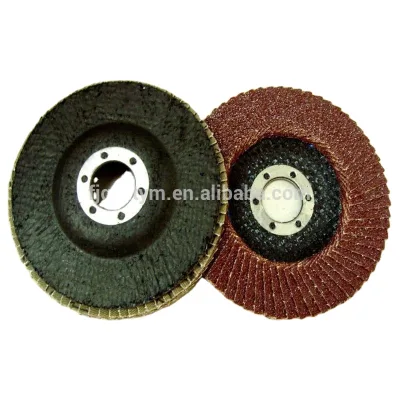


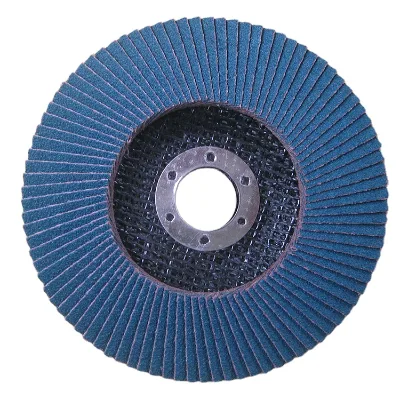


Prime Grade Heat Resistant CE Certification Flap Wheels for Weld Cleaning
$0.18 - $0.20
MOQ: 1000 Pieces

Practical Grade Stable Performance CE Certification Flap Wheels for Rust Removal
$0.18 - $0.20
MOQ: 1000 Pieces
Comprehensive Sourcing Guide
Strategic Sourcing Guide for Welding Seam Removal Flap Wheels
Understanding the Technical Architecture of Flap Wheels
When sourcing welding seam removal flap wheels, buyers must first distinguish between the broad category of abrasive discs and the specific geometry required for seam removal. The core product in this category is the flap wheel, which consists of multiple abrasive flaps arranged radially around a central backing. Based on the available market data, these units are frequently constructed with an Alumina or Aluminum Oxide abrasive grain bonded to a Glass Fibre Backing. This specific material combination is critical for welding applications because the glass fibre provides the necessary tensile strength to withstand high centrifugal forces, while the alumina grain offers a balance of cutting speed and durability on steel and other ferrous metals.
The physical dimensions of the wheel are the primary differentiator in this category. The standard configuration observed in the market includes a 150mm diameter with a 22mm hole size, often denoted as 150mm22mmAO. However, buyers must be aware that specifications vary significantly. Some listings indicate a fiberglass backing size of 140mm, while others reference a Diam 100-400mm range for standard products. The abrasive flaps themselves often measure 32 x 17 mm, with a typical quantity of 95 pieces per unit. This high flap count is essential for creating a consistent, uniform surface finish when removing welds, as it prevents the "grooving" effect often seen with solid grinding discs.
The rotational speed capability is another non-negotiable technical parameter. For safe operation during welding seam removal, the maximum RPM must be strictly observed. Data indicates specific units are rated for 10,200 RPM, while other high-performance mounted versions may reach up to 38,000 RPM. It is imperative for procurement teams to match the wheel's rated RPM to the spindle speed of the specific angle grinder or die grinder being used. Exceeding the maximum RPM rating can lead to catastrophic failure of the glass fibre backing, posing severe safety risks. The working style is generally classified as Surface Grinding or Tool Grinding, indicating the wheel is designed for contact with the workpiece surface rather than side loading.
Compliance, Safety Standards, and Certification Verification
In the industrial procurement of abrasive tools, compliance is not merely a formality but a critical component of risk management. While the supplied product data mentions a Standard of Diam 100-400 and references Standard compliance, it does not explicitly list specific international certification bodies such as OSHA, CE, or ISO for every listed item. Therefore, buyers must treat the "Standard" attribute as a general descriptor rather than a verified certification. The procurement process must include a direct request for the specific safety certificates associated with the batch being purchased.
Safety standards for abrasive wheels are rigorous. Buyers should verify that the manufacturer adheres to recognized standards for high-speed rotating tools. The presence of a Trade Assurance flag in the supplier profile suggests a level of transactional security, but it does not replace the need for technical compliance documentation. When evaluating a supplier, the buyer must confirm that the Glass Fibre Backing and the bonding agent used meet the tensile strength requirements for the stated Max Rpm.
Furthermore, the Place of Origin for these products is frequently listed as Fujian, China or Zhengzhou, China. While these regions are established manufacturing hubs, the location itself does not guarantee compliance. Buyers must verify that the specific factory holds valid quality management system certifications. The absence of explicit certification data in the product listing means the buyer must actively request test reports or compliance statements before placing a large order. Relying solely on the "High Quality" or "Top Quality" attributes listed in the product description is insufficient for B2B procurement, as these are subjective marketing terms rather than objective compliance metrics.
Cost Drivers and Pricing Dynamics in the Abrasive Market
The pricing of welding seam removal flap wheels is influenced by a complex interplay of material costs, manufacturing complexity, and order volume. The observed price range in the market spans from $0.08 to $15.00 USD. This wide variance is not indicative of a single product line but rather reflects differences in grit size, backing material quality, and the quantity of abrasive flaps. The lower end of the price spectrum likely corresponds to basic configurations with fewer flaps or lower-grade alumina, while the higher end represents premium units with optimized backing materials and higher flap counts.
The Minimum Order Quantity (MOQ) is a significant cost driver. The observed MOQ range is between 10 and 10,000 units. For small workshops or initial trials, an MOQ of 10 units allows for cost-effective testing without significant capital outlay. However, for large-scale industrial procurement, negotiating an MOQ closer to the 10,000-unit range can drastically reduce the unit cost. Buyers should be aware that the Single Gross Weight of a standard unit is approximately 1.000 kg, which impacts shipping costs. The Single Package Size of 16x16x13 cm suggests that while individual units are compact, bulk shipping in cartons (often 500PCS/Carton) requires careful logistics planning to optimize container space.
Customization is a key factor in cost variability. The market data confirms that Customization is available, allowing buyers to specify Grit sizes ranging from 40# to 120#. Customizing the grit size or the number of flaps will typically increase the unit price and potentially extend the lead time. Additionally, the Optional packing configurations, such as Bundled or Unbundled options, and the choice between Box or Carton packaging can influence the final landed cost. Buyers must calculate the total cost of ownership, including the shipping from ports like Xiamen, Qingdao, Tianjin, Ningbo, or Guangzhou, rather than focusing solely on the ex-factory price.
Typical Applications and Performance Expectations
The primary application for these flap wheels is the removal of welding seams, a process that requires both aggressive material removal and a smooth finish. The Application field explicitly lists Wood, Steel etc., but the specific geometry of the flap wheel makes it particularly suited for metalworking. The Alumina abrasive is effective on steel, stainless steel, and aluminum, providing a versatile solution for various fabrication environments. The Working Style of Surface Grinding ensures that the wheel can be used to blend welds flush with the surrounding material without creating deep gouges.
The versatility of the product is further enhanced by the availability of different Shank sizes, including 3mm, 6mm, and 6.35mm. This allows the wheels to be mounted on a wide variety of handheld tools, from small die grinders to larger angle grinders. The Color of the wheels, typically Brown or Black, is a visual indicator of the abrasive material, with black often indicating a specific grade or bond type of aluminum oxide.
For applications requiring precision, the Mounted model number AXFW or Strip it variants may be preferred. These configurations often feature a specific Structure described as Without Connector, which simplifies the mounting process and reduces the risk of imbalance during high-speed operation. The Grit options, ranging from coarse 40# for rapid stock removal to fine 120# for finishing, allow buyers to select the exact tool for the stage of the welding process. A typical workflow might involve using a 40# or 60# grit wheel to remove the bulk of the weld bead, followed by a 100# or 120# grit wheel to smooth the surface and prepare it for painting or coating.
Supplier Evaluation and Quality Control Protocols
Evaluating suppliers for abrasive tools requires a focus on consistency and reliability. The Brand Name XT appears in the data, but buyers should not assume that all products under this brand meet the same quality standards. The market data shows multiple Model Numbers such as 150mm22mmAO, AXFW, and Strip it, indicating a diverse product portfolio. Buyers must verify that the specific model they are sourcing matches their technical requirements exactly.
Quality control should begin with the verification of the Material. The MATERIAL is listed as ALUMINA CLOTH + GLASS FIBRE BACKING. Buyers must ensure that the glass fibre backing is of sufficient thickness and quality to prevent delamination at high speeds. The Quality attribute is often listed as High Quality or Top Quality, but these terms are subjective. A robust quality control protocol should include requesting samples for destructive testing, specifically checking the bond strength of the flaps and the tensile strength of the backing.
The Packing method is also a critical quality indicator. The data mentions prod_packing as in Box and Carton or 10PCS/Box, 500PCS/Carton. Proper packaging protects the abrasive flaps from moisture and physical damage during transit. Buyers should inspect the packaging upon receipt to ensure that the Single Package Size and Single Gross Weight match the specifications. Any deviation could indicate a change in the product composition or a packaging error that might affect the product's performance.
Long-Term Procurement Considerations and Logistics
Sourcing flap wheels is not a one-time transaction but a long-term supply chain relationship. The Lead Time and Shipping Port are critical factors in maintaining production continuity. The OUR SHIPPING PORT is listed as Xiamen, China, with Other Ports including Qingdao, Tianjin, Ningbo, or Guangzhou. Buyers should negotiate shipping terms that align with their production schedule, as delays in shipping from these ports can disrupt manufacturing lines.
The Selling Units are typically Single item, but bulk purchasing is encouraged for cost efficiency. The Optional nature of the packing allows for flexibility in storage and handling. For long-term contracts, buyers should consider negotiating a fixed price for a specific Grit range and Size to mitigate market volatility. The Customization availability offers a strategic advantage, allowing buyers to tailor the product to their specific machinery and application needs, which can lead to improved efficiency and reduced waste over time.
Finally, the Standard of Diam 100-400 and the prod_standard of as your request highlight the need for clear communication. Buyers must provide detailed specifications to avoid receiving mismatched products. The Place of Origin being Fujian or Zhengzhou suggests a concentrated manufacturing base, which can be advantageous for logistics but requires careful supplier vetting to ensure consistent quality across different batches. By focusing on these long-term factors, buyers can build a resilient supply chain for their welding seam removal needs.
Comparative Analysis of Key Product Attributes
To facilitate decision-making, the following table summarizes the key attributes observed in the market data for welding seam removal flap wheels. This comparison highlights the variability in specifications that buyers must navigate.
| Attribute | Observed Value / Range | Relevance to Procurement |
|---|---|---|
| Material | Alumina / Aluminum Oxide + Glass Fibre | Determines cutting speed and durability on steel. |
| Size (Diameter) | 100mm - 400mm (Standard); 150mm common | Must match grinder spindle capacity and workpiece size. |
| Hole Size | 22mm (Common); 3mm/6mm/6.35mm Shank | Critical for mounting compatibility with tools. |
| Grit Size | 40#, 60#, 80#, 100#, 120# | Coarse for removal, Fine for finishing. |
| Max RPM | 10,200 RPM - 38,000 RPM | Safety limit; must not exceed tool speed. |
| Flap Quantity | 95 PCS (Typical) | Higher count provides smoother finish. |
| Backing Size | 140mm (Backing) / 150mm (Total) | Ensures proper coverage and structural integrity. |
| Packing | 10PCS/Box, 500PCS/Carton | Affects storage density and shipping costs. |
| Origin | Fujian, China / Zhengzhou, China | Indicates manufacturing hub; affects lead time. |
| Shipping Port | Xiamen, Qingdao, Tianjin, Ningbo, Guangzhou | Determines logistics route and cost. |
This table serves as a checklist for buyers to ensure they are specifying the correct parameters for their specific welding applications. By cross-referencing these attributes with their operational requirements, buyers can minimize the risk of purchasing unsuitable tools and ensure a steady supply of high-performance abrasive wheels for their production lines.
FAQs
What material is used for welding seam removal flap wheels?
These wheels typically use Aluminum Oxide abrasive bonded to a Glass Fibre backing. This combination provides the necessary tensile strength for high-speed operation while effectively grinding steel and other metals.
Which grit sizes are available for these abrasive discs?
Available grit sizes range from 40# to 120# to suit different finishing needs. Coarser 40# or 60# grits remove material quickly, while finer 100# or 120# grits prepare surfaces for painting.
Can these wheels operate at high rotational speeds safely?
Yes, specific models are rated for maximum speeds up to 38,000 RPM. Buyers must match the wheel's rated RPM to their tool's spindle speed to prevent catastrophic failure of the glass fibre backing.
How are these flap wheels packaged for bulk shipping?
Standard packaging involves 10 pieces per box and 500 pieces per carton. This configuration ensures the abrasive flaps are protected from moisture and physical damage during transit from Chinese ports.
What is the typical minimum order quantity for these products?
The minimum order quantity ranges from 10 to 10,000 units depending on the supplier. Lower MOQs allow for small workshop trials, while larger orders significantly reduce the unit cost.
Which ports are used for shipping these abrasive tools?
Primary shipping ports include Xiamen, with alternatives like Qingdao, Tianjin, Ningbo, and Guangzhou. Buyers should factor in logistics from these Fujian or Zhengzhou origins when calculating total landed costs.