Source Welding Tables for Assembly, Repair, and Fabrication
Find and compare 30 Welding Table options for home workshops, industrial fabrication, and repair tasks. Evaluate models with D16 and D28 hole systems, varying thicknesses, and materials like steel and cast iron to match your specific workflow requirements.
Key considerations
Products List


Premium Reliable Welding Table with Adjustable Tilt and Rotary Function
$1250.00 - $6750.00
MOQ: 1 Pieces


Datang Welding Table Turning Table Rotating Table
$1000.00 - $10000.00
MOQ: 1 Set
Wuxi Datang Welding & Cutting Mechanical Equipment Co., Ltd.

High Quality Welding Table/Clamping Plate
$3000.00 - $7000.00
MOQ: 1 Pieces
Wuxi Datang Welding & Cutting Mechanical Equipment Co., Ltd.


High-Strength Welding Table Designed for Demanding Industrial Environments
$600.00 - $1000.00
MOQ: 1 Pieces




Comprehensive Sourcing Guide
Welding Table Sourcing Guide
Selecting the right Welding Table is a critical decision for any fabrication shop, workshop, or industrial assembly line. These workstations serve as the foundation for precision welding, cutting, and assembly tasks, directly impacting operator safety, workflow efficiency, and final product quality. Unlike standard workbenches, welding tables are engineered to withstand high temperatures, resist warping under thermal stress, and provide a stable, flat surface for clamping and fixturing. The market offers a diverse range of options, from portable units suitable for field repairs to heavy-duty modular systems designed for high-volume manufacturing. Understanding the specific needs of your operation is the first step in narrowing down the vast array of available configurations.
The procurement process involves evaluating multiple variables, including material composition, surface treatment, hole patterns, and structural integrity. Buyers must distinguish between basic steel tables and advanced modular systems that offer flexibility in fixture placement. Additionally, the source of the product, often indicated by regional manufacturing hubs, can influence lead times, shipping costs, and compliance with local safety standards. This guide provides a structured approach to sourcing welding tables, focusing on technical verification, commercial terms, and long-term reliability to ensure a sound investment.
Product Scope and Observed Listing Signals
The current market landscape for welding tables reveals a significant variation in product types and specifications. Listings indicate a price range from approximately $25 to $100,000, reflecting the disparity between simple, small-scale tables and large, complex modular systems. The minimum order quantity (MOQ) typically starts at one set, allowing for single-unit purchases, but can extend up to 600 units for large-scale industrial deployments. This wide range suggests that buyers can find solutions for both home workshops and large-scale industrial facilities, provided they carefully match the product attributes to their specific operational requirements.
Observed product attributes highlight key differentiators such as portability, customization options, and structural design. For instance, some models are explicitly labeled as portable, while others are built on a platform structure for stationary use. Customization is frequently available, allowing buyers to tailor dimensions and features to their unique workflows. The presence of specific model numbers, such as the YH-WB031-1 or D16 Welding Table, indicates that manufacturers offer distinct product lines with varying capabilities. Buyers should pay close attention to these identifiers to ensure they are evaluating the correct tier of equipment for their needs.
Technical Specifications to Verify
Material selection is paramount for durability and performance. Common materials observed in the market include Q355 steel, standard steel, cast iron, and stainless steel. Each material offers distinct advantages; for example, cast iron provides excellent vibration damping and stability, while stainless steel offers superior corrosion resistance. The thickness of the table top is a critical specification, with observed values ranging from 12mm to 25mm. Thicker tops generally provide greater rigidity and resistance to warping under heavy loads or intense heat, making them suitable for heavy-duty industrial applications.
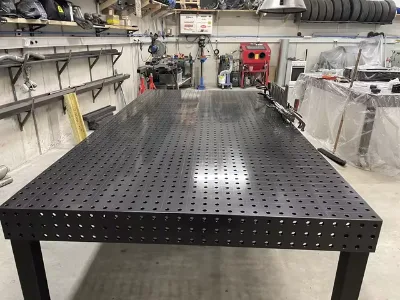
The hole pattern and system type are essential for fixture compatibility. The D16 system features a 16mm hole diameter with a 50mm hole distance, while the D28 system utilizes a 28mm hole diameter. These standardized patterns ensure that clamps and fixtures from various manufacturers can be used interchangeably. Table dimensions also vary significantly, with observed sizes including 24001200100mm, 15002000mm, and 40002000*200mm. Buyers must verify that the table dimensions fit their available floor space and accommodate the largest workpieces they intend to process. Additionally, surface treatments such as nitriding or normal finishing can affect wear resistance and ease of maintenance.
Compliance and Safety Documentation
Certification is a key indicator of manufacturing quality and regulatory compliance. The CE certificate is a common requirement for products sold in the European market, indicating that the Welding Table meets essential health, safety, and environmental protection standards. Buyers should request valid certification documents from suppliers to ensure that the equipment complies with local regulations. This is particularly important for industrial settings where workplace safety audits are conducted regularly. Non-compliant equipment can lead to operational disruptions, fines, or increased liability in the event of an accident.
Safety features extend beyond certification to include structural stability and surface integrity. Tables with standard legs and robust platform structures are designed to minimize tipping hazards during heavy welding operations. The surface finish should be inspected for smoothness and consistency to prevent snagging of cables or materials. Additionally, the treatment process, such as nitriding, can enhance the surface hardness and resistance to spatter, reducing the risk of surface degradation over time. Buyers should verify that the supplier provides clear documentation on these safety aspects to ensure a secure working environment.
Cost Drivers and Commercial Terms
Pricing for welding tables is highly variable and depends on several factors, including size, material, and customization. The observed price range of $25 to $100,000 reflects the complexity and scale of the equipment. Smaller, portable tables made from standard steel are generally more affordable, while large, modular systems constructed from high-grade materials like cast iron or stainless steel command higher prices. Buyers should expect the price to vary depending on the specific size and material chosen, and should request detailed quotes that break down these components.
Commercial terms such as lead time and packaging are also important considerations. Production dates are typically listed as new condition, and delivery times can range from 15 to 20 days, depending on the order size and customization requirements. Packaging is usually done in wooden packages to protect the table during sea shipment, which is the preferred transport method for large items. Buyers should factor in shipping costs and potential customs duties when calculating the total cost of ownership. Clear communication with the supplier regarding these terms can help avoid unexpected delays or expenses.
Supplier Qualification and Quality Control
Supplier location and origin can impact logistics and support. Many welding tables are manufactured in Jiangsu, China, a region known for its industrial manufacturing capabilities. Buyers should verify the supplier’s location to assess shipping times and potential tariffs. Additionally, the brand name, such as Lemar, can provide insight into the manufacturer’s reputation and product quality. Established brands often have more rigorous quality control processes and better after-sales support. Buyers should research the supplier’s track record and customer reviews to gauge reliability.
Quality control measures should be verified before placing an order. This includes checking for consistent hole patterns, flatness of the table surface, and structural integrity of the legs and platform. Buyers should request photos or videos of the actual product to verify these attributes. Customization options should be clearly defined in the contract to ensure that the final product meets the buyer’s specifications. Suppliers that offer transparent communication and detailed product information are more likely to deliver high-quality equipment that meets the buyer’s expectations.
Long-Term Procurement Checks
Long-term reliability is influenced by the material’s resistance to wear and corrosion. Tables made from Q355 steel or cast iron with proper surface treatments like nitriding are designed to withstand the harsh conditions of a welding environment. Buyers should consider the maintenance requirements of the table, including cleaning procedures and potential need for surface re-treatment over time. Regular inspection of the hole pattern for damage or deformation is also essential to ensure continued compatibility with fixtures.
Procurement strategies should include evaluating the supplier’s ability to provide spare parts and technical support. Modular welding tables, in particular, benefit from a supply chain that can provide replacement clamps, fixtures, and table components. Buyers should establish a relationship with a supplier that can offer consistent quality and timely support. Additionally, staying informed about industry trends and new technologies can help buyers make informed decisions about future upgrades or expansions of their welding workspace.
FAQs
What customization options are available for welding tables?
Customization is available for welding tables to meet specific project requirements. Buyers can request modifications to dimensions, hole patterns, or surface finishes. The D16 and D28 systems offer modular flexibility. This ensures the table fits unique assembly workflows. Contact suppliers directly to discuss tailored specifications and lead times for custom orders.
How does the D16 Welding Table system work?
The D16 system features a 16mm hole diameter with a 50mm hole distance. It is constructed from Q355 steel with a steel table surface finish. The standard model measures 2400 by 1200 by 100mm. This configuration supports precise fixture placement. It is ideal for general welding and assembly tasks requiring consistent grid alignment.
What certifications do welding tables typically carry?
Many welding tables carry CE certification, indicating compliance with European safety standards. This certification is common for equipment exported from regions like Jiangsu, China. Buyers should verify specific certificate documents with suppliers. CE marking ensures the product meets essential health and safety requirements for industrial use.
Can I source welding tables with cast iron material?
Yes, modular welding tables are available in steel or cast iron materials. Cast iron options provide superior vibration damping and stability for precision work. These tables often feature standard legs and normal surface finishes. They are suitable for home, workshop, or industrial applications requiring high rigidity.
What is the typical lead time for Welding Table orders?
Delivery times typically range from 15 to 20 days for standard orders. Some customized configurations may require up to 20 days for production. Shipping methods usually involve sea shipment for international buyers. Packaging is often provided in wooden crates to ensure safe transit. Confirm exact timelines with the supplier based on order volume.
What are the specifications for the 28mm hole system?
The 28mm hole system uses a D28 configuration with a 28mm hole diameter. Tables in this system often have a thickness of 25mm and a height of 200mm. Materials include steel or cast iron with nitrided treatment. Standard sizes include 1500 by 2000mm or 4000 by 2000mm variants.