Source White Glass Spiral Tube Tips for Cosmetics Medicine Food
Find 30 White Glass Spiral Tube Tips from verified Chinese manufacturers. Compare sizes like 8x30mm and 10x30mm, customization options, and lead times for cosmetics, medicine, and food applications.
Key considerations
Products List




Comprehensive Sourcing Guide
Strategic Sourcing Guide for White Glass Spiral Tube Tips
Navigating the global market for White Glass Spiral Tube Tips requires a disciplined approach that balances technical precision with supply chain reliability. These components, often utilized in filtration systems, cosmetic applicators, and specialized medical devices, demand rigorous verification of material integrity and manufacturing capabilities. The following guide synthesizes available market data and procurement best practices to assist buyers in identifying suitable suppliers and defining clear technical requirements.
Technical Specifications and Material Verification
The foundation of a successful procurement strategy lies in the precise definition of technical specifications. For White Glass Spiral Tube Tips, the primary material attribute is glass, which offers distinct advantages regarding chemical resistance, transparency, and recyclability. Buyers must verify that the glass composition meets the specific needs of the application, particularly when the product is intended for use in cosmetics, medicine, food, or chemical environments. The observed market data indicates a strong emphasis on transparency and specific dimensional standards, which are critical for functional compatibility.
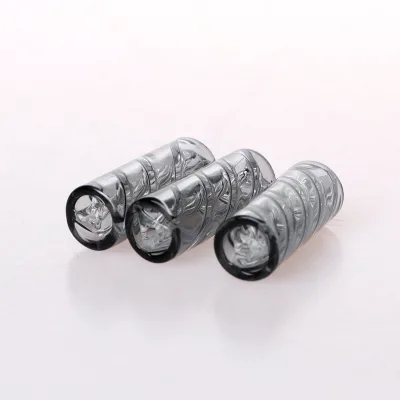
Dimensional consistency is paramount. Available product data highlights a variety of standard sizes, including 830mm, 1030mm, 1230mm, and variations such as 825mm, 1025mm, and 1225mm. Some listings also reference specific dimensions like 836mm and 835mm, suggesting that custom sizing is a common requirement in this sector. When sourcing, buyers should not assume a single standard applies to all suppliers. Instead, the procurement team must explicitly request confirmation of the exact outer diameter and length required for their specific assembly line. The "spiral" aspect of the tube tip often relates to the internal structure or the surface treatment, which may involve screen printing or specific hole configurations. Data points mention "7/9 Holes," indicating that the internal geometry can vary significantly based on the intended airflow or flow rate requirements.
Shape and style also play a role in the selection process. While round shapes are standard, the market offers creative styles and various models, such as LEO09-4, 25IRIS04-013, and FF-GGT006-27. These model numbers serve as internal references for suppliers but should be cross-referenced with physical samples to ensure they match the buyer's design intent. The "white" designation in the core keyword implies a specific aesthetic or functional coating, though observed listings frequently mention "transparent" as a primary color attribute. This discrepancy suggests that the "white" finish may be a result of the glass type, a specific coating, or a lighting effect in the product photography. Buyers must physically verify the color and opacity of the final product to ensure it aligns with brand standards.
Compliance, Certification, and Regulatory Standards
In the B2B procurement of glass components, particularly those used in food, medicine, and cosmetics, compliance is non-negotiable. The supply chain must be able to demonstrate adherence to relevant international and regional standards. The observed market data explicitly lists "CE" certification as a common attribute for these products. This indicates that many suppliers in the region are capable of meeting European conformity requirements, which is a significant advantage for buyers targeting the European market. However, the presence of a CE mark on a listing does not guarantee that every unit in a large order will be compliant; it is a supplier-level claim that requires verification through third-party testing reports for each production batch.
Beyond CE, buyers should investigate other potential certifications depending on the end-use application. For food-grade applications, compliance with FDA regulations or equivalent local food safety standards is essential. For medical devices, ISO 13485 certification for the manufacturer and biocompatibility testing for the glass material may be required. The provided data mentions "Standard Export Packaging" and "Standard Carton" as common packing methods, which are logistical details rather than regulatory certifications. Buyers must distinguish between packaging standards and product safety certifications.
When evaluating a supplier, request a copy of their current CE certificate and verify its validity with the issuing body. Additionally, inquire about their quality management system certifications, such as ISO 9001, which indicate a structured approach to maintaining consistent quality. The "recyclable" feature noted in the product attributes is an environmental claim that should be supported by data on the glass composition and the supplier's waste management practices. While this is a positive attribute for sustainability goals, it does not replace the need for functional safety certifications.
Cost Drivers and Pricing Structures
Understanding the cost drivers for White Glass Spiral Tube Tips is essential for budgeting and negotiation. The observed price range in the market is broad, spanning from $0.04 to $1500. This wide variance is likely due to differences in order volume, customization levels, and the complexity of the spiral design. The lower end of the spectrum typically represents standard, off-the-shelf items with minimal customization, while the higher end may include complex custom molds, specialized glass formulations, or very small batch orders with high setup costs.
Minimum Order Quantity (MOQ) is a significant factor influencing the unit price. Data indicates an MOQ range from 1 to 10,000 units, with a specific observation of 500 units for certain models. Suppliers often offer tiered pricing, where the unit cost decreases as the order volume increases. Buyers should be aware that ordering below the standard MOQ, such as the 100 PCS minimum observed in some listings, may result in a significantly higher per-unit cost or require a premium for sample production. Conversely, ordering in bulk can leverage economies of scale but ties up capital in inventory.
Customization is another major cost driver. The market data confirms that customization is available, including logo printing, custom colors, and unique dimensions. While the "Free Design Provided" and "Free Sample" attributes are attractive, they often come with conditions. For instance, a free sample may be limited to a standard model, while a custom mold or a specific color batch will incur tooling and setup fees. Buyers should clarify whether the quoted price includes the cost of design services, mold creation, and logo application. The "Screen Printing" process mentioned in the data adds a layer of complexity and cost compared to unprinted glass tubes.
Typical Applications and Usage Scenarios
The versatility of White Glass Spiral Tube Tips allows them to serve a wide array of industries. The observed usage categories include cosmetics, medicine, food, and chemical applications. In the cosmetics industry, these tips are frequently used in mascara wands, lip gloss applicators, and precision dispensers where the spiral design helps in even distribution of the product. The transparency and recyclability of the glass make it an environmentally friendly choice for brands aiming to reduce plastic waste.
In the medical and pharmaceutical sectors, the chemical resistance of glass is a critical factor. These tips may be used in droppers, pipettes, or sampling devices where contamination must be avoided. The specific hole configurations, such as the 7 or 9 holes mentioned, can be engineered to control the flow rate or create specific spray patterns. For food and chemical applications, the inert nature of glass ensures that the product remains uncontaminated by the container material, preserving the integrity of sensitive substances.
The "Daily Use" category suggests that these products are also suitable for general consumer goods, such as household cleaning tools or personal care items. The "Creative" style and "We Have Many Styles" attributes indicate that manufacturers are catering to a market that values both functionality and aesthetic appeal. Buyers should consider the end-user experience when selecting a design; for example, a spiral tip might provide a better grip or a more comfortable application experience than a straight tube.
Supplier Evaluation and Sourcing Strategy
Selecting the right supplier requires a thorough evaluation of their capabilities, location, and reliability. The market data points to suppliers primarily located in China, with specific mentions of Anhui and Jiangsu provinces. These regions are known for their glass manufacturing clusters, offering a concentration of expertise and supply chain efficiency. However, buyers should verify the specific factory location to ensure it aligns with their logistics and quality control preferences.
When evaluating a supplier, look for evidence of their design capabilities. The "OEM/ODM" and "Logo-Support" attributes suggest that many suppliers are willing to work with buyers to create custom products. A strong supplier will have a dedicated design team that can provide "Free Design Provided" services, helping to optimize the product for manufacturing and cost-efficiency. The "Multi-Modal" shipping option indicates flexibility in logistics, which is crucial for managing lead times and reducing shipping costs.
Lead time is another critical evaluation metric. The observed lead time of 7-15 days is relatively short, suggesting that suppliers are capable of quick turnaround for standard orders. However, for custom orders involving new molds or complex designs, the lead time may extend significantly. Buyers should confirm the lead time for their specific order requirements, including the time needed for sample approval and mass production. The "Standard Export Packaging" and "Carton" packing methods are standard, but buyers should ensure that the packaging is robust enough to prevent breakage during transit, especially for fragile glass items.
Quality Control and Long-Term Procurement Considerations
Maintaining consistent quality is essential for long-term procurement success. Given the fragile nature of glass, quality control must focus on dimensional accuracy, surface finish, and structural integrity. Buyers should implement a rigorous inspection process that includes checking for defects such as cracks, bubbles, or uneven printing. The "Screen Printing" process requires careful monitoring to ensure that logos and designs are aligned correctly and do not smudge or fade.
For long-term procurement, establishing a partnership with a reliable supplier is more beneficial than transactional buying. Look for suppliers who offer "Free Samples" to facilitate initial testing and validation. The ability to provide samples freely can reduce the risk of entering into a contract with an unsuitable supplier. Additionally, suppliers who support "Add Logo" and offer "Custom" colors demonstrate a commitment to meeting the buyer's branding needs.
Sustainability is increasingly important in procurement strategies. The "recyclable" attribute of the glass tips aligns with global trends toward reducing environmental impact. Buyers should inquire about the supplier's sustainability practices, including energy efficiency in the manufacturing process and waste reduction initiatives. Long-term contracts should include clauses that require the supplier to maintain consistent quality and adhere to agreed-upon environmental standards.
Finally, buyers should consider the scalability of the supplier. As demand grows, the supplier must be able to increase production capacity without compromising quality. The wide range of observed MOQs, from 1 to 10,000 units, suggests that suppliers are flexible, but buyers should confirm the maximum production capacity to ensure it can meet future demand spikes. By focusing on these key areas, buyers can build a resilient supply chain for White Glass Spiral Tube Tips that delivers value, quality, and reliability over the long term.
FAQs
What certifications do White Glass Spiral Tube Tips have?
Many White Glass Spiral Tube Tips carry CE certification for European conformity. Buyers should verify this with third-party reports for each batch, especially for food, medicine, or cosmetic applications where safety is critical.
Which sizes are available for these glass filter tips?
Available sizes include 8x30mm, 10x30mm, 12x30mm, and variations like 8x25mm or 12x25mm. Custom dimensions such as 8x36mm or 8x35mm are also offered, so confirm exact requirements before ordering.
Can I get a free sample for White Glass Spiral Tube Tips?
Free samples are available for standard models to facilitate initial testing. Custom molds or specific color batches may incur tooling fees, so clarify sample conditions and costs before requesting them.
How long is the lead time for custom orders?
Standard lead times range from 7 to 15 days for mass production. Custom orders involving new molds or complex designs may require additional time, so confirm the schedule based on your specific design needs.
What is the minimum order quantity for these tips?
Minimum order quantities vary, with some listings requiring 500 units and others 100 pieces. Ordering below standard MOQs may result in higher per-unit costs or require a premium for sample production.
Where are these glass tips manufactured?
These tips are primarily manufactured in China, with specific origins in Anhui and Jiangsu provinces. Buyers should verify the exact factory location to ensure it aligns with their logistics and quality control preferences.
Can suppliers add logos to White Glass Spiral Tube Tips?
Yes, suppliers support logo printing and customization for branding purposes. Screen printing is a common process used, but buyers should confirm alignment accuracy and design compatibility before placing large orders.