Source Winter Snow Passenger Car Tire for Sedans, SUVs, and Trucks
Compare 30 Winter Snow Passenger Car Tire options from verified Chinese manufacturers. Buyers can evaluate radial designs, DOT and ECE certifications, and delivery times ranging from 15 to 20 days for various tire sizes.
Key considerations
Products List


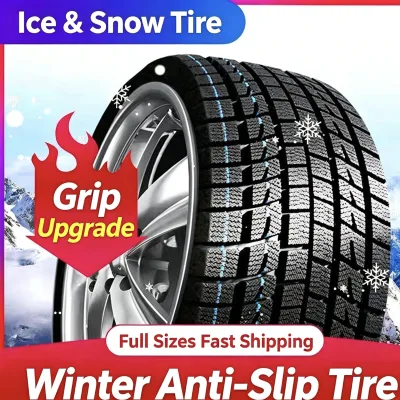


Winter Tire Snow Tires Car Tyre 145/70r12 155/70r12 155/70r13 PCR Tyre/Tire
$11.00 - $25.00
MOQ: 300 Pieces


Full Sizes for Winter/Snow/Summer/All Season Passenger Car Tire/Tyre From China
$15.00 - $25.00
MOQ: 300 Pieces


195/65r15 205/55r16 225/55r16 205/60r16 Passenger Car Tire Tires for Snow Commercial Tyre
$24.00 - $45.00
MOQ: 100 Pieces


Comprehensive Sourcing Guide
Strategic Sourcing Guide for Winter Snow Passenger Car Tires
Understanding Technical Specifications and Design Requirements
When sourcing winter snow passenger car tires, the primary objective is to identify products engineered specifically for low-temperature traction and snow clearance. The technical landscape for these tires is defined by specific tread patterns and structural designs that differ significantly from all-season or summer alternatives. Based on available market data, the most critical design attribute is the tread pattern. Buyers must verify that the product features a "Mud and Snow Pattern" or explicitly labeled "M+S" (Mud and Snow) designation. This pattern is not merely aesthetic; it is a functional requirement designed to bite into snow and expel slush, ensuring stability on winter roads.
The tire construction is another vital technical parameter. The majority of high-performance winter tires in the current supply chain utilize a "Radial Tyre" design. This construction offers superior flexibility and heat dissipation, which is essential for maintaining grip in freezing conditions. Furthermore, the industry standard for these products is the "Tubeless" type, often described as "Without Inner Tube." This design reduces the risk of sudden pressure loss and simplifies repair procedures. Buyers should also note that while some listings mention "Full-size Spare Tire" capabilities, the standard configuration for winter tires is often a "Non-Spare Tire" setup, meaning the winter set is a dedicated replacement rather than a temporary spare.
Size specifications vary widely depending on the vehicle class, but the market offers a robust range of diameters. Data indicates availability in sizes ranging from 15 to 20 inches, with specific models covering 13 to 18 inches. Width specifications are equally diverse, with common ranges falling between 175mm and 225mm, and some high-performance variants extending to widths of 235mm or more. Specific model examples found in the supply chain include sizes such as 235/55R18, 235/40ZR18, 225/60R16, and 165/55R14. When evaluating a supplier, buyers must cross-reference their vehicle's rim size and width requirements against these specific model numbers to ensure compatibility. The "Winter Season/Snow Road" usage designation is a mandatory filter; any tire lacking this specific application profile should be excluded from consideration regardless of its price point.
Compliance, Certification, and Regulatory Standards
Navigating the regulatory landscape is perhaps the most critical phase of sourcing winter tires, as non-compliant products can lead to customs seizures, legal liabilities, and safety failures. The global market for winter tires is heavily regulated, requiring adherence to multiple international standards. A comprehensive review of the supply base reveals that reputable manufacturers typically hold a portfolio of certifications including ECE, DOT, ISO, CCC, CE, FCC, GS, and RoHS. These certifications are not optional; they serve as proof that the tire meets specific safety, environmental, and performance benchmarks for different regions.
For buyers targeting the European market, the ECE (Economic Commission for Europe) and E-MARK certifications are non-negotiable. These standards ensure the tire has passed rigorous testing for noise, wet grip, and rolling resistance. Similarly, for shipments to North America, the DOT (Department of Transportation) certification is mandatory. In the Middle East and Africa, certifications such as GCC (Gulf Cooperation Council), SONCAP (Nigeria), and INMETRO (Brazil) are often required for market entry. The supply chain also frequently references TS16949 (now IATF 16949), which indicates that the manufacturer adheres to automotive quality management systems.
Buyers must verify that the "prod_standard" listed by the supplier matches the regulatory requirements of their destination country. A common listing might include "DOT, GCC, ECE, TS16949, E-MARK, S-MARK, SONCAP, INM," suggesting a broad compliance capability. However, buyers should not assume that every SKU from a supplier possesses every certification. It is essential to request specific test reports or certification documents for the exact tire model being purchased. The presence of "EU LABEL" compliance is also a significant indicator of adherence to European energy efficiency standards. Without these verified credentials, the risk of importing substandard or illegal tires increases dramatically.
Cost Drivers and Pricing Dynamics
The pricing structure for winter snow passenger car tires is influenced by a complex interplay of raw material costs, certification expenses, and logistical factors. The observed market price range for these products spans from approximately $10 to $194.17 USD per unit. This wide variance is not arbitrary; it reflects differences in tire size, technology, brand positioning, and the depth of the tread pattern. Smaller tires, such as those in the 13-15 inch range with widths around 175mm, tend to occupy the lower end of the price spectrum. Conversely, high-performance radial tires in larger diameters (18-20 inches) with advanced winter compounds and specialized tread designs command premium prices.
Several specific factors drive these costs. First, the "Technology" employed in the tire construction plays a significant role. Some suppliers highlight the use of advanced technologies, such as those associated with major industry players like "Hankook," which can influence the pricing tier. Second, the level of customization available affects the final cost. While "Customization" is listed as an available attribute, bespoke designs, private labeling, or specific compound formulations often incur additional charges. Third, the packaging requirements impact the unit price. Options range from "PP" (polypropylene) packing to "with/Without Packing" configurations, where premium protective packaging adds to the overall cost.
Buyers must also consider the Minimum Order Quantity (MOQ) as a cost driver. The observed MOQ range is substantial, spanning from 1 unit to 1,280 units. A low MOQ of 100 pieces is common for smaller buyers or sample orders, but it often results in a higher per-unit cost. Larger orders, potentially reaching the 1,280-unit threshold, typically unlock significant volume discounts. The "Single volume" and "Single gross weight" of the tire also factor into shipping costs, which can be a hidden expense in the total landed cost. For example, a tire with a single gross weight of 0.0 kg in the data suggests a need for careful verification of actual shipping weights, as this could indicate a data entry error or a specific lightweight model. Buyers should calculate the total cost of ownership, including freight, insurance, and duties, rather than focusing solely on the ex-factory price.
Typical Applications and Usage Scenarios
Winter snow passenger car tires are designed for specific environmental conditions that demand superior traction and safety. The primary application is "Winter Season/Snow Road" usage, where temperatures drop below 7°C (45°F). In these conditions, standard all-season tires harden and lose grip, whereas winter tires utilize specialized rubber compounds that remain flexible. The "M+S" pattern and "Mud and Snow Pattern" are engineered to provide biting edges that dig into packed snow and ice, offering stability that is crucial for passenger vehicles navigating slippery surfaces.
Beyond general winter driving, these tires are suitable for a variety of vehicle types, from compact city cars to larger SUVs. The availability of sizes ranging from 155/55R14 to 245/40ZR18 ensures that buyers can find suitable options for sedans, hatchbacks, and crossover vehicles. The "Radial Tyre" design is particularly beneficial for passenger cars, offering a balance of comfort and handling that is essential for daily commuting in adverse weather. Additionally, the "Reliable Quality" and "Excellent" performance attributes listed in the product data suggest that these tires are intended for regular, long-term use rather than temporary or emergency scenarios.
It is important to note that while some listings mention "Sole Agency Opportunity," this implies that certain suppliers may offer exclusive distribution rights for specific regions. This can be advantageous for buyers looking to establish a long-term supply chain without competition from other local distributors. However, the "Using" category strictly defines the operational context; these tires are not intended for high-speed summer driving or off-road rock crawling, despite the "Mud" designation in the pattern name. The "Condition" is listed as "New," confirming that the supply chain deals in fresh inventory rather than refurbished or used goods. Buyers should ensure that the tires they procure are matched to the specific climate of their target market, as winter tires in warm climates can wear out rapidly and offer poor handling.
Supplier Evaluation and Quality Control Protocols
Selecting the right supplier requires a rigorous evaluation process that goes beyond simple price comparison. The "Place of Origin" for the majority of these products is identified as "China," with specific mentions of "Shandong, China" as a manufacturing hub. While this region is known for a high volume of tire production, buyers must verify the specific capabilities of the factory. Key evaluation criteria include the "Technology" level, such as the adoption of "Hankook" technology or similar advanced manufacturing processes, and the consistency of the "Product Name" and "Brand Name" (often OEM or "Chinese Tire Brand").
Quality control should be a central part of the procurement strategy. Buyers must demand evidence of the "Certification" portfolio, ensuring that the specific batch of tires matches the claimed standards like ECE, DOT, and ISO. The "Delivery" lead time is another critical metric; observed ranges include 15 days and 20 days. Buyers should verify if these lead times are consistent or if they fluctuate based on order volume. The "Advantage" of "Fast Delivery" and "Reliable Quality" should be substantiated with past performance data or references from other clients.
When evaluating suppliers, buyers should also assess their "Services" capabilities. The listing of "Top Services" suggests a focus on customer support, which is vital for resolving issues related to defects, shipping delays, or documentation. The "Single item" selling unit indicates that some suppliers may be flexible with order sizes, but the "MOQ" of 100 pieces is a common threshold. Buyers should also check the "prod_packing" specifications to ensure that the tires will arrive in good condition, especially given the "PP" or "with/Without Packing" options. A robust quality control protocol should include pre-shipment inspections to verify the "Tread Pattern," "Tire Design," and "Size" against the purchase order.
Long-Term Procurement Considerations and Strategic Sourcing
Sourcing winter snow passenger car tires is not a one-time transaction but a strategic initiative that requires long-term planning. The "Sole Agency Opportunity" mentioned in the product data suggests that buyers can secure exclusive rights to distribute specific models in their region. This can provide a competitive advantage by limiting market saturation and allowing for better price control. However, securing such an opportunity requires a commitment to volume and a strong relationship with the supplier.
Buyers should also consider the "Customization" aspect as a long-term growth strategy. The ability to customize tread patterns, sidewall branding, or compound formulations can differentiate a buyer's product line from generic competitors. This is particularly relevant for OEM buyers or private labelers looking to build a distinct brand identity. The "Brand Name" being listed as "OEM" or "Chinese Tire Brand" indicates that there is significant flexibility for private labeling, which is a key driver for many B2B procurement strategies.
Finally, the "Delivery" timeline and "Lead Time" must be factored into inventory planning. With lead times ranging from 15 to 20 days, buyers need to align their procurement cycles with the onset of the winter season to avoid stockouts. The "Advantage" of "Fast Delivery" is a valuable asset, but it should be balanced against the reliability of the supply chain. Buyers should establish clear communication channels with suppliers to monitor production status and potential delays. By focusing on suppliers with "Excellent" performance ratings and "Reliable Quality" track records, buyers can mitigate risks and ensure a steady supply of high-quality winter tires for their customers. The "Condition" of the tires being "New" and the availability of "Spare Tire" options (even if non-spare in standard configuration) further support a strategy of maintaining a robust and versatile inventory.
FAQs
What certifications are required for winter snow passenger car tires?
Winter tires must hold certifications like ECE, DOT, ISO, and CCC to meet global safety standards. Buyers should verify specific regional requirements such as GCC for the Middle East or INMETRO for Brazil before ordering.
Which tread pattern is essential for winter snow passenger car tires?
A Mud and Snow Pattern or M+S designation is essential for effective traction on snow and ice. This pattern provides the necessary biting edges to clear slush and maintain stability in freezing conditions.
How long is the typical delivery time for winter snow passenger car tires?
The typical delivery time ranges from 15 to 20 days depending on the supplier and order volume. Buyers should confirm lead times early to ensure timely arrival before the winter season begins.
Can I customize the packaging for winter snow passenger car tires?
Customization is available for packaging, with options ranging from PP packing to with or without packing configurations. Buyers can request specific packaging to protect the tires during transit or meet branding needs.
What is the minimum order quantity for winter snow passenger car tires?
The minimum order quantity varies from 1 to 1280 units, with 100 pieces being a common threshold for many suppliers. Smaller orders may incur higher per-unit costs compared to bulk purchases.
Which tire sizes are available for winter snow passenger car tires?
Available sizes range from 13 to 20 inches, with widths between 175mm and 235mm. Specific models include 165/55R14, 235/55R18, and 225/60R16 to fit various passenger vehicle classes.