Source Wireless Remote Clamshell Grab for Vessel Dock Terminal Port
Find and compare 30 Wireless Remote Clamshell Grab units with capacities from 3 to 14 cubic meters and SWL up to 30 tons. Buyers can evaluate models like Clamshell Grab and Excavator Bucket for use in vessel, dock, and terminal port applications.
Key considerations
Products List


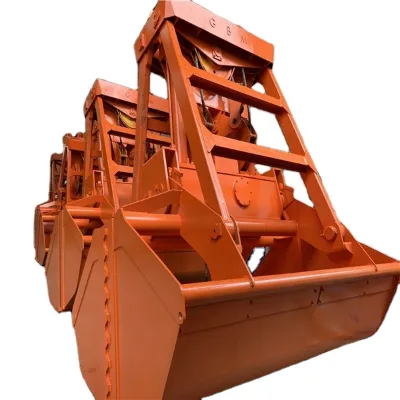
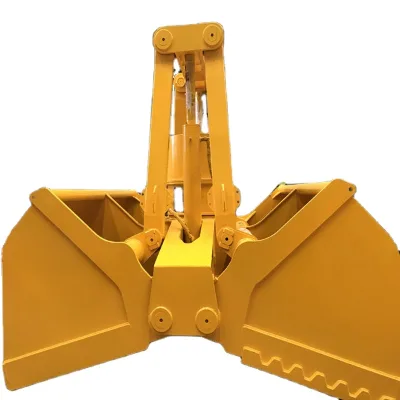
Electric Hydraulic Marine Clamshell Grab with Remote Control System for Sale
$28000.00 - $30000.00
MOQ: 1 Sets



Comprehensive Sourcing Guide
Strategic Sourcing Guide for Wireless Remote Clamshell Grab Systems
Understanding the Technical Architecture of Clamshell Grabs
When sourcing a Wireless Remote Clamshell Grab, buyers must first distinguish between the mechanical grab itself and the control systems that operate it. The core keyword implies a system where the operator manages the grab's opening and closing cycles from a distance, typically utilizing pneumatic or electric signals rather than direct manual linkage. Based on available product data, the mechanical structure of these units often utilizes high-strength steel, specifically Q345b, which is a standard low-alloy high-strength structural steel known for its toughness and weldability in heavy industrial applications. The physical dimensions and capacity vary significantly across the market, with observed volume capacities ranging from 4 cubic meters to 14 cubic meters. This variance suggests that a single "one-size-fits-all" specification does not exist; instead, the selection must be driven by the specific bulk material density and the required throughput of the vessel or terminal.
The lifting mechanism relies on a robust wire rope system. For these heavy-duty applications, the wire rope diameter is a critical specification, with observed values around 24mm. The core type of the rope is equally important for flexibility and durability; data indicates the use of Hemp Core configurations, which provide the necessary flexibility for the complex winding and unwinding required during clamshell operations. The grab itself operates via a pulley system, where the pulley diameter, observed at 520mm, dictates the mechanical advantage and the smoothness of the lifting cycle. The dead weight of the unit is another vital metric, with observed ranges between 5 tons and 8 tons. This weight directly impacts the load capacity of the host crane or excavator. Buyers must ensure that the host equipment's Safe Working Load (SWL) exceeds the combined weight of the grab and the material. For instance, while some configurations list a crane SWL of 10 tons, others in the same category may support up to 30 tons, indicating a wide spectrum of industrial applications from smaller port operations to massive bulk handling terminals.
Compliance and Certification Verification Protocols
In the international B2B market for heavy machinery, certification is not merely a formality but a prerequisite for operational safety and legal compliance. When evaluating a Wireless Remote Clamshell Grab, buyers must verify that the supplier provides valid documentation for recognized standards. The observed product data lists certifications such as ISO, RoHS, CE, and GS. These acronyms represent distinct compliance frameworks: ISO generally refers to quality management systems (specifically ISO9001 is noted in some contexts), RoHS addresses restrictions on hazardous substances, CE indicates conformity with health, safety, and environmental protection standards for products sold within the European Economic Area, and GS is a German safety mark. However, buyers should exercise caution, as certification status can vary by specific model. For example, one model may be listed with "CE, ISO9001: Condition: New," while another might list "ISOCE, GS." This inconsistency highlights the need for buyers to request the specific certificate for the exact model number being purchased, rather than accepting a generic claim for the supplier's entire catalog.
Furthermore, the standard for the product itself is often not a fixed number but a variable dependent on the unit's dead weight and volume. The data indicates that the "prod_standard" can be "It depends dead weight and volume" or "customized." This implies that there is no single universal standard that applies to every clamshell grab. Instead, the standard is likely a custom engineering specification tailored to the client's requirements. Buyers must verify that the supplier has a clear process for defining these standards before production begins. Additionally, the origin of the product is frequently cited as Shanghai or Wuxi, China. While these are major manufacturing hubs, the "prod_origin" field sometimes varies between "China" and specific cities. Buyers should confirm the specific manufacturing location to understand the logistical implications and to ensure the supplier has the requisite local infrastructure for quality control.
Cost Drivers and Pricing Structure Analysis
The pricing structure for wireless remote clamshell grabs is highly dynamic and influenced by several tangible factors. The observed price range in the market spans from 10 USD to 10,000,000 USD. This extreme variance is not indicative of a single product line but rather reflects the difference between a small component, a complete system, or a bulk order of multiple units. It is critical for buyers to understand that a price at the lower end of this spectrum likely refers to a specific part or a very small, low-capacity unit, while the upper end represents a fully integrated, high-capacity system with advanced remote control features. The Minimum Order Quantity (MOQ) observed is consistently 1, suggesting that suppliers are flexible and willing to sell single units, which is advantageous for smaller projects or replacement part procurement.
Several specific attributes drive the final cost. The material composition, specifically the use of Q345b steel versus other alloys, will impact the base price. The capacity of the grab, ranging from 3-13 cubic meters to 30 cubic meters, is a primary cost driver, as larger grabs require more material and more complex engineering. The power source is another variable; while some units are pneumatic, others may utilize different mechanisms, and the complexity of the wireless remote control system adds significant cost. The "Rate" attribute, observed as 3, may refer to a specific operational parameter or a cost multiplier, but its exact definition requires clarification with the supplier. Additionally, the "prod_packing" is often listed as "Nude Packing" or "Nude," which affects shipping costs. Nude packing means the unit is shipped without a protective crate, reducing initial shipping weight but potentially increasing the risk of damage during transit. Buyers must factor in the cost of custom crating or protective measures if they choose this option. The "Delivery Time" is also a cost factor, with observed lead times of 30 days or 60 days. Rush orders or expedited shipping will inevitably increase the total procurement cost.
Typical Applications and Operational Environments
The versatility of the Wireless Remote Clamshell Grab makes it suitable for a wide array of heavy industrial applications. The primary application place is identified as Vessel, Dock, and Terminal Port. In these environments, the grab is used to load and unload bulk materials such as coal, ore, grain, and sand. The ability to operate the grab remotely is particularly valuable in these settings, as it allows the operator to stand in a safe location away from the hazardous zone of the loading/unloading operation. This reduces the risk of injury from falling materials or mechanical failure. The "Operation Form" is noted as "Ground Operation," which confirms that the system is designed to be controlled from the ground level, further enhancing safety.
Beyond ports, the grab can be adapted for use with excavators, as indicated by the "Type: Excavator Bucket" classification in some product listings. This suggests that the clamshell mechanism can be integrated into mobile equipment for construction sites, dredging operations, or waste management facilities. The "Shape" of the grab is described as "Endless," which may refer to the continuous loop of the wire rope or the specific design of the grab jaws. The "Sling Color" is observed as Red, which is a standard safety color used to indicate lifting equipment, ensuring high visibility for safety officers and operators. The "Lifting Eye Type" is listed as "Folded Eye," a design feature that likely enhances the connection strength and reduces stress concentrations at the lifting point. The "Fixed Form" is noted as "Welding Type," indicating that the structural components are permanently joined, which is standard for high-load applications where bolted connections might loosen under vibration.
Supplier Evaluation and Selection Criteria
Selecting the right supplier for a Wireless Remote Clamshell Grab requires a rigorous evaluation process that goes beyond price comparison. Buyers should prioritize suppliers who demonstrate a clear understanding of the customization requirements. The data shows that "Customization: Available" is a standard offering, meaning that buyers should expect to work with the supplier to tailor the grab to their specific needs. The "prod_model" varies widely, with examples like "Clamshell Grab," "GBM-JS-024," "RXM4LB2BD," and "QSHI-C2." This variety indicates that suppliers often have a modular approach to manufacturing, allowing them to mix and match components to create a custom solution. Buyers should verify the supplier's ability to provide detailed engineering drawings and specifications for the custom model they are purchasing.
The "Guarantee Period" is another critical factor in supplier evaluation. An observed guarantee period of 12 months is a standard benchmark, but buyers should negotiate for longer periods if the application involves high-frequency use. The "Delivery Time" of 30 or 60 days should be clearly defined in the contract, with penalties for delays. Buyers should also check the supplier's track record in the specific region of operation. While the "prod_origin" is often listed as Shanghai or Wuxi, China, the supplier's ability to provide after-sales support in the buyer's location is paramount. A supplier with a local service team or a strong network of authorized distributors can significantly reduce downtime in the event of a malfunction. The "Certification" status should be verified against the specific model, as discussed earlier, to ensure that the product meets the regulatory requirements of the buyer's country.
Quality Control and Long-Term Procurement Considerations
Quality control for wireless remote clamshell grabs must be comprehensive, covering both the mechanical and electronic components. The "Wire Rope Diameter" of 24mm and the "Pulley Diameter" of 520mm are specific measurements that must be verified during the inspection process. Buyers should request third-party inspection reports that confirm these dimensions and the tensile strength of the materials used. The "Dead Weight" of 5 to 8 tons must be accurately measured to ensure it matches the design specifications. Any deviation could indicate a manufacturing defect or the use of substandard materials. The "Rope Core Type" of Hemp Core should be inspected for signs of wear or degradation, as this component is subject to significant stress during operation.
Long-term procurement considerations include the availability of spare parts and the ease of maintenance. The "prod_packing" being "Nude" suggests that the unit is shipped in a way that facilitates easy disassembly or assembly, which can be beneficial for maintenance. However, buyers should ensure that the supplier provides a comprehensive spare parts list, including wire ropes, pulleys, and hydraulic or pneumatic components. The "Standard" being "customized" or "It depends dead weight and volume" means that spare parts may not be off-the-shelf items, so buyers should secure a long-term supply agreement for critical components. The "Application" as "Hoisting Machinery" implies that the grab is a critical part of the overall lifting system, and any failure can halt operations. Therefore, buyers should consider the total cost of ownership, including maintenance, spare parts, and potential downtime, rather than just the initial purchase price.
Comparative Analysis of Key Specifications
To facilitate a clearer understanding of the market offerings, the following table summarizes the key specifications observed in the product data. This comparison highlights the variability in capacity, weight, and certification, which are critical factors in the selection process.
| Specification | Observed Range / Value | Notes for Buyer Verification |
|---|---|---|
| Volume Capacity | 4cbm - 14cbm (also 3-13cbm, 6-12cbm, 30cbm) | Verify based on material density and required throughput. |
| Dead Weight | 5t - 8t | Ensure host crane SWL exceeds this weight plus load. |
| Wire Rope Diameter | 24mm | Check tensile strength and core type (Hemp Core). |
| Pulley Diameter | 520mm | Verify mechanical advantage and wear resistance. |
| Crane SWL | 10ton - 30t | Match to the specific grab model and application. |
| Certification | ISO, RoHS, CE, GS, ISO9001 | Request specific certificates for the exact model. |
| Material | Q345b, PE | Confirm material grade for the specific component. |
| Delivery Time | 30 Days, 60 Days | Define penalties for delays in the contract. |
| Guarantee Period | 12 Months | Negotiate for extended coverage if needed. |
| Origin | Shanghai, Wuxi, China | Verify local support and logistics capabilities. |
In conclusion, sourcing a Wireless Remote Clamshell Grab requires a meticulous approach that balances technical specifications, compliance requirements, and long-term operational needs. By carefully evaluating the factors outlined above, buyers can make informed decisions that ensure safety, efficiency, and reliability in their bulk handling operations.
FAQs
What certifications are available for wireless remote clamshell grabs?
Certifications such as ISO, RoHS, CE, and GS are available for these units. Buyers must verify the specific certificate for the exact model, as some listings show CE and ISO9001 while others list ISOCE and GS, indicating variation by product.
Which materials are used to construct the grab body?
The grab body is constructed using Q345b low-alloy high-strength structural steel. This material is selected for its toughness and weldability in heavy industrial applications like vessel and dock operations.
How is the wireless remote system powered?
The system utilizes a pneumatic power source for operation. This allows the operator to manage the grab's opening and closing cycles from a distance, typically using pneumatic signals rather than direct manual linkage.
Can the product capacity be adjusted for different needs?
Yes, the capacity is adjustable to suit specific project requirements. The observed volume ranges from 4 cubic meters to 14 cubic meters, allowing selection based on bulk material density and throughput needs.
What is the standard delivery time for these units?
The delivery time is typically 30 days or 60 days depending on the order. Buyers should confirm the specific lead time in the contract, as rush orders or expedited shipping may increase costs.
Which wire rope specifications are standard for this equipment?
Standard specifications include a 24mm wire rope diameter with a Hemp Core. This configuration provides the necessary flexibility for the complex winding and unwinding required during clamshell operations.
What is the guaranteed warranty period for the grab?
The standard guarantee period is 12 months for the unit. Buyers should negotiate for longer periods if the application involves high-frequency use or harsh operating environments.