Source Wireless Rechargeable LED Par Light for Stage Pool Fountain
Find 30 Wireless Rechargeable LED Par Light options with features like built-in batteries, wireless DMX control, and IP ratings suitable for stage, swimming pool, and fountain applications. Compare specifications including power, beam angles, and color mixing capabilities from verified suppliers.
Key considerations
Products List


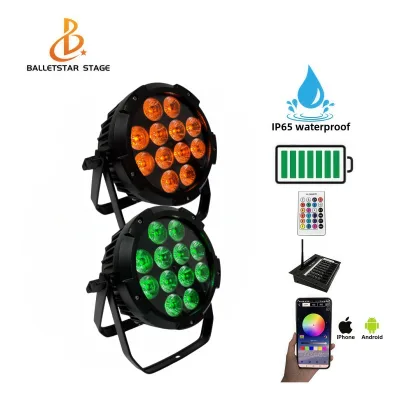
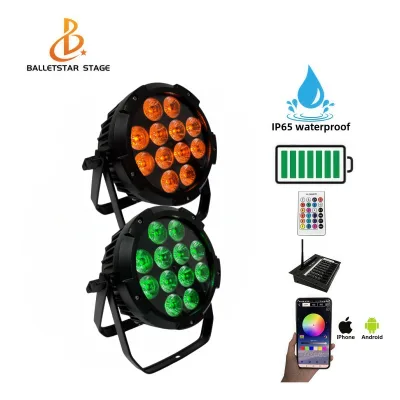
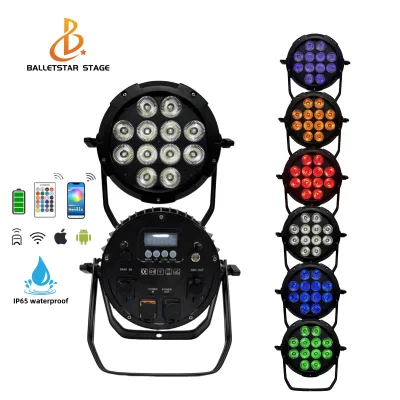
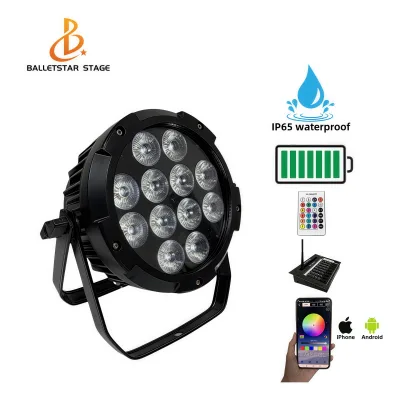
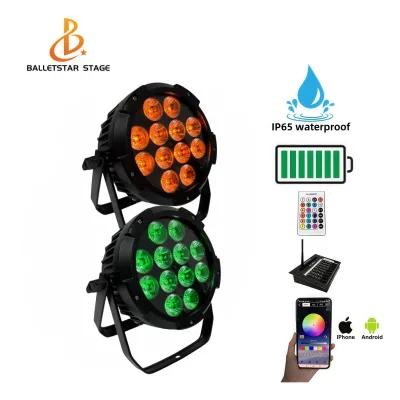
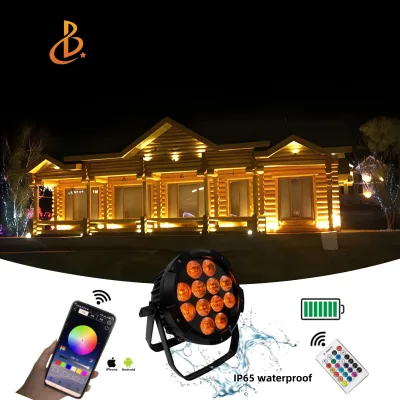
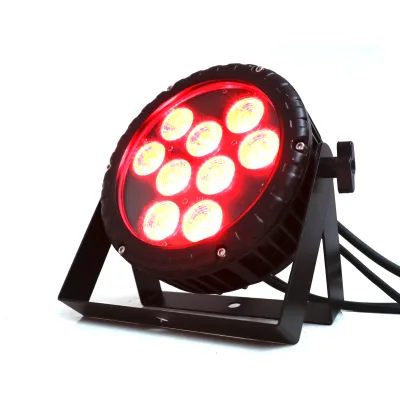
Battery Powered up Light Rgbwauv 6in1 6*18W Wireless LED WiFi PAR Light
$90.00 - $105.00
MOQ: 2 Pieces




Comprehensive Sourcing Guide
Strategic Sourcing Guide for Wireless Rechargeable LED Par Lights
Understanding the Core Technology and Operational Capabilities
The market for wireless rechargeable LED par lights has evolved to meet the demands of mobile event production, where power access is often limited or non-existent. These fixtures integrate high-efficiency LED arrays with built-in battery systems, allowing for untethered operation in dynamic environments. Based on current product observations, the core technology typically relies on 12W to 18W LED modules, often configured as 6-in-1 or 5-in-1 RGBWA (Red, Green, Blue, White, Amber) plus UV combinations. This configuration enables a color mixing capability that spans 16.7 million colors, providing the versatility required for complex stage designs.
A critical differentiator in this category is the control architecture. Modern units frequently feature a dual-mode control system, supporting standard DMX-512 protocols alongside wireless connectivity. Specifically, built-in 2.4G wireless DMX receivers allow for rapid deployment without the clutter of physical cables. Some advanced models also incorporate WiFi control interfaces, offering a modern alternative for smartphone-based management. The physical construction of these lights often utilizes an aluminum alloy shell, which serves to dissipate heat effectively while maintaining a lightweight profile. This is particularly important for fixtures that must be manually carried and positioned by crew members during live events.
Technical Specifications and Performance Metrics
When evaluating specific units, buyers must scrutinize the detailed technical specifications to ensure they align with the intended application. The LED lifespan is a primary metric for long-term value. Observed data indicates a range of operational lifetimes, with some units rated for 50,000 hours and others extending to 100,000 hours. The LED chips themselves are often sourced from reputable manufacturers such as Epistar, which is a standard indicator of consistent color rendering and reliability.
Power consumption and battery performance are inextricably linked. Units typically operate on AC input voltages ranging from 100V to 240V, ensuring global compatibility. When running on battery power, the utilization time varies significantly based on the output mode. For instance, a fixture might offer 3 to 4 hours of runtime at full white output, extending to 5 or 6 hours when cycling through changing colors. The charging cycle is another vital consideration, with typical recharge times observed between 5 and 6 hours. Buyers should verify if the charging time aligns with their event turnaround schedules.
Optical performance is defined by the beam angle and light source configuration. Standard beam angles often start at 25 degrees, with optional configurations available at 15, 35, 45, 60, and 40 degrees. This variability allows for precise lighting design, from tight spot effects to broad washes. The DMX channel count is another technical specification that dictates control granularity. Depending on the model, units may operate on 4, 6, 8, 9, or 10 channels, allowing for independent control of color, dimming, and strobe functions. Some models feature a digital display for easy on-site parameter adjustments, while others rely on physical buttons or remote control interfaces.
Compliance, Certification, and Safety Standards
Safety and regulatory compliance are non-negotiable in the professional lighting industry. The products in this category must adhere to strict international standards to be considered viable for commercial procurement. The most commonly observed certifications include CE and RoHS, which indicate compliance with European health, safety, and environmental protection requirements. More comprehensive models may also carry EMC (Electromagnetic Compatibility) and LVD (Low Voltage Directive) certifications, ensuring that the device does not emit excessive electromagnetic interference and operates safely within low-voltage parameters.
Water resistance is a critical safety and durability factor, particularly for applications involving water features. The market presents a divergence in waterproof ratings. Some units are explicitly rated as waterproof, making them suitable for submersion in fountains or swimming pools. Conversely, other models in the same category are noted as "Not Waterproof" or carry an IP20 rating, which indicates protection against solid objects larger than 12.5mm but no protection against water. This distinction is paramount; a buyer intending to use a light in a fountain environment must strictly verify the waterproof rating, as using a non-waterproof unit in such a setting poses a severe safety hazard. The diffuser material, typically polycarbonate, also plays a role in durability and light quality, offering resistance to impact and yellowing over time.
Cost Drivers and Pricing Structures
The pricing of wireless rechargeable LED par lights is influenced by a complex interplay of factors, including the LED wattage, battery capacity, and the sophistication of the control system. The observed price range for these units spans from $1 to $200, reflecting the diversity of the market from entry-level consumer-grade fixtures to professional-grade equipment. Several specific cost drivers should be analyzed during the procurement process.
First, the battery technology itself represents a significant portion of the cost. A unit with a built-in rechargeable battery capable of sustaining 5 to 6 hours of operation requires a larger and more expensive battery pack than a unit with a shorter runtime. Second, the complexity of the wireless control system adds value; models featuring both 2.4G wireless DMX and WiFi capabilities command a higher price point than those relying solely on wired DMX. Third, the optical quality, including the use of high-end LED chips like Epistar and the precision of the beam angle optics, influences the final price.
The Minimum Order Quantity (MOQ) is another variable that affects the total cost of acquisition. The observed MOQ range for these products is between 1 and 100 units. Buyers purchasing single units for testing or small events will face a higher per-unit cost compared to those placing bulk orders. Additionally, packaging requirements, such as the choice between standard cartons and flight cases, can impact the final price. Flight cases offer superior protection for shipping and storage but add to the overall cost. Buyers should also consider the lead time, which is typically observed as three to seven days, as expedited shipping or rush orders may incur additional fees.
Typical Applications and Environmental Suitability
The versatility of wireless rechargeable LED par lights makes them suitable for a wide array of applications, though the specific model selected must match the environmental conditions. The primary use cases include stage performances, where the ability to move lights freely without cable management is a significant advantage. The 16.7 million color range and multiple beam angles allow for dynamic lighting effects that enhance the visual storytelling of a performance.
Beyond the stage, these lights are frequently deployed in swimming pool and fountain environments. However, this application requires strict adherence to the waterproof rating. Only units explicitly certified as waterproof should be used in or near water sources. The aluminum alloy shell provides the necessary corrosion resistance for these humid environments. For indoor events where water is not a factor, units with an IP20 rating or those marked as "Not Waterproof" are often sufficient and may offer a more cost-effective solution.
The battery capability extends the utility of these lights to outdoor festivals, pop-up events, and locations with limited power infrastructure. The ability to operate for several hours on a single charge allows for uninterrupted performances in remote areas. The weight of the unit, typically around 4kg, makes it manageable for manual handling, which is essential for setups that require frequent repositioning. The inclusion of features like Powercon connectors ensures that the lights can be easily integrated into standard power distribution systems when AC power is available, providing a seamless transition between battery and mains operation.
Supplier Evaluation and Quality Assurance
Selecting the right supplier is as critical as selecting the right product. Buyers should prioritize suppliers who provide transparent documentation regarding certifications and technical specifications. The presence of CE, RoHS, EMC, and LVD certifications should be verified through official documentation rather than relying on marketing claims. Suppliers who can provide test reports for the LED lifespan and battery cycle life offer a higher level of assurance regarding product longevity.
Quality control measures should be a focal point of the evaluation process. Buyers should inquire about the manufacturing standards and the origin of the products. The Guangzhou region in China is a known hub for lighting manufacturing, and understanding the specific factory capabilities can help assess the consistency of the product quality. Inspection of the build quality, including the finish of the aluminum alloy shell and the integrity of the polycarbonate diffuser, is essential. Suppliers should also be evaluated on their warranty terms; a standard one-year warranty is common, but buyers should clarify what is covered, such as battery degradation or LED failure.
Communication and support are also key indicators of a reliable supplier. A supplier that offers detailed technical support, including DMX channel mapping and troubleshooting guides, adds significant value. The ability to provide samples for testing before a bulk order is placed is another best practice. This allows the buyer to verify the actual performance of the battery, the brightness of the LEDs, and the reliability of the wireless control system in a real-world setting.
Long-Term Procurement and Maintenance Considerations
Procuring wireless rechargeable LED par lights is not just a one-time transaction but a long-term investment in the lighting infrastructure. The battery is the component with the most limited lifespan and the highest replacement cost. Buyers should consider the total cost of ownership, which includes the eventual need to replace batteries after several hundred charge cycles. Understanding the charging times and utilization hours helps in planning for battery replacements and ensuring that the fleet of lights remains operational.
Maintenance of the optical components is also important. The polycarbonate diffuser should be kept clean to maintain light output and color accuracy. Regular inspection of the DMX connections and wireless receivers ensures that the control systems remain reliable. Buyers should also consider the availability of spare parts, such as replacement batteries or power connectors, from the supplier. A supplier that maintains a stock of spare parts can minimize downtime during critical events.
Finally, the scalability of the lighting system should be considered. As events grow in complexity, the ability to expand the lighting rig with additional units is crucial. Ensuring that the selected models are compatible with existing control systems and that they can be daisy-chained or controlled via the same wireless network is essential for future-proofing the investment. By focusing on these long-term factors, buyers can ensure that their investment in wireless rechargeable LED par lights delivers consistent performance and value over time.
FAQs
Can these lights operate without a power cable?
Yes, they feature a built-in rechargeable battery for untethered operation. The runtime varies from 3 to 6 hours depending on the color mode and brightness settings used during the event.
What control modes do these fixtures support?
They support DMX512, wireless DMX, and WiFi control modes. The units include a built-in 2.4G wireless receiver and digital displays for easy on-site parameter adjustments.
Are all models waterproof for pool use?
No, waterproof ratings vary significantly between models in this category. Some units are rated IP20 or not waterproof, while others are explicitly certified as waterproof for fountain or pool applications.
What certifications do these lights typically hold?
Common certifications include CE, RoHS, EMC, and LVD. These standards ensure compliance with European safety and environmental requirements for professional lighting equipment.
How long does the battery take to recharge?
The typical charging time is between 5 and 6 hours for a full charge. This duration ensures the lights are ready for subsequent events or extended usage periods.
What is the expected lifespan of the LED chips?
The LED lifespan ranges from 50,000 to 100,000 hours depending on the specific model. High-quality Epistar chips are often used to ensure consistent color rendering and reliability.