Source Wooden Living Room Magazine Rack for Storage and Display
Compare 30 Wooden Living Room Magazine Rack options from verified suppliers. Buyers can review specifications, pricing, and customization features for home storage solutions.
Key considerations
Products List

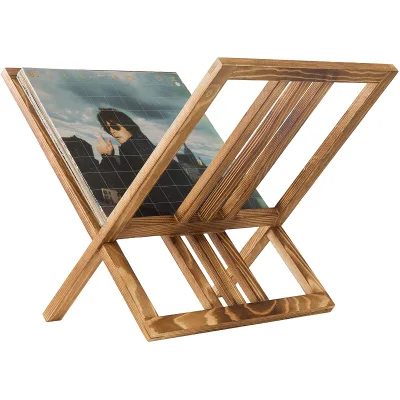
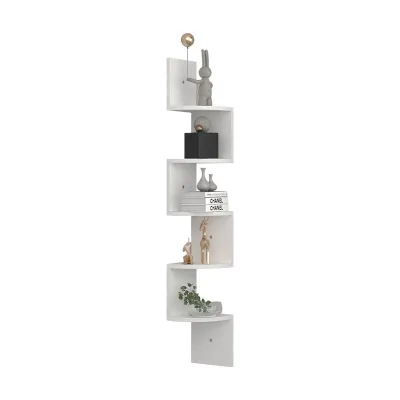
Living Room or Study Area Display Rustic Wood-burning Floor Vertical Magazine Rack
$19.80 - $29.70
MOQ: 500 pieces
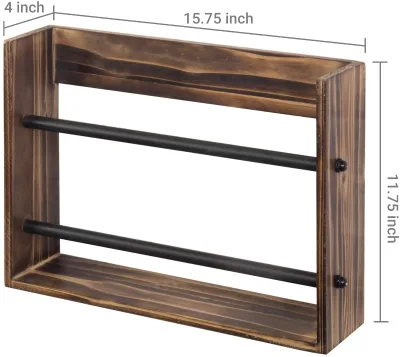


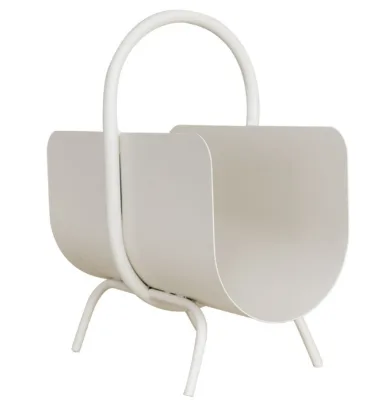


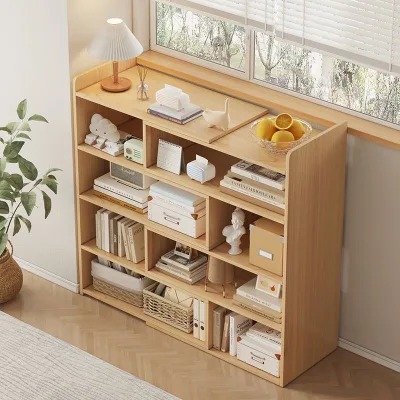
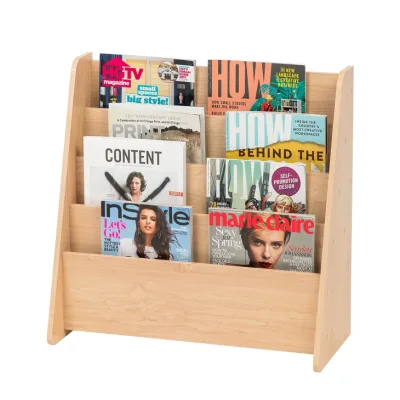
Wholesale Steel Wood Bookcase with Display Rack for Magazine Storage Home
$16.99 - $23.99
MOQ: 200 Pieces


Comprehensive Sourcing Guide
Strategic Sourcing Guide for Wooden Living Room Magazine Racks
Understanding Product Variants and Core Specifications
When sourcing wooden living room magazine racks, buyers must first navigate a fragmented market where product attributes vary significantly even within the same category. The core keyword "Wooden Living Room Magazine Rack" encompasses items ranging from compact desktop organizers to substantial floor-standing units. Based on observed market data, the physical dimensions of these products are not standardized. For instance, specific listings indicate a "Macrame Magazine Wooden Rack" with dimensions of 3735 cm, while other entries describe similar functional items with a footprint of 503536 cm. A third variation lists a desktop bookshelf model with a size of 4029.8*10 cm. This variance necessitates that procurement teams verify exact dimensional requirements against their specific storage needs before placing orders.
The material composition is a primary differentiator. While the category is defined by wood, the specific finish and type vary. Observed attributes include "Natural" color, "Log color," "Mahogany Color," and "Grey." Some suppliers offer "Customizable colors," which allows for brand alignment but may introduce complexity in the supply chain. The primary material is consistently identified as "Wood" or "Wooden," with specific listings noting "Main Material: Wooden." The construction type also differs; some units are classified as "Standing Type," while others are "Wall Mounted Type." Additionally, the structural design can be a "Single" tier unit or a "Non-folding Rack," impacting both the storage capacity and the space required for installation. Buyers must distinguish between a "Desktop bookshelf" intended for small spaces and a larger "Storage Holders & Racks" unit designed for a living room environment.
Technical Compliance and Dimensional Tolerances
Technical precision is critical when integrating wooden furniture into a living space, particularly regarding fit and finish. In the observed product data, specific dimensional tolerances are listed as "<±1mm." This indicates a high level of manufacturing precision for certain models, which is essential for ensuring that the rack fits into designated alcoves or aligns with other furniture pieces without gaps. Similarly, weight tolerances are noted as "<±1% (Include)," suggesting that manufacturers are accountable for consistent unit weights, which is vital for shipping cost calculations and structural stability assessments.
However, not all listed products provide explicit tolerance data. Some entries show a "Single volume" of 0 cm³ or a "Single gross weight" of 0.0 kg, which likely represents placeholder data or incomplete specifications in the source listing. Procurement professionals must treat these figures as red flags requiring immediate clarification. When evaluating a potential supplier, buyers should request a technical data sheet that explicitly confirms dimensional tolerances and weight variances. Relying on the assumption that all wooden racks meet the <±1mm standard observed in specific high-end models could lead to installation failures. The "installation type" is another technical factor; a "Standing Type" requires floor stability, whereas a "Wall Mounted Type" necessitates specific wall integrity and mounting hardware, which may not be included in the standard "Box" or "Carton" packing.
Cost Drivers and Minimum Order Quantity Analysis
The cost structure for wooden magazine racks is influenced by several variables, including customization, material quality, and order volume. The observed market data reveals a wide price range, with listed prices fluctuating between 4 and 78 USD. This significant spread suggests that factors such as finish complexity, brand reputation, and included features like "Customized Logo" play a major role in pricing. Products offering "Customization" services often command a premium, as they require additional setup time and quality control measures.
Minimum Order Quantity (MOQ) is another critical cost driver. The data shows a broad spectrum of MOQs, ranging from as low as 1 piece to as high as 500 pieces. For example, one specific model has an MOQ of 12 PCS, while another requires 500 pieces. A third listing indicates an MOQ of 100 PCS. This disparity means that buyers must align their inventory strategy with their volume needs. Small businesses or those testing a new product line may find the 12-piece or single-item options viable, whereas large retailers might need to negotiate for lower unit costs by meeting the 500-piece threshold. It is important to note that the "Selling Units" are often listed as "Single item," which can be misleading if the MOQ is higher. Buyers must verify the actual transactional unit to avoid confusion between the unit price and the total order cost.
Typical Applications and Functional Design
The utility of a wooden magazine rack extends beyond simple storage; it is often designed to optimize space and enhance the aesthetic of a living area. The "applicable space" is frequently identified as the "Living Room," confirming the product's primary market. However, the functional design can vary from "Book sorting" to general "Home Indoor Furniture." Some models are explicitly marketed for "Save Storage Space," making them ideal for compact living environments. The "Feature" attributes often highlight "Convenient" access and "Eco-Friendly" materials, which are increasingly important to modern consumers.
The "Classification" of the product also dictates its application. A "Non-folding Rack" offers permanent stability, suitable for high-traffic areas, while the "Single" tier design implies a focus on specific media types like magazines or books rather than a multi-purpose shelving unit. The "Usage" is defined as "bookshelf" in some contexts, suggesting versatility in holding various reading materials. When selecting a product, buyers should consider the "Functional design" aspect, such as "Multifunction" capabilities, which might allow the rack to serve dual purposes, such as holding magazines on one side and decorative items on the other. The "Color" options, ranging from "Natural" to "Mahogany," should be matched to the existing interior design palette of the target market to ensure the product integrates seamlessly into the living room setting.
Supplier Evaluation and Origin Verification
Evaluating suppliers requires a rigorous check of their origin and production capabilities. The observed data lists origins in "Shanghai, China" and "Shandong, China." These are major manufacturing hubs, but the specific location can impact logistics, lead times, and shipping costs. Buyers should verify the exact "place of origin" for each order, as different factories within the same province may have varying quality standards and production capacities. The "brand name" associated with some products, such as "FORWARDCRAFTS," indicates that some suppliers operate with established branding, which can be a proxy for reliability, though it does not guarantee quality without further verification.
When assessing a supplier, buyers must look beyond the basic product listing. The presence of "Customized Logo" services suggests a supplier capable of OEM (Original Equipment Manufacturer) work, which is essential for private label strategies. However, the availability of "Customization" does not automatically imply that every listed product supports it. Buyers must explicitly confirm whether the specific model they are sourcing allows for logo application or color customization. Furthermore, the "Packing" method varies between "Kraft Box" and "Carton." The choice of packaging affects the product's protection during transit and the sustainability profile of the shipment. A "Kraft Box" might be preferred for eco-conscious markets, while a "Carton" might offer superior protection for heavier units.
Quality Control and Long-Term Procurement Considerations
Ensuring consistent quality is paramount when sourcing wooden furniture. The "Feature: Eco-Friendly" attribute suggests that some suppliers adhere to environmental standards, but buyers must verify this claim through third-party testing or certification requests. The "Weight" of a specific unit is listed as 368g, providing a benchmark for quality assessment. If a supplier's product deviates significantly from this weight without a clear reason (such as different dimensions), it may indicate the use of inferior materials or hollow construction.
Long-term procurement considerations include the durability of the "Installation type" and the stability of the "Classification." A "Standing Type" rack must remain stable over years of use, while a "Wall Mounted Type" must withstand the weight of the contents without loosening. Buyers should request samples to test the structural integrity and finish quality. The "dimensional tolerance" of <±1mm observed in some listings serves as a quality benchmark; buyers should ensure that their chosen supplier can consistently meet or exceed this standard. Additionally, the "Single volume" and "Single gross weight" data points, even if currently listed as zero in some entries, highlight the need for accurate logistics planning. Incomplete data in initial listings often signals a need for more detailed communication with the supplier to finalize shipping specifications.
Comparative Analysis of Product Attributes
To facilitate decision-making, the following table summarizes the key variations observed in the market for wooden living room magazine racks. This comparison helps buyers identify which product attributes align with their specific procurement goals.
| Attribute | Variant A (Compact) | Variant B (Standard) | Variant C (Large/Heavy) |
|---|---|---|---|
| Product Name | Desktop bookshelf | Macrame Magazine Wooden Rack | White and blue (Generic) |
| Dimensions | 4029.810 cm | 37*35 cm | 503536 cm |
| Material | Wood | Wooden | Wood |
| Color | Grey | Natural | Mahogany Color |
| Installation | Wall Mounted Type | Standing Type | Standing Type |
| MOQ | 100 PCS | 12 PCS | 500 pieces |
| Packing | Carton | Kraft Box | Carton |
| Origin | Shandong, China | Shanghai, China | Shandong, China |
| Key Feature | Customizable colors | Convenient | Multifunction |
| Tolerance | <±1mm | <±1% | <±1mm |
This table illustrates that there is no single "best" product; the optimal choice depends entirely on the buyer's specific requirements regarding volume, space, and customization. A buyer needing a small, wall-mounted unit for a boutique hotel might select Variant A, while a large retailer stocking a living room collection might prefer Variant C for its larger capacity and multifunctional design. The variation in MOQs is particularly striking, requiring buyers to carefully calculate their inventory turnover rates before committing to an order.
Final Procurement Recommendations
In conclusion, sourcing wooden living room magazine racks requires a methodical approach that prioritizes verification of technical specifications, clear communication regarding customization, and rigorous supplier evaluation. Buyers should not assume that all products in the category share the same dimensions, tolerances, or material quality. The observed data shows a wide range of options, from single-item desktop shelves to large standing racks with custom branding capabilities. By focusing on the specific attributes that matter most to their business—such as the "Standing Type" versus "Wall Mounted Type," the "Natural" versus "Mahogany" finish, and the specific "MOQ" requirements—procurement teams can build a supply chain that is both efficient and reliable. Always request detailed technical data sheets and samples to confirm that the supplier can meet the <±1mm dimensional tolerance and <±1% weight tolerance standards observed in the market. This disciplined approach ensures that the final product meets the functional and aesthetic demands of the living room environment while maintaining cost-effectiveness and quality consistency.
FAQs
What are the available dimensions for wooden living room magazine racks?
Dimensions vary significantly across models, ranging from compact desktop units like 40*29.8*10 cm to larger standing racks measuring 50*35*36 cm. Buyers must verify exact sizes against their specific storage needs before ordering, as standardization is not guaranteed across all listings.
Which installation types are available for these wooden storage racks?
Racks are available in both standing and wall-mounted configurations to suit different space requirements. Standing types require floor stability, while wall-mounted units need specific wall integrity, so buyers should confirm the installation type matches their intended location.
Can buyers request customized colors for these wooden magazine racks?
Yes, some suppliers offer customizable colors including natural, log, mahogany, and grey options to align with brand aesthetics. However, customization is not universal, so buyers must explicitly confirm if the specific model supports color changes before placing an order.
What is the minimum order quantity for sourcing these wooden racks?
Minimum order quantities vary widely, with some models requiring as few as 12 pieces while others demand 500 pieces. Buyers should align their inventory strategy with these thresholds, as small businesses may find lower MOQs more viable for testing new product lines.
How are these wooden magazine racks typically packaged for shipping?
Packaging methods include Kraft boxes and cartons, depending on the specific product model and supplier. The choice of packaging affects product protection during transit and the sustainability profile, so buyers should verify the packing method to ensure safe delivery.
Which countries are the primary origins for these wooden storage products?
Primary origins include Shanghai and Shandong in China, which are major manufacturing hubs for wooden furniture. Buyers should verify the exact place of origin for each order, as different factories within these regions may have varying quality standards and production capacities.