Source Yarn Dyed Sheer Curtain for Home, Hotel, and Cafe
Find 30 Yarn Dyed Sheer Curtain options for home, hotel, and cafe settings. Compare woven polyester styles, grommet and hook-mounted headers, and custom design capabilities to select the right window treatment for your project; compare the available evidence and request quotations based on your requirements.
Key considerations
Products List


Xinlan Modern Printed Sheer Curtains for Living Room and Bedroom Windows
$2.75 - $3.07
MOQ: 200 Pieces


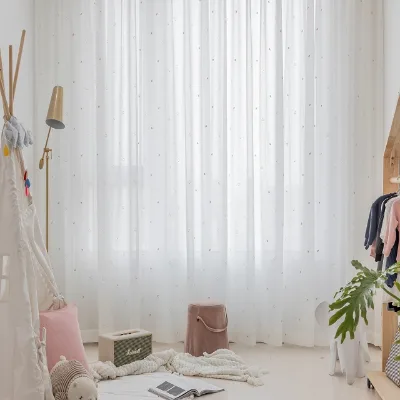


Embroidery Curtains for Windows Cheap Sheer Embroidered Curtain Wholesale
$5.25 - $10.78
MOQ: 20 Meters


Comprehensive Sourcing Guide
Yarn Dyed Sheer Curtain Sourcing Guide
Procuring yarn dyed sheer curtains requires distinguishing between specific weave techniques and general sheer panel definitions found in current listings. While some observed products feature a "Yarn Dyed" style alongside "All Over" patterns, others are categorized simply as "Printing Sheer Panel Curtain" or "Solid" designs. Buyers must verify if the specific aesthetic of yarn-dyed color integration is present, as this technique offers superior colorfastness compared to printed alternatives, a distinction not always explicit in standard product titles.
The observed market data indicates a diverse range of opacity levels, from "Sheer" to "Semi-Sheer" and even "Opaque" variants, which complicates the definition of a purely sheer product. Sourcing teams should prioritize suppliers who explicitly confirm the "Sheer" or "Semi-Sheer" classification for their specific yarn-dyed offerings. Relying on general "Window Curtain" tags without verifying the light transmission properties can lead to receiving opaque blackout panels that fail to meet the intended design requirements for airy, light-filtering spaces.
Product Scope and Observed Listing Signals
Current listings reveal a broad spectrum of curtain types, including "Grommet" and "Hook-mounted" headers, alongside "Ring-mounted" options, which dictates the necessary hardware for installation. The "Yarn Dyed" attribute appears alongside various styles such as "Solid" and "Printed," suggesting that the dyeing method is a production technique rather than a singular visual style. Buyers must scrutinize the "Style" and "Technics" fields to ensure the product matches the desired texture and color depth, as "Woven" techniques are standard but the specific dye application varies by manufacturer.
Commercial signals in the data show significant variation in packaging, with some items listed in "PVC Bag" and others in "PE Bag," which impacts shipping costs and environmental compliance. The "Customization" attribute is widely available, allowing for "Customized Color and Design" requests, yet the "MOQ" ranges from 1 to 1000 pieces, creating a barrier for small orders. Procurement strategies must align with these volume thresholds, as the "100PCS" minimum observed for certain models may not suit trial orders, necessitating a search for suppliers with lower entry barriers.
Technical Specifications to Verify
Dimensional accuracy is critical, as observed specifications list widths ranging from "60cm" to "118/120 inches" and standard sizes like "5484 inch" or "132213 cm." Buyers must confirm that the selected yarn-dyed sheer curtain matches the exact window dimensions required, as the "Width" and "Size" attributes are not uniform across all listings. Verifying the "Raw Material" composition is equally important, with "100% Polyester" and generic "Polyester" being the primary materials observed, ensuring the fabric density supports the sheer aesthetic without excessive transparency.
Weight and construction details further define product performance, with specific listings noting a weight of "110GSM" for certain panels. This metric influences the drape and flow of the curtain, which is essential for achieving the desired "Modern" or "Solid" look in hospitality or residential settings. Additionally, the "Cleaning Method" is listed as "Machine Washable" for some items, a crucial specification for maintaining the integrity of the yarn-dyed colors over time, whereas other products may require professional care not explicitly stated in the general listing.
Compliance and Safety Documentation
Safety compliance is a primary concern for curtains used in public spaces like "Hospitals," "Hotels," and "Offices," where fire safety is paramount. While the observed data mentions "Flame Retardant" as a feature for some blackout and insulated curtains, buyers must explicitly request certification documents for yarn-dyed sheer variants to ensure they meet local fire codes. The presence of "Flame Retardant" claims in the general product pool does not guarantee that every sheer panel possesses this treatment, requiring specific verification before bulk purchasing for regulated environments.
Environmental and chemical safety standards are often referenced in the broader industry, with background knowledge suggesting certifications like "OEKO-TEX" or "GOTS" are relevant for textile sourcing. However, these specific standards are not confirmed in the provided product facts, so buyers should not assume compliance based on general category knowledge. Instead, procurement teams must demand third-party test reports confirming the absence of harmful substances, ensuring the "100% Polyester" or "Polyester" blends used in the yarn-dyed process are safe for indoor air quality.
Cost Drivers and Commercial Terms
Pricing in the observed market spans a wide range from $0.98 to $10.78 USD, driven by factors such as fabric weight, customization complexity, and order volume. The "MOQ" of 100 pieces for certain models suggests that unit costs will decrease significantly as order quantities increase, making volume negotiation a key strategy for cost reduction. Buyers should analyze the price-to-volume curve carefully, as the "Customized Color and Design" options may incur additional setup fees that are not reflected in the base listed price.
Logistics and packaging choices also influence the final landed cost, with variations between "PVC Bag" and "PE Bag" packaging affecting both material costs and waste disposal fees. The "OEM Service" availability indicates that branding and labeling can be customized, but this often requires higher minimum order quantities to be economically viable. Procurement planners must factor in these variable costs when budgeting, ensuring that the total cost of ownership includes not just the unit price but also the expenses associated with custom branding and specialized packaging requirements.
Supplier Qualification and Quality Control
Supplier location data points to "Zhejiang" and "China" as primary origins, regions known for textile manufacturing but requiring rigorous quality control protocols. Buyers should verify the supplier's production capacity and consistency, as the "Yarn Dyed" technique requires precise control over dyeing processes to maintain color uniformity across large batches. The "Design" attribute allowing for "Customized" options implies a need for close communication and sample approval processes to ensure the final product matches the requested "Multicolored" or "Solid" specifications.
Quality assurance should extend to the physical attributes of the curtain, such as the "Header Type" and "Technics" used in construction. Since "Woven" techniques are standard, verifying the tightness of the weave and the durability of the "Hook-mounted" or "Ring-mounted" headers is essential for long-term performance. Buyers must establish clear acceptance criteria for defects, particularly regarding color bleeding or uneven dyeing, which are common risks in yarn-dyed processes if the supplier lacks adequate quality control measures.
Long-Term Procurement Checks
Sustainability and lifecycle management are increasingly important for "Home," "Hotel," and "Cafe" applications where curtains are subject to frequent cleaning and wear. The "Machine Washable" attribute observed in some listings suggests a path toward easier maintenance, but buyers must confirm that the yarn-dyed colors remain vibrant after repeated washing cycles. Establishing a long-term relationship with a supplier who can consistently reproduce the "Yarn Dyed" quality ensures that replacement orders match the original aesthetic, preventing visual inconsistencies in large-scale deployments.
Future-proofing procurement involves monitoring changes in material standards and design trends, as the "Modern" and "Solid" styles observed today may evolve. Buyers should maintain a flexible contract structure that allows for adjustments in "Size" or "Width" specifications as window designs change in their facilities. Regular audits of supplier performance against the initial "Flame Retardant" and "Insulated" claims will ensure that the long-term value of the yarn-dyed sheer curtains is maintained, protecting the investment in high-quality window treatments.
FAQs
What materials are used for yarn dyed sheer curtains?
Yarn dyed sheer curtains are typically crafted from 100% polyester. This material choice ensures durability and a smooth texture suitable for various environments. The woven technique enhances the fabric's integrity, allowing for consistent color retention and a refined appearance that meets professional standards for home and commercial use.
Can these curtains be customized for specific designs?
Yes, customization is available for these curtains. Buyers can request customized colors and designs to match specific interior themes. The product accepts tailored specifications, allowing for unique patterns or solid styles. This flexibility ensures that the final product aligns precisely with the desired aesthetic and functional requirements of the space.
What are the standard sizes for these window curtains?
Standard sizes include dimensions like 54 by 84 inches or 132 by 213 centimeters. Widths may vary, with options around 118 to 120 inches or 60 centimeters depending on the specific model. These specifications cater to common window dimensions, ensuring a proper fit for residential and commercial applications without extensive alteration.
How should yarn dyed sheer curtains be cleaned?
These curtains are machine washable, offering convenient maintenance for users. The polyester composition allows for easy care without damaging the yarn-dyed finish. Regular cleaning helps maintain the fabric's appearance and longevity. Buyers should follow standard care instructions to preserve the texture and color integrity of the woven material over time.
Which header types are available for these curtains?
Available header types include hook-mounted and ring-mounted options. These configurations provide versatile hanging solutions for different curtain rod systems. The choice of header allows for easy installation and smooth operation. Buyers can select the style that best suits their existing window treatment hardware and desired aesthetic presentation.
What is the minimum order quantity for these products?
The minimum order quantity can be as low as 100 pieces for certain models. However, general MOQ ranges from 1 to 1000 units depending on the supplier and customization level. This flexibility accommodates both small-scale trials and larger bulk orders. Buyers should verify specific MOQ requirements with the supplier to ensure alignment with their procurement needs.