Adjustable Flow Monitor for Liquids Suppliers and Manufacturers
Source 15 verified suppliers for Adjustable Flow Monitor for Liquids. Compare certifications like ISO and CE, response times, and lead times. Review pricing and MOQs to identify the right partner for your liquid measurement needs; review the available evidence before requesting comparable quotations from suitable candidates.
Suppliers List
WENZHOU FLOW INTERNATIONAL TRADE CO., LTD
- Verified by BV
- Trading Company
- China Zhejiang
- Lead time30 days
- Avg. response≤ 12h
Main productsTank Truck Parts, Oil Plant Products, Fuel Station Equipments, Refueling Kit, Industrial Valve, Flow Meters, Pumps, Opw Products, Reelcraft Products
Main marketsSoutheast Asia/ Mideast

Advanced Positive Displacement Flow Meter for Efficient Liquid Control
$4679.00 - $4879.00
MOQ: 1 Pieces

Advanced Flow Measurement Device for Accurate Liquid Control Applications
$2580.00 - $2600.00
MOQ: 1 Pieces


Positive Displacement Flow Meter for Quick Liquid Measurement Devices
$825.00 - $1025.00
MOQ: 1 Pieces
Jiangsu Aice Instrument Technology Co., Ltd.
- Verified by BV
- Trading Company
- China Jiangsu
- Lead time15 days
- Avg. response≤ 2h
Main productsindustrial temperature instruments
Main marketsSouth America,Others(foreignTradeCapacity.exportBusinessCapacityMarketOther),Southeast Asia/ Mideast,East Asia(Japan/ South Korea),North America

Shenzhen Winan Industrial Development Co., Ltd.
- Verified by TUVRHEINLAND
- Manufacturer/Factory
- China Guangdong
- Lead time23 days
- Avg. response≤ 3h
Main productsFoam Bladder Tank, Fire Monitor, Fire Hydrant, Sprinkler, Foam Equipment, Valves, Foam Generater Foam Making, Fire Hose Reel, Foam Generator, Fire Fighting Foam
Main marketsMid East,North America,Southeast Asia,Eastern Asia,Africa
OSMeterings Instrument (Shanghai) Co., Ltd.
- Verified by SGS
- Combined
- China Shanghai
- Lead time30 days
- Avg. response≤ 2h
Main productsFlow Meter, Flow Meters, Flowmeter, Flowmeters, Gas Liquid Steam Oil Water Flow Meter, Electromagnetic Flowmeter, Turbine Flow Meter Flowmeter, Air Diesel Flow Meter, Precession Vortex Flow Meter, Positive Displacement Flow Meter
Main marketsSoutheast Asia/ Mideast

Huaibei Huadian Automation Technology Co., Ltd.
- Verified by TUVRHEINLAND
- Combined
- China Anhui
- Lead time15 days
- Avg. response≤ 1h
Main productsLevel Transmitter, Flow Meter, Pressure Transmitter, Temperature Transmitter, Signal Isolator, Current Transducer
Main marketsOthers(foreignTradeCapacity.exportBusinessCapacityMarketOther),Southeast Asia/ Mideast,North America

Liquid Flow Meter 2 Flow Meter Water Flow Meter with Automatic Shut off Velocity Meter for Water
$100.00 - $1000.00
MOQ: 1 Pieces

Flow Indicator Instrumart Flow Meter Flow Monitor Liquid Control Flow Meter
$100.00 - $1000.00
MOQ: 1 Pieces

Flow Meter Ultrasonic Gas Meter Electronic Flowmeter Liquid Flow Indicator
$100.00 - $1000.00
MOQ: 1 Pieces

Liquid Flow Meter Flow Meter Price Flow Rate Measurement Devices Fluid Flow Measurement
$100.00 - $1000.00
MOQ: 1 Pieces

Liquid Flow Meter 1 Inch Water Meter Ultrasonic Liquid Flow Meter Distributor Flow Meter
$100.00 - $1000.00
MOQ: 1 Pieces

Liquid Flow Meter Non Contact Flow Meter Water Consumption Meter Totalizer Water Meter
$100.00 - $1000.00
MOQ: 1 Pieces

Xi'an Yunyi Instrument Co., Ltd.
- Verified by TUVRHEINLAND
- Combined
- China Shaanxi
- Lead time15 days
- Avg. response≤ 4h
Main productsPressure Transmitter, Pressure Gauge, Temperature Products, Level Meter, Flow Meter, Pressure Calibrator, Piston Dead Weight Teste, Density Meter, Analysis Instrument, Load Cell
Main marketsSouth America,Africa,Southeast Asia/ Mideast,Europe
Anhui Hechuang Intelligent Manufacturing Co. Ltd
- Verified by SGS
- Combined
- China Anhui
- Lead time15 days
- Avg. response≤ 1h
Main productsDifferential Pressure Transmitter, Pressure Transmitter, Temperature Transmitter, Electromagnetic Flowmeter, Magnetic Level Gauge, Bimetallic Thermometer, Differential Pressure Switch, Sensor, Float Level Gauge, Vortex Flowmeter
Main marketsDomestic


Electronic Liquid Flowmeter with LCD Display 4-20mA Output Stainless Steel Body Flanged Connection
$245.00 - $645.00
MOQ: 1 Pieces

WEIHAI KUNKE FLOW INSTRUMENT CO., LTD.
- Verified by BV
- Trading Company,Manufacturer/Factory
- China Shandong
- Lead time23 days
- Avg. response≤ 8h
Main productsVortex Flow Meter, Liquid Turbine Flow Meter, Thermal Gas Mass Flow Meter, Electromagnetic Flowmeter, Gas Turbine Flow Meter, Roots Flow Meter, Mass Flowmeter
Main marketsSouth America,Eastern Europe,Mid East,Southeast Asia,Eastern Asia,Oceania


$200.00 - $1500.00
MOQ: 1 Pieces
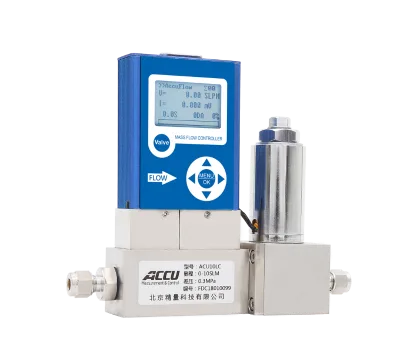
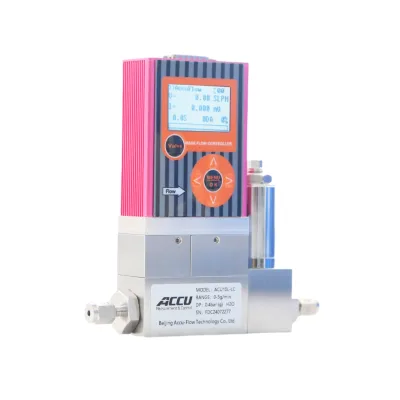
Beijing Accu-Flow Technology Co., Ltd.
- Manufacturer
- Beijing, China
- Lead time0 days
- Avg. response≤ 3h
Main productsCoriolis Mass Flow Controller & Meter,Differential pressure Mass Flow Controller & Meter,Pressure controller,Thermal Mass Flow Controller & Meter,Controlled evaporation mixer
Main marketsDomestic Market(80.00%), Eastern Asia(10.00%), Northern Europe(10.00%)

Quanzhou Xixing Machinery Co., Ltd.
- Verified by TUVRHEINLAND
- Trading Company,Manufacturer/Factory
- China Fujian
- Lead time15 days
- Avg. response≤ 2h
Main productsFlow Meter, Flowmeter, Pd Meter, Weighing Scale, Weigh Bridge, Scale, Weighbridge, Truck Scale, Block Machine, Brick Machine
Main marketsSouth America,Eastern Europe,Mid East,North America,Southeast Asia,Eastern Asia,Oceania,Western Europe,Africa

Wuhu Jujie International Trade Co., LTD
- Verified by TUVRHEINLAND
- Trading Company,Manufacturer/Factory
- China Anhui
- Lead time15 days
- Avg. response≤ 4h
Main productsLiquid Turbine Flow Meter, Electromagnetic Flow Meter, Vortex Flow Meter, Pression Vortex Flow Meter, Gas Turbine Flow Meter, Data Recorder, Ultrasonic Fow Meter, Ultrasonic Level Meter, Oval Gear Flow Meter, Batch Filling Controller
Main marketsSouth America,Eastern Europe,Mid East,North America,Southeast Asia,Eastern Asia,Oceania,Western Europe,Africa

Liquid Flow Meter Rotameter Flow Meter for Water Oil Gas Industrial Process Control
$175.00 - $215.00
MOQ: 1 Pieces

Integrated Small Flow Monitoring Precision Flow Control Intelligent Micro Flowmeter
$80.00 - $110.00
MOQ: 1 Pieces


Liquid Batch Controller Water Flow Quantitative Control Box with Flow Meter
$325.00 - $425.00
MOQ: 1 Pieces

Micro Liquid Flowmeter Turbine Flow Sensor Water Micro Small Flow Measurement Flowmeter
$80.00 - $110.00
MOQ: 1 Pieces

High Precision Liquid Turbine Flowmeter Industrial Intelligent Flow Monitoring Device
$60.00 - $100.00
MOQ: 1 Pieces

Ningbo KIO Flow Instruments Co.,Ltd.
- Verified by BV
- Combined
- China Zhejiang
- Lead time15 days
- Avg. response≤ 17h
Main productsFlow Meter, Rotameter, Instruments, Electromagnetic Flowmeter, Oriflice Plate Flowmeter, Acrylic Flowmeter, Turbine Transducer, Solenoid Valves, Liquid Flowmeter, Paddle Switch
Main marketsSouth America,Domestic
Aileike TT&C Equipment (Huaian) Co., Ltd.
- Verified by BV
- Trading Company,Manufacturer/Factory
- China Jiangsu
- Lead time15 days
- Avg. response≤ 9h
Main productsPressure Calibrator, Marine Temperature Calibrator, Hart 475 Manual Operator, Precision Digital Pressure Gauge, Pressure Comparator, Hydraulic Pump, Portable Micro Pressure Pump, Marine Pressure Calibrator, Handheld Hydraulic Pressure Pum, Pressure Gauge Comparator
Main marketsSouth America,Eastern Europe,Mid East,North America,Southeast Asia,Eastern Asia,Oceania,Western Europe,Africa

Chongqing Hongxing Instrument Co., Ltd.
- Manufacturer/Factory
- China Chongqing
- Lead time15 days
- Avg. response≤ 20h
Main productsDifferential Pressure Transmitter, Orifice Flowmeter, Gas Flow Mete, Pressure Transmitter, Flow Mete, Flowmeter, Multi-Parameter Transmitter, Flow Transmitter, Differential Pressure Flowmeter, Electromagnetic Flowmeter
Main marketsSouth America,Eastern Europe,Mid East,North America,Southeast Asia,Eastern Asia,Oceania,Western Europe,Africa
Shanghai Dubhe Environmental Protection &Technology Co., Ltd
- Verified by SGS
- Trading Company
- China Shanghai
- Lead time23 days
- Avg. response≤ 11h
Main productsBiological Media Mbbr, Aeration Diffuser, Dissolved Air Fiotation, Rotary Drum Screen, Belt Filter Press
Main marketsSoutheast Asia/ Mideast,East Asia(Japan/ South Korea)




Comprehensive Sourcing Guide
Adjustable Flow Monitor for Liquids Supplier Concentration and Factory Types
Current data indicates a concentration of suppliers in China, specifically within the Zhejiang and Jiangsu provinces. Zhejiang-based entities often operate as trading companies dealing in tank truck parts, oil plant products, and various industrial valves alongside flow meters. These suppliers frequently list main products that include Opw and Reelcraft products, suggesting a broad portfolio in fuel station equipment. In contrast, Jiangsu-based suppliers appear to specialize more deeply in industrial temperature instruments and advanced digital flow measurement devices. This regional split suggests that buyers seeking general fueling equipment might find more options in Zhejiang, while those requiring specialized ultrasonic or magnetic flow monitors may find dedicated manufacturers in Jiangsu.
Factory types vary significantly across these regions, with trading companies dominating the Zhejiang listings and manufacturers offering ODM and OEM capabilities appearing in Jiangsu. A trading company structure implies a focus on aggregating products from various factories, which can offer a wider range of models like the M150 or FL-18 flow meters. Conversely, suppliers in Jiangsu explicitly state capabilities for own-brand production and customized support, indicating a direct manufacturing relationship. Buyers should verify if a supplier is a trading company or a factory by checking their company type designation, as this impacts the ability to customize specifications such as the DN100 variable area flow meter or the RC-DP-101 ultrasonic monitor.
How to Verify Adjustable Flow Monitor for Liquids Suppliers
Verification is critical when sourcing flow meters, as the market includes both verified and unverified entities. Some suppliers in the current results hold BV verification status, which serves as a third-party validation of their business operations. Buyers should prioritize suppliers with this specific badge to ensure the entity exists and has undergone a basic audit. Additionally, system certifications like ISO9001:2015 and ISO14001:2015 are explicitly listed for certain Jiangsu-based manufacturers, providing evidence of quality management systems. These certifications are distinct from product-specific marks and indicate a commitment to standardized production processes, which is essential for maintaining the accuracy of ±0.2-0.5% claimed for mechanical flow meters.
Beyond corporate verification, buyers must scrutinize product-specific certifications and attributes to ensure compliance with international standards. Product evidence shows certifications including ISO, RoHS, CE, GB, ANSI, DIN, and JIS for various flow meter models. These marks confirm that the devices meet specific safety and performance requirements for applications involving diesel fuel, fuel oil, or wastewater. Buyers should request copies of these certificates rather than relying solely on the supplier's claim. Furthermore, checking the response time is a practical verification step; a supplier with a response time of 1.35 hours demonstrates higher engagement levels compared to those with slower reply rates, indicating better communication channels for resolving technical queries regarding sensor types or electrode materials.
What to Compare Across Adjustable Flow Monitor for Liquids Suppliers
When evaluating multiple suppliers, lead time is a primary differentiator that affects project scheduling. Current data reveals a lead time of 30 days for some Zhejiang-based trading companies, while Jiangsu manufacturers offer a significantly faster 15-day turnaround. This discrepancy often correlates with the supplier type; trading companies may need to coordinate with external factories, whereas manufacturers with in-house capacity can ship faster. Buyers must align their order timeline with these lead times to avoid production delays. Additionally, the minimum order quantity (MOQ) varies, with some suppliers accepting orders as low as one unit, which is ideal for testing or small-scale deployment, while others may have higher thresholds not explicitly detailed in the current sample.
Response speed and customization capabilities are equally vital comparison points for technical procurement. Suppliers with a response time under two hours, such as those in Jiangsu, are better positioned to handle urgent technical inquiries about model numbers like RC-2000M or M100. Customization availability is another key metric; while many suppliers list customization as available, the extent of support varies. Some offer OEM and ODM services, allowing for brand integration and specific model modifications, while others may only offer standard configurations. Buyers should compare the specific customization options against their project requirements, ensuring the supplier can accommodate unique needs such as specific measuring media or nominal pressure ratings up to 4.0MPa.
Common Adjustable Flow Monitor for Liquids Sourcing Risks
One significant risk involves the discrepancy between claimed accuracy and actual performance in varying media. While product attributes list accuracy as ±0.2-0.5% for mechanical and positive displacement meters, this performance is often dependent on the specific measuring media, such as diesel fuel or fuel oil. Buyers risk receiving units that do not perform as expected if the application involves fluids with different viscosity or chemical properties than those tested. It is essential to verify that the supplier has tested the specific flow meter model against the intended liquid to ensure the accuracy claims hold true in the buyer's specific operational environment.
Another risk lies in the potential for mismatched certifications and standards across different product lines. A supplier might list a broad range of certifications like CE, ISO, and RoHS, but these may apply only to specific models rather than the entire catalog. For instance, an electromagnetic flow meter might carry an "Em Flowmeter" certification, while a mechanical meter carries DIN or JIS standards. Buyers must ensure that the specific unit they are purchasing carries the necessary certifications for their target market. Relying on a general certification list without verifying the specific model number can lead to compliance issues, especially in regulated industries like energy metering or environmental protection where specific standards are mandatory.
Adjustable Flow Monitor for Liquids Regional Sourcing and Logistics
Sourcing from China, specifically Zhejiang and Jiangsu, offers distinct logistical advantages and challenges. Zhejiang suppliers often deal in heavy equipment like tank truck parts and fuel station equipment, which may require specialized shipping arrangements compared to smaller flow meters. The location of these suppliers suggests a supply chain optimized for industrial hardware, potentially affecting packaging and freight costs. Buyers should consider that products originating from Zhejiang might be bundled with other industrial components, whereas Jiangsu suppliers focusing on digital and ultrasonic monitors may have different packaging standards, such as cartons for smaller, precision instruments.
Logistics planning must account for the specific product dimensions and weight, which vary by model. For example, a DN100 variable area flow meter will have different shipping requirements compared to a compact 2-inch digital flow meter. The origin location, whether Zhejiang or Jiangsu, influences the transit time to international ports. Buyers should verify the exact shipping terms and whether the supplier handles export documentation. Additionally, the size specifications, ranging from DN3 to DN1600 for electromagnetic meters, necessitate careful logistics planning to ensure the equipment fits within standard container constraints. Understanding these regional and dimensional factors helps in estimating total landed costs and delivery schedules accurately.
Adjustable Flow Monitor for Liquids Commercial Terms and Order Planning
Commercial terms regarding pricing and payment structures vary significantly based on the supplier type and product complexity. Current data shows price ranges for specific models, such as a positive displacement flow meter priced between 1604 and 1804 units, or an ultrasonic monitor at a fixed price of 1193 units. Buyers must clarify whether these prices are per unit or for a batch, and if they include taxes or duties. The minimum order quantity of one unit for some suppliers allows for flexible purchasing, but bulk orders may trigger different pricing tiers. It is crucial to confirm if the quoted price includes the specific accessories mentioned, such as the clamp-on sensor or specific electrode materials like Hastelloy or Tantalum.
Order planning should also factor in warranty and after-sales service terms, which are critical for long-term reliability. Some suppliers explicitly offer a one-year warranty and after-sales service, which provides a safety net for potential defects. Buyers should verify the scope of this warranty, including whether it covers installation errors or only manufacturing defects. Additionally, the availability of spare parts and the supplier's capacity for repairs should be confirmed before placing a large order. For projects requiring continuous operation, understanding the response time for technical support and the availability of replacement units is essential to minimize downtime and ensure the flow monitoring system remains operational.
FAQs
What certifications do the flow meters hold?
The available flow meters carry ISO, RoHS, CE, GB, ANSI, DIN, and JIS certifications. These standards ensure compliance with international safety and quality requirements for liquid measurement applications in industrial settings.
What is the typical lead time for orders?
Lead times vary between 15 and 30 days depending on the supplier location and product type. Suppliers in Jiangsu often offer faster delivery at 15 days, while those in Zhejiang may require up to 30 days for production.
Are customization options available for these meters?
Yes, customization is available for most models to meet specific industrial needs. Buyers can request tailored specifications for measuring media, size, or application, ensuring the device fits unique pipeline or fuel station requirements effectively.
What is the minimum order quantity for these products?
The minimum order quantity is one unit for the listed flow meters. This low threshold allows buyers to test performance or purchase small batches without committing to large inventory volumes immediately upon initial sourcing.
How accurate are the positive displacement flow meters?
These meters offer high accuracy ranging from plus or minus 0.2 to 0.5 percent. This precision makes them suitable for energy metering and precise liquid control applications where reliable measurement of diesel or fuel oil is critical.
Where are the suppliers located geographically?
Suppliers are located in China, specifically in the provinces of Zhejiang and Jiangsu. These regions are known for manufacturing industrial valves, pumps, and advanced flow measurement equipment for global export markets.
What response times can buyers expect from suppliers?
Response times vary significantly, with some suppliers replying within 1.35 hours and others taking around 11.59 hours. Buyers should check individual supplier profiles to determine the most responsive partner for urgent inquiries.