Adjustable Sliding Fittings Plumbing Tools Suppliers and Manufacturers
Source 19 verified suppliers for Adjustable Sliding Fittings Plumbing Tools. Compare capabilities including ISO and CE certifications, lead times, and MOQs. Contact manufacturers directly to request quotes and verify production standards; review the available evidence before requesting comparable quotations from suitable candidates.
Suppliers List
NANJING IGEELY TOOLS CO., LIMITED.
- Verified by TUVRHEINLAND
- Manufacturer/Factory
- China Jiangsu
- Lead time45 days
- Avg. response≤ 20h
Main productsCable Crimping Tools, Wire Crimping Tools, Cable Strippers, Wire Strippers, Cable Cutter, Cable Cutting Tools, Pipe Crimping Tools, Hydraulic Crimping Tools, Cable Clamp, Hose Crimping Tool
Main marketsSouth America,Eastern Europe,Mid East,North America,Southeast Asia,Eastern Asia,Oceania,Western Europe,Africa


Plumbing Tool for Pressing Copper Fittings
MOQ: 500 Pieces

Pressing Pipe Tool Hydraulic Plumbing Crimping Tool
MOQ: 5 Pieces

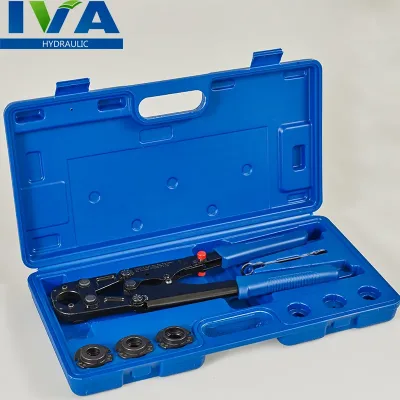
Hydraulic Plumbing Pex Clamp Fitting Tool Pex-1632
MOQ: 5 Pieces
Yuhuan Shengli Tools Co., Ltd.
- Verified by Intertek
- Manufacturer, Trading Company
- Lead time10 days
- Avg. response≤ 8h
Main productsBattery Pipe Pressing, Battery Crimping Tool, Hydraulic Sliding and Expanding Tool, Hydraulic Crimping Tool, Underfloor Heating Tool
Main marketsEastern Europe(60%), North America(20%), South Asia(10%)

Taizhou Zhuoxin Plastics Co., Ltd.
- Verified by BV
- Combined
- China Zhejiang
- Lead time30 days
- Avg. response≤ 3h
Main productsPVC Dwv Fitting, Pipe Fitting, Plastic Fittings, PVC Fittings, PPR Fittings, PVC Thread Fitings, Pph Pipe Fitting, PVC Pipe, PPR Pipe, Pph Pipe
Main marketsSouth America,Africa,Southeast Asia/ Mideast,East Asia(Japan/ South Korea),Domestic,Europe,Australia,North America

Ningbo Xintai Industry and Trade Co., Ltd.
- Verified by SGS
- Combined
- China Zhejiang
- Lead time30 days
- Avg. response≤ 2h
Main productsHydraulic Fitting, Hydraulic Hose Ferrule, Hydraulic Adapter, Hydraulic Hose Fittings
Main marketsDomestic,Europe
Weihai Haoyu Metal Products Co., Ltd
- Verified by SGS
- Combined
- China Shandong
- Lead time30 days
- Avg. response≤ 5h
Main productsRepair Clamps, Coupling, Pipe Clamp, Pipe Repair Clamp, Compression Coupling, Leak Clamp, Stainless Repair Clamps, Stainless Coupling, Pipe Coupling, Stainless Pipe Clamp
Main marketsDomestic


Pipe Coupings Pipe Repair Connector Leaking Pipe Recovery Tool Pipe Repair Clamp Water Pipe Fittings
$1.00 - $3.00
MOQ: 10 Pieces


- Trading Company
- China Shandong
- Lead time60 days
- Avg. response≤ 25h
Main productsForging, Turning Part, Forging Part, Machining Parts, Lifting Anchor, T Bolt, Casting, Aluminum Parts, Precast, Brass Parts
Main marketsSoutheast Asia/ Mideast,East Asia(Japan/ South Korea),Europe,Australia,North America
Chengdu Chuangrong Trading Co., Ltd.
- Trading Company,Manufacturer/Factory
- China Sichuan
- Lead time15 days
- Avg. response≤ 7h
Main productsHDPE Pipe, HDPE Fittings, Plastic Pipe Welding Machine, Plastic Pipe Welding Tool, PPR Pipe, PPR Fittings, PP Compression Fittings, Pipe Repair Clamp
Main marketsSouth America,Eastern Europe,Mid East,North America,Southeast Asia,Eastern Asia,Oceania,Western Europe,Africa
- Verified by TUVRHEINLAND
- Manufacturer/Factory
- China Zhejiang
- Lead time30 days
- Avg. response≤ 3h
Main productsMixing Valve, Mix System Series, Manifold Series, Manifold Fittings Series, Air Vent and Check Valve Series, Boiler Fittings Series, Radiator Valve Series, Thermostat Series, Radiator Fittings Series, Stainless Steel Hoses Series
Main marketsSouth America,Eastern Europe,Mid East,North America,Southeast Asia,Eastern Asia,Oceania,Western Europe,Africa


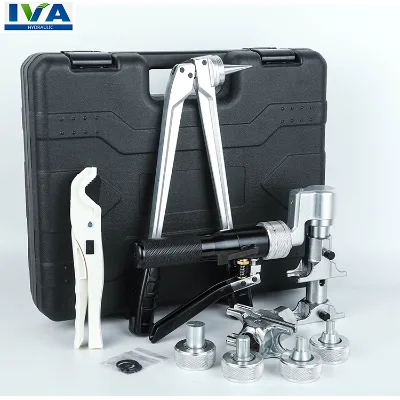
Under Floor Heating Pex Hydraulic Clamping Tool Kit Brass Sliding Pipe Press Fitting Tool
$105.00 - $110.00
MOQ: 1 Pieces
- Verified by TUVRHEINLAND
- Trading Company
- China Sichuan
- Lead time15 days
- Avg. response≤ 1h
Main productsPressfittings, Press Fittings and Pipes, Carbon Steel Zinc Plated Pressfittings, Stainless Steel Pressfittings, Kpress-Epoxy Carbon Steel Pressfittings, Kpress-Superdyma Carbon Steel Pressfittings, Kpress-Zinc Carbon Steel Pressfittings, Ipress-304/316L Stainless Steel Pressfittings
Main marketsDomestic,Europe
Hangzhou Hegong Machinery Co., Ltd.
- Verified by TUVRHEINLAND
- Combined
- China Zhejiang
- Lead time15 days
- Avg. response≤ 3h
Main productsMachining Part, Milling Part, Turning Part, Metal Fabrication, CNC Machining, Aluminum Machining, UHMW Machining, Sheet Metal Fabrication
Main marketsDomestic
Ningbo Riteco Copper Co., Ltd.
- Trading Company
- China Zhejiang
- Lead time30 days
- Avg. response≤ 25h
Main productsBrass Fitting, Fitting, Pex-Al-Pex Pipe, Press Fitting, Pex Fitting, Compression Fitting
Main marketsSouth America,Africa,Southeast Asia/ Mideast,East Asia(Japan/ South Korea),Europe,Australia,North America

Plumbing Fittings Multilayer Pipe Fittings Female Wall Plated Elbow Press
$0.30 - $0.32
MOQ: 3000 Pieces

Hydraulic Brass Pneumatic Threaded Machine Fitting Reducing Socket, F Thread
$0.28 - $0.30
MOQ: 1000 Pieces


Ningbo Pneumatic Technical Expert Co., Ltd.
- Verified by SGS
- Combined
- China Zhejiang
- Lead time15 days
- Avg. response≤ 6h
Main productsPneumatic Fittings, Brass Fittings, Plastic Fittings, PU Hose, Speed Controllers, Mini Fittings, Check Valves, Silencers, Tube Cutter
Main marketsDomestic,North America

Shandong Tongmao Special Steel Co., Ltd.
- Verified by BV
- Trading Company
- China Shandong
- Lead time15 days
- Avg. response≤ 6h
Main productsCopper Pipe, Galvanized Steel Coil, Aluminum Tube, Brass Tube, Precision Seamless Steel Pipe, Stainless Steel Coil, Stainless Steel Pipe, Steel Sheet, Copper Sheet, Aluminum Coil
Main marketsSouth America,Africa,Southeast Asia/ Mideast,Australia,North America

Ningbo HuaHui Metal Products Co., Ltd.
- Verified by BV
- Manufacturer/Factory
- China Zhejiang
- Lead time30 days
- Avg. response≤ 8h
Main productsBrass Heating Flange, Brass Connector, Brass Valves, Brass Electric Parts, Aluminum Parts, Stamping Parts, Stainless Steel Parts, Plastic Parts, Brass Nipple, Brass Hose Fittings
Main marketsSouth America,Eastern Europe,North America,Western Europe


Pipe and Fittings, Valve Fittings, Plumbing Pipe Fittings with ISO 9001, Brass Electric Fitting
$0.10 - $0.80
MOQ: 1000 Pieces

Pipe and Fittings, Metal Fittings, Plumbing Pipe Fittings with ISO 9001
$0.30 - $1.00
MOQ: 1000 Pieces

NINGBO JINSHUO REFRIGERATION EQUIPMENT CO., LTD.
- Verified by SGS
- Trading Company,Manufacturer/Factory
- China Zhejiang
- Lead time23 days
- Avg. response≤ 12h
Main productsFilter Dryer, Condenser, Home Appliance, Refrigeration Parts, Raw Plastic Material, Nut Screw
Main marketsSouth America,Eastern Europe,North America,Southeast Asia,Africa

Copper Press Fitting Coupling Reducer Elbow for Plumbing Pipe Fittings HVAC
$0.40 - $0.50
MOQ: 5000 Pieces

Copper Press Fitting Coupling Reducer Elbow for Plumbing Pipe Fittings HVAC
$0.40 - $0.50
MOQ: 5000 Pieces

Copper Press Fitting Coupling Reducer Elbow for Plumbing Pipe Fittings HVAC Press Fittings
$0.40 - $0.50
MOQ: 5000 Pieces

NINGBO STANDARD IMPORT & EXPORT CO., LTD
- Trading Company,Manufacturer/Factory,Group Corporation
- China Zhejiang
- Lead time23 days
- Avg. response≤ 15h
Main productsPex-Al-Pex Pipe, Pipe Fitting, Brass Fitting, Pex Pipe, Gas Fitting, PPR Insert, Screw Thread Fitting, Press Fitting, Compression Fitting, Valve
Main marketsSouth America,Eastern Europe,Mid East,North America,Southeast Asia,Eastern Asia,Oceania,Western Europe,Africa

Plumbing Pipe Fitting Elbow Double Brass Press Fitting for Water and Gas
$0.43 - $0.59
MOQ: 1000 Pieces


QUZHOU ECO IMP. & EXP. CO., LTD.
- Trading Company
- China Zhejiang
- Lead time30 days
- Avg. response≤ 25h
Main productsWater Meter, Gas Meter, Electric Meter, PU Tubes, IC Card Prepayment, Caster Wheel, Valves, Pipefittings, Filter, Strainer
Main marketsSoutheast Asia/ Mideast,Europe,North America

Ningbo Pntek Technology Co., Ltd.
- Verified by TUVRHEINLAND
- Trading Company
- China Zhejiang
- Lead time23 days
- Avg. response≤ 4h
Main productsPVC Valve, PVC Fitting, PVC Pipe, PVC Butterfly Valve, PP Valve, Brass Ball Valve, Water Tap, PVC Ball Valve, CPVC Valve, Faucet
Main marketsOthers(foreignTradeCapacity.exportBusinessCapacityMarketOther)

Hangzhou Times Import and Export Co., Ltd.
- Manufacturer/Factory
- China Zhejiang
- Lead time0 days
- Avg. response≤ 23h
Main productsEMT, IMC, Steel Conduit, Socket Sets, Cable Tray, Accessories, Wrench, Conduit Box


Comprehensive Sourcing Guide
Adjustable Sliding Fittings Plumbing Tools Supplier Concentration and Factory Types
Adjustable Sliding Fittings Plumbing Tools sit within a broader hydraulic and pipe-crimping tool category, and the supplier results for this page show manufacturing concentrated in China, with a Jiangsu-based factory listed among the verified results. Jiangsu is a plausible cluster signal because the supplier's main products cover cable crimping tools, wire strippers, pipe crimping tools, hydraulic crimping tools and hose crimping tools — a product breadth typical of an established tool-manufacturing region. When no location data appears for a supplier, you should still try to identify clusters before shortlisting: check the registered address, ask which city production actually takes place in, and confirm whether the listed origin on individual product pages (in these results, China) matches the factory address rather than a sales office.
Factory type matters as much as geography. The results show two structural profiles: a Manufacturer/Factory, and a combined Manufacturer and Trading Company. A dedicated factory usually gives you more control over tooling, hydraulic press frames and jaw production, which matters if you need custom jaw ranges or branded handles. A manufacturer-trading hybrid can be useful when you want to bundle sliding fitting sets with related expansion tools sourced from partner workshops. Verify which entity owns the production line for the specific model you are buying, because the company profile alone does not prove that every listed product is made in-house.
How to Verify Adjustable Sliding Fittings Plumbing Tools Suppliers
Verification starts with third-party evidence rather than self-declared claims. In the current results, one supplier is verified through TUVRHEINLAND and another through Intertek, both of which involve on-site or documented checks of the business entity. Treat such verification as a baseline, not a guarantee of product quality: it confirms the company exists and operates at the stated address at the time of inspection. Ask for the verification report summary and check the date, because an inspection several years old tells you little about current capacity.
System and product certifications provide the second layer. One supplier lists ISO 9000 and ISO 9001 system certification, indicating a documented quality-management process; product-level listings in this category show CE, ISO and RoHS markings on hydraulic crimping tools. When you review certifications, request the certificate number and issuing body, then confirm validity independently rather than accepting PDF copies alone. Also match the certificate scope to the exact product: a CE mark on a manual clamp tool does not automatically cover a battery-powered press tool. Finally, verify functional claims directly. Results include stated output pressures (for example, 500 bar and 70 bar on specific models), stroke lengths and oil capacities — ask for pressure test records or a video of a crimp on the fitting sizes you use, and consider requesting a sample before committing to production volume.
What to Compare Across Adjustable Sliding Fittings Plumbing Tools Suppliers
Build a comparison table using attributes actually displayed by suppliers, without assuming every supplier publishes every field. Lead time is a strong differentiator in these results: one supplier quotes 10 days while another quotes 45, a gap that can determine whether you can restock mid-season or must plan quarterly purchases. Response time varies similarly — roughly 8 hours versus around 19 hours — which affects how quickly spec questions, sample approvals and shipment issues get resolved. Neither figure guarantees future behavior, so test responsiveness yourself with a technical question before ordering.
Compare commercial and capability fields next. MOQ ranges from 1 unit on a battery-powered plumbing tool to 500 units on a customized pressing tool, so your order size may exclude some suppliers or unlock others. Main products reveal specialization: some suppliers focus on battery pipe pressing and underfloor heating tools, while others emphasize cable and hydraulic crimping broadly. Capacity descriptions differ too — one lists its own brand plus OEM work, another lists graphic processing, sample processing and customization on demand. Product-level attributes are equally comparable: automatic versus manual operation, DC 18V battery standards, alloy steel construction, warranty length (one set carries a 1-year warranty), packing format and customization availability. Weigh these together rather than chasing the lowest quoted price, since a cheaper manual clamp tool serves a different job than a powered press.
Common Adjustable Sliding Fittings Plumbing Tools Sourcing Risks
The most common risk in this category is specification mismatch. Sliding fitting tools must match the fitting system, jaw range and pipe diameters you use; results show models covering ranges such as 16–32 mm, while other models are described for sliding fittings on multi-layer composite pipe. If the jaw range, press jaw geometry or expansion head does not match your fittings, the tool is unusable regardless of price. Confirm compatibility in writing, referencing the exact model numbers (for example, BZ-1550, IG-1632, HZ-1240, PEX-1632F appear across results) rather than generic product names.
Second, watch for certification and build-quality gaps. A listing marked CE, RoHS and ISO may belong to a different model than the one quoted to you, and customized variants can fall outside certified configurations. Battery-powered tools carry additional risk around battery standard (DC 18V, 1.5Ah in one listing), charger compatibility and cell quality. Third, low MOQ can signal stock reselling rather than production — an MOQ of 1 on a powered tool is convenient but deserves extra scrutiny about actual manufacturing. Fourth, hydraulic performance claims are hard to validate remotely; pressure figures like 500 bar mean little without test evidence. Finally, long quoted lead times combined with high MOQ raise inventory risk if demand forecasting is uncertain. Mitigate all of these with pre-shipment inspection and a small pilot order before scaling.
Adjustable Sliding Fittings Plumbing Tools Regional Sourcing and Logistics
The verified location data for this page points to Jiangsu, China, as a sourcing region, and origin fields on individual products confirm China as the place of origin. Jiangsu's proximity to Shanghai's port infrastructure generally supports consolidated container shipments and established freight-forwarding routes for tools and hardware, though you should confirm the actual loading port with each supplier rather than assuming it. When shortlisting suppliers without published locations, identify clusters through the factory address, business-license region and which industrial zone the verification report cites, then prioritize regions with documented hydraulic-tool manufacturing.
Logistics details worth checking include packing format and weight, both of which appear in product data: manual clamp tools list carton/pallet packing with a color paper box inner package and a weight around 2.3 kg, while a hydraulic quick clamp tool lists a single package of 20×20×15 cm at 4.0 kg gross. These figures let you estimate container fill, per-unit freight cost and whether palletized or loose cartons suit your warehouse. Battery-powered tools add dangerous-goods considerations for sea and air freight — confirm battery shipping classification, packaging requirements and any documentation the carrier requires. Lead time should be read together with transit time: a 10-day production lead time still means several weeks door-to-door to most markets, and a 45-day lead time requires order placement well ahead of your selling season or project schedule.
Adjustable Sliding Fittings Plumbing Tools Commercial Terms and Order Planning
Commercial terms in this category span a wide range, so quote on identical specifications before comparing. Listed price ranges illustrate the spread: a manual PEX clamp tool at roughly 10–19 USD, a hydraulic clamping tool set at 152–160 USD, a hydraulic manual tool at 30–60 USD, and battery-powered pressing tools at 300–500 USD. These are listing prices, not negotiated contracts; tooling for customized variants, jaw sets, batteries and packaging changes the final number. Always request an itemized quote covering the tool body, jaws, case or box, spare seals and any customization fees.
Order planning should follow from the MOQ and lead-time data. Where MOQ is 1, use it to order samples and validate crimp quality on your fitting systems; where MOQ reaches 500 units for customized tools, negotiate a staged delivery or split the tool body order from consumable jaws. For payment protection, ask each supplier what secure payment or escrow-style arrangements they accept and verify the terms yourself rather than assuming coverage. Confirm warranty terms in the contract — a 1-year warranty appears in the results for one tool set — and specify what it covers, since hydraulic seals and battery packs often carry different terms than the tool body. Finally, align reorder cycles with the quoted lead time, building buffer stock for the longest supplier in your shortlist so a single delayed shipment cannot halt your product line.
FAQs
What types of Adjustable Sliding Fittings Plumbing Tools can I source from China?
You can source sliding fittings tool sets, tube expansion tools, hydraulic pipe clamping tools, PEX crimping tools, and battery-powered pipe pressing tools. Manufacturers in Jiangsu and other regions also list manual clamp tools for 16-32 mm fittings and hydraulic crimping tools up to 500 bar output. Confirm each tool's compatible fitting sizes and pipe materials before ordering.
How long does lead time usually take for these plumbing tools?
Lead times vary by supplier and order size, but some manufacturers list a lead time of around 10 days for standard items, while others quote around 45 days for larger or customized production runs. Always confirm the actual lead time for your quantity, finish, and any customization requirements before placing a purchase order.
What is the typical minimum order quantity for sliding fitting tool sets?
MOQs differ widely by product type. Some hydraulic and manual crimping tools are listed with a minimum order of just 1 or 5 units, which suits trial orders and product testing. Other powered pressing tools carry MOQs of 500 units for customized OEM production. Ask each supplier to confirm MOQ for the exact model you need.
Which certifications should I check on hydraulic crimping and pressing tools?
Look for CE, ISO, and RoHS certifications on the product listings, and check whether the factory holds ISO 9001 quality management certification. Some suppliers also hold UKCA certification and third-party verification from bodies such as Intertek or TUV Rheinland. Request copies of valid certificates and match the model number before ordering.
Can suppliers customize plumbing tools with my own brand?
Yes, customization is widely available. Several manufacturers list OEM services, some operate their own brands alongside OEM production, and customization options are marked on individual tool listings. Capabilities may include graphic processing, sample processing, and made-to-order modifications. Provide your logo files and specifications early so the supplier can confirm feasibility and cost.
How quickly do these tool manufacturers typically respond to inquiries?
Response times vary by supplier, with some manufacturers replying in roughly 8 hours on average and others taking longer. Fast response matters when you need quick quotes for sliding fittings tool sets or confirmation of technical details. Send a detailed inquiry with quantities and target models to get a complete first reply.
What technical specifications should I compare before buying a PEX clamping tool?
Compare the applicable fitting range, such as 16-32 mm, the maximum output pressure, stroke length, oil capacity, and operating pressure. Also check the crimping method, whether manual or automatic hydraulic, the handle material, weight, and package dimensions. Matching these specifications to your pipe system prevents compatibility problems on site.
What price ranges are common for these plumbing installation tools?
Listed prices vary by tool type and capability. Manual PEX clamp and crimping tools often fall in ranges from about 10 to 60 US dollars per unit, hydraulic quick clamp tools can start around 37 US dollars, and battery-powered pressing tools with motors and cases are commonly listed between 300 and 500 US dollars. Request formal quotations for your exact quantity.