Servo Driven Lotion Filling Machine Suppliers and Manufacturers
Source a Servo Driven Lotion Filling Machine from 20 verified suppliers in China. Compare key dimensions including response times, lead times, certifications, and pricing ranges to identify the right partner for your production needs. Review detailed specifications and request quotes today.
Suppliers List
CHANGZHOU RUN-TECH MACHINERY CO.,LTD
- Trading Company
- China Jiangsu
- Lead time0 days
- Avg. response≤ 21h
Main productsHigh Speed Filling Machine, High Speed Rotary Capping Machine, Hot Melt OPP Labeling Machine, Shrink Sleeve Labeling Machine, Self-Adhesive Labeling Machine for Bottles, Cartoning Packing Machine

Guangzhou Change Machinery Co., Ltd.
- Verified by TUVRHEINLAND
- Trading Company,Manufacturer/Factory
- China Guangdong
- Lead time23 days
- Avg. response≤ 6h
Main productsFilling Machines, Packing Machines, Labeling Machines, Foods Machinery, Cosmetics Machiniery, Daily Chemicals Machinery, Capping Machine, Mixing Tank, Filling and Sealing Machine, Tube Filling and Sealing Machine
Main marketsSouth America,Eastern Europe,Mid East,North America,Southeast Asia,Oceania,Africa

Guangzhou Fuluke Cosmetics Equipment Co., Ltd.
- Verified by CTI
- Combined
- China Guangdong
- Lead time15 days
- Avg. response≤ 9h
Main productsVacuum Cosmetics Emulsifier Mixer, Mixing Machine, Water Treatment System, Cosmetics Cream Making Machine, Shampoo Detergent Mixing Machine, Label Machine, Filling and Sealing Machine, Capping Machine, Cream Loction Making Machine, Inkjet Print
Main marketsAfrica,Southeast Asia/ Mideast,Domestic,Europe,Australia,North America

Jiangsu TOM Intelligent Equipment Co., Ltd.
- Verified by SGS
- Combined
- China Jiangsu
- Lead time30 days
- Avg. response≤ 6h
Main productsFilling Machine, Capping Machine, Labeling Machine, Bottle Unscrambling Machine, Sachet/Bag Packing Machine, Carton Open Machine, Carton Packaging Machine, Carton Sealing Machine, Robot Palletizer, Induction Aluminum Foil Sealing Machine
Main marketsAfrica,Southeast Asia/ Mideast,Europe

Shanghai Grepack Packing Machinery Co., Ltd
- Verified by TUVRHEINLAND
- Manufacturer/Factory
- China Shanghai
- Lead time45 days
- Avg. response≤ 4h
Main productsAutomatic Packing Machine, Automatic Filling Machine, Automatic Labeling Machine, Capping Machine, Automatic Packing Line, Carton Erector, Carton Packing Machine, Carton Sealing Machine, Palletizer, Checkweigher
Main marketsSouth America,Eastern Europe,Mid East,North America,Southeast Asia,Eastern Asia,Oceania,Western Europe,Africa


Automatic Linear Type Bottle Viscous Liquid/Cream/Lotion/Cosmetic Filling Machine
$11000.00 - $14500.00
MOQ: 1 set

$11000.00 - $14500.00
MOQ: 1 set

Full Automatic Filling Machine, Liquid Detergent Filling Machine, Shampoo Filling Production Line
$11000.00 - $14500.00
MOQ: 1 set

Zhangjiagang King Machine Tech Co., Ltd.
- Verified by BV
- Combined
- China Jiangsu
- Lead time45 days
- Avg. response≤ 6h
Main productsWater Filling Machine, Beverage Filling Machine, Carbonated Drink Filling Machine, 5gallon Bottle Filling Machine, Bottle Blowing Machine, Glass Bottle Filling Machine, Can Filling Machine, Wrapping Machine, Juice Filling Machine, Labeling Machine
Main marketsSoutheast Asia/ Mideast
Guangzhou Yundu Machinery Technology Co., Ltd.
- Verified by BV
- Manufacturer/Factory
- China Guangdong
- Lead time38 days
- Avg. response≤ 5h
Main productsPacking Machine, Filling Machine, Liquid Filing Machine, Capsule Filling Machine, Blister Packing Machine, Tube Filling Machine, Pharmaceutical Machinery, Capsule/ Tablet Counting Machine, Sachet /Pouch Filling Sealing Machine, Film Wrapping Machine
Main marketsSouth America,Eastern Europe,Mid East,North America,Southeast Asia,Eastern Asia,Oceania,Western Europe,Africa


High Speed Automatic Body Lotion Tracking Filling Machine Cosmetic Cream Filling Machine
$22800.00 - $33800.00
MOQ: 1 Sets

Guangzhou Cosmati Technology Co., Ltd
- Verified by TUVRHEINLAND
- Trading Company
- China Guangdong
- Lead time23 days
- Avg. response≤ 2h
Main productsVacuum Emulsifying Mixer, Liquid Washing Homogenizing Mixer, Liquid Soap Mixer Machine, Perfume Filling Machine, Dry Powder Mixing Machine, Color Cosmetic Making Machine, Filling Capping Labeling Machine, Lab Homogenizer, Mixing Tank, Cream Making Machine
Main marketsSoutheast Asia/ Mideast,Europe,North America


Automatic 4 6 8 Heads Filling Machine Filling for Liquid Detergent Lotion
$15000.00 - $20000.00
MOQ: 1 Pieces

Automatic Turntable Liquid Filling Machine Cream Lotion Filling and Capping Machine
$45000.00 - $50000.00
MOQ: 1 Pieces

Guangzhou Silian Machinery Co., Ltd.
- Verified by CTI
- Combined
- China Guangdong
- Lead time30 days
- Avg. response≤ 2h
Main marketsAfrica,Southeast Asia/ Mideast,East Asia(Japan/ South Korea),Domestic,Europe,Australia,North America

Pneumatic Simple Essence Filling Machine Foundation Filling Machine Cosmetics Lotion Filling Machine
$888.00 - $999.00
MOQ: 1 sets

$16000.00 - $20000.00
MOQ: 1 sets


Guangzhou Sanxin Machinery Co., Ltd.
- Verified by SGS
- Manufacturer
- China Guangdong
- Lead time15 days
- Avg. response≤ 2h
Main productsCosmetic Machine, Three Dimensional Packing Machine, Shrink Wrapper
Main marketsSoutheast Asia/ Mideast,Domestic


Fully Automatic and Latest High Quality Cosmetic Liquid Filling Machine
$4000.00 - $12000.00
MOQ: 1 Sets

Shanghai Paixie Packing Machinery Co., Ltd.
- Verified by BV
- Combined
- China Shanghai
- Lead time23 days
- Avg. response≤ 2h
Main productsPacking Machine, Liquid Filling Machine, Vape Equipment, Packaging Machine, Olive Oil Machine, Box Packing Machine, Wrapping Machine, Labeling Machine, Capping Machine, Filling Machine
Main marketsNorth America


China Factory Automatic Lotion and Cream Cosmetic Bottle Filling Machine
$13000.00 - $19000.00
MOQ: 1 Pieces

Advanced Fully Automatic Pneumatic Cream and Lotion Filling Machine
$8000.00 - $19000.00
MOQ: 1 Pieces

High-Quality Detergent Body Cosmetic Lotion Bottle Filling Machine
$13000.00 - $19000.00
MOQ: 1 Pieces


Cosmetic Filler Facial Cream 100/200ml Lotion Cosmetic Filling Machine
$13000.00 - $19000.00
MOQ: 1 Pieces

Guangzhou Guanhe Light Industry Machinery Co., Ltd.
- Verified by SGS
- Trading Company,Manufacturer/Factory
- China Guangdong
- Lead time38 days
- Avg. response≤ 7h
Main productsFilling Machines, Packing Machine, Capping Machine, Sealing Machine, Labeling Machine, Bottle Washing Drying Machine, Bottle Unscrambling Machine, Conveying Machine, Filling Capping Machines, Mixing/Storage Tanks
Main marketsSouth America,Eastern Europe,Mid East,North America,Southeast Asia,Eastern Asia,Oceania,Western Europe,Africa

Lotion Liquid Cream Semi Automatic Piston Pneumatic Filler Filling Machine
$1600.00 - $6250.00
MOQ: 1 Pieces

Automatic Bottle Capping Sealing Filling Machine for Lotion Liquid
$50000.00 - $56650.00
MOQ: 1 Pieces

Guangzhou Tengzhuo Packing Equipment Co., Ltd.
- Verified by SGS
- Trading Company,Manufacturer/Factory
- China Guangdong
- Lead time23 days
- Avg. response≤ 5h
Main productsFilling Machine, Capping Machine, Labeling Machine, Bottle Washing Machine, Filling Production Line, Liquid Filling Machine, Powder Filling Machine, Honey Filling Machine, Perfume Filling Machine, Lotion Filling Machine
Main marketsSouth America,Eastern Europe,Mid East,North America,Southeast Asia,Eastern Asia,Oceania,Western Europe,Africa

Advanced Automatic Lotion Liquid Filling Machine for Skin Care Bottles
$5670.00 - $8955.00
MOQ: 1 sets

Cosmetic Cream Filling Packaging Liquid Filling Sauces Packing Machine
$8400.00 - $8571.00
MOQ: 1 sets

- Verified by BV
- Trading Company
- China Hebei
- Lead time30 days
- Avg. response≤ 3h
Main productsElbow Machine, Induction Pipe Bending Machine, Tee Machine, Seamless Elbow, Pipe Expanding Machine, Hydraulic Press, GOST Elbow, Tee
Main marketsSouth America,Africa,Southeast Asia/ Mideast,East Asia(Japan/ South Korea),Europe,North America

Shanghai Glzon Equipment Co., Ltd.
- Verified by BV
- Combined
- China Shanghai
- Lead time30 days
- Avg. response≤ 4h
Main productsFilling Machine
Main marketsDomestic

Automatic Bottle Filling System Liquid Filling Machine Suppliers Lotion/Shampoo Filling Machine
$2000.00 - $10000.00
MOQ: 1 Pieces


Luohe Tianheng Machinery Co., Ltd.
- Verified by TUVRHEINLAND
- Combined
- China Henan
- Lead time15 days
- Avg. response≤ 4h
Main productsPackaging Machinery, Grain Machinery, Flour Mill, Oil Press, Food Machinery.
Main marketsSoutheast Asia/ Mideast

Guangdong Jinzong Machinery Co., Ltd.
- Verified by BV
- Combined
- China Guangdong
- Lead time60 days
- Avg. response≤ 21h
Main productsChemical Reactor, Resin Reactor, Vacuum Emulsifying Machine, Stainless Steel Mixing Tank, Liquid Detergent Mxing Tank, Laboratroy Mixer, Pharmaceutical Processing Machine, Food Processing Machine, Resin Plant, Paint Production Equipment
Main marketsSouth America,Africa,Southeast Asia/ Mideast,East Asia(Japan/ South Korea)
Shanghai Grepack Packing Machinery Co., Ltd.
- Verified by SGS Group
- Manufacturer, Trading Company
- Lead time30 days
- Avg. response≤ 2h
Main productsFilling Machines, Multi-Function Packaging Machines, Labeling Machine, Capping Machine, Palletizer
Main marketsNorth America(15%), South America(15%), Southeast Asia(15%)
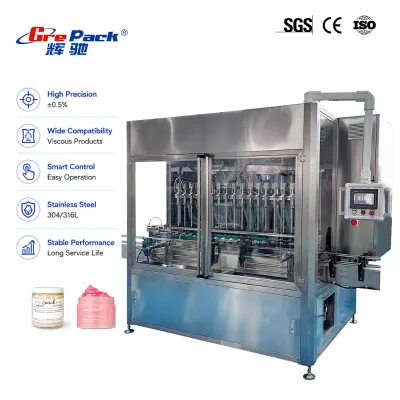
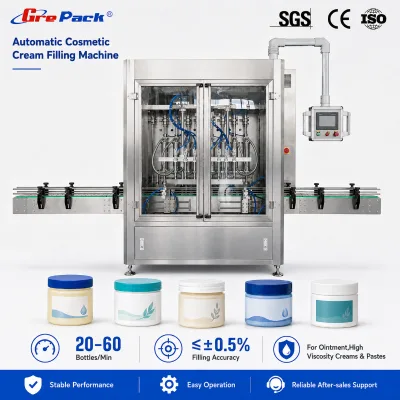
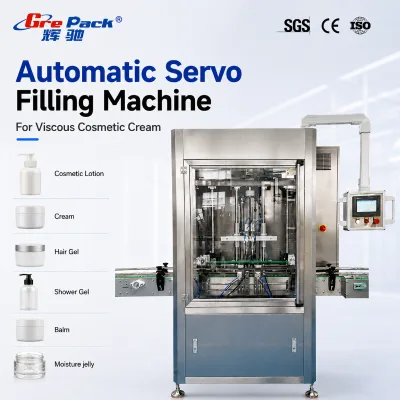
Automatic Viscosity Cream Filling Machine Facial Scrub Cream Filling Machine
$11000.00 - $14800.00

Guangzhou Hone Machinery Co., Ltd.
- Verified by BV
- Trading Company,Manufacturer/Factory
- China Guangdong
- Lead time38 days
- Avg. response≤ 1h
Main productsVacuum Emulsifying Mixer, Vacuum Homogenizer Mixer, Mixing Tank, Liquid Homogenizer Mixer, Shampoo Making Machine, Vacuum Cream Mixer, Filling Machine, Capping Machine, Labeling Machine, Filling and Sealing Machine
Main marketsSouth America,Eastern Europe,Mid East,North America,Southeast Asia,Eastern Asia,Oceania,Western Europe,Africa


$11500.00 - $12500.00
MOQ: 1 Sets

Shanghai Kesi Packaging Machinery Co., Ltd.
- Trading Company,Manufacturer/Factory
- China Shanghai
- Lead time38 days
- Avg. response≤ 17h
Main productsFilling Machine, Labeling Machine, Capping Machine, Liquid Filling Machine, Filling Line, Sealing Machine, Packaging Machine, Folding Machine, Coding Machine, Labeling Machinery
Main marketsSouth America,Eastern Europe,Mid East,North America,Southeast Asia,Eastern Asia,Western Europe,Africa


Comprehensive Sourcing Guide
Servo Driven Lotion Filling Machine Supplier Concentration and Factory Types
When you search for a Servo Driven Lotion Filling Machine, the supplier results you see will typically cluster around a small number of Chinese manufacturing regions rather than being spread evenly across the country. In the current results, two regional origins are explicitly visible: suppliers based in Jiangsu and suppliers based in Guangdong. The Jiangsu-based supplier in these results is listed as a trading company whose main product lines center on high-speed filling machines, rotary capping machines, and several labeling machine types, including hot melt OPP, shrink sleeve, and self-adhesive systems for bottles, alongside cartoning machines. That positioning suggests a supplier oriented toward complete bottling lines rather than single standalone units.
The Guangdong results look different: one supplier there is listed as a combined trading company and manufacturer/factory, with main products spanning filling machines, packing machines, labeling machines, foods machinery, cosmetics machinery, daily chemicals machinery, capping machines, mixing tanks, and tube filling and sealing machines. A third listed entity is described simply as combined and shows product lines including vacuum cosmetics emulsifier mixers, cream making machines, water treatment systems, and filling and sealing machines. Treat these type labels as a starting point only. A trading company listing does not prove it lacks factory relationships, and a factory label does not prove in-house servo piston engineering. Ask each candidate to state which portions of a servo driven filling line it builds itself and which it sources from partner workshops.
How to Verify Servo Driven Lotion Filling Machine Suppliers
Verification should begin with the attributes a platform actually displays, then move to evidence the supplier must produce on request. In the current results, one Guangdong supplier shows system certifications of ISO 9001 and GMP and carries third-party verification from TÜV Rheinland, while another entity shows verification from CTI. These labels indicate that some form of audit or credential check has occurred, but they do not tell you which factory was audited, when, or against which scope. When a supplier claims certification, request the certificate number and the name of the certified legal entity, then confirm the entity name matches the company on your contract and invoice.
Beyond credentials, test responsiveness and transparency directly. The listed suppliers show very different response-time figures — roughly five hours, eight hours, and over twenty hours in the current results — which is a usable early signal of how a supplier communicates under normal conditions. Send each candidate the same technical questionnaire: servo motor and drive brands used in the piston dosing system, filling accuracy claims at your target volume, nozzle configurations available, and whether they provide bottle-based sample filling. The listed results already show that at least one supplier offers samples provision based on bottle samples and supports PLC control with a touch-screen panel, so treat sample filling on your own bottles as a baseline expectation. Finally, verify whether the company type, registered address, and exported product history align with what the listing claims.
What to Compare Across Servo Driven Lotion Filling Machine Suppliers
Build a comparison sheet from the dimensions visible in supplier results, and fill gaps with direct questions. The current listings expose several usable variables. Lead time varies dramatically: one supplier shows a lead time of zero, another twenty-three days, and a third fifteen days. A zero or short displayed lead time usually refers to stock or listing readiness rather than a built-to-order servo machine, so confirm actual production time for your exact nozzle count before treating it as an advantage. Response speed differs too — roughly five, eight, and twenty hours — which matters when commissioning issues arise after shipment. MOQ data is also displayed, and in this category it is typically very low because machinery is quoted per unit rather than per carton.
Technical comparison matters more than any label. The listed filling machines show piston-type dosing, pressure filling, multi-head valve configurations, linear structure, stainless steel construction, PLC control with touch-screen panels, and remote control capability, with nozzle counts of six, eight, and twelve across different models and fill ranges from 1000ml to 5000ml. Price ranges in the current results scale visibly with nozzle count and automation level, with some automatic body lotion machines listed far above the six- and eight-nozzle models. Also compare main product breadth: a supplier listing filling, capping, labeling, and cartoning machines may integrate a full line, while a specialist may deliver better dosing accuracy. Never assume a displayed attribute applies to every machine a supplier sells.
Common Servo Driven Lotion Filling Machine Sourcing Risks
The most common risk in this category is assuming that a servo-driven label guarantees servo piston dosing throughout the machine. Listings in the current results mix keywords such as servo piston system, pneumatic lotion filling, and pressure filling within the same product family, and one listed machine is explicitly specified with a pure pneumatic dynamic type. A supplier selling both pneumatic and servo configurations may quote you a lower price for a machine that is not fully servo driven. Insist on a written specification naming the servo motor, drive, and controller brands, the dosing principle, and the accuracy tolerance at your fill volume, and make that document part of the purchase contract.
Second, beware of conflating company type with manufacturing capability. The current results include a Jiangsu trading company, a Guangdong combined trading company and factory, and a combined entity, yet all sell filling machinery. A trading intermediary may add cost and slow technical communication, while a factory may still outsource servo components. Third, watch lead-time ambiguity: displayed lead times of zero, fifteen, and twenty-three days cannot be compared directly without clarifying what triggers the clock — deposit receipt, drawing approval, or bottle sample confirmation. Fourth, customization is listed as available on several machines, but scope matters; confirm whether customization covers nozzle count, change parts for your bottle, and control integration. Finally, verify machine material claims such as stainless steel grade in writing, and request photos of the actual welded frame and nozzle manifold rather than catalog renders.
Servo Driven Lotion Filling Machine Regional Sourcing and Logistics
Regional context shapes both machine design and shipping. The current results show Jiangsu and Guangdong as listed origins, and one product explicitly names Guangzhou as its place of origin. Jiangsu sits within the Yangtze River Delta industrial belt, where packaging machinery supply chains are dense; Guangdong hosts a large cluster of cosmetics and daily-chemicals equipment makers, which is consistent with the listed suppliers there offering emulsifier mixers, cream making machines, mixing tanks, and tube filling and sealing lines alongside fillers. Sourcing from a region where your upstream tanks and downstream labelers are also made can simplify integration, spare parts, and engineer visits, since one trip can cover multiple vendors.
Logistics planning should start from machine dimensions and packaging. The current listings show wooden case packing for a multi-nozzle linear filler and a timber box for a compact desktop unit, with one listing specifying a volume around 0.3 cubic meters and 45 kilograms — small enough for air freight — while multi-head servo machines will require sea freight and possibly a full or shared container. Confirm whether wooden cases are heat-treated and stamped for export compliance in your destination market. Ask each supplier to state the gross weight, packed dimensions, and loading port, and to quote the disassembly steps needed. Also verify voltage and frequency options, since servo drives and control panels must match your plant power supply before shipment rather than after arrival.
Servo Driven Lotion Filling Machine Commercial Terms and Order Planning
Commercial terms in this category revolve around unit pricing, low order quantities, and staged production. The current results display explicit price ranges: roughly 25,000 to 28,000 for a six-nozzle model, 29,000 to 30,000 for an eight-nozzle model, 35,000 to 40,000 for a twelve-nozzle configuration, and a higher band of 55,000 to 75,000 for an automatic body lotion filling machine positioned for efficient production. A desktop pneumatic unit lists far lower, around 1,200. These figures are listing prices, not negotiated contracts, so use them to bracket expectations and then request itemized quotations separating the base machine, change parts, customization, spare parts, and packaging.
MOQ is displayed as one unit for at least one listed machine, which is typical for capital equipment; the negotiation leverage lies in spares, warranty terms, and future repeat orders rather than quantity. Payment structure should follow the machinery norm of a deposit with balance against pre-shipment inspection, and given the lead times of fifteen to twenty-three days shown in the results — plus the possibility that a servo machine is built to order and takes longer — plan your production schedule and factory acceptance test date before signing. Sequence the order around your bottle samples: at least one supplier confirms sample filling based on bottle samples, so send bottles early, lock the fill-volume specification, and tie the final payment to a documented acceptance run at your target speed and accuracy. Keep warranty scope, commissioning support, and remote diagnostics in writing.
FAQs
What is a Servo Driven Lotion Filling Machine and how does it work?
It is a piston-type filling machine that uses a servo motor to drive the dosing system, giving precise control over fill volume and speed for lotions, creams, and other viscous liquids. Most models are fully automatic, built with a linear structure and stainless steel contact parts, and operate through PLC control with a touch screen panel for easy recipe changes.
How much does a Servo Driven Lotion Filling Machine cost?
Listed prices vary widely by configuration. Smaller fully automatic piston models with 6 nozzles are quoted from 25,000 to 28,000 dollars, 8-nozzle versions from 29,000 to 30,000 dollars, 12-nozzle high-speed models from 35,000 to 40,000 dollars, and larger efficient production lines from 55,000 to 75,000 dollars. Confirm final pricing with each supplier based on your bottle and product.
What is the typical MOQ when ordering a Servo Driven Lotion Filling Machine?
Many suppliers list a minimum order quantity of just 1 unit, since filling machines are capital equipment bought individually. This lets you order a single machine for trials or a production line upgrade. Always confirm MOQ in writing before quoting, as customizations such as additional filling heads, custom bottle handling, or special nozzles can affect terms.
Which nozzle configuration should I choose for my lotion production volume?
Match filling heads to output needs. Six-nozzle models suit smaller batches, eight-nozzle configurations handle mid-range production, and twelve-nozzle high-speed machines are quoted with filling speeds of 55 to 65 bottles per hour and suit larger runs. Consider your bottle sizes, typically 1000ml to 5000ml on listed models, and future growth before selecting a configuration.
Can I get a Servo Driven Lotion Filling Machine customized for my bottles?
Yes, customization is available on listed machines, and samples can be provided based on your bottle samples. Suppliers typically adjust nozzle count, filling volume range, conveyor height, and bottle handling to your containers. Provide bottle drawings, product viscosity details, and target fill volumes early so the supplier can confirm feasibility and accurate pricing before production.
How long is the lead time and how fast do suppliers respond?
Listed lead times range from about 15 to 23 days depending on the supplier and machine complexity. Response times in current results range from roughly 5 to 20 hours. Since custom machines may need longer production schedules, confirm the exact lead time for your configured model and message several suppliers early to compare availability before committing.
Which regions in China supply these machines and what certifications matter?
Current results show suppliers based in Jiangsu and Guangdong provinces, with Guangzhou a common production origin for smaller units. One Guangdong supplier holds ISO 9001 and GMP system certifications and is verified by TUV Rheinland, while another is verified by CTI. Ask each supplier for current certificates, factory photos, and verification status relevant to your market.
Are pneumatic semi-automatic desktop fillers a good alternative to servo models?
For startups or low-volume production, desktop pneumatic fillers offer a low entry cost, with one listed unit priced at 1,200 dollars. They handle liquids and pastes for foods and cosmetics using SUS 304 or SUS 316 materials and need compressed air at 0.6 to 0.8 MPa. Servo driven automatic machines suit higher volumes where precision and speed matter.