Boho Midi Floral Print Dress Suppliers and Manufacturers
Explore 30 verified options for Boho Midi Floral Print Dress from Guangdong factories. Compare response times, lead times, MOQs, and sample policies to source efficiently. Request quotes directly from listed suppliers; review the available evidence before requesting comparable quotations from suitable candidates.
Updated
Suppliers List

Guangzhou Sinkar Clothing Co., Ltd.
- Manufacturer, Trading Company
- Guangdong, China
- Lead time20 days
- Avg. response≤ 12h
Main productsBlouse, Dress, Woman Clothes, Trousers, Coat
Main marketsNorth America(40.00%), Domestic Market(40.00%), Eastern Europe(20.00%)
Dongguan Humen Yihao Clothing Co., Ltd.
- Manufacturer, Trading Company
- Lead time旺季: "1 - 100":15,"101 - 500":25,"501 - 1000":35,"> 1000":"To be negotiated", 淡季: "1 - 100":15,"101 - 500":25,"501 - 1000":35,"> 1000":"To be negotiated"
- Avg. response≤ 5h
Main productsSilk Dress, Crop Top, Women Oversized T Shirts, Bodysuit, Mini Dress
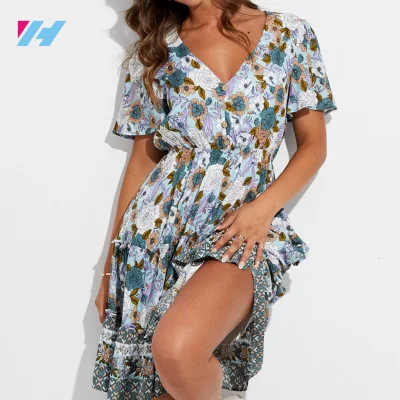
Custom Midi Flower Boho Dresses Women Summer Floral Print Sun Casual Bohemian Dress
$12.26 - $12.85
MOQ: 100 pieces
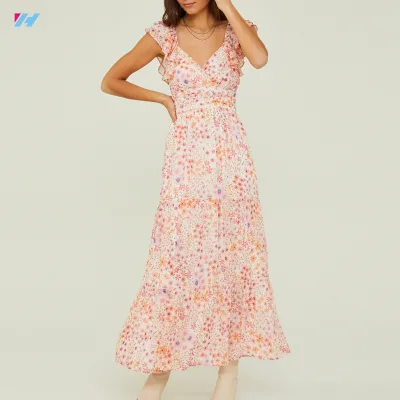

Guangzhou Dongzhou Garment Co., Ltd.
- Verified by TUVRHEINLAND
- Combined
- China Guangdong
- Lead time15 days
- Avg. response≤ 6h
Main productsDress, Blazer / Suit Jacket, Trousers / Dress Pants, Vest / Waistcoat, Chanel Style / Tweed Style, Skirt
Main marketsDomestic,Europe


White Embroidered Boho Summer Dress - Floral Print Short Sleeve Casual Vacation Dress for Women
$5.00 - $25.00
MOQ: 100 Pieces

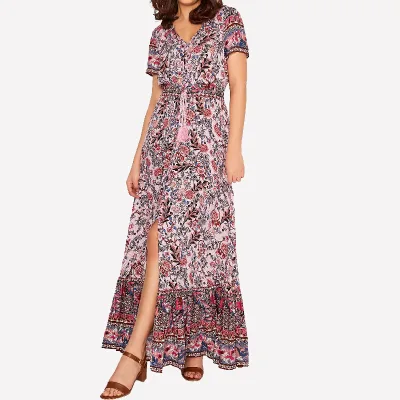
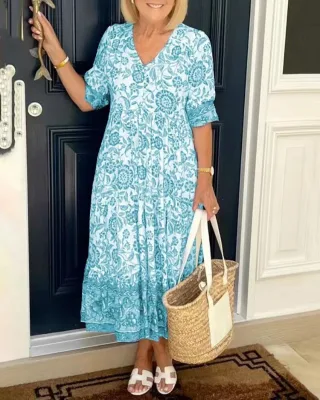
Pink Printed Boho Maxi Dress - V Neck Short Sleeve Casual Summer Vacation Dress for Women
$5.00 - $25.00
MOQ: 100 Pieces

$5.00 - $25.00
MOQ: 100 Pieces

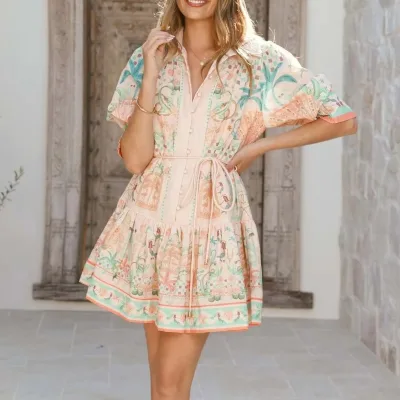
Women's Boho Floral Print V-Neck Short Sleeve Mini Dress with Embroidered Waistband
$5.00 - $25.00
MOQ: 100 Pieces

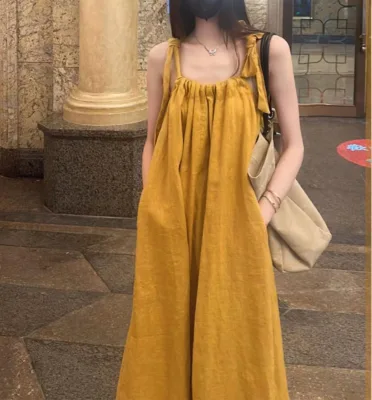
Boho Yellow Floral Print Halter Backless Maxi Dress, Ruffle Hem High Split Bodycon Summer Dress
$5.00 - $25.00
MOQ: 100 Pieces

Goldely Garment Import and Export Inc.
- Verified by SGS
- Trading Company
- China Guangdong
- Lead time15 days
- Avg. response≤ 5h
Main marketsNorth America


Summer Women Maxi Dress Casual Floral Boho Short Sleeve Beach Long Dresses
$7.00 - $9.00
MOQ: 100 Pieces


- Verified by TüVRheinland
- Manufacturer, Trading Company
- Lead time25 days
- Avg. response≤ 3h
Main productsSheet, Duvet Cover, Pillowcase, Pyjama, Dress
Main marketsOceania(70%), North America(30%)

Guangzhou Yuanfeng Textile Technology Co., Ltd.
- Verified by BV
- Trading Company,Manufacturer/Factory
- China Guangdong
- Lead time23 days
- Avg. response≤ 6h
Main productsCustom Bikinis, One-Piece Swimwear, Beach Cover-UPS, Yoga & Activewear Sets
Main marketsSouth America,Eastern Europe,North America,Western Europe

Long Sleeve Print Women Shirt Dress Boho Office Dresses Holiday Floral Split Maxi Vestido
$7.99 - $9.99
MOQ: 2 Pieces

Boho Maxi Dress Womenfloral Print Long Sleeve V Neck High Waist Dsresse Femalebeach Long Dress
$8.00 - $9.99
MOQ: 30 pieces
Dongguan Eloom Fashion Co., Ltd.
- Manufacturer, Trading Company
- Guangdong, China
- Lead time30 days
- Avg. response≤ 3h
Main productsDress,Tops,Blazer,Skirt,Pants
Main marketsWestern Europe(30.00%), Oceania(30.00%), North America(30.00%), Mid East(10.00%)

Shangrao Huanju Socks Co., Ltd.
- Trading Company
- Jiangxi, China
- Lead time10 days
- Avg. response≤ 3h
Main productsApparel,Socks & Hosiery,Women's Clothing,Sportswear,Men's Clothing
Main marketsNorth America(50.00%), Western Europe(30.00%), Eastern Asia(5.00%), Northern Europe(3.00%), Southeast Asia(2.00%), Central America(2.00%), South Asia(2.00%), Eastern Europe(2.00%), Southern Europe(2.00%), South America(1.00%), Africa(1.00%)

Guangzhou Jingsheng Garment Co., Ltd.
- Verified by CTI
- Trading Company
- China Guangdong
- Lead time15 days
- Avg. response≤ 17h
Main productsGarment
Main marketsDomestic,Australia,North America

$9.30 - $11.80
MOQ: 200 Pieces

Dongguan Anxi Clothing Co., Ltd
- Verified by Intertek
- Manufacturer, Trading Company
- Lead time15 days
- Avg. response≤ 2h
Main productsWomen Dress, Women Skirt, Women Shirt, Women Pant, Women Short
Dongguan Bafinasa Garments Co., Ltd.
- Verified by TüVRheinland
- Manufacturer, Trading Company
- Lead time30 days
- Avg. response≤ 2h
Main productsDresses, Coats, Jackets, Pants, Base Shirt
Main marketsEastern Europe(40%), North America(30%), Oceania(10%)
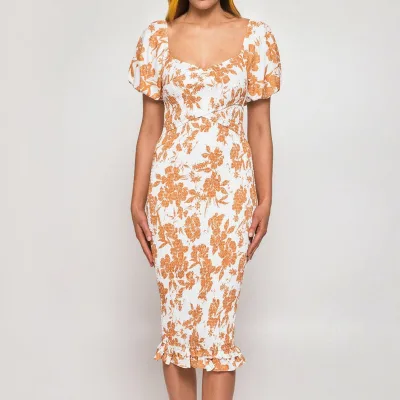
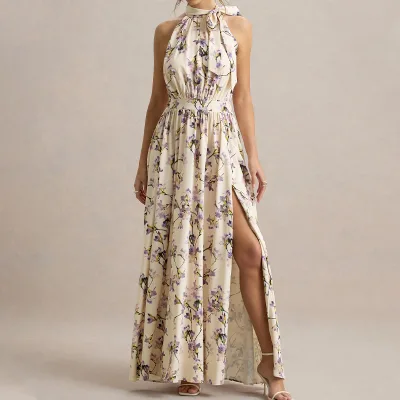
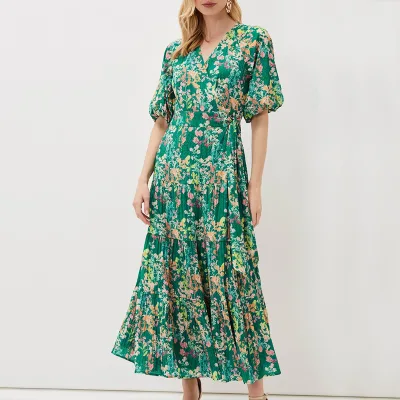
Custom Puff Sleeve Fit and Flare Boho Women Summer Chiffon Long Floral Casual Dresses
$12.30 - $17.90
MOQ: 50 pieces

Qingdao Yuyi Industry and Trade Co., Ltd.
- Verified by SGS
- Combined
- China Shandong
- Lead time30 days
- Avg. response≤ 2h
Main productsClothes
Main marketsDomestic

Dongguan Yecheng Trading Co., Ltd.
- Verified by SGS
- Manufacturer/Factory
- China Guangdong
- Lead time23 days
- Avg. response≤ 6h
Main productsHoodie, Sweatshirts, Jacket, Pants, Tracksuit
Main marketsSouth America,Eastern Europe,North America,Southeast Asia,Western Europe

$13.99 - $15.99
MOQ: 100 pieces

Boho Floral Print Frill Short Sleeve Adjustable Waist Women Casual High Quality Tiered Maxi Dress
$10.99 - $12.99
MOQ: 100 pieces

$10.99 - $12.99
MOQ: 100 pieces

$10.82 - $12.82
MOQ: 100 pieces

Dongguan Chen Shan Apparel & Accessory Co., Ltd.
- Manufacturer
- Guangdong, China
- Lead time15 days
- Avg. response≤ 8h
Main productsApparel
Main marketsNorth America(40.00%), Domestic Market(10.00%), Eastern Europe(7.00%), Western Europe(6.00%), Southern Europe(6.00%), Northern Europe(6.00%), South America(5.00%), Oceania(5.00%), Africa(5.00%), Mid East(5.00%), Southeast Asia(5.00%)
Shenzhen Fendi Jewelry Co., Ltd.
- Manufacturer, Trading Company, Distributor/Wholesaler
- Guangdong, China
- Lead time10 days
- Avg. response≤ 4h
Main productsFashion Jewelry,Body Jewelry,Silicone Gift,Bags,Clothes
Main marketsSouth America(20.00%), North America(20.00%), Central America(10.00%), Mid East(10.00%), Northern Europe(5.00%), Southeast Asia(5.00%), Western Europe(5.00%), Southern Europe(5.00%), Eastern Europe(5.00%), Domestic Market(5.00%), South Asia(5.00%), Eastern Asia(3.00%), Oceania(1.00%), Africa(1.00%)
Dongguan City Xishang Clothing Co., Ltd.
- Verified by Intertek
- Manufacturer, Trading Company
- Lead time0 days
- Avg. response≤ 3h
Main productsDresses, Blouses, Skirts, Sets, Pants
Main marketsNorth America(70%), Western Europe(10%), South America(10%)
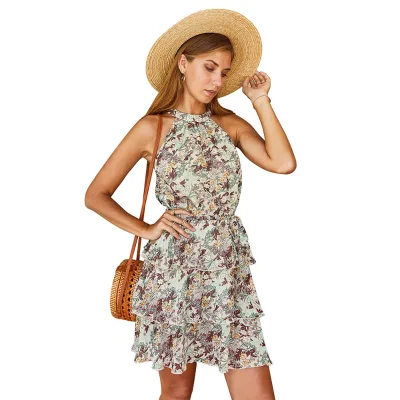
$7.90 - $8.58
MOQ: 50 pieces
Huixian Baishangji Clothing Co., Ltd.
- Trading Company
- Henan Province, China
- Lead time7 days
- Avg. response≤ 3h
Main productsWomen's clothing,men's clothing
Main marketsNorth America(60.00%), Africa(20.00%), Western Europe(10.00%), Northern Europe(5.00%), South America(5.00%)
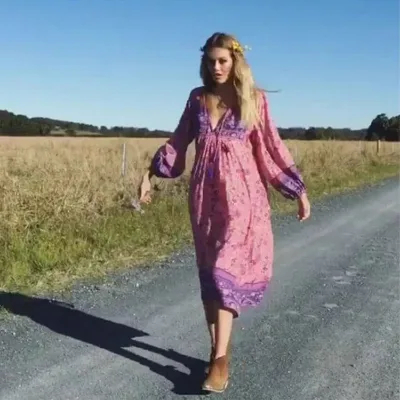
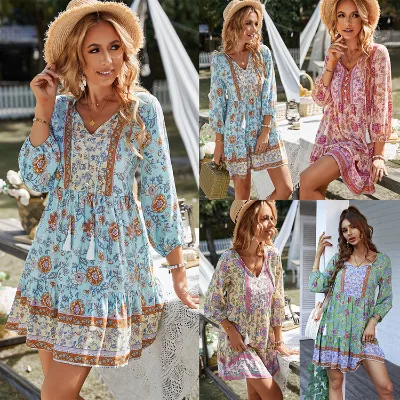
Bohemia Casual Dresses Holiday Style Short Dresses Positioning Print Dresses for Women
$7.27 - $8.72
MOQ: 2 pieces

Dongguan Xiuyu Fashion Garment Co., Ltd.
- Verified by TUVRHEINLAND
- Combined
- China Guangdong
- Lead time15 days
- Avg. response≤ 5h
Main productsSuit, Dress, Hoodie, T-Shirt, Jeans, Trousers, Skirt, Top, Shorts, Blazer
Main marketsEurope,Australia,North America


Customize Womens Loose Fit Floral Print Chiffon Long Sleeve Summer Casual Dresses
$8.80 - $11.80
MOQ: 200 pieces

Summer Slim Fashion Women's MIDI-Length Pleated Dress Elegant Sexy Cotton Strawberry Print
$13.30 - $15.30
MOQ: 100 pieces

Summer's Plaid MIDI Dress with One Shoulder Checkered Elegant Slim Women's Dress
$7.20 - $9.60
MOQ: 100 pieces

Guangzhou Sunyoung Garment Co., Ltd.
- Verified by SGS
- Combined
- China Guangdong
- Lead time15 days
- Avg. response≤ 6h
Main productsPolo-Shirt, Shirt, Suit, Coat, Uifrom
Main marketsDomestic

Dongguan Hanlin Clothing Co., Ltd.
- Manufacturer
- Guangdong, China
- Lead time0 days
- Avg. response≤ 3h
Main productsmini dress,Blouse,Plus-size dress,suit,formal dress
Main marketsSouthern Europe(20.00%), Oceania(20.00%), Northern Europe(20.00%), Eastern Europe(20.00%), Western Europe(20.00%), Mid East(10.00%), South Asia(10.00%), Southeast Asia(10.00%), Central America(10.00%), North America(10.00%)

Guangzhou Mingyu Manufacturing Co., Ltd
- Verified by SGS
- Trading Company
- China Guangdong
- Lead time15 days
- Avg. response≤ 1h
Main productsCoat, Dress, Trousers
Main marketsDomestic


Summer Fashion Loose and Breathable High-End Floral Print Blouse Dress
$12.00 - $14.00
MOQ: 100 Pieces
Xinxiang Baiyin Clothing Co., Ltd.
- Trading Company
- Henan, China
- Lead time15 days
- Avg. response≤ 3h
Main productsGarment making,Costume printing,Clothing sales
Main marketsSouth America(35.00%), Domestic Market(5.00%), North America(5.00%), South Asia(5.00%), Southern Europe(5.00%), Northern Europe(5.00%), Central America(5.00%), Western Europe(5.00%), Eastern Asia(5.00%), Mid East(5.00%), Oceania(5.00%), Africa(5.00%), Southeast Asia(5.00%), Eastern Europe(5.00%)

Jinan Nanfei Information Technology Co., Ltd.
- Verified by CTI
- Trading Company
- China Shandong
- Lead time15 days
- Avg. response≤ 3h
Main productsWomen/Men Activewear, Women Tops Blouses & Tee, Women Dresses, Women Bottoms, Women Sweatshirts, Women Outerwear, Women Beachwear, Men Co-Ords, Men Hoodies & Sweatshirts, Men Bottoms
Main marketsDomestic

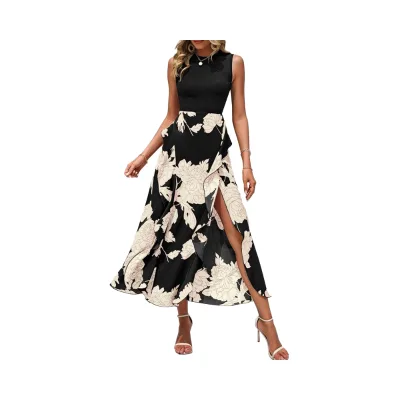
Casual Dresses Sleeveless MIDI Dress with Leaf Print Twisted Asymmetrical Dress
$8.86 - $12.00
MOQ: 2 Pieces

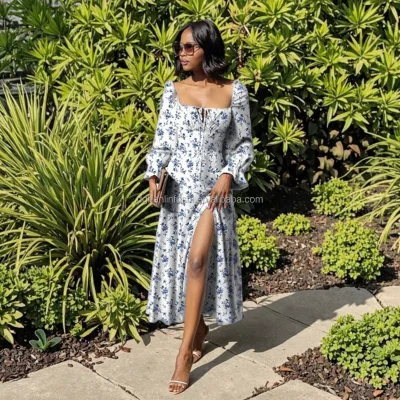
Retro Floral Print Dress with a Smudged Square Neckline, Drawstring Lacing, and Puffed Sleeves
$11.00 - $15.52
MOQ: 2 Pieces

- Verified by SGS
- Trading Company
- China Zhejiang
- Lead time30 days
- Avg. response≤ 3h
Main productsBlazers, Dress, Jumpsuits&Bodysuits, Bottoms&Pants, Blouses, Sportswear, Skirts, Tops, T-Shirts, Coats&Jackets
Main marketsEurope,Australia,North America

Custom Ruffle Sleeve Smock Boho Beach Elegant Casual Summer Short Dresses
$8.90 - $15.00
MOQ: 30 Pieces


- Verified by CTI
- Trading Company
- China Anhui
- Lead time23 days
- Avg. response≤ 1h
Main productsFurniture, Home Furniture
Main marketsSoutheast Asia/ Mideast
Dongguan Holy Mountain Fashion Co., Ltd.
- Verified by Intertek
- Manufacturer, Trading Company
- Lead time20 days
- Avg. response≤ 4h
Main productsWomen's Dress, Women's Blouse, Women's Trousers, Muslim Robe, Muslim Headscarf
Main marketsSouth Asia(57%), Mid East(18%), Oceania(9%)
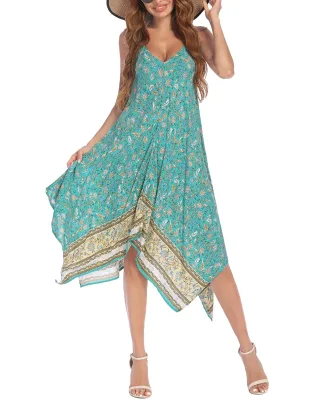
$19.6571 - $21.726
MOQ: 50 pieces
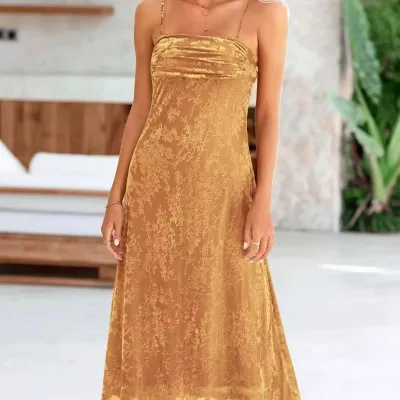
High Quality Summer Sleeveless Floral Cocktail Dress Slim Shoulder Strap Mid-Length Casual Dress
$18.6227 - $20.6915
MOQ: 50 pieces

- Verified by BV
- Combined
- China Guangdong
- Lead time0 days
- Avg. response≤ 25h
Main productsWomen Dress, Ladies Dress, Bridesmaid Dress, Skirt, Jumpsuit, Trousers, Jacket, Coat, Blouse, Shirt
Main marketsSoutheast Asia/ Mideast,Europe,Australia,North America
Xiamen Hualecai Clothing Co., Ltd.
- Manufacturer, Trading Company, Distributor/Wholesaler
- Fujian, China
- Lead time5 days
- Avg. response≤ 6h
Main productsfashion clothing,women's clothing,swimsuit,Yoga Wear,shoes
Main marketsNorth America(95.00%), Western Europe(2.00%), Africa(2.00%), Southern Europe(1.00%)

Dongguan Moma Fashion Garment Co., Ltd.
- Manufacturer, Trading Company
- Guangdong, China
- Lead time20 days
- Avg. response≤ 3h
Main productsDress,Hoodies,Skirts,Tops,Trousers
Main marketsNorth America(37.00%), Mid East(17.00%), Western Europe(7.00%), Eastern Asia(7.00%), Eastern Europe(7.00%), Southern Europe(7.00%), Northern Europe(7.00%), Central America(7.00%), South Asia(1.00%), Oceania(1.00%), Africa(1.00%), Southeast Asia(1.00%)

GUANGZHOU SICHEM GARMENT CO., LTD
- Verified by BV
- Trading Company,Manufacturer/Factory
- China Guangdong
- Lead time45 days
- Avg. response≤ 15h
Main productsWomen Clothing, Children Clothing, Skirt, Dress, T Shirt, Pants, Blouse, Coat, Jumpsuit, Shirt
Main marketsEastern Europe,North America,Oceania,Western Europe


High Quality Casual Loose Floral Printed Mesh Ruffles Round-Neck Long Sleeve Dress
$8.20 - $10.50
MOQ: 150 piece
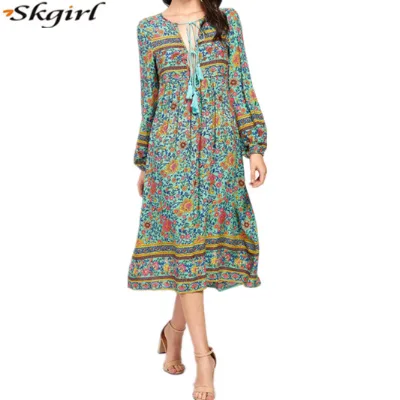
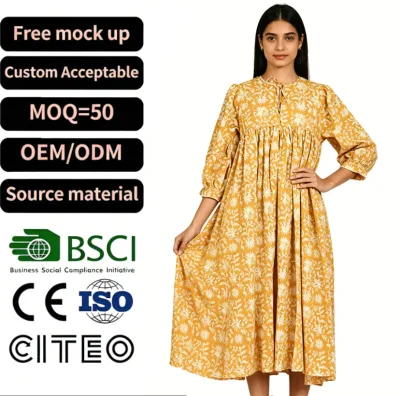
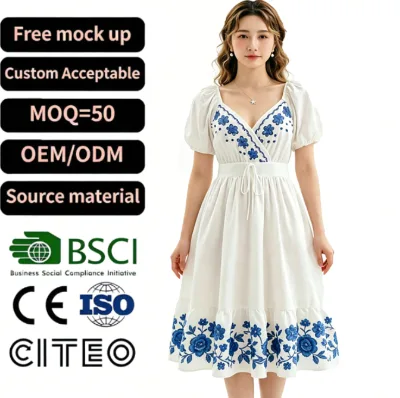
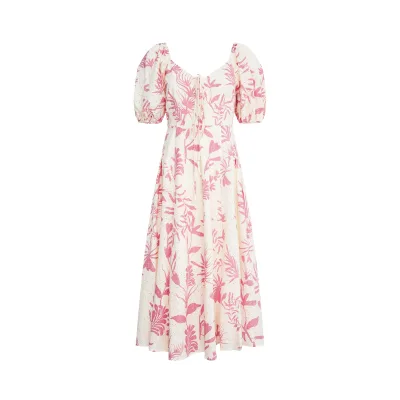
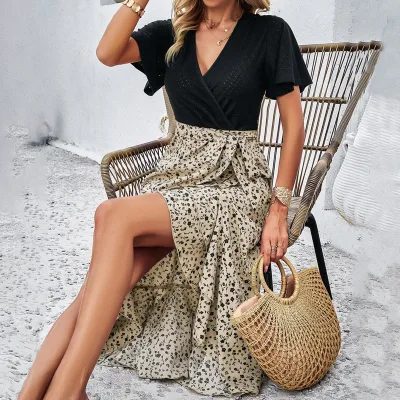
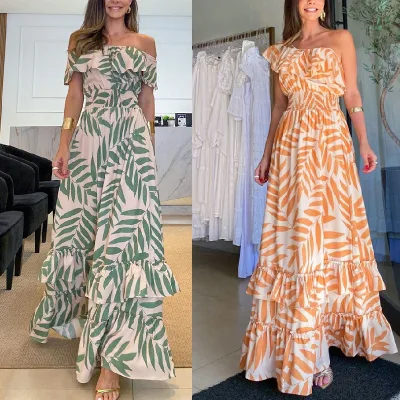
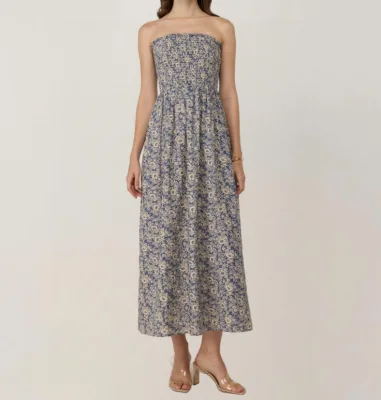
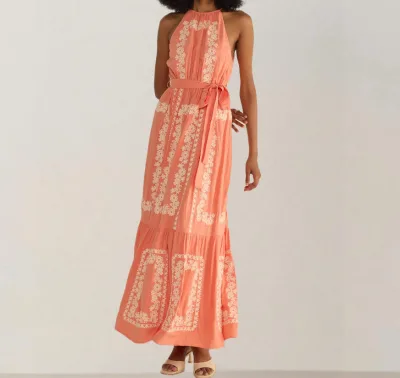
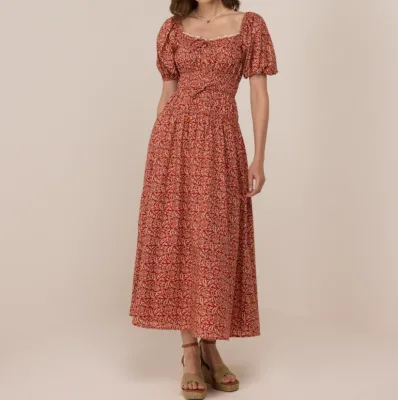






Comprehensive Sourcing Guide
Boho Midi Floral Print Dress Supplier Concentration and Factory Types
Sourcing data for the Boho Midi Floral Print Dress points clearly to Guangdong, China, as a documented origin, and buyers should treat that province as the confirmed manufacturing base when screening candidates. Listings tied to this region commonly combine manufacturer and trading company roles under one profile, which means the entity you contact may produce in-house, subcontract, or resell. Ask directly whether the workshop that would cut and sew your order is the same entity holding the profile, and request photos or a video walkthrough of the sewing floor rather than showroom footage. The supplier results also show main product ranges covering blouses, dresses, trousers, and coats, or silk dresses, crop tops, oversized tees, bodysuits, and mini dresses, so verify that boho-style woven or printed dresses are a recurring line, not an occasional listing.
When location evidence is unavailable for a candidate, identify clusters yourself by checking the place of origin declared on individual product listings, the port of dispatch named in packaging details, and whether several product pages from the same company share consistent origin data. A listing for a V-neck boho dress with tassel detailing, for example, declares Guangdong origin and dispatch from Guangzhou port, which is the kind of internal consistency worth confirming on every shortlisted profile. Inconsistencies between profile location and product-level origin claims are an early screening signal.
How to Verify Boho Midi Floral Print Dress Suppliers
Verification should start with the attributes suppliers themselves declare on product pages, because these are checkable commitments. Relevant examples from this category include a declared MOQ of 100 pieces, OEM supply type, customized sizing, digital printing for floral graphics, sample lead times of five to seven days, and a supply ability of 5,000 pieces per month for bohemian-style dresses. Confirm each claim in writing: ask the supplier to restate the MOQ, the sampling timeline, and monthly capacity for your specific print and fabric, then compare the answers against the listing. A listing supporting seven-day sample orders is a useful test point—order a sample early and time how long it actually takes against the stated window.
Second, verify operational behavior rather than paperwork alone. Response time is a displayed attribute in this category, with observed values of twelve hours and five hours, so message several candidates with identical technical questions—fabric composition for a rayon woven dress versus a polyester-cotton knit, for example—and log who answers accurately and how quickly. Note that not every supplier displays the same attributes: some profiles show establishment year, escrow availability, or certification badges while others do not, and absence of a displayed field is not proof of a problem but does mean you must request the information directly. Keep a simple verification sheet per supplier covering origin, role, capacity, sampling speed, and responsiveness, and eliminate anyone whose written answers contradict their own listings.
What to Compare Across Boho Midi Floral Print Dress Suppliers
Build a comparison matrix using the dimensions that actually appear on supplier profiles in this category. Lead time is a primary one: one documented profile states 20 days, while another uses a tiered structure of 15 days for 1–100 pieces, 25 days for 101–500, 35 days for 501–1,000, and negotiation above 1,000, with the same tiers in peak and off-peak seasons. MOQ also varies meaningfully—one listing sets 100 pieces while another profile shows no MOQ displayed on comparable products—so normalize your matrix to the order size you actually need. Response time, where displayed, gives a second differentiator, and price ranges give a third: observed per-piece pricing in this category spans roughly $12.26–$12.85 for a custom floral midi and $17.90 or $24–26 for other boho styles, so always compare price against the matching MOQ and spec.
Beyond these label dimensions, compare product depth by reviewing each supplier's main products line—dresses, blouses, trousers, and coats on one profile; silk dresses, crop tops, bodysuits, and mini dresses on another—and judge whether your category is central to their business. Compare construction details that affect your quality bar: A-line silhouette, V-neck, full or short sleeves, woven rayon versus knitted polyester-cotton, printed versus plain-dyed technics, and features like anti-wrinkle or breathable finishes. Do not assume every supplier displays every field; where a dimension is blank, ask for the value before ranking.
Common Boho Midi Floral Print Dress Sourcing Risks
The most common risk in this category is fabric and construction mismatch, because boho floral dresses span two very different build types: woven rayon with printed technics and tassel or fringe decoration on one hand, and knitted polyester-cotton with plain dyeing and pleated silhouettes on the other. If you approve a sample in one construction and mass production shifts to the other, drape, weight, and print handfeel will all change. Mitigate this by locking material, fabric type, weaving method, and printing method—digital printing where declared—into your specification sheet, and by requiring a pre-production sample cut from bulk fabric.
The second cluster of risks concerns timing and scale. A tiered lead time that reaches 35 days at mid volumes, or moves to negotiation above 1,000 pieces, can quietly push your delivery date beyond a seasonal window for spring, summer, and autumn stock; a flat 20-day lead time may also exclude sampling and shipping. Sample-stage speed is another trap: a declared five-to-seven-day sample window or seven-day sample order support only helps if it is honored, so track actual versus promised sample dates. Finally, capacity claims such as 5,000 pieces per month need stress-testing if your volume approaches that ceiling, since a supplier whose main products are spread across blouses, trousers, and coats may be allocating only part of that capacity to your style. Ask what share is realistic for your design.
Boho Midi Floral Print Dress Regional Sourcing and Logistics
The documented logistics picture for this category is anchored in Guangdong: a declared port of dispatch at Guangzhou and origin declarations at the provincial level on multiple product listings. For a buyer, this matters practically—proximity of factory, consolidation point, and export port shortens inland transit and reduces the number of handoffs before goods reach a carrier. When shortlisting, confirm that the shipping port named in packaging details matches the supplier's stated location, and ask whether dispatch from the declared port is standard or whether an alternative port applies to your volume. A mismatch between factory province and dispatch port adds cost and lead time that will not appear in quoted production timelines.
On freight modes, one supplier in this category explicitly declares DHL, EMS, UPS, FedEx, sea, and air as available shipping options, which gives you a framework for planning: air or express suits sample runs and urgent top-ups, while sea freight suits bulk orders where the 15–35 day production window is only one leg of the total timeline. Note that package-level details are also declared—one listing specifies a single package size of 30×30×20 cm with 1.000 kg gross weight, another 35×25×3 cm at 0.600 kg—and these figures let you estimate freight cost per piece before committing. Recalculate with your own packaging instructions, since polybag-per-piece packing is offered but customizable, and carton configuration changes volumetric weight.
Boho Midi Floral Print Dress Commercial Terms and Order Planning
Order planning for this category should be built around the documented commercial parameters rather than assumptions. Start from MOQ: the 100-piece minimums declared on product listings set a practical floor for trial orders, and customized sizing and OEM supply type mean your size curve—US S, M, L, XL, and extended sizes up to 2XL or 3XL on some listings—should be specified within that minimum. Price behavior also matters: observed per-piece quotes range from roughly $12.26 to $26.00 depending on style and specification, so request quotes against an identical spec sheet across suppliers and treat deviations as a prompt to ask what changed—fabric, print method, or decoration—rather than simply choosing the lowest number.
On payment and milestone structure, use the sampling evidence to set gates: a five-to-seven-day sample declaration or seven-day sample support is a natural first milestone, bulk production start is the second, and the tiered lead times of 15, 25, and 35 days define your delivery expectation by quantity band. Escrow availability is a displayed attribute on some profiles in this category but not all, so verify it directly where it matters to you and never assume it. Plan a buffer between the quoted lead time and your retail window, especially for peak-season orders where the same 15–35 day tiers apply, and confirm in writing that lead time excludes transit from the Guangzhou dispatch port to your destination market.
FAQs
What is the typical MOQ for boho midi floral dresses?
The minimum order quantity is generally 100 pieces for most suppliers. This baseline allows for efficient production runs while keeping initial investment manageable. Buyers should confirm specific thresholds with their chosen vendor, as some may offer flexible terms for custom designs or repeat orders.
How long does production take for these dresses?
Standard lead times are approximately 20 days for regular orders. During peak seasons, production may extend to 35 days for larger quantities. Sample orders can often be completed within 5 to 7 days. Buyers should negotiate specific timelines based on their volume requirements and seasonal demands.
What materials are commonly used for these dresses?
Common materials include rayon, polyester, cotton blends, and chiffon. Rayon offers a soft, breathable feel suitable for summer wear. Polyester and cotton blends provide durability and ease of care. Chiffon is often used for elegant, flowing styles. Suppliers typically specify the exact fabric composition in product details.
Are custom logo and label options available?
Yes, most manufacturers support OEM services including custom logo printing and label customization. Digital printing is frequently used for graphic designs. Buyers can specify logo placement on the front or back. Custom labels are accepted to meet brand identity requirements, ensuring a professional finish for retail distribution.
What is the typical price range for these dresses?
Prices generally range from $12.26 to $26.00 per piece. The cost varies based on material quality, design complexity, and order volume. Basic styles may start around $12, while more intricate designs with premium fabrics can reach higher price points. Buyers should request quotes for accurate pricing based on their specifications.
Where are these dresses typically manufactured?
Most suppliers are located in Guangdong, China, a major hub for apparel manufacturing. This region offers efficient supply chains and experienced production facilities. Buyers can expect reliable shipping from ports like Guangzhou. The concentration of manufacturers in this area facilitates competitive pricing and quick turnaround times for international orders.
How quickly do suppliers respond to inquiries?
Response times vary, with some suppliers replying within 5 hours and others taking up to 12 hours. Faster response times often indicate higher operational efficiency. Buyers should prioritize suppliers with quick reply rates for smoother communication. Prompt responses help in resolving questions about samples, pricing, and production details efficiently.