Coil Steel Wire Hose Clip Suppliers and Manufacturers
Source 18 verified suppliers for Coil Steel Wire Hose Clip products. Compare key dimensions including lead times, MOQs, certifications, and response rates. Review product specifications and request quotes directly from manufacturers in China; review the available evidence before requesting comparable quotations from suitable candidates.
Suppliers List
Hejian Huansheng Fasteners Co., Ltd.
- Verified by SGS
- Combined
- China Hebei
- Lead time15 days
- Avg. response≤ 2h
Main productsamerican hose clamp
Main marketsDomestic

Qingdao Powtech Electronics Co., Ltd.
- Verified by TUVRHEINLAND
- Manufacturer/Factory
- China Shandong
- Lead time23 days
- Avg. response≤ 5h
Main productsInsulator, Insulation Piercing Connector, Surge Arrestor, ABC Clamp, Cutout Fuse, Line Hardware, Fiber Optic Cable, Patch Cord, Preformed Guy Grip, PLC Splitter
Main marketsSouth America,Eastern Europe,Mid East,North America,Southeast Asia,Eastern Asia,Oceania,Africa

Qingdao Eastop Plastic Product Co., Ltd.
- Verified by TUVRHEINLAND
- Trading Company,Manufacturer/Factory
- China Shandong
- Lead time30 days
- Avg. response≤ 7h
Main productsHose, PVC Hose, Rubber Hose, Garden Tools, Hose Assemblies, Hose Coupling, Hose Clamp, Layflat Hose, Suction Hose, Air Hose
Main marketsEastern Europe,Mid East,North America,Western Europe,Africa
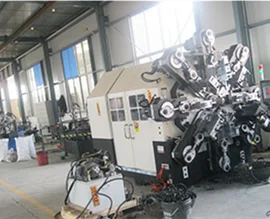
Botou Yongchuang Spring Manufacturing Co., Ltd.
- Manufacturer, Trading Company
- Hebei, China
- Lead time30 days
- Avg. response≤ 4h
Main productsExtension Spring,Torsional Spring,Compression Spring,Special Shape Spring,Hose Clamp
Main marketsDomestic Market(50.0%), Southeast Asia(10.0%), North America(10.0%), Eastern Asia(10.0%), Africa(5.0%), Eastern Europe(4.0%), Western Europe(3.0%), South Asia(2.0%), Oceania(1.0%), South America(1.0%), Southern Europe(1.0%), Northern Europe(1.0%), Central America(1.0%), Mid East(1.0%)
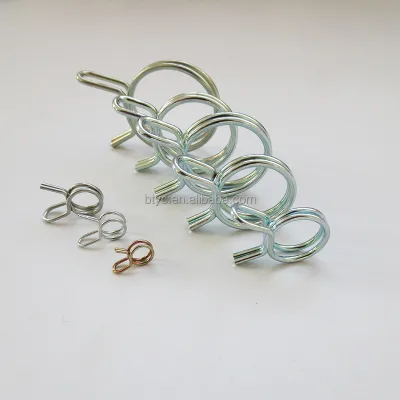
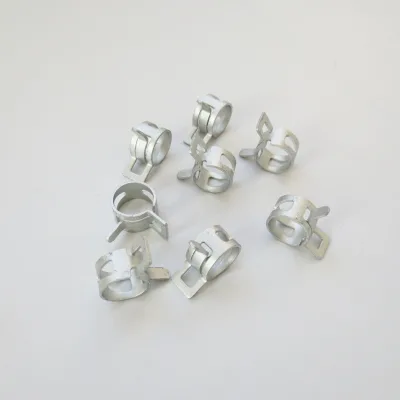
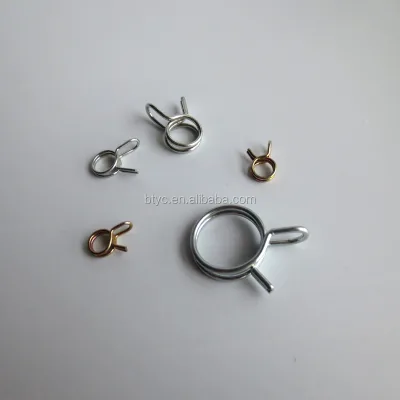
65mn Spring Steel Single Wire Wholesale Hose Clamp/clip With Zinc Plated Steel
$0.01 - $0.09
MOQ: 999 pieces
Tianjin Youde New Material Technology Co., Ltd.
- Verified by BV
- Trading Company,Manufacturer/Factory
- China Tianjin
- Lead time23 days
- Avg. response≤ 5h
Main productsHose Clamp, Stamping Metal Parts, American Type Hose Clamp, Worm Gear Hose Clamp, German Type Hose Clamp, British Type Hose Clamp, Heavy Duty Hose Clamp, No-Hub Coupling, T Bolt Clamp, Fixing Clamp
Main marketsEastern Europe,Mid East,North America,Southeast Asia,Eastern Asia,Africa

Qingdao sindko metal products Co., Ltd.
- Verified by TUVRHEINLAND
- Trading Company,Manufacturer/Factory
- China Shandong
- Lead time23 days
- Avg. response≤ 2h
Main productsHose Clamp, Strut Channel Accessories, Stamping Product, Fasteners, Strut Channel, Steel Products, Pipe Clamp, Threaded Rod, Stainless Steel Hose Clamps, Iron Galvanized Hose Clamps
Main marketsSouth America,Eastern Europe,Mid East,North America,Southeast Asia,Eastern Asia,Oceania,Western Europe,Africa

Ningbo Wodafeng Hardware Technology Co., Ltd.
- Verified by SGS
- Combined
- China Zhejiang
- Lead time30 days
- Avg. response≤ 3h
Main productsClamp, Hose Clamp, Pipe Clamp, Stamping
Main marketsOthers(foreignTradeCapacity.exportBusinessCapacityMarketOther)
Tianjin Vieworld International Trade Co., Ltd.
- Verified by SGS
- Combined
- China Tianjin
- Lead time15 days
- Avg. response≤ 2h
Main marketsOthers(foreignTradeCapacity.exportBusinessCapacityMarketOther)
Xiamen Sinuowei Automated Science and Technology Co., Ltd.
- Verified by SGS
- Combined
- China Fujian
- Lead time60 days
- Avg. response≤ 12h
Main productsMlcc Machine, Hose Clamp Machine, Clock Movement Machine, Battery Pack Line, Battery Production Line, Multi-Layer Ceramic Capacitors Machine, Multi-Layer Chip Inductors Machine, Mlci Machine, Ltcc Machine, Htcc Machine
Main marketsOthers(foreignTradeCapacity.exportBusinessCapacityMarketOther)


Size From 4-95mm Spring Hose Clips Suitable for Car Tubes with High Standard
$0.01 - $0.50
MOQ: 10000 Pieces


Wuhan Fush Technology Co., Ltd.
- Verified by SGS
- Manufacturer/Factory
- China Hubei
- Lead time45 days
- Avg. response≤ 6h
Main productsAgricultural Machine, Seeder, Lawn Mower, Spring Hose Clamp, Pipe Clamp, Handrail for Outdoor Steps, Type Measurement, Laser Measurement, Tiller, Agricultural Tools
Main marketsSouth America,Eastern Europe,Mid East,North America,Southeast Asia,Eastern Asia,Oceania,Western Europe,Africa

Hose Clamps Spring Clip Constant Tension Spring Pipe Clamp Steel Hose Clamp
$0.03 - $0.08
MOQ: 1000 Pieces

Stainless Steel Adjustable Hose Clip Pipe Clips Hose Clamp with Plastic Handle
$0.01 - $0.20
MOQ: 1000 Pieces

Stainless Steel Black Rubber Lined Retaining Hose R Clips Clamp Hose and Cable Clamp
$0.50 - $0.80
MOQ: 3000 Pieces

Stainless Steel Rubber Lined Retaining Hose R P Clips Clamp Hose and Cable Clamp
$0.02 - $0.05
MOQ: 1000 Pieces

Rubber Lined P Clips Rubber Pipe Clamps R Types of Hose Clamps Quick Locking Pipe Clamp
$0.20 - $0.60
MOQ: 2000 Pieces

Pipe Hose Clamp Spring Clip Zinc Plated Steel Elastic Clamp Colored Auto Spring Clamps
$0.01 - $0.50
MOQ: 1000 Pieces

Zhe Jiang Yue Ding Corrugated Tube Co., Ltd.
- Verified by SGS
- Combined
- China Zhejiang
- Lead time15 days
- Avg. response≤ 5h
Main productsExhaust Flexible Pipe, Exhaust Clamp, Hose Clamp, Exhaust X/Y Pipe, Truck Exhaust Pipe, Pipe & Cable Clamps, Exhaust Elbow, Exhaust Accessories, Exhaust Tip, Metal Bellow
Main marketsSoutheast Asia/ Mideast,Europe,Australia


Wire Pipe Clips Stainless Steel Yellow Zinc Plating Double Wire Hose Clamps
$0.03 - $0.10
MOQ: 500 Pieces

Yangzhou Baijia Spring Manufacturing Co., Ltd.
- Verified by SGS
- Trading Company,Manufacturer/Factory
- China Jiangsu
- Lead time23 days
- Avg. response≤ 14h
Main productsPressure Spring, Spring, Stamping, Auto Parts, Leaf Spring, Torsion Spring, Extension Spring, Power Spring, Metal Product, Compression Spring
Main marketsSouth America,Eastern Europe,Mid East,North America,Southeast Asia,Eastern Asia,Oceania,Western Europe,Africa

Dongguan Weihui Hardware Spring Products Co., Ltd.
- Verified by CTI
- Combined
- China Guangdong
- Lead time30 days
- Avg. response≤ 6h
Main productsSpiral Springs, Tension Springs, Compression Springs, Trampoline Springs, Auger Feeder for Poultry, Torsion Spring, Spring Clips
Main marketsSouth America,East Asia(Japan/ South Korea),Europe

- Trading Company,Manufacturer/Factory,Group Corporation
- China Zhejiang
- Lead time30 days
- Avg. response≤ 3h
Main productsScrewdriver, Handsaw, Fireplace, Plier, Hose Clamp, Aviation Snips, Hand Tools, Pruning Shear, Earmuff, Caulking Gun
Main marketsSouth America,Eastern Europe,Mid East,North America,Southeast Asia,Eastern Asia,Oceania,Western Europe,Africa

Qingdao Sincere Metal Product Co., Ltd.
- Verified by BV
- Trading Company,Manufacturer/Factory
- China Shandong
- Lead time23 days
- Avg. response≤ 4h
Main productsTurnbuckle, Wire Rope, Pipe Fittings, Marine Fittings, Liffting Accessories, Wire Tensioners, Forged Parts, Metal Stamping Parts, Auto Parts, Fence Accessories
Main marketsSouth America,Eastern Europe,Mid East,North America,Southeast Asia,Eastern Asia,Oceania,Western Europe,Africa

- Trading Company
- China Shandong
- Lead time60 days
- Avg. response≤ 25h
Main productsForging, Turning Part, Forging Part, Machining Parts, Lifting Anchor, T Bolt, Casting, Aluminum Parts, Precast, Brass Parts
Main marketsSoutheast Asia/ Mideast,East Asia(Japan/ South Korea),Europe,Australia,North America

Hot Sale Stainless Steel Hose Clip with High Quality
Contact supplier

Hot Sale Stainless and Steel Hose Clips with High Quality
Contact supplier

Yueqing Dofo Spring Manufacturing Co., Ltd.
- Verified by SGS
- Combined
- China Zhejiang
- Lead time30 days
- Avg. response≤ 2h
Main productsCompression Spring, Extension Spring, Automotive Parts Spring, Torsion Spring, Stainless Steel Spring, Trampoline Spring, Alloy Steel Spring, Switch Spring, Mining Machine Spring, Disc Spring
Main marketsSoutheast Asia/ Mideast,Australia
Hejian Shuanghuan Fastener Co., Ltd
- Verified by SGS
- Combined
- China Hebei
- Lead time23 days
- Avg. response≤ 14h
Main productsStainless Steel Clamp, Hose Clamp
Main marketsDomestic

Heavy Duty Wholesale Price Custom Sizes Hydraulic Hose Clip Factory Clamp
$0.16 - $0.37
MOQ: 1000 Pieces


Comprehensive Sourcing Guide
Coil Steel Wire Hose Clip Supplier Concentration and Factory Types
Current data indicates a concentration of manufacturing activity in China, specifically within the Hebei and Shandong provinces. Suppliers in Hebei are identified as combined entities offering American-style hose clamps and double wire clips, with specific product origins noted in Tianjin and Hejian. These facilities often list ODM and OEM capabilities alongside their core fastener production. In contrast, suppliers located in Shandong operate as manufacturers or factories with a broader portfolio that includes insulators, surge arrestors, and fiber optic hardware. This distinction suggests that while Hebei facilities focus heavily on fastening solutions, Shandong-based factories may integrate hose clips into a wider range of electrical and utility hardware products.
When evaluating factory types, buyers should distinguish between combined trading and manufacturing entities. The available records show some suppliers labeled as "Combined," which implies a hybrid model of trading and production, while others are explicitly defined as "Manufacturer/Factory." This classification is critical for understanding the supply chain structure. A manufacturer typically controls the production process directly, whereas a combined entity might source from multiple factories. Buyers must verify if the supplier's main products align with their specific needs, as some listings highlight diverse ranges like line hardware and cable fittings alongside the requested coil steel wire hose clips.
How to Verify Coil Steel Wire Hose Clip Suppliers
Verification of supplier credentials relies heavily on third-party audit reports and system certifications found in the data. Several suppliers display verification from recognized bodies such as SGS and TÜV Rheinland, which serves as a primary indicator of operational legitimacy. Additionally, specific factories hold system certifications including ISO 9001, ISO 14001, and OHSAS/OHSMS 18001, demonstrating adherence to quality and safety management standards. However, not all suppliers in the current results list system certifications, with some showing a status of "NIL." Buyers must treat the absence of a listed certification as a signal to request proof of compliance rather than assuming a lack of standards.
Beyond certifications, response time and verification status provide immediate insights into supplier reliability. The data shows response times varying significantly, with some suppliers responding in approximately 1.57 hours while others take over four hours. A faster response time often correlates with a more active sales team and better communication channels. Buyers should prioritize suppliers with verified badges and documented response metrics. It is essential to confirm that the verification status applies to the specific entity being contacted, as some listings may show verification for the parent company while the specific factory unit operates under different conditions.
What to Compare Across Coil Steel Wire Hose Clip Suppliers
Comparing suppliers requires a detailed analysis of lead times, minimum order quantities, and pricing structures. Lead times in the current dataset range from 15 days to 23 days, indicating variability in production capacity and scheduling. Minimum order quantities also differ substantially, with some suppliers requiring 500 units while others set thresholds at 2,000 units. Pricing varies from as low as $0.04 per unit to $3.00, depending on the specific product type, such as standard double wire clips versus specialized handle-type clamps. Buyers must align their order volume with these MOQs to avoid unnecessary costs or stockouts.
Product attributes and customization options form another critical comparison point. Available data highlights variations in material, such as metal, stainless steel, and galvanized finishes, alongside structural differences like F-clamp or handle types. Customization is frequently listed as available, with some suppliers accepting logo customization and specific size modifications. Buyers should compare the thickness ranges, which span from 0.4mm to 25.0mm, and surface treatments like electroplating or galvanization. Ensuring the supplier can meet specific technical requirements, such as high-pressure applications or specific corrosion resistance, is vital for selecting the right partner.
Common Coil Steel Wire Hose Clip Sourcing Risks
One significant risk involves the discrepancy between product descriptions and actual manufacturing capabilities. While many listings claim customization and OEM services, the specific details regarding material grades and structural integrity may vary. For instance, some products are described as "Stainless Steel" while others are simply "Metal," which could lead to confusion regarding corrosion resistance and durability. Buyers must verify the exact material composition and surface treatment specifications before placing an order, as the generic terms used in product titles may not reflect the precise quality of the finished goods.
Another risk relates to the consistency of quality standards across different supplier types. The data shows that some suppliers adhere to international standards like CE, RoHS, and ISO, while others list no specific certifications. This inconsistency can lead to compliance issues, particularly for buyers operating in regulated markets. Additionally, the variation in lead times suggests potential bottlenecks in production scheduling. A supplier with a 23-day lead time might face delays that a 15-day supplier avoids, impacting the buyer's overall supply chain timeline. Buyers should assess the supplier's track record for meeting delivery deadlines and maintaining consistent quality levels.
Coil Steel Wire Hose Clip Regional Sourcing and Logistics
Regional sourcing strategies should account for the specific locations of manufacturing hubs identified in the data. Hebei and Shandong provinces in China are the primary regions for these products, with specific origins noted in Tianjin and Hejian. These locations influence logistics costs and transit times, as shipping from different ports within these provinces may vary. Buyers should consider the proximity of the supplier to major shipping ports to minimize freight expenses. Additionally, the type of packaging, such as carton boxes or wooden cases, affects the efficiency of loading and unloading during transit.
Logistics planning must also consider the specific product dimensions and weight, which impact shipping costs. The data indicates that products are packed in international standards or custom cases, which can influence the volume and weight of the shipment. Buyers should verify the packing details to ensure that the goods are protected during transit and that the packaging meets the requirements of the destination country. Furthermore, the origin of the product, whether from Hebei or Shandong, may affect the availability of specific shipping routes and the associated customs procedures.
Coil Steel Wire Hose Clip Commercial Terms and Order Planning
Commercial terms and order planning are heavily influenced by the pricing structures and payment conditions offered by suppliers. The data shows a wide range of prices, from $0.04 to $3.00, which necessitates careful budgeting and cost analysis. Buyers should negotiate based on the specific product type and order volume, as higher volumes may qualify for better pricing tiers. Additionally, the minimum order quantities must be factored into the financial planning to ensure that the order size is economically viable. Buyers should also consider the potential for price fluctuations based on raw material costs and market conditions.
Order planning should also account for the customization lead times and production schedules. Suppliers offering customization services may require additional time for design approval and prototype development. Buyers should factor in these lead times when planning their inventory levels to avoid stockouts. The availability of OEM and ODM services allows for tailored solutions, but it requires clear communication and detailed specifications. Buyers should establish a timeline that includes design, production, and shipping to ensure that the final delivery meets their project deadlines.
FAQs
What is the price range for coil steel wire hose clips?
Prices for these clips typically range from $0.04 to $0.50 per unit depending on material and size. Stainless steel options often start around $0.10, while basic metal versions can be as low as $0.04. Buyers should verify specific quotes based on order volume and customization requirements.
What is the minimum order quantity for these clips?
Minimum order quantities vary by supplier, generally starting at 500 pieces for standard items. Some manufacturers require 1000 or 2000 units for specific models like stainless steel retaining clamps. Buyers should confirm the exact MOQ with the supplier before placing an order to ensure availability.
How long does production take for these hose clips?
Production lead times typically range from 15 to 23 days after order confirmation. This duration depends on the supplier's current workload and the complexity of the customization requested. Buyers should plan their procurement schedule accordingly and confirm the exact timeline with the supplier during negotiation.
Are these clips available with OEM or ODM services?
Yes, many suppliers offer both OEM and ODM customization services for these clips. Buyers can request custom sizes, logos, and specific packaging options. This flexibility allows businesses to tailor the products to their specific branding and functional requirements while maintaining quality standards.
What certifications do these hose clips have?
Certifications vary by supplier, with some holding ISO 9001, ISO 14001, or OHSAS 18001. Others may provide CE, RoHS, or SGS test reports. Buyers should verify the specific certifications required for their market and request documentation from the supplier to ensure compliance with local regulations.
Where are these hose clips manufactured?
These clips are primarily manufactured in China, with specific production hubs in Hebei and Shandong provinces. Some products originate from Tianjin or Hejian. Buyers should confirm the exact place of origin to assess shipping logistics and potential tariffs associated with importing these hardware components.