DIN Self-Drilling Screw Suppliers and Manufacturers
Compare 19 DIN Self-Drilling Screw suppliers in China based on location, lead times, certifications, and response times. Review product specs like material and standards, then contact verified factories for samples; review the available evidence before requesting comparable quotations from suitable candidates.
Suppliers List

Guangzhou 247 International Co., Ltd
- Trading Company,Manufacturer/Factory
- China Guangdong
- Lead time23 days
- Avg. response≤ 13h
Main productsIron Nails, Screws, Welding Rods, Iron Wire, Welding Wires, Wire Mesh, Safety Products, Welding Gloves, Fastener, Labour Protection Tools
Main marketsSouth America,Eastern Europe,Mid East,North America,Southeast Asia,Eastern Asia,Oceania,Western Europe,Africa
Ningbo Geobo Hardware Co., Ltd.
- Verified by CTI
- Trading Company
- China Zhejiang
- Lead time45 days
- Avg. response≤ 5h
Main productsstainless steel screw nut
Main marketsSouth America,Africa,Southeast Asia/ Mideast,Europe,Australia,North America
Ningbo Mianxuan Import &Export Co., Ltd.
- Verified by CTI
- Manufacturer/Factory
- China Zhejiang
- Lead time23 days
- Avg. response≤ 5h
Main productsVehicles Parts and Accessories, CNC Machining Parts, Metal Stamping, Casting Parts, Aluminum Die Castings, Fasteners, Plastic Parts, Rubber Parts
Main marketsSouth America,Eastern Europe,Mid East,North America,Southeast Asia,Eastern Asia,Oceania,Western Europe,Africa

DIN7504 Cross Pan Head Drill Tail Nail Stainless Steel Self Drilling Screw
$0.05 - $1.00
MOQ: 1000 Pieces

Custom DIN7504 Stainless Steel Zinc Plate Cross Pan Head Self Drilling Screw
$0.05 - $1.00
MOQ: 1000 Pieces

High Quality DIN 7504 Hex Hexagon Flange Head Self Drilling Tapping Screw
$0.01 - $0.04
MOQ: 1000 Pieces

Jiaxing Sini Fastener Co., Ltd.
- Verified by TUVRHEINLAND
- Combined
- China Zhejiang
- Lead time30 days
- Avg. response≤ 19h
Main productsBolt, Nut, Carriage Bolt, Hex Lag Screw, Flange Bolt, Hex Bolt
Main marketsNorth America


Various Specifications of Galvanized or Stainless Steel Self Drilling Screws
$0.04 - $0.05
MOQ: 10000 Pieces


Jiaxing Goshen Hardware Co., Ltd.
- Trading Company,Manufacturer/Factory
- China Zhejiang
- Lead time23 days
- Avg. response≤ 5h
Main productsFasteners, Bolts, Nuts, Screws, Stainless Steel Screw, Threaded Rod, Stainless Steel Bolt, Customized Bolt, Washer, Carriage Bolt
Main marketsSouth America,Eastern Europe,Mid East,North America,Southeast Asia,Eastern Asia,Oceania,Western Europe,Africa


Stainless Steel Hex Flange Cross Flat Head Various Types Self Drilling Screw
$0.01 - $0.03
MOQ: 10000 Pieces


Stainless Steel DIN 7976 Hexagon Self-Tapping Screws
MOQ: 10000 Pieces
Hebei Fujinrui Metal Products Co., Ltd.
- Manufacturer, Trading Company
- Hebei, China
- Lead time0 days
- Avg. response≤ 1h
Main productsBolts, Screws, Washers, Nuts, Anchors
Main marketsAfrica(30.00%), North America(10.00%), Southeast Asia(10.00%), South Asia(10.00%), Mid East(10.00%), Domestic Market(5.00%), Eastern Asia(5.00%), South America(5.00%), Northern Europe(5.00%), Western Europe(2.50%), Eastern Europe(2.50%), Southern Europe(2.50%), Oceania(2.50%)

Qingdao Marink Enterprise Co., Ltd.
- Combined
- China Shandong
- Lead time15 days
- Avg. response≤ 10h
Main productsFarrowing Crates, Crush, Panels for Sheep, Troughs, Cattle Yard Gates, Panels for Cattle, Cattle Forcing Yard, Hay Feder, Chainlink Fence, Welded Mesh Fence
Main marketsSouth America,Africa,Southeast Asia/ Mideast,East Asia(Japan/ South Korea),Europe,Australia,North America
Handan Haoqiang Fasteners Manufacturing Co., Ltd.
- Verified by SGS
- Combined
- China Hebei
- Lead time30 days
- Avg. response≤ 10h
Main productsHex Bolt, Hex Nut, Flange Nut, Flange Bolt, High Strength Bolt, ASTM/ANSI, Bolt and Nut, Spring Washer, Flat Washer, Screws
Main marketsSouth America,Africa,Southeast Asia/ Mideast

Zinc Plated Countersunk Flat Head Phillip Drive Thread Self Drilling Screw
$0.01 - $0.10
MOQ: 1 Pieces

Factory Fasteners Carbon Steel Black Oxied Pan Wafer Head Self Drilling Screw
$0.20 - $0.50
MOQ: 1000 Pieces

YUYAO MEIGESI FASTENER CO.,LTD.
- Trading Company
- China Zhejiang
- Lead time45 days
- Avg. response≤ 18h
Main productsScrew, Bolt, Nut, Anchor, Washer, Rigging
Main marketsSouth America,Africa,Southeast Asia/ Mideast,East Asia(Japan/ South Korea),Europe,Australia,North America

High Quality Pan Head Self Drilling Screw
MOQ: 200000 Pieces

Factory Price Carbon Steel Pan Head Self Drilling Screw
MOQ: 200000 Pieces

Cross Recessed Countersunk Head with 8 Nibs Self Drilling Screw
MOQ: 200000 Pieces

Cross Recessed Countersunk Head with 6 Nibs Self Drilling Screw
MOQ: 200000 Pieces

Cross Recessed Flat Head Self Drilling Screws with 4 Nibs Under Head
MOQ: 200000 Pieces


Tianjin Xinruifeng Technology Co. Ltd
- Verified by BV
- Combined
- China Tianjin
- Lead time30 days
- Avg. response≤ 1h
Main productsDrywall Screw, Wood Screw, Self Tapping Screw, Self Drilling Screw, Gypsum Screw, Roofing Screw, Chipboard Screw, Drive Pin, Screws, Nails
Main marketsSouth America,Africa,Southeast Asia/ Mideast,East Asia(Japan/ South Korea),Domestic,Europe,North America

NINGBO STANDARD IMPORT & EXPORT CO., LTD
- Trading Company,Manufacturer/Factory,Group Corporation
- China Zhejiang
- Lead time23 days
- Avg. response≤ 14h
Main productsPex-Al-Pex Pipe, Pipe Fitting, Brass Fitting, Pex Pipe, Gas Fitting, PPR Insert, Screw Thread Fitting, Press Fitting, Compression Fitting, Valve
Main marketsSouth America,Eastern Europe,Mid East,North America,Southeast Asia,Eastern Asia,Oceania,Western Europe,Africa
Handan Moen Import and Export Trading Co., Ltd.
- Verified by SGS
- Combined
- China Hebei
- Lead time30 days
- Avg. response≤ 3h
Main productsSteel Wire Rope Clamp, Nut and Bolt, Fasteners Manufacturing, Thread Rod, Sleeve Anchor with Hex Flange Nuts, Flange Bolt, Carriage Bolt, Screws, U-Bolt, Drop in Anchor
Main marketsEurope


High Quality Drill Tail Hexagon Self-Tapping Screw M5.5 Self-Drilling Screw
$0.06 - $0.13
MOQ: 1000 Pieces

Zhejiang Unit Hardware Products Co.,Ltd
- Verified by TUVRHEINLAND
- Manufacturer/Factory
- China Zhejiang
- Lead time90 days
- Avg. response≤ 6h
Main productsStainless Steel Self Drilling Screw, Stainless Steel Self Tapping Screw, Stainless Steel Bolt and Nut, Brass Hex Bolt and Nut, Brass Machine Screw, Brass Self Tapping Screw, Brass Wood Screw, Brass Flat Washer, Stainless Steel Machine Screw, Rivet Nuts
Main marketsSouth America,Eastern Europe,Mid East,North America,Southeast Asia,Oceania,Africa


Stainless Steel 304+Scm 410 Compound Hex Head Composite Self Drilling Bi-Metal Screw
$0.17
MOQ: 100000 Pieces


Tianjin Xinruifeng Fastener Manufacturing Co., Ltd
- Verified by SGS
- Manufacturer/Factory
- China Tianjin
- Lead time45 days
- Avg. response≤ 8h
Main productsScrew, Fastener, Self-Drilling Screw, Coil Nail, Blind Rivet, Drywall Screw, Roofing Screw, Gypsum Screw
Main marketsSouth America,Eastern Europe,Mid East,North America,Southeast Asia,Eastern Asia,Oceania,Western Europe,Africa


Cross Countersunk/Round/Pan/Hex Head Stainless Steel Self Drilling Screw
$999.00 - $1399.00
MOQ: 1 Tons

Hardness Steel Zinc Plated Countersunk Head Chipboard Screw Self Tapping Screw
$6.00 - $14.00
MOQ: 1 kg

NINGBO TRANSHOW FASTENER CO., LTD.
- Verified by BV
- Trading Company
- China Zhejiang
- Lead time30 days
- Avg. response≤ 10h
Main productsScrews, Bolts, Nuts, Rivets, Washers, Pins, Flange Bolts, Hex Bolts, Self Tapping Screws, Wood Screws
Main marketsSouth America,Southeast Asia/ Mideast,Europe,Australia,North America
Ningbo Yongbiao Fastener Co., Ltd
- Verified by SGS
- Combined
- China Zhejiang
- Lead time23 days
- Avg. response≤ 3h
Main productsFastener, Screw, Harware
Main marketsDomestic

DIN18182 Carbon Steel Bugle Cross Head Self-Drilling Screws with Black Phosphating Treatment
$0.01 - $0.10
MOQ: 100000 Pieces


Qingdao Zhongjinyingxin Tools Co., Ltd.
- Trading Company
- China Shandong
- Lead time30 days
- Avg. response≤ 10h
Main productsRoofing Nails, Common Nails, Screw Nails, Clout Nails, Concrete Nails, Shoe Tacks Nails, Roofing Screws, Drywall Black Screws, Chipboard Screws, Wire and Wire Net
Main marketsSouth America,Africa,Southeast Asia/ Mideast,East Asia(Japan/ South Korea),Europe,Australia,North America

Low Price Good Quality Screw Nails Self Tapping Screw (Self-Drilling Screws)
$0.06
MOQ: 1000000 Pieces

Yibang Machinery Technology (Handan) Co., Ltd
- Verified by TUVRHEINLAND
- Combined
- China Hebei
- Lead time15 days
- Avg. response≤ 13h
Main marketsSoutheast Asia/ Mideast,Domestic

Yi Pian Hong Industry Co., Limited
- Verified by CTI
- Trading Company
- China Zhejiang
- Lead time23 days
- Avg. response≤ 4h
Main productsNut, Bolt, Washer, Anchor, Hex Bolt, Rivet Nut, Hex Nut
Main marketsOthers(foreignTradeCapacity.exportBusinessCapacityMarketOther),Southeast Asia/ Mideast,Europe,North America




Comprehensive Sourcing Guide
DIN Self-Drilling Screw Supplier Concentration and Factory Types
The current supplier landscape for DIN Self-Drilling Screw products shows a distinct concentration in China, specifically within the Guangdong and Zhejiang provinces. Fact-based observations confirm that manufacturers and trading companies in these regions offer a wide array of fasteners, including iron nails, screws, welding rods, and specialized safety products. Guangdong-based entities frequently list main products such as stainless steel screws, nuts, and various metal stamping parts, indicating a robust industrial cluster capable of handling high-volume orders. This geographic clustering suggests that buyers seeking these specific fasteners will likely find the highest density of relevant suppliers in these southern and eastern coastal areas, where supply chains for raw materials like carbon steel and stainless steel are well-established.
Supplier types in this sector vary between trading companies and direct manufacturers, each offering different advantages for sourcing Din Self Drilling Screws. Some entities operate as trading companies, facilitating access to a broader range of products including vehicles parts, CNC machining parts, and plastic components alongside fasteners. Others function as manufacturers or factories, often holding certifications like ISO 9001 and TS 16949, which signal a direct capability in production and quality control. The presence of both company types means buyers must distinguish between a supplier who manufactures the screws and one who sources them from various factories. Understanding this distinction is critical, as manufacturers may offer more flexibility in customization and OEM services, while trading companies might provide a consolidated catalog of diverse hardware items.
How to Verify DIN Self-Drilling Screw Suppliers
Verification of DIN Self-Drilling Screw suppliers requires a rigorous check of their system certifications and product standards to ensure compliance with international requirements. Available data indicates that many suppliers hold certifications such as BSCI, ISO 9000, OHSAS 18001, and ISO 14001, which are essential for assessing their management systems and environmental standards. Buyers should specifically look for evidence of ISO 9001 and TS 16949, as these are frequently cited in the product attributes of manufacturers dealing with automotive-grade fasteners or high-strength steel screws. Additionally, some suppliers display verification badges from third-party inspection bodies like CTI, which adds a layer of credibility regarding their business legitimacy and operational stability.
Beyond certifications, buyers must scrutinize product-specific evidence to confirm the authenticity of the Din Self Drilling Screws offered. Product attributes often list standards such as DIN, GB, ANSI, and JIS, which are crucial for matching the fasteners to specific engineering requirements. For instance, a supplier claiming to produce DIN 7504K screws should provide clear documentation of the material grade, such as high-strength steel or stainless steel, and the head style, like hexagonal or pan head. Buyers should also verify the presence of quality control measures, such as 100% quality inspection, and check if the supplier offers free samples to validate the physical characteristics of the product before committing to a larger order. This due diligence ensures that the supplier can meet the precise technical specifications required for the application.
What to Compare Across DIN Self-Drilling Screw Suppliers
When evaluating potential partners for Din Self Drilling Screws, buyers should prioritize comparing lead times and response speeds to gauge operational efficiency. The data reveals significant variation in lead times, with some suppliers indicating a delivery window of 15 to 20 days, while others report a standard lead time of 23 days or even up to 45 days for certain orders. Response times also differ, ranging from approximately 4 hours to over 12 hours, which can impact the speed of communication and problem resolution during the sourcing process. A supplier with a shorter lead time and faster response rate may be better suited for urgent projects, whereas a longer lead time might be acceptable for planned, large-scale procurement where inventory buffers are available.
Another critical dimension for comparison is the Minimum Order Quantity (MOQ) and pricing structures, which directly affect the financial viability of the order. Some suppliers set an MOQ of 1 ton, while others may have a lower threshold of 1 unit, offering flexibility for smaller buyers. Pricing data shows a range from as low as 0.01 per unit to over 1000 per ton, depending on the material, size, and surface finishing. Buyers must also compare the price terms, such as EXW, CIF, or FOB, to understand the total landed cost. Additionally, the availability of customization options and the range of main products, from simple screws to complex welding rods, should be weighed against the buyer's specific needs to ensure the supplier can provide a comprehensive solution without requiring multiple vendors.
Common DIN Self-Drilling Screw Sourcing Risks
One significant risk in sourcing Din Self Drilling Screws is the potential mismatch between advertised product attributes and actual delivery specifications. Suppliers may list materials like stainless steel or carbon steel, but the actual grade or surface treatment, such as galvanized or bright finish, might vary from the description. For example, a product listed with a "Hexagonal" head style and "Sharp Self Drilling" point might not meet the exact DIN 7504K standard if the groove or connection type, such as hinged bolts or common bolts, is not clearly defined. Buyers must verify that the product evidence, including diameter ranges like 4.8mm to 6.3mm and size specifications, aligns perfectly with their engineering drawings to avoid costly rework or project delays.
Another risk involves the reliability of the supply chain and the consistency of quality control measures across different batches. While some suppliers claim to support OEM services and offer 100% quality inspection, the actual implementation of these standards can vary. The presence of certifications like ISO 9001 is a positive indicator, but buyers should confirm if these certifications are current and applicable to the specific product line being sourced. Furthermore, the variability in lead times, ranging from 15 days to 45 days, introduces uncertainty in project scheduling. If a supplier fails to meet the agreed delivery window due to capacity constraints or raw material shortages, it can disrupt the entire production timeline, making it essential to have clear contractual terms regarding penalties for late delivery.
DIN Self-Drilling Screw Regional Sourcing and Logistics
Sourcing Din Self Drilling Screws from China, particularly from Guangdong and Zhejiang, offers logistical advantages due to the region's well-developed port infrastructure and manufacturing ecosystems. Fact-based observations confirm that suppliers in these provinces are equipped to handle international shipping, with product origins explicitly listed as Guangdong or China. The concentration of manufacturers in these areas facilitates efficient logistics, as raw materials and finished goods can be moved quickly from the factory floor to the port. Buyers should leverage this geographic advantage by selecting suppliers who have experience with international trade terms like FOB or CIF, which can simplify the shipping process and reduce the administrative burden on the buyer.
However, regional sourcing also presents challenges related to transportation costs and delivery times, which can fluctuate based on global logistics conditions. The lead times observed, ranging from 15 to 45 days, include both production and shipping durations, meaning buyers must account for potential delays in transit. Suppliers in Zhejiang and Guangdong may offer different shipping options, such as palletized packing or carton packaging, which can affect the efficiency of loading and unloading at the destination port. Buyers should verify the specific packing requirements, such as 20kg or 25kg per carton, to ensure compatibility with their storage and handling systems. Additionally, understanding the local customs and import regulations in the destination country is crucial to avoid unexpected delays or additional costs upon arrival.
DIN Self-Drilling Screw Commercial Terms and Order Planning
Commercial terms for Din Self Drilling Screws vary significantly, with suppliers offering options like EXW, CIF, and FOB, each carrying different implications for cost and risk. Buyers must carefully evaluate these terms to determine the total cost of ownership, including freight, insurance, and customs duties. For instance, an EXW term places the responsibility for shipping and insurance on the buyer, while a CIF term includes these costs up to the destination port. Understanding these distinctions is vital for accurate budgeting and financial planning, especially when dealing with large orders where shipping costs can constitute a significant portion of the total expense. Buyers should also consider the payment terms and the availability of escrow services to protect their financial interests during the transaction.
Order planning for Din Self Drilling Screws requires a strategic approach to managing inventory and production schedules. Given the variability in lead times, from 15 to 45 days, buyers should plan their orders well in advance to avoid stockouts and production delays. The MOQ of 1 ton or 1 unit offers flexibility, but buyers must balance this with their storage capacity and cash flow constraints. Additionally, the availability of free samples allows buyers to test the product quality before placing a large order, reducing the risk of receiving substandard goods. Buyers should also consider the customization options available, such as specific head styles or surface treatments, and ensure that these requirements are clearly communicated to the supplier to avoid misunderstandings and ensure the final product meets their exact specifications.
FAQs
What is the typical lead time for DIN self drilling screws?
Manufacturers in China generally require 15 to 23 days for production and delivery. Some suppliers list a standard lead time of 23 days, while specific product listings indicate a delivery window of 15 to 20 days. Buyers should confirm exact timelines based on order volume and customization needs.
What materials are used for DIN self drilling screws?
Suppliers offer screws made from stainless steel, high strength steel, and carbon steel. Stainless steel options include A2 and A4 grades, while carbon steel variants are often galvanized or finished in bright silver. Buyers can select materials based on corrosion resistance and strength requirements for their specific application.
What is the minimum order quantity for these screws?
The minimum order quantity is typically one ton for bulk industrial orders. Some listings specify an MOQ of one ton, ensuring cost-effective pricing for large-scale procurement. Buyers requiring smaller quantities should verify if suppliers offer sample orders or adjusted minimums, as standard bulk pricing applies to larger volumes.
What certifications do DIN Self-Drilling Screw suppliers hold?
Many manufacturers hold ISO 9001, ISO 14001, and TS 16949 certifications. Additional standards include BSCI, OHSAS 18001, and SGS product standards. These certifications ensure quality management, environmental compliance, and occupational health safety, providing buyers with confidence in the supplier's manufacturing processes and product reliability.
What are the common head styles for DIN self drilling screws?
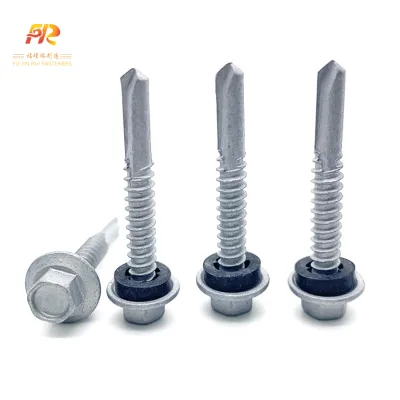
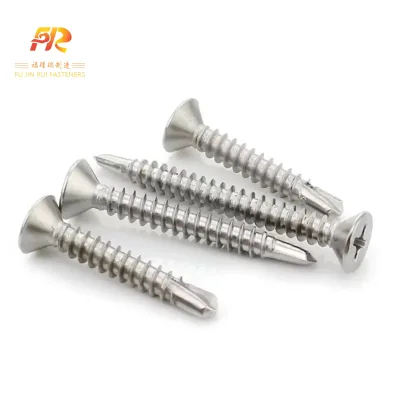
Common head styles include hexagonal, pan head, and cross pan head. Hexagonal heads are often paired with washers for secure fastening, while pan heads offer a low profile. Suppliers provide options like DIN 7504K hex washer head and DIN 7504M pan head screws to suit different installation requirements.
What is the price range for DIN self drilling screws?
Prices typically range from $0.01 to $1,250 per unit or ton, depending on specifications. Stainless steel screws may cost between $1,050 and $1,200, while carbon steel options range from $1,000 to $1,250. Bulk orders and specific material grades significantly influence the final unit price and total cost.