Color Changing PLA Filament Suppliers and Manufacturers
Source Color Changing PLA Filament from 24 verified suppliers in China. Compare response times, lead times, and certifications to find the right partner. Contact suppliers directly to request quotes and samples for your specific printing needs; review the available evidence before requesting comparable quotations from suitable candidates.
Suppliers List

GUANGDONG IBOSS SMART TECHNOLOGY CO.,LTD
- Verified by BV
- Combined
- China Guangdong
- Lead time15 days
- Avg. response≤ 8h
Main products3D Printer Filament, 3D Printing Pen, 3D Printer, 3D Printing, Printer PLA+, 3D Printer PLA, PLA+ Filament, PLC Filament, 3D Printing Pen Filament, 3D Printer Material PLA+
Main marketsSouth America,Southeast Asia/ Mideast,East Asia(Japan/ South Korea),Europe,Australia,North America


PLA+ Gradient Filament 1.75mm Gradient Tri-Color Red Blue Green 1kg 3D Printing Filament
$11.50 - $12.50
MOQ: 1 kg


3D Printer Filament Iboss Factory Silk Tri-Color Blue Black Purple PLA Filament
$12.00 - $13.00
MOQ: 1 kg


- Combined
- China Shandong
- Lead time15 days
- Avg. response≤ 6h
Main productsHeat Shrinkable Sleeve, Heat Shrinkable Tape, Hand Extruder, Plastic Extrusion Welder, Plastic Welding Rods, HDPE Electro Fusion Belt, HDPE Electro Fusion Welding Joint, Electro Fusion Wrap Sleeve, Plastic Sheet, Plastic Board
Main marketsSouth America,Africa,Southeast Asia/ Mideast,East Asia(Japan/ South Korea),Domestic,Europe,Australia,North America

Zhangjiagang Friend Machinery Co., Ltd.
- Verified by BV
- Combined
- China Jiangsu
- Lead time45 days
- Avg. response≤ 19h
Main productsPipe Production Line, Plastic Granulation Line, Pet Recycling Line, PP PE Film Recycling Line, WPC Profile Production Line, Plastic Extruder, Plastic Crusher, Plastic Shredder, Plastic Grinding Machine, 3D Filament Machine
Main marketsAfrica,Domestic,Europe

Suzhou Chunsheng Environmental Protection Fiber Co., Ltd.
- Verified by TUVRHEINLAND
- Trading Company,Manufacturer/Factory,Other
- China Jiangsu
- Lead time15 days
- Avg. response≤ 7h
Main productsRecycled Yarn, Recycled Nylon, Yarn, Biodegradable Yarn, Functional Yarn, Polyester, RPET, PLA, Monofilament, Ppolyester Yarn
Main marketsSouth America,Eastern Europe,Mid East,North America,Southeast Asia,Eastern Asia,Oceania,Western Europe,Africa

Guangzhou Yousu3D Technology Co., Ltd.
- Verified by SGS
- Combined
- China Guangdong
- Lead time15 days
- Avg. response≤ 12h
Main products3D Printer, Printing Materials, 3D Printing Filament, up Printer, Makerbot, Ultimaker, Nylon Filament, Mendel, Reprap, Metal Filament
Main marketsEurope,Australia,North America


Customizable Color 1.75mm PLA Filament Purple Neatly Winding Luminous 3D Printing Filament
$11.94 - $12.86
MOQ: 1 kg


Magical Color-Blending Effect Filament 1.75mm Green-Purple Silk PLA 3D Printer Filament
$9.28 - $9.82
MOQ: 1 kg


Custom Cheap Dual Color Silk PLA Filament for 3D Printers Shiny Surface Filament 3D
$9.28 - $9.82
MOQ: 1 kg

Shenzhen Flying Supply Chain Co., Ltd.
- Verified by SGS
- Trading Company
- China Guangdong
- Lead time15 days
- Avg. response≤ 4h
Main productsPacking Bag, Gift Bag, Folding Bag, Laptop Bag, Carton, Toy Puzzle, Stationery, Label, Hot Melt Paper, 3D Printing Consumables
Main marketsNorth America

Regular PLA Filament More Color 1.75mm 1kg 3D Printer Filament for Printer Material
$8.98 - $11.45
MOQ: 1 Rolls

High Precision Filament Neat Winding Filament 1.75 mm PLA 3D Printer Filament
$37.37 - $47.27
MOQ: 2 Rolls

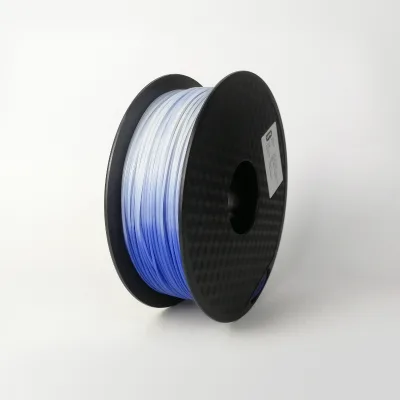
High Toughness PLA 3D Printer Filament 1.75mm Supplier 1.35kg Filament with Blue to White
$11.50 - $12.50
MOQ: 1 Rolls

Wholesale Multi Color 1.75mm PLA 3D Printer Filament for 3D Printing Machine Available
$8.98 - $11.45
MOQ: 1 Rolls
Shenzhen Hongshengye Technology Co., Ltd.
- Manufacturer
- Guangdong, China
- Lead time3 days
- Avg. response≤ 4h
Main productsphone cases&Airtag Cases,watch bands,AI translator,Starlink accessories,popular electronic products
Main marketsNorthern Europe(25.0%), Western Europe(20.0%), North America(20.0%), Southeast Asia(10.0%), South Asia(8.0%), Central America(5.0%), Eastern Europe(5.0%), Eastern Asia(4.0%), South America(3.0%)

JIANGXI NEW SILK ROAD INDUSTRY & TRADE COMPANY LIMITED
- Trading Company
- China Jiangxi
- Lead time23 days
- Avg. response≤ 6h
Main productsConstruction Goods, Hand Tool, Stove for Outdoor, Electric Items, and Any Related Items
Main marketsSouth America,Africa,Southeast Asia/ Mideast,East Asia(Japan/ South Korea),Europe,Australia,North America


Bambu Lab PLA Silk Filament1.75mm 1kg PLA Filament for 3D Printer Filamento
$9.30 - $9.50
MOQ: 1 Pieces

Dongguan Dezhijian Plastic Electronic Ltd.
- Verified by Intertek
- Manufacturer, Trading Company
- Lead time3 days
- Avg. response≤ 3h
Main products3D Printing Filament, 3D Printing Products
Main marketsDomestic Market(27%), North America(25%), Southeast Asia(13%)
Shenzhen Eryone Technology Co., Ltd.
- Manufacturer, Trading Company
- Guangdong, China
- Lead time10 days
- Avg. response≤ 6h
Main products3D Printer/ 3D Printing Applications , Resin, 3D Printing Filament/
Main marketsWestern Europe(37.0%), North America(35.0%), Eastern Asia(10.0%), Mid East(10.0%), Southern Europe(3.0%), Northern Europe(3.0%), Eastern Europe(1.0%), Southeast Asia(1.0%)

Suzhou Aifuer Machinery Co., Ltd.
- Verified by TUVRHEINLAND
- Combined
- China Jiangsu
- Lead time15 days
- Avg. response≤ 8h
Main productsComplete Plastic Pipe/Profile Extrusion Line, Plastic Recycling &Pelletizing Line, WPC Composite Line
Main marketsSouth America,Southeast Asia/ Mideast,Europe,North America
Shanghai Gucai Intelligent Technology Co., Ltd.
- Trading Company
- Shanghai, China
- Lead time5 days
- Avg. response≤ 2h
Main products3d printer filament,3d printer,3d pen,filament dryer box,pla filament
Main marketsEastern Europe(25.0%), North America(20.0%), Western Europe(15.0%), Domestic Market(10.0%), South America(10.0%), Southeast Asia(10.0%), Africa(5.0%), Eastern Asia(3.0%), Mid East(2.0%)

Suzhou Winsoar Science & Technology Development Co., Ltd.
- Trading Company
- China Jiangsu
- Lead time30 days
- Avg. response≤ 6h
Main productsPVC-U/PVC-C Pipe Production Line, HDPE/PP Pipe Production Line, PPR/PE-Rt Pipe Production Line, WPC Door Board/Profile Production Line, PVC Foaming Board Production Line, PE/PVC Profile/Wall Board/Ceiling Production Lin, Pet/PP/PE Crushing&Washing Production Line, PVC/PE/PP Granulating Production Line, Single/Twin Screw Extrusion Machine, Mixer/Cutter/Haul off Machine
Main marketsAfrica


ABS Filament Production Line PLA Filament 3D Printer Porduction Line
$15000.00 - $20000.00
MOQ: 1 Pieces

Shenzhen Hello 3d Technology Co., Ltd.
- Manufacturer, Trading Company
- GuangDong, China
- Lead time3 days
- Avg. response≤ 3h
Main products3D Printing Filaments
Main marketsNorth America(20.0%), Domestic Market(10.0%), Africa(10.0%), South America(10.0%), Southeast Asia(5.0%), South Asia(5.0%), Southern Europe(5.0%), Northern Europe(5.0%), Central America(5.0%), Western Europe(5.0%), Eastern Asia(5.0%), Mid East(5.0%), Oceania(5.0%), Eastern Europe(5.0%)
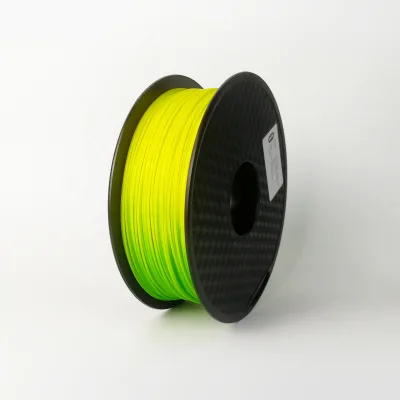
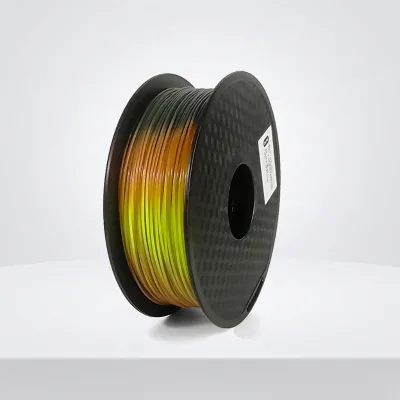
Hello 3D PLA Temperature Change Colors 3d Printer Filament Supplier 3d Filament 1.75mm Pla
$10.24 - $12.31
MOQ: 1 kilograms

Handan Jiuwei Plastic Products Co., Ltd.
- Verified by SGS
- Trading Company
- China Hebei
- Lead time15 days
- Avg. response≤ 7h
Main productsPoe, Nylon/PA, ABS, TPU, PMMA, PPO, TPE, PC, EPS, POM
Main marketsOthers(foreignTradeCapacity.exportBusinessCapacityMarketOther)

PLA Filament High Heat Resistant PLA 3D Printer Filament Raw Material PLA Plastic Granules
$2800.00 - $3300.00
MOQ: 1 Tons

PLA Filament High Heat Resistant PLA 3D850 3D Printer Filament Raw Material PLA Plastic Granules
$2800.00 - $3300.00
MOQ: 1 Tons
Guangzhou Colorzone Computer Consumables Co., Ltd.
- Manufacturer, Trading Company
- Guangdong, China
- Lead time6 days
- Avg. response≤ 3h
Main productsToner Cartridge,Inkjet Cartridge,Drum Unit,ink cartridge,Compatible Compatible Toner cartridge
Main marketsCentral America(15.0%), Africa(15.0%), Northern Europe(15.0%), Western Europe(15.0%), Eastern Europe(10.0%), South America(8.0%), Southeast Asia(5.0%), North America(5.0%), Eastern Asia(5.0%), Mid East(5.0%), Oceania(2.0%)

Sunhokey Electronics Co., Ltd.
- Trading Company
- China Guangdong
- Lead time15 days
- Avg. response≤ 8h
Main products3D Printer
Main marketsEurope,North America

Regular PLA Filament White Color 1.75mm 1kg 3D Printer Filament for 3D Printing
$5.50 - $7.80
MOQ: 10 Rolls


Anhui Jumei Biological Technology Co., Ltd.
- Verified by SGS
- Combined
- China Anhui
- Lead time15 days
- Avg. response≤ 11h
Main productsCompostable Cling Film, PLA Straw, Cpla Lid, Compostable Bags, Compostable Raw Material, Paper Cutlery, PLA Gloves
Main marketsSouth America,Africa,Southeast Asia/ Mideast,East Asia(Japan/ South Korea),Europe,Australia,North America
Hangzhou Colour Standard Masterbatches Co., Ltd.
- Verified by Intertek
- Manufacturer, Trading Company
- Lead time0 days
- Avg. response≤ 1h
Main productsMasterbatch, Functional Masterbatch, 3D Printing Filaments, 3D Print Machine
Main marketsDomestic Market(50%), North America(20%), Southeast Asia(10%)

YANGZHOU WANTONG ANIMAL BY-PRODUCTS CO., LTD.
- Combined
- China Jiangsu
- Lead time30 days
- Avg. response≤ 3h
Main productsBristle, Filament, Bristles, Filaments, Paintbrush, Brush
Main marketsSouth America,East Asia(Japan/ South Korea),Europe
- Trading Company
- Guangdong, China
- Lead time5 days
- Avg. response≤ 9h
Main products3D Printer Filament,PLA Filament,PETG Filament,ABS Filament,TPU Filament
Main marketsNorth America(20.0%), Western Europe(10.0%), Eastern Europe(10.0%), Oceania(10.0%), Domestic Market(5.0%), South Asia(5.0%), Southern Europe(5.0%), Northern Europe(5.0%), Central America(5.0%), Southeast Asia(5.0%), Eastern Asia(5.0%), Mid East(5.0%), South America(5.0%), Africa(5.0%)
Suzhou Aorita New Material Technology Co., Ltd.
- Trading Company
- Jiangsu, China
- Lead time0 days
- Avg. response≤ 3h
Main productsFep Film,nfep film,acf film,Pei buildplate
Main marketsDomestic Market(100.0%)

Shenzhen Kingroon 3d Technology Co., Ltd.
- Verified by SGS
- Combined
- China Guangdong
- Lead time15 days
- Avg. response≤ 5h
Main products3D Printing Filament, 3D Printing Resin, 3D Printer Parts
Main marketsSoutheast Asia/ Mideast
Zhuhai Sailner 3d Technology Co., Ltd.
- Manufacturer
- Guangdong Province, China
- Lead time0 days
- Avg. response≤ 4h
Main products3D printers,PLA Filament
Main marketsEastern Europe(50.0%), South America(50.0%)











Comprehensive Sourcing Guide
Color Changing PLA Filament Supplier Concentration and Factory Types
The current supplier landscape for Color Changing PLA Filament reveals a distinct concentration of manufacturing activity within China's Guangdong province, where combined supplier types dominate the market. These entities often operate as integrated factories capable of offering both Original Design Manufacturing and Original Equipment Manufacturing services alongside their own branded products. This dual capability suggests a robust internal supply chain for raw materials, which is critical for maintaining the consistency required in temperature-sensitive color-shifting polymers. Buyers observing this cluster should note that the primary product focus frequently includes a wide array of 3D printing materials, ranging from standard PLA to specialized variants like Iboss Toughness Enhanced filaments, indicating a mature ecosystem for plastic extrusion.
In contrast, other regions such as Shandong and Jiangsu present different operational profiles, with some suppliers focusing heavily on broader plastic extrusion lines or recycling equipment rather than just finished filament. A supplier in Shandong, for instance, may list heat shrinkable sleeves and plastic welding rods alongside filament, suggesting a diversified manufacturing base that might offer flexibility but requires closer scrutiny regarding their specific filament production capacity. The presence of combined company types in Guangdong implies that these factories can handle custom orders with greater agility, whereas suppliers in other provinces might rely more on standard OEM models. Buyers must verify if the specific factory type aligns with their volume needs, as a combined entity might prioritize high-volume branded runs over small, custom color batches.
How to Verify Color Changing PLA Filament Suppliers
Verification of suppliers offering Color Changing PLA Filament requires a rigorous check of their business credentials and product evidence, particularly regarding their verification status and system certifications. While some suppliers in the current results display BV verification, indicating a third-party audit of their business legitimacy, others may lack visible certification marks or show "NIL" for system certifications. Buyers should prioritize suppliers who can provide valid ISO9001:2015 or ISO14001:2015 certificates, as these standards often correlate with consistent quality control processes essential for maintaining the precise chemical composition needed for color-shifting effects. The absence of such certifications does not automatically disqualify a supplier, but it necessitates a deeper inquiry into their internal quality assurance protocols before placing an order.
Beyond corporate credentials, buyers must scrutinize the specific product attributes listed for color changing filaments to ensure they match technical requirements. Evidence shows that successful suppliers provide detailed specifications such as a 1.75mm diameter, a printing temperature range of 170-230℃, and a guarantee of being bubble-free, which are critical for reliable printing performance. When evaluating a supplier, check if their product data includes the specific color transition mechanism, such as "Purple to Pink" or "Tri-Color" gradients, and confirm that the net weight is accurately stated as 1000g per spool. A supplier that fails to provide these granular details or lists inconsistent data, such as varying gross weights without explanation, may indicate a lack of precision in their manufacturing or listing processes, warranting further due diligence.
What to Compare Across Color Changing PLA Filament Suppliers
When comparing suppliers, the response time and lead time are critical operational metrics that directly impact project timelines and inventory management. The data indicates a significant variance in responsiveness, with some suppliers showing a response time of approximately 5.15 hours, while others may take nearly 18 hours or more to reply to inquiries. Similarly, lead times can range from 15 days to as long as 45 days, depending on the supplier's location and current production load. A supplier with a shorter lead time in Guangdong might be preferable for urgent orders, whereas a supplier with a longer lead time in Jiangsu might offer better pricing for planned, large-scale procurement. Buyers should calculate the total time from order placement to delivery, factoring in these response and lead time differences to avoid production delays.
Another vital dimension for comparison is the Minimum Order Quantity (MOQ) and the pricing structure associated with different product variants. Current evidence shows MOQs ranging from as low as 1 unit for specific trial products to 300 units for standard bulk orders, with prices fluctuating between $1.00 and $13.00 per unit depending on the specific filament type and customization level. A supplier offering a low MOQ of 1 unit might be ideal for prototyping or testing color-changing effects, but the per-unit cost will likely be higher compared to bulk buyers. Conversely, suppliers requiring a 30kg MOQ or 200-unit minimum might offer significantly lower unit prices, making them suitable for established production lines. Buyers must weigh the trade-off between lower upfront costs and the flexibility of smaller order quantities when selecting a partner.
Common Color Changing PLA Filament Sourcing Risks
One of the primary risks in sourcing Color Changing PLA Filament is the potential inconsistency in color transition performance, which can stem from variations in raw material batches or extrusion temperatures. While some product evidence highlights features like "High Strength" and "100% Without Bubble," the specific mechanism for color change relies on precise thermal properties that may vary between suppliers. If a supplier does not explicitly state the temperature range required for the color shift or fails to provide batch-specific test data, the resulting prints may exhibit uneven color transitions or fail to change color entirely. Buyers should request sample batches to verify the color-shifting behavior under their specific printer settings before committing to a large order, as this visual verification is the only reliable way to confirm the product's functional integrity.
Another significant risk involves the discrepancy between the stated product specifications and the actual delivered goods, particularly regarding weight and packaging. Evidence shows variations in gross weight, with some spools listed at 1.4kg and others at 1.3kg, despite a standard net weight of 1000g. This inconsistency can lead to confusion regarding the actual amount of material received and may indicate poor quality control in the packaging process. Furthermore, if a supplier claims to offer customization but lacks the necessary ODM or OEM capacity, the buyer may face delays or receive products that do not meet their specific branding or color requirements. Buyers must ensure that the supplier's stated capacity for customization aligns with their needs and that the packaging standards, such as vacuum packing, are strictly adhered to prevent damage during transit.
Color Changing PLA Filament Regional Sourcing and Logistics
The geographical location of the supplier plays a pivotal role in determining logistics costs and delivery reliability for Color Changing PLA Filament. The majority of the current supplier results are concentrated in China's Guangdong province, a region known for its advanced manufacturing infrastructure and efficient export logistics. Suppliers in this area often benefit from proximity to major ports, which can reduce shipping times and costs for international buyers. However, buyers should also consider suppliers in other regions like Shandong or Jiangsu, where the logistics network might differ. While these locations may offer competitive pricing, the additional transit time to reach major shipping hubs could extend the overall lead time, especially if the supplier is not located near a primary port.
Logistics planning must also account for the specific packaging requirements of 3D printing filaments, which are sensitive to moisture and physical damage. Evidence indicates that suppliers use various packing methods, including vacuum-sealed cartons and standard boxes with dimensions like 21217cm or 20020064mm. Buyers should verify that the chosen supplier uses robust packaging, such as vacuum sealing, to protect the filament from humidity during transit, which is crucial for maintaining the material's quality and color-shifting properties. Additionally, the weight of the packaging, which can add up to 400g to the net weight, should be factored into shipping calculations. Buyers should confirm that the supplier's packaging standards align with their logistics partners to ensure the product arrives in optimal condition.
Color Changing PLA Filament Commercial Terms and Order Planning
Commercial terms for Color Changing PLA Filament often involve specific pricing structures that vary based on order volume and customization requirements. The current data shows a wide price range, with some products listed as low as $1.00 per unit and others reaching up to $13.00, depending on the complexity of the color change and the material properties. Buyers should carefully analyze the price per kilogram or per spool to determine the true cost of the material, as the listed prices may not always reflect the final cost after accounting for shipping, taxes, and potential volume discounts. It is essential to clarify whether the quoted price includes all necessary certifications or if additional fees apply for custom branding or specialized color formulations.
Order planning must also consider the establishment year and the specific capacity of the supplier to ensure they can meet demand fluctuations. While the exact establishment year is not always explicitly stated in the provided facts, the presence of ODM and OEM capabilities suggests a mature operation capable of handling complex orders. Buyers should assess the supplier's ability to scale production, especially if they plan to order large quantities of color-changing filaments for a specific project. Additionally, the response time of the supplier, which can range from 5 to 18 hours, should be factored into the timeline for order confirmation and production scheduling. A supplier with a faster response time may be better equipped to handle urgent requests or last-minute changes, ensuring that the project stays on track without unnecessary delays.
FAQs
What is the price range for Color Changing PLA Filament?
Prices for Color Changing PLA Filament range from 7.50 to 13.00 USD per unit based on current listings. Specific products like temperature-sensitive variants cost between 11.50 and 12.50 USD. Minimum order quantities vary significantly, starting from one unit up to 96 units depending on the specific product selection.
What are the lead times for ordering this filament?
Lead times for these products are typically around 15 days for standard orders. Some suppliers in the Jiangsu region may require up to 45 days for production. Buyers should verify specific delivery schedules with the supplier before finalizing large orders to ensure timely arrival.
What is the minimum order quantity for this filament?
Minimum order quantities vary by product, ranging from one unit to 300 kilograms. Some listings require a minimum of 96 units, while others allow orders as low as one piece. Bulk orders often start at 30 kilograms or 200 units depending on the specific supplier and product type.
Where are the suppliers of this filament located?
Suppliers offering this filament are primarily located in Guangdong and Shandong provinces in China. Some manufacturers are also based in Jiangsu. All listed products originate from China, ensuring consistent supply chains for international buyers seeking these specific 3D printing materials.
What certifications do the suppliers hold?
Some suppliers hold ISO9001:2015 and ISO14001:2015 certifications for quality and environmental management. Other listings do not display specific system certifications. Buyers should verify individual supplier credentials directly as certification status varies across different manufacturers in the search results.
How fast do suppliers respond to inquiries?
Response times for suppliers vary, with some responding within 5 hours and others taking up to 18 hours. The average response time observed is around 7.96 hours. Faster response rates are noted for suppliers in Shandong, while those in Jiangsu may take longer to reply.
What are the key features of this filament?
Key features include high strength, color-changing capabilities, and a diameter of 1.75mm. The filament is coiled, bubble-free, and suitable for FDM printers. Printing temperatures typically range from 170 to 230 degrees Celsius, ensuring compatibility with most desktop 3D printers.