Constant Expansion Kovar Alloy Rod Suppliers and Manufacturers
Discover 14 verified suppliers offering Constant Expansion Kovar Alloy Rod with varying lead times, certifications, and response speeds. Compare locations in China, MOQs, and product standards to select the right partner for your precision alloy needs today; review the available evidence before requesting comparable quotations from suitable candidates.
Suppliers List

Huona (Shanghai) New Material Co., Ltd.
- Verified by BV
- Manufacturer/Factory
- China Shanghai
- Lead time23 days
- Avg. response≤ 4h
Main productsThermostatic Bimetal Strip, Welding Wire, Soft Magnetic Alloys, Resistance Alloy, Magnesium Alloy Plate, Amorphous & Nanocrystalline, Controlled Expansion Alloys, Permalloy, Invar, Heating Alloy
Main marketsSouth America,Eastern Europe,Mid East,North America,Southeast Asia,Eastern Asia,Oceania,Western Europe,Africa

- Verified by SGS
- Trading Company
- China Jiangsu
- Lead time30 days
- Avg. response≤ 7h
Main productsNickel Strip, Nichrome Wire, Nickel Wire, Resistance Wire, Nickel Welding Wire, Inconel, Incoloy, Heating Wire, Thermocouple Wire, Nickel Alloy
Main marketsSouth America,Others(foreignTradeCapacity.exportBusinessCapacityMarketOther),Southeast Asia/ Mideast,East Asia(Japan/ South Korea),Domestic,Europe,Australia,North America


Invar 36 Kovar Precision Nickel Alloy Super Permalloy Wire Precision Alloy Nickel Bar Rod
$25.00 - $40.00
MOQ: 10 kg


Nickel-Iron Controlled Expansion Alloy Kovar Invar Welding Wire TIG Rod 2.4mm 3.2mm
$25.00 - $40.00
MOQ: 10 kg

- Verified by TüVRheinland
- Trading Company
- Lead time15 days
- Avg. response≤ 2h
Main productsHeating Resistance Wire, Nickel Welding Wire, Thermocouple Wire, Corrosion Resistance Alloy, Thermal Spray Alloy
Main marketsSouth Asia(20%), South America(15%), Western Europe(15%)
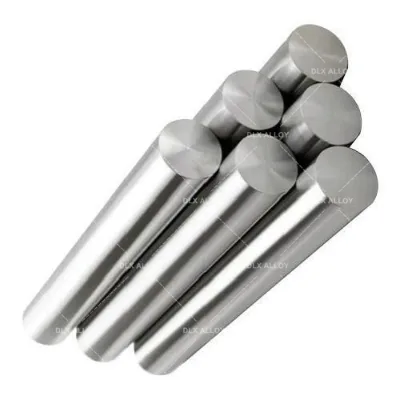
Hot Sale Fe-Ni-Co Constant-expansion Sealing Kovar Alloy 4j29 Rod Kovar Bar Kovar 4J29 Alloy Rod
$37.00 - $39.00
MOQ: 100 kilograms
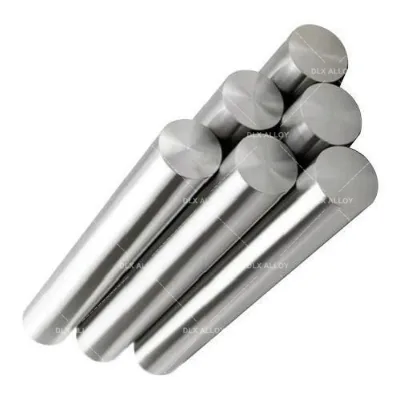
$27.00 - $28.90
MOQ: 100 kilograms
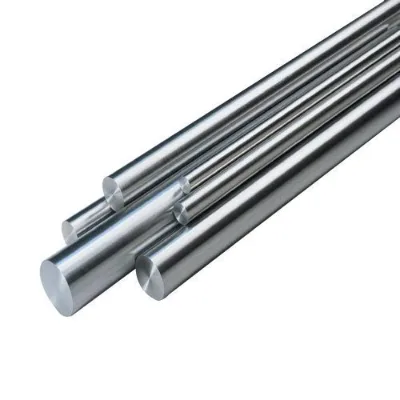

- Verified by SGS
- Trading Company
- China Shanghai
- Lead time15 days
- Avg. response≤ 25h
Main productsNichrome Wire, Fecral Wire, Thermocouple Products, Feni Alloy, CuNi Alloys, Nichrome Strip, Kovar Alloy Wire Strip, Fecral Strip, Pure Nickel Products, Precision Alloy
Main marketsSoutheast Asia/ Mideast,Europe


Stable Kovar 4j29 Rod, Expansion Precision Alloy Rod for Glass-to-Metal Seal
$20.00 - $50.00
MOQ: 50 kg


Jiangsu DZX Technology Co.,Ltd
- Verified by SGS Group
- Trading Company
- Lead time15 days
- Avg. response≤ 2h
Main productsHeating Resistance Alloy, Thermocouple Wire, Nickel Welding Alloy, Pure Nickel Strip
Main marketsSoutheast Asia(20%), Northern Europe(15%), Southern Europe(15%)
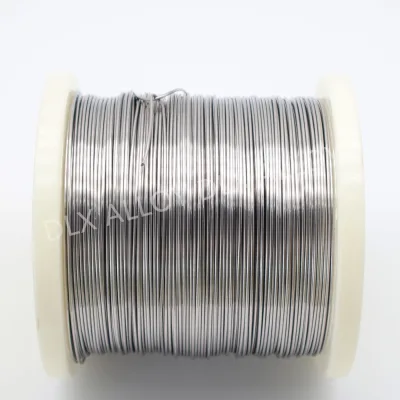
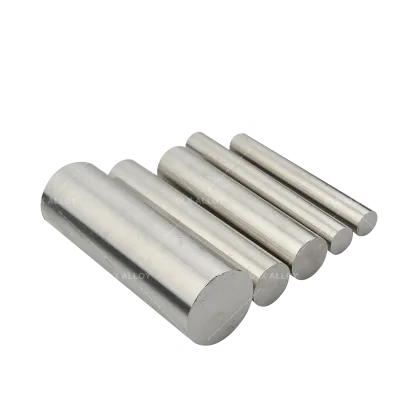
4J29 Kovar Alloy Rod Precision Expansion Alloy Round Bar
$20.00 - $30.00
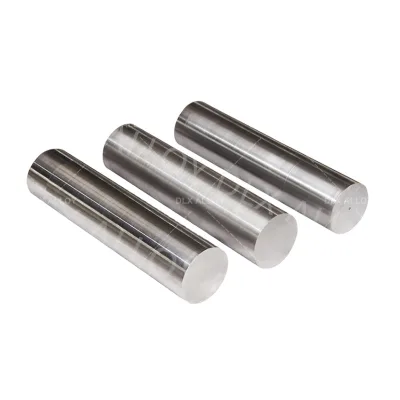

- Manufacturer/Factory,Group Corporation,Other
- China Zhejiang
- Lead time0 days
- Avg. response≤ 25h
Main productsDropout Fuse, Insulators, Poleline Hardwares, Arrester, LV Fuses, Distribution Box, Plugs&Sockets, Disconnector Switches, Junction Boxes, Fuse Links
Main marketsSouth America,Eastern Europe,Mid East,North America,Southeast Asia,Eastern Asia,Oceania,Western Europe,Africa


MOQ: 50 Pieces

Taizhou Haosai Special Alloy Co., Ltd.
- Verified by TUVRHEINLAND
- Manufacturer
- China Jiangsu
- Lead time30 days
- Avg. response≤ 3h

- Verified by BV
- Trading Company
- China Jiangsu
- Lead time15 days
- Avg. response≤ 3h
Main productsCarbine Steel, Stainless Steel, Copper, Aluminum, Nickel, Gi, Titanium, PPGI, Nickel Alloy, 304 Stainless Steel
Main marketsEastern Europe,Mid East,North America,Southeast Asia,Eastern Asia

Nickel Kovar Invar Alloy 4j33 4j36 Controlled Expansion Alloy ASTM F15 Nickel Iron Alloy Rod
$44.20 - $46.80
MOQ: 100 kg


Hangzhou Ualloy Material Co., Ltd.
- Combined
- China Zhejiang
- Lead time15 days
- Avg. response≤ 24h
Main productsResistance Strip, Copper Nickel Alloy Strip, Fecral Strip, Precision Alloy
Main marketsSouth America,Africa,Southeast Asia/ Mideast,East Asia(Japan/ South Korea),Domestic,Europe,Australia,North America


Ualloy-4j29 (Expansion alloy) (Common Name: Kovar, Nilo K, KV-1, Dilver Po, Vacon 12)
$30.00 - $35.00
MOQ: 5 kilogram


Wuxi Taixie Metal Material Co., Ltd.
- Trading Company
- China Jiangsu
- Lead time15 days
- Avg. response≤ 13h
Main productsCopper Alloy, Stainless Steel, Alloy Steel, Tool Steel, Special Steel, Nickel Alloy, Pure Copper, Aluminum Alloy, Tin Ingots, High Speed Steel
Main marketsAfrica,Southeast Asia/ Mideast,Domestic,Europe,North America

Shanghai Tankii Alloy Material Co., Ltd.
- Verified by BV
- Trading Company,Manufacturer/Factory
- China Shanghai
- Lead time23 days
- Avg. response≤ 4h
Main productsNickel Chromium Alloys, Fecral Alloy, Thermocouple Wire, Copper Nickel Alloys, Thermal Spraying Wire, Constantan, Manganin, Alloy
Main marketsSouth America,Eastern Europe,Mid East,North America,Southeast Asia,Eastern Asia,Western Europe,Africa

Dongying Zhaoxin Industry and Trade Co, Ltd.
- Combined
- China Shandong
- Lead time30 days
- Avg. response≤ 12h
Main productsDown Hole Tools, Cementing Tools, Wellhead Equipment, Oil Well Packer, Tubing Anchor, Torque Anchor
Main marketsSouth America,Others(foreignTradeCapacity.exportBusinessCapacityMarketOther),Europe


High-Strength Anti-Corrosion Sucker Rod
MOQ: 1 Pieces

HUNAN WESTION TECHNOLOGY CO., LTD.
- Combined
- China Hunan
- Lead time23 days
- Avg. response≤ 13h
Main productsTungsten Carbide Additive Powder, Titanium Carbide Powder, Tantalum Carbide Powder, Niobium Carbide Powder, Vanadium Carbide Powder, Chromium Carbide Powder, Molybdenum Carbide Powder, Zirconium Carbide Powder, Hafnium Carbide Powder, Titanium Carbonitride Powder
Main marketsSouth America,Africa,Southeast Asia/ Mideast,East Asia(Japan/ South Korea),Domestic,Europe,Australia,North America


Titanium Carbide Hard Alloy Round Rods with Compressive Strength Exceeding 3000MPa
$12.80 - $13.80
MOQ: 1 kg


Zhuzhou Lihua Cemented Carbide Co., Ltd.
- Verified by BV
- Combined
- China Hunan
- Lead time23 days
- Avg. response≤ 12h
Main productsTungsten Carbide Rods, Tungsten Carbide Strips, Tungsten Carbide Anti Vibration Tool Holder, Tungsten Carbide Sleeves, Tungsten Carbide CNC Inserts, Tungsten Carbide Nozzles, Tungsten Carbide End Mill, Tungsten Carbide Mining Tips, Tungsten Carbide Drill Bits, Tungsten Carbide Customized Parts
Main marketsSoutheast Asia/ Mideast,Europe,North America


Comprehensive Sourcing Guide
Constant Expansion Kovar Alloy Rod Supplier Concentration and Factory Types
Buyers searching for Constant Expansion Kovar Alloy Rod will encounter two broad supplier archetypes in current results: manufacturers operating their own factories, and trading companies that consolidate output from multiple mills. The manufacturer-type suppliers in this category tend to list deep, narrow product portfolios built around precision and controlled-expansion alloys, including Invar, Permalloy, soft magnetic alloys, and related nickel-iron grades alongside Kovar rod and strip. Their listings often carry factory-level attributes such as OEM capability, in-house customization options, and export packing as a standard offering. Trading companies, by contrast, present wider catalogs that stretch into nichrome wire, thermocouple wire, and corrosion-resistant nickel alloys, reflecting an aggregation role rather than a single-mill specialization.
Geographically, the observed results cluster in eastern China, with supplier locations in Shanghai and Jiangsu province. A Shanghai-based manufacturer in the results lists multiple system certifications and third-party verification, while a Jiangsu trading company shows SGS verification and ISO 9001:2015 registration. This coastal concentration matters practically because Shanghai and Jiangsu both host established specialty-metals supply chains, but buyers should treat location as a starting filter rather than proof of capability. When no location data is displayed, buyers should identify clusters by checking product origins listed on individual listings, cross-checking business license registrations, and asking suppliers directly which mill produces the rod and where that mill is registered.
How to Verify Constant Expansion Kovar Alloy Rod Suppliers
Verification should begin with the credentials that suppliers actually display, then confirm each one independently. In the current results, one manufacturer shows ISO 9001, ISO 14001, and QC 080000 system certifications together with Bureau Veritas verification, while a trading company shows SGS verification and an ISO 9001:2015 certificate. Buyers should request the actual certificate numbers and scope statements, because a quality management certificate may cover only part of a company's operations. For alloy products, the critical question is whether the certified quality system governs the melting, hot working, and cold finishing steps that determine chemical composition and expansion behavior, or merely the distribution step at a trading intermediary.
Beyond certificates, use product-level evidence to test technical competence. Listings in this category display properties such as density, resistivity, Curie point, tensile strength, yield strength, and chemical composition ranges; a credible supplier can reproduce these values on a mill test certificate traceable to the actual heat number. One Jiangsu listing, for example, states a specific density, tensile strength around 700 MPa, and yield strength around 400 MPa, plus rod sizes from roughly 6 to 50 mm. Ask each supplier to link those published figures to an actual test report. Buyers should also verify the supplier's declared company type against registration records, since a "manufacturer" label is easy to claim and harder to substantiate without a factory address and audit evidence.
What to Compare Across Constant Expansion Kovar Alloy Rod Suppliers
Build a comparison sheet around the attributes suppliers actually publish, and record gaps rather than guessing. Useful dimensions in this category include lead time, minimum order quantity, average response time, verification status, system certifications, company type, and main product lines. In the observed results, the Shanghai manufacturer reports a lead time of about 23 days and an average response time near 3.5 hours, while the Jiangsu trading company reports roughly 30 days lead time and a response time above 6 hours. These figures are self-reported and vary by season and order size, but differences of this magnitude still help rank candidates for urgent projects.
Commercial parameters deserve equal attention. Minimum order quantities in the results range dramatically, from about 30 units on one Shanghai listing to a single-unit MOQ on a Jiangsu listing, and quoted price bands vary from roughly 15 to 45 dollars per unit on the trading side versus tighter bands around 18 to 23 dollars on manufacturer listings. Sample availability also differs: at least one listing advertises a free sample. Establishment year is another dimension to request when it is not displayed, because longevity signals stability in a niche alloy market. Finally, compare main product breadth: a supplier whose catalog is concentrated in controlled-expansion alloys is more likely to hold consistent Kovar rod inventory than one listing it among dozens of unrelated nickel products.
Common Constant Expansion Kovar Alloy Rod Sourcing Risks
The most serious risk in this category is compositional substitution. Kovar's controlled expansion depends on a tight nickel-iron-cobalt balance, and suppliers may offer 4J36 Invar, 4J29 Kovar, 4J42, or other expansion grades interchangeably under loose keywords. Several listings in the results bundle Invar36, Kovar 4J29, Nilo42, Permalloy, and Feni36 into single product pages, which increases the chance of shipment confusion. Mitigate this by specifying the grade, applicable standard, and chemical composition range in the purchase contract, and requiring a mill test certificate with heat-number traceability for every shipment.
Second-tier risks cluster around self-reported data. Published lead times, response times, and certifications are supplier-enteried and unverified in most marketplace contexts; a 23-day lead time quoted today may stretch during peak production. Physical property claims on listings, such as density, Curie point, or resistivity values, may be copied between suppliers rather than measured, so independent lab testing of samples is warranted before a first production order. Quality-system certificates may also expire or cover a narrower scope than assumed. Trading companies add a traceability risk: if the intermediary will not disclose the producing mill, the buyer cannot audit the melt source or verify heat treatment. Finally, packing and surface condition vary, with some listings promising bright, smooth surfaces and wooden-case export packing while others specify only generic export packing, which matters for corrosion-sensitive precision rod.
Constant Expansion Kovar Alloy Rod Regional Sourcing and Logistics
The current results point firmly to eastern China as the practical sourcing region, with Shanghai and Jiangsu both represented. Shanghai's supplier base in this category includes a manufacturer with export-oriented packing and a broad precision-alloy portfolio, while Jiangsu's participation includes trading companies capable of ODM and OEM arrangements with their own branding. These neighboring jurisdictions share port infrastructure, so logistics differences between them are modest; what changes is the supplier's internal handling. Manufacturer listings tend to state export packing directly, while trading companies describe packing options such as DIN spools, cartons, and wooden cases, depending on product form.
Lead-time planning should account for the full chain from inquiry to arrival. The observed lead times of roughly 23 to 30 days reflect production or consolidation periods only; add sampling rounds, quality inspection, and freight time when building a project schedule. Buyers outside China should confirm which port the supplier ships from, whether rod is stocked in standard diameters or produced to order, and whether custom sizes trigger minimum runs not reflected in the published MOQ. Rod products in sizes from about 6 to 50 mm appear in the results, and strip or wire forms ship very differently, so confirm the form and weight per package early. For destinations with strict customs documentation, ask in advance whether the supplier provides certificates of origin and compliant material declarations, since trading companies and factories may differ in documentation readiness.
Constant Expansion Kovar Alloy Rod Commercial Terms and Order Planning
Commercial terms in this category reward staged commitments. Price ranges visible in the results span from about 18.50 to 23.00 dollars on manufacturer listings to 15.00 to 45.00 dollars on a trading company listing, a spread wide enough that buyers should normalize quotes to identical grade, size, tolerance, quantity, and Incoterms before comparing. The trading-company MOQ of one unit versus roughly 30 units at the manufacturer shows how sample-scale and production-scale orders flow to different supplier types. A sensible plan is to run sample qualification with whichever supplier offers low-MOQ or free-sample terms, then negotiate volume pricing with the supplier whose certificates and mill traceability survived verification.
Order planning should lock down the variables that alloy buyers most often leave vague. Specify the exact grade designation, applicable standard, chemical composition limits, size tolerances, surface condition, and heat-treatment state in the contract, and attach the agreed mill test certificate format. The results show suppliers stating standards from AISI, ASTM, BS, DIN, GB, and JIS on some listings and "can discuss" on others, so never assume a default standard applies. Confirm packing format, since export packing and wooden cases appear in listings and affect transit damage risk. Finally, align payment structure with verification findings: use terms that keep funds recoverable until inspection for first orders, and re-verify certificates annually on repeat business, because system certifications and verification statuses displayed today are snapshots rather than permanent guarantees.
FAQs
What is a Kovar alloy rod used for in sourcing projects?
Kovar alloy rod is a controlled expansion nickel-iron-cobalt alloy used mainly for glass-to-metal seals, electronic packaging, and aerospace components. Buyers typically source rods for machining into headers, lead frames, and housings where thermal expansion must match sealing glasses or ceramics. Suppliers list grades such as 4j29 and Ni29co18, and many offer customization for diameter, length, and finish.
How does Kovar differ from Invar 36 alloy rod?
Kovar is a nickel-iron-cobalt alloy matched to hard glasses for sealing applications, while Invar 36 is a nickel-iron alloy with very low expansion matched to precision instruments. Listed listings show Invar 36 around FeNi36 composition with a Curie point near 230 degrees, and Kovar marketed as 4j29. Verify the exact grade you need before requesting quotes.
What certifications should I verify when buying Kovar rod?
Ask for ISO 9001 quality system certification and material test certificates showing chemical composition and thermal expansion data. Results in this category reference ISO 9001, ISO 14001, and QC 080000 systems plus third-party verification. Confirm the specific mill certificates, standard compliance such as ASTM or DIN, and batch traceability directly with each supplier before ordering.
What is the typical MOQ for Kovar alloy rod orders?
Minimum order quantities vary widely by supplier and product form. Published listings in this category show MOQs as low as 1 unit for some rods and 30 units for others, with prices spanning roughly 15 to 155 dollars depending on grade and size. Confirm the exact MOQ for your required diameter and tolerance before committing to a sample order.
What lead times can I expect for controlled expansion alloy rods?
Lead times in the current supplier results range from about 23 days to 30 days for delivery. Faster responses were recorded at roughly 3.5 hours for one manufacturer and about 6 hours for a trading company. Actual lead time depends on diameter, quantity, and whether heat treatment or machining is required, so confirm schedules in writing with each quote.
Which supplier types sell Kovar rods, factories or trading companies?
Both types operate in this category. A Shanghai-based manufacturer and factory offers rods, strips, and wires across Invar, Kovar, Permalloy, and related controlled expansion alloys, while a Jiangsu-based trading company covers nickel alloys, welding wire, and thermocouple products with OEM and ODM support. Factories may offer better pricing; traders may consolidate mixed grades more conveniently.
Can I get free samples of Invar or Kovar alloy rod?
Some listings explicitly offer free samples, including an Invar 36 low expansion alloy rod with customization available and OEM support. Other suppliers list sample policies that are not specified, so you should ask each supplier directly. Expect to pay freight on samples and confirm whether sample dimensions match your production diameter before approving a full order.
What specifications should I include in a Kovar rod inquiry?
Specify the grade, such as 4j29 or ASTM-designated Kovar, plus required diameter range, tolerance, length, surface condition, and quantity. Listed products show sizes from 6 to 50 mm, soft condition, bright surface, and packing in wooden cases or spools. Also request density, tensile strength, and Curie temperature data, which listings report near 8.12 g/cm and 700 MPa.