Construction GI Pipe Suppliers and Manufacturers in China
Explore 20 verified suppliers offering Construction GI Pipe from Tianjin with options for round or square shapes and various standards. Compare response times, lead times, and pricing to find the right partner for your project needs today; review the available evidence before requesting comparable quotations from suitable candidates.
Suppliers List

Tianjin Tianyingtai Steel Pipe Co., Ltd.
- Verified by SGS
- Trading Company,Manufacturer/Factory
- China Tianjin
- Lead time0 days
- Avg. response≤ 11h
Main productsGalvanized Pipe, Scaffolding Shoring Props, ERW Welded Steel Pipe, Black Square Tube, Hollow Section, API Pipe, Angle Steel, Galvanized Sheet/Plate, Channel Steel, Beam
Main marketsSouth America,Eastern Europe,Mid East,North America,Southeast Asia,Eastern Asia,Oceania,Western Europe,Africa

TIANJIN SHENGTENG INTERNATIONAL TRADING CO., LTD.
- Trading Company
- China Tianjin
- Lead time23 days
- Avg. response≤ 14h
Main productsSteel Tube/Pipe, Solar Steel Brackets/Accessories, Steel Coil/Sheet, Steel Nail, Pet Iron Cage, Roofing Sheet, Hose Clamps, Angle Bar, Fence Post, Pipe Fitting
Main marketsSouth America,Africa,Southeast Asia/ Mideast,Domestic,Australia,North America
Tianjin Taihang Steel Co., Ltd
- Verified by BV
- Manufacturer/Factory
- China Tianjin
- Lead time23 days
- Avg. response≤ 10h
Main productsCarbon Steel Coil, Galvanised Coil, Color Coated Coil ( PPGI ), H-Beam, Copper Scrap Wire, Carbon Steel Plate, Carbon Steel Wires, Carbon Steel Tubes, Hot Rolled Ribbed Bars
Main marketsSouth America,Eastern Europe,Mid East,North America,Southeast Asia,Eastern Asia,Oceania,Western Europe,Africa

Shandong Xingtongda Steel Co., Ltd
- Verified by SGS
- Trading Company
- China Shandong
- Lead time15 days
- Avg. response≤ 1h
Main productsSteel Coil, Steel Pipe, Steel Plate/Sheet, Stainless, Aluminum, Color Coated Steel Coil, Section Steel, Copper, Steel Wire Rpoe, Steel Wire
Main marketsEurope


Hot Sales Pre-Gi Galvanized Construction Pipe with Size Customization Gi Round Pipe
$390.00 - $400.00
MOQ: 1 Tons


High Quality Gi Pipe Pre Galvanized Steel Pipe Galvanized Tube for Construction
$390.00 - $400.00
MOQ: 1 Tons
Shanghai Jiangong Building Materials Co., Ltd
- Manufacturer/Factory
- China Shanghai
- Lead time0 days
- Avg. response≤ 1h
Main productsCable Tray, Jdg Pipe

Housing Construction Gi Steel Pipe for Community Water Pipe Protection
$600.00 - $700.00
MOQ: 1 Pieces

on Site Installation Gi Steel Pipe for Water Main Laying Construction Work
$600.00 - $700.00
MOQ: 1 Pieces


General Construction Gi Steel Pipe for Building Internal Water Network
$600.00 - $700.00
MOQ: 1 Pieces

Civil Construction Galvanized Steel Pipe for Building Water Pipe Support
$600.00 - $700.00
MOQ: 1 Pieces

Shandong Hongsheng Steel Pipe Co., Ltd.
- Verified by SGS Group
- Manufacturer, Trading Company
- Lead time15 days
- Avg. response≤ 3h
Main productsGalvanized Steel Pipe, Welded Steel Pipe, Square Pipe, Seamless Steel Pipe, Pipe Fittings
Main marketsDomestic Market(50%), Southeast Asia(15%), South America(8%)

TIANJIN FRIEND STEEL TUBE CO., LTD.
- Verified by TUVRHEINLAND
- Combined
- China Tianjin
- Lead time15 days
- Avg. response≤ 1h
Main productsScaffold, Scaffolding. Formwork
Main marketsDomestic
Tianjin Atlas Scaffolding Co., Ltd
- Verified by SGS
- Trading Company
- China Tianjin
- Lead time30 days
- Avg. response≤ 4h
Main productsScaffolding Frame, Steel Pipe, Ringlock Scaffolding System, Cuplock Scaffolding System, Scaffolding Coupler, Steel Plank, Steel Prop, Steel Formwork, H20 Beams, Scaffold Pipe
Main marketsAfrica,Southeast Asia/ Mideast


Scaffolding Pipe 48.3mm for Construction Buildings Galvanized Steel Tube Gi Pipe
$12.50 - $14.50
MOQ: 20 Pieces

Tianjin.Goldensun Import & Export Co., Ltd.
- Verified by TUVRHEINLAND
- Trading Company
- China Tianjin
- Lead time15 days
- Avg. response≤ 6h
Main productsGalvanized Steel Pipe, Steel Pipe, Steel Tube, Cold Bend Steel Profile, Iron Nails, Iron Wire, Roofing Sheet, Galvanized Coil, PPGI Coil, Hot Steel Plate
Main marketsSouth America,Africa,Others(foreignTradeCapacity.exportBusinessCapacityMarketOther),Southeast Asia/ Mideast


Gi Pipe Steel Pre Galvanized Tube Hot DIP Galvanized Round Steel Pipe for Construction
$550.00 - $700.00
MOQ: 1 Tons


Shandong Dingcheng Liye Materials Co., Ltd.
- Verified by TUVRHEINLAND
- Trading Company
- China Shandong
- Lead time15 days
- Avg. response≤ 4h
Main productsSteel Plate, Steel Coil, Carbon Steel, Stainless Steel, Galvanized Steel, Steel Sheet, Steel Wire, Steel Rebar
Main marketsSouth America,Eastern Europe,Mid East,North America,Southeast Asia,Eastern Asia,Oceania,Western Europe,Africa


$530.00 - $680.00
MOQ: 1 Tons

Tianjin Jinnuo Steel Pipe Co., Ltd.
- Combined
- China Tianjin
- Lead time30 days
- Avg. response≤ 12h
Main productsSteel Pipe, Carbon Steel Pipe, Galvanized Steel Pipe, Welded Steel Pipe, Gi Pipe, Seamless Steel Pipe, Steel Plate, Steel Coil, Steel Strip, Steel Profile
Main marketsSouth America,Africa,Southeast Asia/ Mideast,East Asia(Japan/ South Korea),Domestic,Europe,Australia,North America


Od42.2mm Gi Construction Scaffolding Round Steel Pipe
Contact supplier

Tianjin New Yion International Trade Co., Ltd.
- Verified by BV
- Trading Company
- China Tianjin
- Lead time30 days
- Avg. response≤ 15h
Main productsGalvanized Steel Coil Sheet, Steel Coil, Roofing Sheet, Aluzinc Steel Coils, Galvanized Steel Pipe, Black Hollow Section Pipe, PPGI Steel Coils, Gi Coils, Gi Pipe Fitting, Scaffolding Steel Prop
Main marketsAfrica

2.5 Inch Gi Pipe Galvanized Steel Zinc Coated Pipes Steel Tubes Pipes for Construction
$550.00 - $750.00
MOQ: 30 Tons


Tianjin Youfa International Trade Co., Ltd.
- Verified by BV
- Combined
- China Tianjin
- Lead time30 days
- Avg. response≤ 7h
Main productsSteel Pipe, Steel Tube, Welded Steel Pipe, ERW Pipe, Galvanized Welded Steel Pipe, Square and Rectangular Tube, Gi Pipe, Galvanized Pipe, Square Tube, Rectangular Tube
Main marketsSouth America,Africa,Southeast Asia/ Mideast,East Asia(Japan/ South Korea),Australia,North America
Liaocheng Mingxing Pipe Manufacturing Co., Ltd.
- Verified by BV
- Combined
- China Shandong
- Lead time30 days
- Avg. response≤ 1h
Main productsSteel Pipe, Steel Coil, Steel Sheet, Steel, PPGI, PPGL
Main marketsSouth America,Africa,Southeast Asia/ Mideast,East Asia(Japan/ South Korea),Domestic,Europe,North America

Tianjin Wenli New Energy Technology Co., Ltd.
- Verified by CTI
- Combined
- China Tianjin
- Lead time38 days
- Avg. response≤ 16h
Main productsSolar Photovoltaic Bracket, Structural Steel, Steel Pipe Series
Main marketsOthers(foreignTradeCapacity.exportBusinessCapacityMarketOther),Domestic

Shanghai South Geely Industrial Co., Ltd.
- Verified by BV
- Trading Company,Manufacturer/Factory
- China Shanghai
- Lead time30 days
- Avg. response≤ 4h
Main productsAluminized Steel Pipe, Stainless Steel Pipe, Carbon Steel Pipe, Titanium Pipe, Seamless Steel Pipe, Steel Coils
Main marketsSouth America,Eastern Europe,Mid East,North America,Southeast Asia,Eastern Asia,Oceania,Western Europe,Africa
Linyi Rongxiang Steel Pipe Co., Ltd.
- Verified by SGS
- Manufacturer
- China Shandong
- Lead time30 days
- Avg. response≤ 2h
Main marketsDomestic

Henan Steel Guang International Trade Co., Ltd.
- Trading Company,Manufacturer/Factory
- China Henan
- Lead time23 days
- Avg. response≤ 9h
Main productsSteel Plate, Steel Tube, Angle Steel Bar, Round Bar, CNC Cutting Service, Steel Plate Cutting, Flame Cutting Service, Cutting Steel Plate, Seamless Steel Tube, Wear Resistant Steel Plate
Main marketsSouth America,Mid East,North America,Southeast Asia,Eastern Asia,Western Europe,Africa
- Verified by SGS
- Combined
- China Guangdong
- Lead time45 days
- Avg. response≤ 12h
Main marketsSouth America,Southeast Asia/ Mideast,Domestic,Australia

Shandong Zhishang Steel Co., Ltd.
- Combined
- China Shandong
- Lead time15 days
- Avg. response≤ 6h
Main productsPPGI/Prepainted Steel, Galvanized, Galvalume, Stainless Steel, Cold Rolled Hot Rolled, Steel Profile, Carbon Steel, Steel Bar
Main marketsSouth America,Africa,Southeast Asia/ Mideast,Domestic,Europe,Australia,North America

Professional Outlet 4 Inch Galvanized Steel Pipe/Galvanized Pipe Standard Length/Gi Pipe
$460.00 - $580.00
MOQ: 30 Tons

High Quality 4-Inch Galvanized Steel Pipe/Galvanized Pipe Standard Length/Gi Pipe
$460.00 - $580.00
MOQ: 30 Tons




Comprehensive Sourcing Guide
Construction GI Pipe Supplier Concentration and Factory Types
Suppliers offering Construction GI Pipe on B2B platforms cluster heavily in northern China, and the supplier results in this category consistently point to Tianjin as the dominant origin. One profile lists Tianjin directly, and multiple product listings record Tianjin, China as the production origin, with one even citing a specific Tianjin-based manufacturer brand in its model field. This matters because Tianjin and the surrounding Hebei area form one of the country's most established steel pipe manufacturing belts, where galvanizing lines, ERW tube mills, and trading offices operate in close proximity. A buyer sourcing this category should therefore expect to receive quotations mostly from that corridor and should treat it as the default benchmark region when comparing logistics costs and lead times.
The supplier mix in these results is also revealing. One profile declares both Trading Company and Manufacturer/Factory as its company type, while another is a pure trading company whose main products span steel tube and pipe, solar steel brackets, coils, nails, roofing sheets, and pipe fittings. The first profile also lists an unusually broad catalog—galvanized pipe, scaffolding shoring props, hollow sections, angle steel, and beams—suggesting a factory or group with multiple lines. Buyers should decide early whether they need a dedicated pipe mill with in-house galvanizing or a trading company that consolidates pipe with other construction materials, since the two structures differ in pricing transparency, quality control depth, and flexibility on mixed orders.
How to Verify Construction GI Pipe Suppliers
Verification should start with third-party status and company structure. In the current results, one supplier carries an SGS verification badge, which indicates an independent audit of the business rather than a self-reported claim. Company type labels also matter: a profile that declares both trading company and manufacturer/factory status deserves a direct question about whether galvanizing happens in-house or at a partner plant, because this changes the zinc coating consistency and the traceability of any mill certificate. For a trading-company profile, ask which mills it works with and whether the mill name will appear on the invoice and quality documents, since trading intermediaries in this category often quote from several competing pipe mills without disclosing them.
Then verify product-level claims against the listings themselves. The observed listings carry detailed technical attributes—grades such as Q195, Q235, and Q345, standards like ASTM A53, BS1387, and GB/T3091-2001, size ranges from roughly 21.3 mm to 325 mm, thicknesses from 0.6 mm to 12 mm, and zinc coatings quoted at about 40 g/m² with customization offered. A buyer should ask each shortlisted supplier for a mill test certificate matching a specific order lot and cross-check the grade, standard, and coating weight against the listing. One profile also references ISO9001 certification on a greenhouse pipe product; confirm the certificate number and scope, not just the label. Finally, verify the physical address through a video call or third-party inspection, since cluster-based suppliers frequently share industrial addresses.
What to Compare Across Construction GI Pipe Suppliers
Build the comparison on the attributes actually displayed, because suppliers expose different data. Lead time is the clearest example: one profile in these results shows a 23-day lead time while another shows zero days, which likely indicates stock availability or an unfilled field rather than instant delivery. Treat an unpopulated or zero value as something to clarify in writing, not a promise. Response time is displayed too, with observed values around 10 and 13 hours; a supplier answering within half a day is materially easier to work with during a multi-round technical negotiation than one taking a day or more per reply.
Minimum order quantities vary widely in this category and deserve a dedicated column: observed listings show MOQs of 1, 5, 10, and 28 units, so a buyer with a small trial order has realistic options even among manufacturers. Main products are another differentiator—one supplier focuses on steel pipe, scaffolding props, and structural sections, while another spreads across coils, nails, fencing, and pet cages, which signals very different category priorities. Also compare customization claims: every observed listing states customization is available, covering length, zinc coating, and section shape, so test that claim by requesting a quote on your exact specification. Record establishment year where shown, escrow or secure-payment support where offered, and location, then weigh trading companies against factories on price transparency rather than assuming factories are always cheaper for small mixed orders.
Common Construction GI Pipe Sourcing Risks
The most common risk in this category is zinc coating shortfalls. One observed listing quotes a standard coating of about 40 g/m², which is relatively light for outdoor construction use, while offering heavier coatings as a custom option. Buyers who specify "galvanized" without a numeric coating weight often receive the mill's standard, then discover premature rusting on fences, greenhouses, or scaffolding exposed to weather. Write the required grams per square meter, internal and external, into the purchase contract, and agree on the test method before production starts.
The second risk cluster involves specification drift and mixed channels. Listings in these results span hot-dipped galvanized, pre-galvanized, ERW, cold drawn, and hot rolled processes across both welded and seamless categories, and one supplier even places a GI pipe product under agricultural greenhouse equipment rather than steel pipes. A buyer comparing quotations across such heterogeneous listings can easily compare a pre-galvanized pipe against a hot-dipped one. Fix the process, standard (ASTM A53, BS1387, GB/T3091-2001 all appear in the listings), grade, and wall thickness tolerance before requesting prices. Additional risks include length substitutions—some listings stock only 6 m but claim custom lengths—and packaging shortcuts, since observed packing ranges from hexagon bundles to simple bundling, which affects transit damage for exports. Finally, treat marketing model names on listings as branding, not specifications, and never rely on a listing title alone to define what will actually ship.
Construction GI Pipe Regional Sourcing and Logistics
Tianjin's position in these supplier results has direct logistics consequences. The port adjacent to the Tianjin cluster is one of northern China's major gateways for steel exports, so suppliers there typically have established container loading routines for bundled pipe, and inland freight from mill to port is short. One observed profile explicitly lists export packaging, and products record markets across Africa, South America, the Middle East, and Asia—evidence that these suppliers already ship GI pipe to developing-construction markets on regular schedules. Buyers in those regions can often share sailing frequencies that keep total lead time predictable.
Plan logistics around the packing and dimension facts shown in the listings. Observed details include hexagon bundles, PVC packing, bundle packing, and bulk options; pipe sizes from roughly 20 mm to 508 mm outer diameter; lengths of 1–12 m with 6 m stock mentioned; and wall thicknesses from 0.6 mm to 12 mm. These parameters determine how many tons fit a 20-foot versus 40-foot container, and thin-wall small-diameter pipe bundles waste far less space than heavy sections. One supplier profile shows a 23-day lead time, which is a workable planning anchor once confirmed, but a zero or blank lead-time field must be clarified. Ask each supplier to quote freight terms explicitly—FOB from the northern Chinese port versus CIF to your port—because trading companies and factories in the same cluster can quote noticeably different inland and handling components for identical pipe.
Construction GI Pipe Commercial Terms and Order Planning
Price signals in the observed listings give a realistic commercial envelope: quoted figures range from about 500 to 700 per ton-equivalent unit across different products, with a single product quoted at a flat 600 and others spanning 550–650. Treat these as indicative listing prices only; galvanized pipe pricing moves with the underlying steel coil market, so require a validity period of at least 7–14 days on any quotation and tie price adjustments to a published steel index for longer horizons. MOQ differences—1, 5, 10, and 28 units observed across listings—let buyers stage commitments: place a small first order at the higher per-unit price, verify quality, then consolidate volume with the best performer.
Payment and order-structure planning should follow the supplier type. With a manufacturer-type profile, negotiate directly against mill test certificates and production scheduling; with a trading company, confirm who holds the payment risk and whether escrow or platform-protected payment is available for the first transactions. Sequence a pilot order with explicit acceptance criteria: grade, standard, zinc coating weight, length tolerance, and bundle packing, all drawn from the attributes the supplier itself published. Plan reorders around the confirmed 23-day production-plus-handling window where shown, adding freight time to your destination. Keep a second qualified supplier warm in the same cluster, since regional concentration means a local production or environmental shutdown can affect multiple suppliers simultaneously, and a nearby backup protects delivery schedules.
FAQs
What sizes of Construction GI Pipe are commonly available from suppliers?
Listed galvanized pipe products cover outer diameters roughly from 17mm to 508mm, with wall thicknesses from about 0.6mm to 12mm. Standard stock lengths are often 6 meters, and many listings state lengths of 1 to 12 meters can be made to order. Confirm exact diameter, thickness, and length tolerances with each supplier before ordering.
Which standards should Construction GI Pipe meet before I place an order?
Relevant standards named in current listings include ASTM A53, BS1387, DIN2440, and GB/T3091. Steel grades such as Q195, Q235, and Q345 are also cited. Ask each supplier for mill test certificates proving the specified standard and grade, and verify zinc coating weight, since one listing states a typical coating around 40g/m2 with customization possible.
What is the typical MOQ for galvanized iron pipe used in construction?
Minimum order quantities in the current listings vary widely, from as low as 1 ton to 5, 10, or 28 tons depending on the product and supplier. Smaller MOQs often apply to stocked 6-meter lengths, while custom sizes may carry higher requirements. Always confirm the MOQ in writing together with the price and packaging terms.
How much does Construction GI Pipe cost per ton?
Published price points in the listings range from about 500 to 700 per ton, depending on diameter, wall thickness, coating type, and whether the pipe is pre-galvanized or hot dipped galvanized. Prices move with steel market rates, so request a current quotation that states the validity period, applicable Incoterms, and any surcharges before committing.
What is the difference between pre-galvanized and hot dipped galvanized pipe?
Pre-galvanized pipe is coated as a sheet or strip before forming, giving a fairly uniform but thinner zinc layer, while hot dipped galvanized pipe is dipped after forming, producing a heavier coating that better resists corrosion on welds and edges. For outdoor structural or greenhouse use, hot dipped coating usually lasts longer, but it can cost more per ton.
How fast do suppliers in this category respond to buyer inquiries?
Response times recorded for suppliers in these results range from roughly 10 to 13 hours, which is typical for China-based trading companies and factories. Send a detailed inquiry listing diameter, wall thickness, standard, zinc coating weight, and destination port to shorten the quoting cycle, and follow up during Chinese business hours for faster replies.
What should I check about packaging and shipping for GI pipe orders?
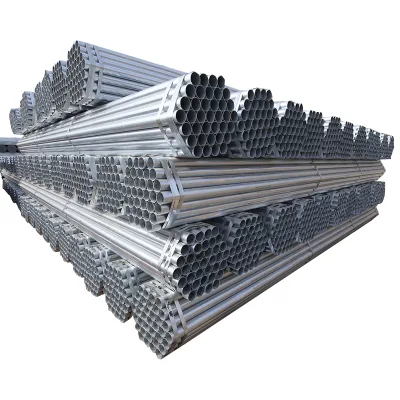
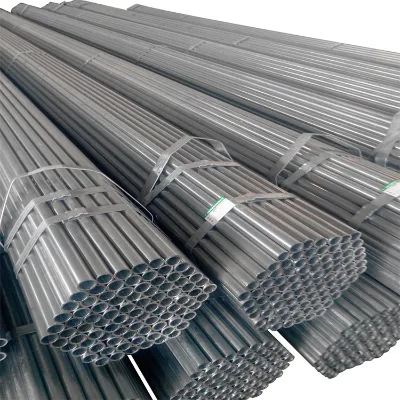
Listings mention bundling, hexagonal bundles, PVC packing, and export packages as common options. Bundled packing protects long pipes in containers, while PVC wrapping adds surface protection for higher-grade finishes. Confirm bundle weight limits, container loading quantities for your chosen lengths, and whether end caps or slings are included, since these details affect freight cost and damage risk.
Can Construction GI Pipe be customized for specific project requirements?
Yes, most listings state customization is available, covering size, length, zinc coating weight, and packing arrangements. One listing offers stock 6-meter lengths with made-to-order sizes, and another mentions coating weights that can be adjusted. Custom production may raise the MOQ and extend lead time, so agree on specifications, samples, and delivery dates before confirming the purchase order.