Organic Prenatal Fertility Gummies Suppliers and Manufacturers
Compare 28 verified suppliers offering Organic Prenatal Fertility Gummies with varying lead times, MOQs, and certifications like SGS and TüVRheinland. Review response times and ODM capabilities to select a partner, then request samples for validation; review the available evidence before requesting comparable quotations from suitable candidates.
Suppliers List

Miteyo(Shenzhen)BiotechnologyCo.,Ltd.
- Verified by SGS
- Trading Company
- China Guangdong
- Lead time15 days
- Avg. response≤ 3h
Main productsNutrition, Hesupplementrbal, Sports Nutrition, Gummies, Capsules, Tablets, Powder, Softgels, Drops
Main marketsDomestic
- Verified by TüVRheinland
- Trading Company
- Lead time3 days
- Avg. response≤ 6h
Main productsHealth Food, Dietary Supplement
Main marketsNorth America(70%), Africa(10%), Northern Europe(10%)
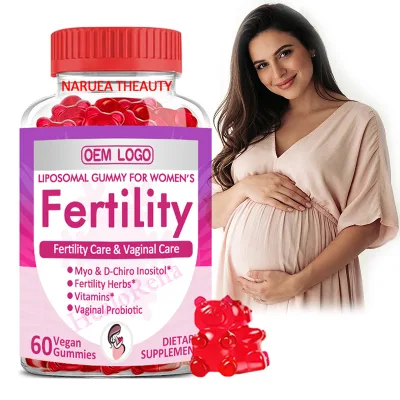
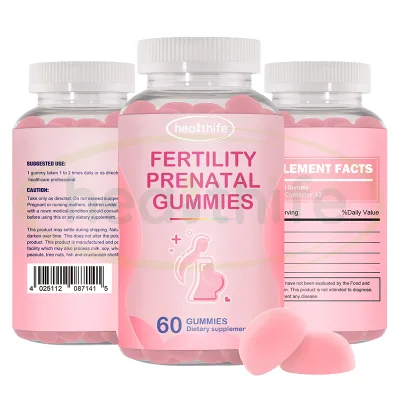
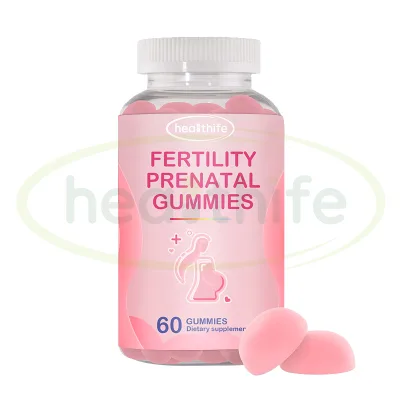
Fertility Multivitamin Gummy Supplement Vitamin Gummy Prenatal Fertility Gummies
$1.95 - $2.20
MOQ: 10
- Manufacturer, Trading Company
- Lead time旺季: "1 - 50000":4,"50001 - 100000":5,"> 100000":"To be negotiated", 淡季: "1 - 50000":4,"50001 - 100000":5,"> 100000":"To be negotiated"
- Avg. response≤ 4h
Main productsNervonic Acid, Spermidine, Herbal Extract Supplement, Beef Organ Capsules, Mushroom Capsules

Shenzhen Come Health Biotechnology Co.,Ltd
- Verified by BV
- Manufacturer/Factory
- China Guangdong
- Lead time23 days
- Avg. response≤ 1h
Main productsGummies, Capsule, Liquid Drops, Instant Coffee, Electrolyte Powder, Sofe Capsule, Tablets, Caffine Pouches, Jelly, Gel
Main marketsSouth America,Eastern Europe,Mid East,North America,Southeast Asia,Eastern Asia,Oceania,Western Europe,Africa

OEM Health Supplements Prenatal Multivitamin Fertility Support Preconception Gummies
$2.90 - $3.50
MOQ: 500 Pieces

OEM Prenatal Supplement Fertility Support Multivitamin Women Fertility Gummies
$2.90 - $3.50
MOQ: 500 Pieces

OEM Prenatal Supplement Fertility Support Multivitamin Women Fertility Sweets Gummies
$2.90 - $3.50
MOQ: 500 Pieces

OEM Food Supplement Hormone Balance Promote Woman Health Fertility Gummies
$2.90 - $3.50
MOQ: 500 Pieces

OEM Fertility Supplyment Reduce Women Fertility Prenatal Multivitamins Folate Acid Gummies
$2.90 - $3.50
MOQ: 500 Pieces

OEM Private Label Women Fertility Supplement Multivitamin Folic Acid Prenatal Gummies
$2.90 - $3.50
MOQ: 500 Pieces
U Life (Zhengzhou) International E-Commerce Co., Ltd.
- Verified by Intertek
- Trading Company
- Lead time7 days
- Avg. response≤ 2h
Main productsElectrolyte Powder, Creatine Gummies, Collagen Gummies, Protein Powder, Vitamin Tablets
Main marketsNorth America(40%), Western Europe(15%), Africa(15%)
Shaanxi Anzhi Youchong Nutrition Technology Co., Ltd.
- Trading Company
- Shaanxi, China
- Lead time3 days
- Avg. response≤ 3h
Main productsOlive Leaf Extract,Aloe Vera Extract,Spermidine,Nervonic Acid,Dihydroquercetin
Main marketsNorthern Europe(30.00%), North America(30.00%), Southern Europe(20.00%), Africa(20.00%)

Guangzhou Shengmei Pharmaceutical Industry Co., Ltd
- Verified by SGS
- Combined
- China Guangdong
- Lead time15 days
- Avg. response≤ 4h
Main productsGummies, Drink, Capsule, Jelly, Oral Film
Main marketsDomestic,Europe,North America

Multivitamin Prenatal Gummies Folic Acid Gummies Fertility Prenatal Supplements
$0.02 - $0.08
MOQ: 50000 Pieces


Wholesale Folic Acid Gummies Fertility Prenatal Supplements Vitamin B6 Gummy
$0.02 - $0.08
MOQ: 50000 Pieces

Shanghai Duolaian Health Management Co., Ltd.
- Verified by SGS Group
- Manufacturer, Trading Company
- Lead time15 days
- Avg. response≤ 3h
Main productsCollagen Gummies, Kidney Cleaning Tablet, Skin Whitening Gummies, Slim Green Coffee, Slimming Tea
Main marketsAfrica(25%), North America(18%), South America(8%)

Xi'an ECO Biotech Factory Co., Ltd.
- Verified by SGS
- Combined
- China Shaanxi
- Lead time15 days
- Avg. response≤ 2h
Main productsGummy, Healthcare Product, Vitamins, Amino Acid, Nutrition Supplements, Softgels Capsules, Drops, Solid Drink, OEM/ODM, Cosmetic Raw
Main marketsNorth America


Ausreson OEM Health Supplements Prenatal Multivitamins Fertility Gummies for Women
$1.25 - $3.80
MOQ: 100


Ausreson OEM Food Supplement Balances Hormone Promote Woman Health Fertility Gummies
$1.25 - $3.80
MOQ: 100


Guangzhou Jianzhijia Health Food Co., Ltd
- Verified by SGS Group
- Manufacturer, Trading Company
- Lead time0 days
Main productsPill, Capsule, Softgel, Oral Solution, Solid beverage
Main marketsNorth America(55%), Africa(15%), Western Europe(8%)

Xi'an International Healthcare Factory Co., Ltd.
- Verified by BV
- Trading Company
- China Shaanxi
- Lead time0 days
- Avg. response≤ 2h
Main productsVeterinary Drugs, Human Apis, Healthcare Products, Vitamins, Amino Acid, Nutrition Supplements, Softgels Capsules, Human Medicine, Daily Chemical, Gummy
- Verified by Intertek
- Trading Company
- Lead time10 days
- Avg. response≤ 1h
Main productsHealthcare Products, Plant Extract, Vitamins Amino Acid, Cosmetics Raw Materials, Nutrition Supplements
Main marketsNorth America(40%), South America(10%), Eastern Europe(10%)
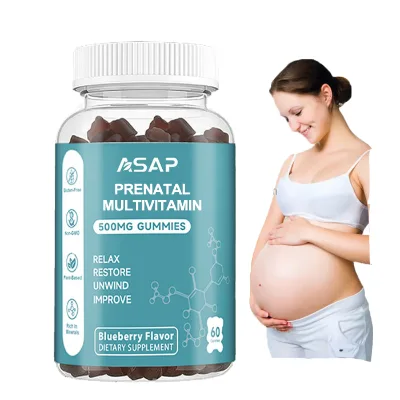
Private Label Best Prenatal Vitamins Multivitamin Gummy Fertility Supplements Halal Prenatal Gummies
$2.24 - $3.86
MOQ: 100 Minimum
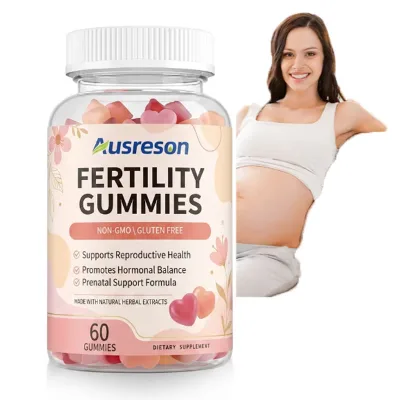
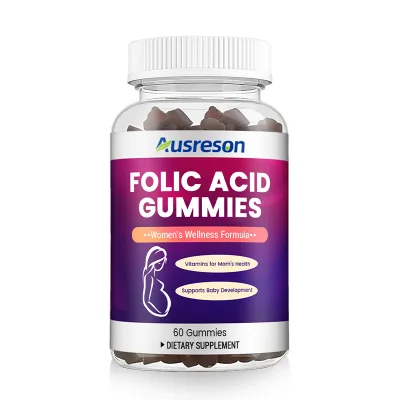

Xi'an Henrikang Biotech Co., Ltd.
- Verified by SGS
- Trading Company
- China Shaanxi
- Lead time15 days
- Avg. response≤ 2h
Main productsHealthcare Product, Human API, Vitamins, Veterinary Medicine, Cosmetic Raw Materials, Plant Extract, Nootropics, Peptides, Amino Acid, Nutritional Supplements
Main marketsAfrica,East Asia(Japan/ South Korea)

Ausreson OEM Fertility Support Health Supplement DHA and Minerals Prenatal Multivitamin Gummies
$1.25 - $3.80
MOQ: 100 box


Ausreson OEM Organic Supplements Aid Ovulation Prenatal Folic Acid Multivitamins Fertility Gummies
$2.32 - $2.65
MOQ: 100 box

Ausreson Private Label Supplements Vitamins Iron Vegan Beets Prenatal Gummies
$2.20 - $3.80
MOQ: 100 box

Zhengzhou Kunjing Trading Co., Ltd.
- Verified by Intertek
- Trading Company
- Lead time0 days
- Avg. response≤ 1h
Main productsGummy, Tablets, Pre-packed Food
Main marketsNorth America(40%), Western Europe(30%), Southeast Asia(20%)
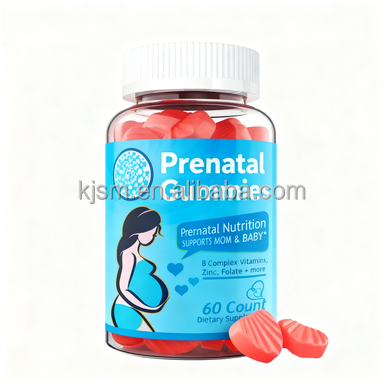
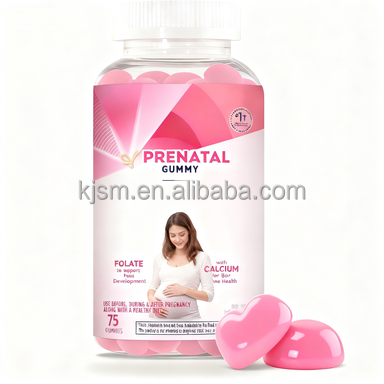
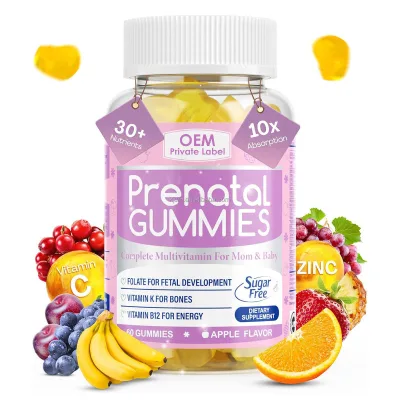
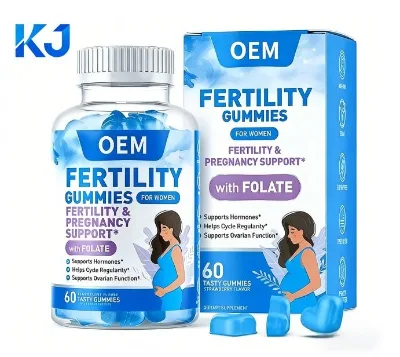
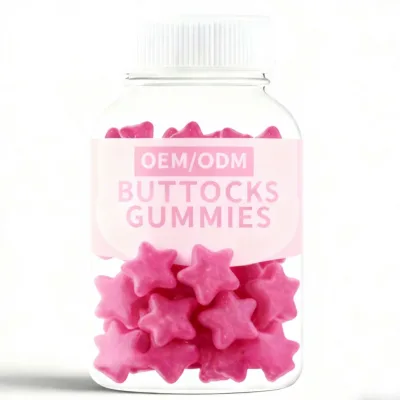
$2.16 - $2.77
MOQ: 100 units
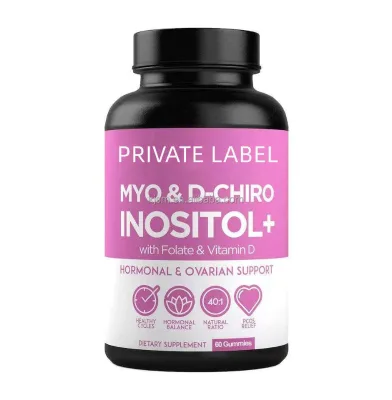
OEM/ODM Myo-Inositol & D-Chiro Inositol Gummies - Hormonal Balance, Fertility & Menstrual Support
$1.68 - $3.12
MOQ: 50 units
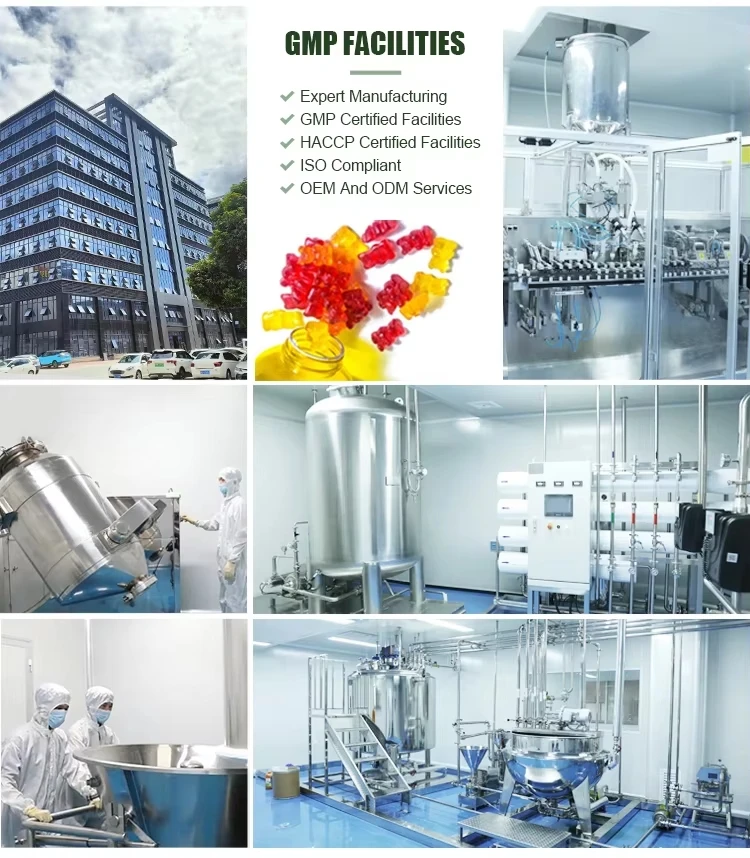
Healorena Dietary Supplement Factory
- Trading Company
- Shaanxi, China
- Lead time5 days
- Avg. response≤ 10h
Main productsDietary Supplement,Herbal Supplement,Capsules,Tablets,Liquid
Main marketsNorth America(80.00%), Africa(10.00%), Western Europe(5.00%), Southeast Asia(5.00%)

Hubei Wansongtang Health Pharmaceutical Group Co., Ltd.
- Verified by BV
- Group Corporation
- China Hubei
- Lead time15 days
- Avg. response≤ 8h
Main productsSlimming Tea, Health Care Tea, Slimming Drink, Dietary Supplements, Slim Green Coffee, Powder, Gummies, Capsule, Tablet, Soft-Gel
Main marketsAfrica,Europe,North America

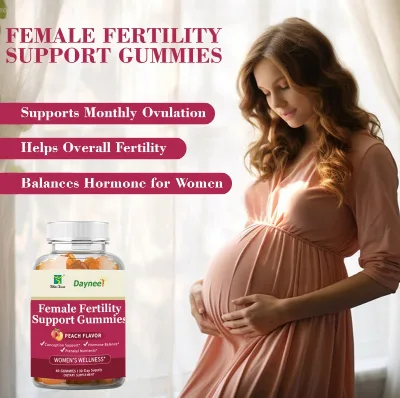
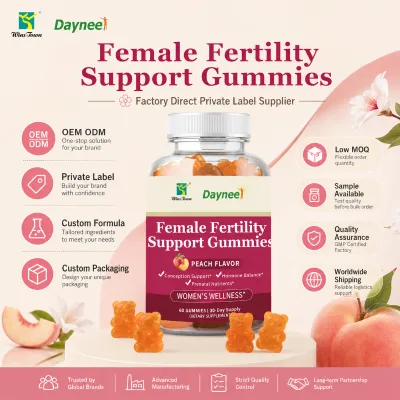
Female Fertility Support Gummies Conception Aid Hormone Balance Prenatal Nutrients
$1.60 - $2.30
MOQ: 100 Bottle

Natural Female Fertility Support Gummies for Women's Wellness Nutrition Care
$1.60 - $2.30
MOQ: 100 Bottle

Peach-Flavored Fertility Support Gummies for Female Preconception Health
$1.60 - $2.40
MOQ: 100 Bottle
Xi'an Heiner Supplement Co., Ltd.
- Verified by Intertek
- Manufacturer, Trading Company
- Lead time10 days
- Avg. response≤ 2h
Main productsCompound Whitening Powder, Compound Anti-wrinkle Powder, Healthcare Products, Herbal Extract, Solid Drink
Main marketsNorth America(30%), Southeast Asia(20%), South America(10%)
Anhui Oneheall Technology Industry Co., LTD
- Manufacturer, Trading Company
- Anhui, China
- Lead time旺季: "1 - 10000":20,"> 10000":"To be negotiated", 淡季: "1 - 10000":20,"> 10000":"To be negotiated"
- Avg. response≤ 2h
Main productsGummy, Liquid, Powder
Main marketsNorth America(25.00%), Eastern Europe(20.00%), South America(12.00%), Southern Europe(10.00%), Northern Europe(10.00%), Western Europe(10.00%), Southeast Asia(5.00%), Eastern Asia(2.00%), South Asia(2.00%), Mid East(2.00%), Africa(2.00%)

Dunkang Biotechnology Co., Ltd.
- Verified by SGS
- Manufacturer/Factory
- China Guangdong
- Lead time23 days
- Avg. response≤ 6h
Main productsCapsules, Gummies, Softgel, Powder, Drink, Jelly, Weight Loss, Probiotic, Tablets
Main marketsSouth America,Eastern Europe,Mid East,North America,Southeast Asia,Eastern Asia,Oceania,Western Europe,Africa


Inositol Vitamins Folate Prenatal Fertility Gummies Support Healthy Pregnancy
$2.55 - $3.10
MOQ: 500 Pieces
Zhengzhou Jiannuo Biotechnology Co., Ltd.
- Verified by Intertek
- Trading Company
- Lead time15 days
- Avg. response≤ 2h
Main productsMonohydrate Creatine Gummies, Electrolyte Powder, Fish Oil Softgel Capsules, Collagen Drink, Shilajit Resin

OEM Male 60-Gummy Gummies Maca Root for Men Women Fertility-aiding Gummies
$1.75 - $2.50
MOQ: 100 pieces
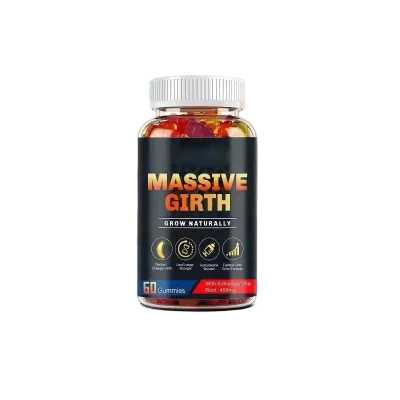
Fertility-aiding Gummies Maca Extract Gummies and Ashwagandha Gummies Adult Supplements
$1.62 - $2.25
MOQ: 100 pieces
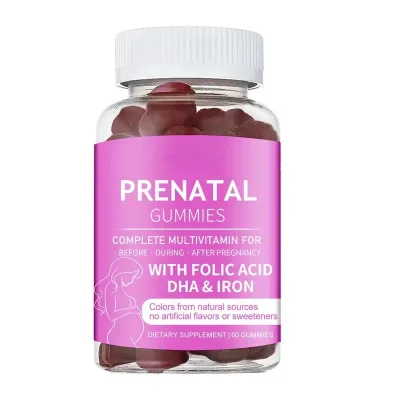
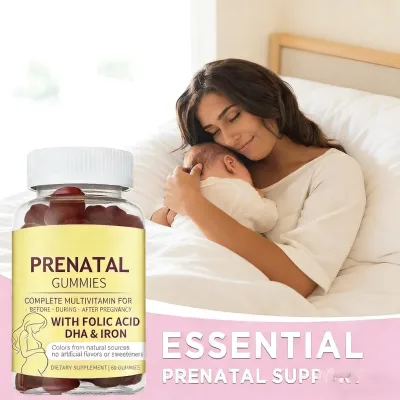
$1.85 - $2.52
MOQ: 100 pieces
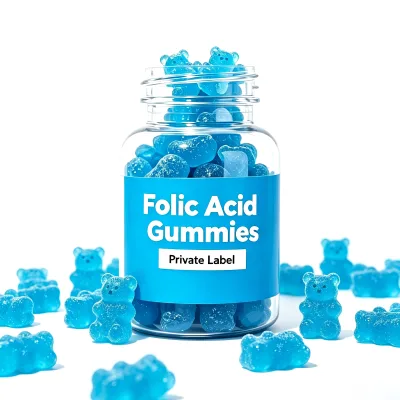
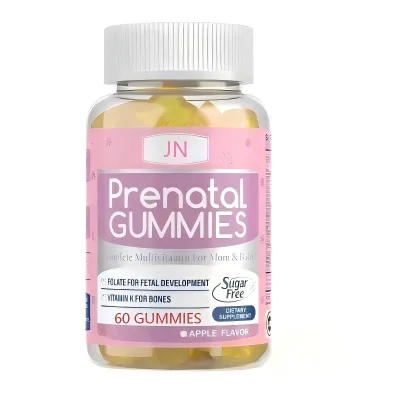

Henan Tangbainian Health Management Co., Ltd.
- Verified by SGS
- Combined
- China Henan
- Lead time15 days
- Avg. response≤ 2h
Main productsHealth Food Candy Gummy Tablet Candy Softgel
Main marketsDomestic

OEM ODM Supplements Prenatal Multivitamin Fertility Support Probiotic Gummy Fertility Gummies
$1.20 - $2.30
MOQ: 500 Boxes

OEM ODM Fertility Supplements Natural Ashwagandha Folate Multivitamin Fertility Gummies
$1.20 - $2.30
MOQ: 500 Boxes


Guangzhou Jiabei Health Biotechnology Co., Ltd.
- Verified by Intertek
- Manufacturer, Trading Company
- Lead time0 days
- Avg. response≤ 2h
Main productsGummies, Other Drinks, Plant Extract, Energy Drinks, Tablet
Main marketsNorth America(20%), South America(20%), Eastern Europe(15%)
Come Health Biotechnology Co., Ltd.
- Verified by Intertek
- Manufacturer, Trading Company
- Lead time15 days
- Avg. response≤ 3h
Main productsGummy, Capsule, Tea, Powdered Beverage Mix, Pigment
Main marketsNorth America(30%), Oceania(20%), Northern Europe(20%)

Guangzhou Boyida Biology Science And Technology Co., Ltd.
- Trading Company
- Guangdong, China
- Lead time15 days
- Avg. response≤ 3h
Main productsgummy,powder,softgel,health care product,oral drink
Main marketsSoutheast Asia(30.00%), North America(30.00%), South America(10.00%), Eastern Europe(5.00%), Mid East(2.00%)
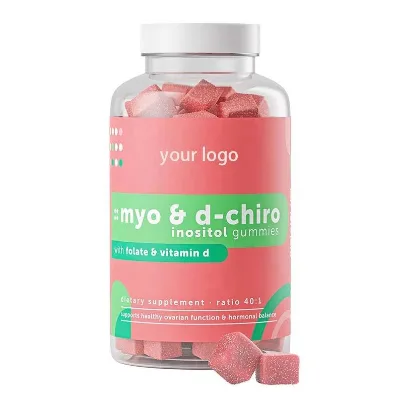
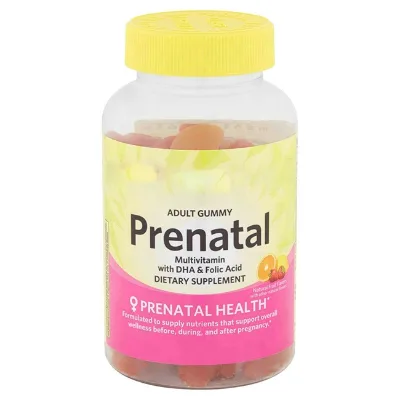
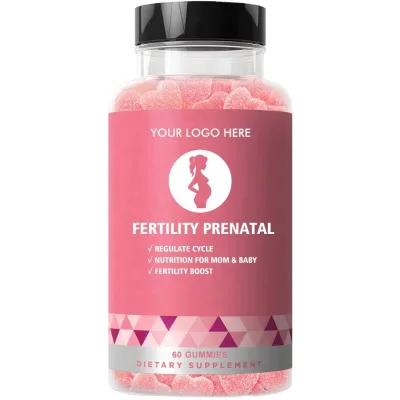
Fertility Multivitamin Folic Acid Prenatal Gummies With Vitamin K2 Methylated Folate Vitamin B6
$2.80 - $4.00
MOQ: 100 pieces
Jiabeikang (Guangzhou) Pharmaceutical Holdings Co., Ltd.
- Verified by TüVRheinland
- Trading Company
- Lead time15 days
- Avg. response≤ 2h
Main productsGummy, Capsules, Softgel, Tea Bag, Powder
Main marketsNorth America(30%), Southeast Asia(20%), Oceania(20%)

Xi'an Haoze Biotechnology Co., Ltd.
- Verified by BV
- Manufacturer/Factory
- China Shaanxi
- Lead time15 days
- Avg. response≤ 8h
Main productsNmn, Pharmaceutical Intermediates, Melatonin, Lidocaine, Coenzyme Q10, L-Carnitine, Plant Extract, Alpha Arbutin, Resveratrol, Quercetin
Main marketsSouth America,Eastern Europe,Mid East,North America,Southeast Asia,Eastern Asia,Oceania,Western Europe,Africa

Folic Acid Supplement for Female Fertility Prenatal Vitamin B9 Folic Acid Gummies
$1.80 - $3.50
MOQ: 100 bottle

Folic Acid Supplement for Female Fertility Folic Acid Gummy Vitamin B9 Folic Acid Gummies
$3.00 - $6.00
MOQ: 50 Bottle

Xi'an Plant Source biotech Co.,Ltd.
- Verified by SGS
- Manufacturer/Factory
- China Shaanxi
- Lead time15 days
- Avg. response≤ 4h
Main productsOEM Capsules, Fenbendazole, Plant Extract, Nmn, Linocaine HCl, Creatine Monohydrate, OEM Gummies, Peptide, Shilajit, Tongkat Ali Extract
Main marketsSouth America,Eastern Europe,Mid East,North America,Southeast Asia,Eastern Asia,Oceania,Western Europe,Africa

Shandong Shoucheng Biotechnology Co., Ltd
- Verified by TUVRHEINLAND
- Manufacturer/Factory
- China Shandong
- Lead time15 days
- Avg. response≤ 2h
Main productsChondroitin Sulfate, Glucosamine, Msm, Hyaluronic Acid, Dietary Supplement Tablets OEM, Dietary Supplement Capsule OEM, Dietary Supplement Softgel OEM, Dietary Supplement Gummies OEM
Main marketsSouth America,Eastern Europe,Mid East,North America,Southeast Asia,Eastern Asia,Oceania,Western Europe,Africa


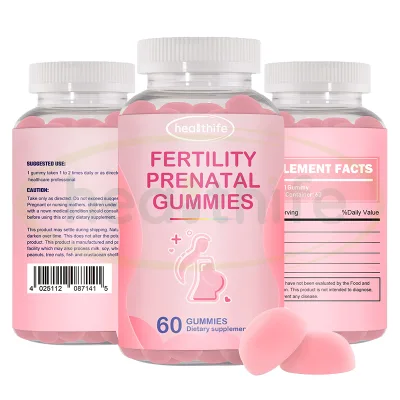

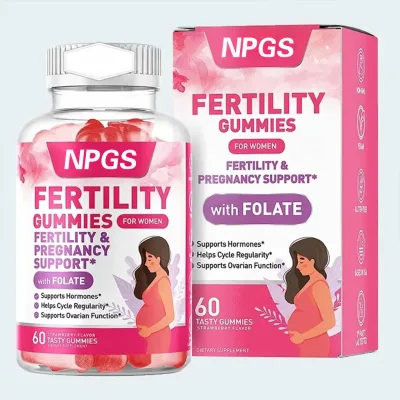
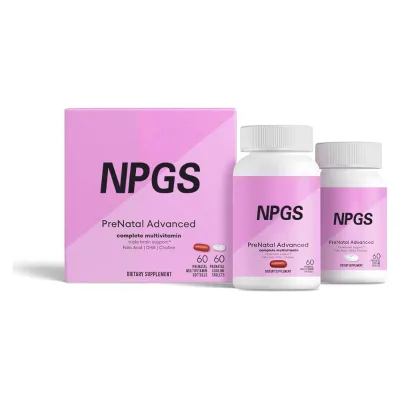


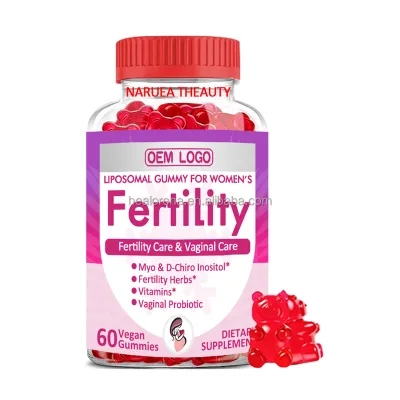

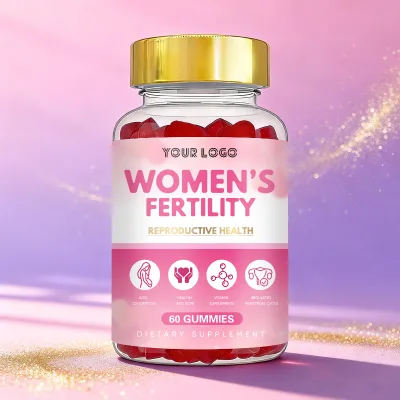
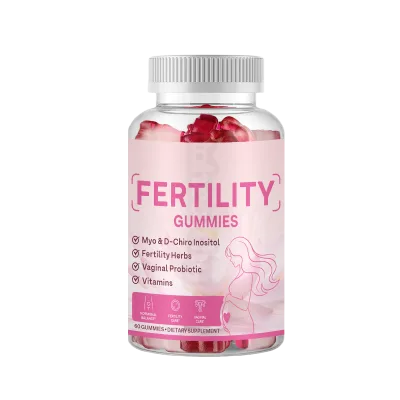
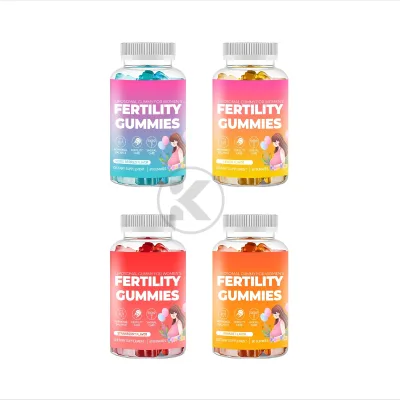
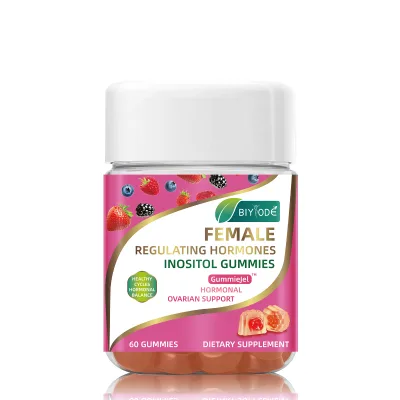
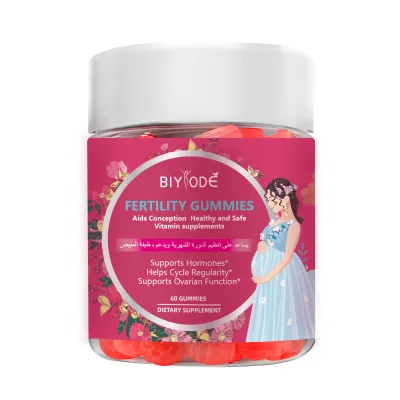
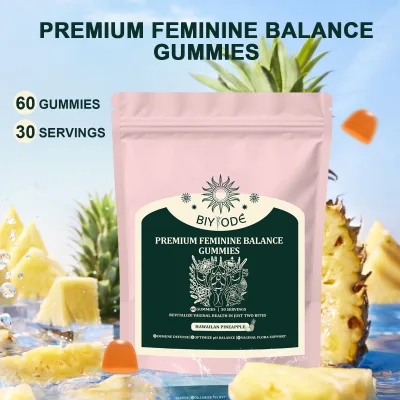
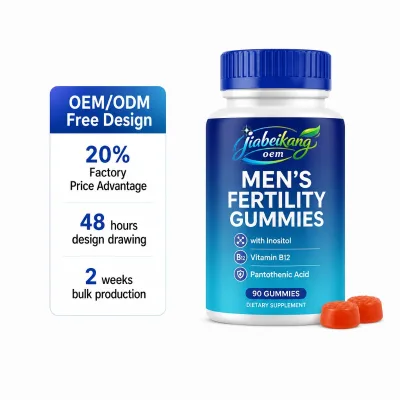


Comprehensive Sourcing Guide
Organic Prenatal Fertility Gummies Supplier Concentration and Factory Types
Current data indicates a concentration of suppliers in China, specifically within the Guangdong province, which serves as a primary manufacturing hub for these specialized supplements. The available results show that many entities operating in this region function as trading companies rather than direct manufacturers, offering a bridge between various production facilities and international buyers. These trading companies often aggregate products from multiple factories, providing a wider range of options including gummies, capsules, and tablets tailored for fertility support. The presence of ODM and OEM capabilities suggests that these entities can facilitate custom formulation and private labeling, which is critical for brands seeking unique organic prenatal solutions.
Buyers must distinguish between trading companies and actual production facilities when evaluating the supply chain for Organic Prenatal Fertility Gummies. While some suppliers list specific manufacturing capacities like graphic processing and sample handling, others may rely on third-party partners for the actual production of the gummy candies. The main products listed often include a broad spectrum of health supplements, indicating that a single supplier might not specialize exclusively in prenatal fertility gummies. It is essential to verify whether the supplier has direct control over the production line or if they act as an intermediary. This distinction impacts the ability to enforce strict quality controls and organic certification standards required for this sensitive product category.
How to Verify Organic Prenatal Fertility Gummies Suppliers
Verification of suppliers for Organic Prenatal Fertility Gummies requires a rigorous check of their stated credentials and third-party audit results. The current dataset highlights specific verification bodies such as SGS and TÜV Rheinland, which serve as indicators of a supplier's commitment to quality and compliance. Buyers should prioritize suppliers who have undergone these external audits, as they provide an independent assessment of the company's operational standards. Additionally, the presence of system certifications like IATA DGR suggests that the supplier is capable of handling the logistics of shipping hazardous or regulated materials, which is relevant for certain supplement ingredients.
Beyond general verification, buyers must scrutinize specific product certifications such as QS, HACCP, GMP, and ISO, which are explicitly mentioned in the product attributes of some listings. These standards are crucial for ensuring that the organic prenatal gummies are produced in a hygienic environment and meet safety requirements. The absence of these certifications in a supplier's profile should trigger a request for documentation before proceeding with any order. Furthermore, the response time of a supplier, which varies from approximately two hours to six hours in the observed data, can serve as a proxy for their operational efficiency and customer service readiness. A slow response time may indicate a lack of dedicated support for international buyers, potentially complicating the verification process for complex organic claims.
What to Compare Across Organic Prenatal Fertility Gummies Suppliers
When comparing suppliers, the minimum order quantity (MOQ) is a primary differentiator that significantly impacts procurement strategy. The observed data reveals a wide disparity in MOQs, ranging from as low as ten pieces to five hundred bottles, depending on the specific product and supplier configuration. This variation allows buyers to select partners that align with their inventory capacity and financial constraints, whether they are launching a new brand or restocking existing lines. Buyers should also compare the price ranges, which in the current results span from approximately $1.95 to $3.50 per unit, to ensure the selected supplier offers a competitive margin while maintaining quality standards.
Lead time and response speed are equally critical dimensions for comparison, as they directly influence supply chain reliability and time-to-market. Some suppliers demonstrate a lead time of just three days, while others may require fifteen days or more for production and delivery. This difference can be decisive for buyers operating under tight deadlines or those needing to respond quickly to market trends. Additionally, the availability of customization services, such as private labeling and custom formulations, varies among suppliers. Buyers must assess whether a supplier can accommodate specific requests for ingredient sourcing, such as organic maca root or ashwagandha, and whether they offer the necessary flexibility in packaging and branding to meet their unique market requirements.
Common Organic Prenatal Fertility Gummies Sourcing Risks
One significant risk in sourcing Organic Prenatal Fertility Gummies is the potential mismatch between claimed organic status and actual production practices. While some product attributes list features like "Organic" and "Natural," buyers must verify these claims through independent testing and certification documents rather than relying solely on supplier descriptions. The presence of keywords like "Private Label" and "Custom Made" does not guarantee that the underlying ingredients meet organic standards, especially if the supplier is a trading company without direct oversight of the raw material sourcing. This disconnect can lead to compliance issues in target markets where organic labeling is strictly regulated.
Another critical risk involves the variability in shelf life and storage requirements, which can affect product integrity during transit and storage. The data shows shelf life claims ranging from over twelve months to twenty-four months, but these figures depend heavily on the specific formulation and packaging used. If a supplier does not provide clear storage instructions, such as keeping the product in a cool, dry area, the gummies may degrade before reaching the end consumer. Furthermore, the lack of standardized dosage forms or specifications across different suppliers can lead to confusion and potential regulatory non-compliance. Buyers must ensure that the supplier provides consistent product specifications and that the final product matches the agreed-upon formula exactly.
Organic Prenatal Fertility Gummies Regional Sourcing and Logistics
The regional concentration of suppliers in China, particularly in Guangdong and Shaanxi provinces, offers logistical advantages but also presents specific challenges for international buyers. Suppliers in these regions often have established infrastructure for exporting health supplements, yet the distance can lead to longer transit times and higher shipping costs. Buyers should evaluate the supplier's experience with international shipping, including their ability to handle customs clearance and documentation for organic products. The presence of certifications like IATA DGR suggests that some suppliers are equipped to manage the complexities of shipping regulated goods, which is a vital consideration for prenatal supplements.
Logistics planning must also account for the specific packaging requirements of gummy products, which are often sensitive to temperature and humidity. The observed data indicates that packaging can range from single bottles to bulk cartons, and the choice of packaging can influence the overall shipping volume and cost. Buyers should verify that the supplier uses appropriate packaging materials to protect the gummies during transit, ensuring that the product arrives in optimal condition. Additionally, the location of the supplier impacts the lead time for sample processing and graphic design, which are often required for private label orders. Understanding the regional logistics capabilities of the supplier is essential for creating a realistic timeline for product delivery.
Organic Prenatal Fertility Gummies Commercial Terms and Order Planning
Commercial terms for Organic Prenatal Fertility Gummies vary significantly, with payment methods including T/T, PayPal, and Trade Assurance, each carrying different levels of risk and protection for the buyer. Buyers should prioritize suppliers who offer secure payment options like Trade Assurance, which provides a layer of financial protection in case the supplier fails to deliver as agreed. The minimum order quantities observed, ranging from ten pieces to five hundred bottles, also dictate the financial commitment required upfront. Buyers must calculate the total cost of ownership, including the unit price, shipping fees, and any potential tariffs, to ensure the order remains profitable.
Order planning for this category requires careful attention to the supplier's capacity for customization and their ability to meet specific deadlines. The data shows that some suppliers offer sample processing and graphic design services, which are essential for developing a unique brand identity. However, the lead times for these services can vary, and buyers must factor these into their overall production schedule. It is also important to verify the supplier's ability to handle large orders without compromising quality, especially when scaling up from a small initial order. Buyers should establish clear communication channels and set realistic expectations regarding production timelines to avoid delays that could disrupt their market launch strategy.
FAQs
Where are Organic Prenatal Fertility Gummies manufactured?
Manufacturers are located in China, specifically in Guangdong and Shaanxi provinces. Some facilities operate in Shenzhen while others are based in Shaanxi. Buyers should verify the specific origin of their chosen product batch to ensure it matches their regional requirements and logistics plans.
What is the minimum order quantity for these gummies?
Minimum order quantities vary significantly by supplier. Some vendors require 500 bottles per package, while others accept orders as low as 10 pieces. Buyers must check the specific MOQ listed for each product to determine if the supplier meets their volume needs before proceeding.
How long does it take to receive an order?
Lead times range from 3 days to 15 days depending on the supplier and order size. Some facilities offer rapid processing within three days, while others require up to two weeks for production and packaging. Buyers should confirm the exact lead time with the vendor before placing an order.
Are these supplements certified for safety and quality?
Many suppliers hold certifications such as QS, HACCP, GMP, and ISO. Some vendors are also verified by SGS or TÜV Rheinland. Buyers should request current certification documents to confirm that the manufacturing processes meet international safety standards and regulatory requirements for dietary supplements.
What is the price range for private label gummies?
Prices typically range from 1.95 to 3.50 per unit depending on specifications and order volume. Some products are priced at 2.00 while others reach 3.50. Buyers should compare unit costs against their budget and consider how volume discounts might affect the final price per bottle.
Can suppliers customize the formula and packaging?
Customization is available for many products including private labeling and specific ingredient formulations. Suppliers offer ODM and OEM services to create unique health care supplements. Buyers can request custom labels, flavors, and specifications like 600mg or 1000mg dosages to match their brand identity.
What is the shelf life of these prenatal gummies?
Shelf life generally ranges from 12 months to 24 months depending on the product type. Some gummies are guaranteed for over 12 months while others last up to 2 years. Buyers should store products in cool, dry areas to maintain quality and verify the expiration date on the packaging.
How quickly do suppliers respond to inquiries?
Response times vary between 2.14 hours and 6 hours for most suppliers. Some vendors reply within two hours while others take up to six hours. Buyers should expect a prompt response but should verify the current response time with the specific supplier to ensure timely communication.