Custom Logo Wood Menu Holder Suppliers and Manufacturers
Explore 29 verified options for Custom Logo Wood Menu Holder products from Shandong, China. Compare lead times, MOQs, sample times, and material types like paulownia or beech wood. Contact suppliers directly to request quotes and samples; review the available evidence before requesting comparable quotations from suitable candidates.
Updated
Suppliers List

Shandong Huiyang Industry Co., Ltd.
- Trading Company
- Shandong, China
- Lead time40 days
- Avg. response≤ 5h
Main productsWood Storage,Wooden Crate,Wooden Wall Shelf,Wooden Tray,Wooden Furniture
Main marketsWestern Europe(28.00%), Northern Europe(25.00%), North America(15.00%), Mid East(10.00%), Eastern Asia(7.00%), Eastern Europe(5.00%), Oceania(5.00%), Africa(3.00%), Domestic Market(2.00%)

- Manufacturer, Trading Company
- Zhejiang, China
- Lead time0 days
- Avg. response≤ 3h
Main productscocktail shaker,Barware Accessories,ice bucket,bar runner,bar tray
Main marketsEastern Europe(8.70%), Northern Europe(8.70%), Africa(8.60%), Mid East(8.30%), South America(7.70%), Southern Europe(7.70%), Oceania(7.50%), Eastern Asia(7.20%), North America(7.10%), South Asia(6.50%), Southeast Asia(5.90%), Western Europe(5.90%), Central America(5.50%), Domestic Market(4.70%)

LION PROMOTIONAL GIFT CO., LIMITED
- Verified by TUVRHEINLAND
- Trading Company
- China Zhejiang
- Lead time30 days
- Avg. response≤ 25h
Main productsPromotional Gifts, Giveaways, Advertising Gift, Premium Items, Publicity Material, Freebie Items, Marketing Gifts, Campaign Gifts, Promotional Products, China Gifts Supplier
Main marketsAfrica,Europe,North America

Kingskong Material Co., Ltd. (hangzhou)
- Manufacturer, Trading Company
- Zhejiang, China
- Lead time0 days
- Avg. response≤ 4h
Main productscocktail shaker,bar runner,Stainless Steel Bar Set,Barware Accessories,ice bucket
Main marketsNorth America(12.00%), Central America(8.00%), Oceania(8.00%), Western Europe(8.00%), Southeast Asia(8.00%), Southern Europe(8.00%), Northern Europe(8.00%), Africa(7.00%), South America(7.00%), South Asia(6.00%), Domestic Market(5.00%), Mid East(5.00%), Eastern Europe(5.00%), Eastern Asia(5.00%)

- Verified by TUVRHEINLAND
- Trading Company,Manufacturer/Factory
- China Shandong
- Lead time23 days
- Avg. response≤ 9h
Main productsFolding Table, Chiavari Chair, Beer Table, Louis Chair, Bentwood Chair, Cross Back Chair, Stainless Steel Chair, Bamboo Folding Table and Chair
Main marketsSouth America,Eastern Europe,Mid East,North America,Southeast Asia,Eastern Asia,Oceania,Western Europe,Africa


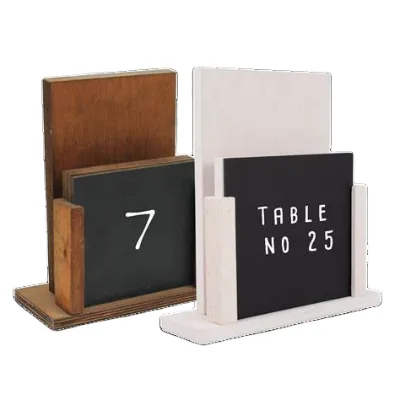
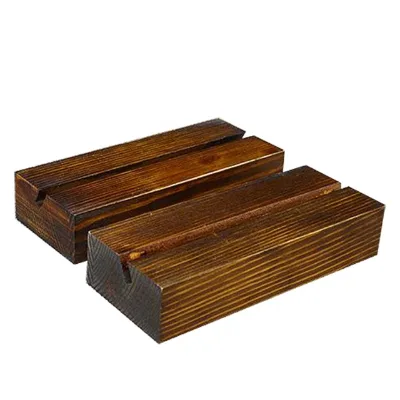
Wood Natural Color Display Menu Board Order Menu Holder with Straps for Restaurant
$0.70 - $1.70
MOQ: 300 Pieces


- Trading Company
- Shandong, China
- Lead time25 days
- Avg. response≤ 6h
Main productsWooden packaging boxes,wood tray,wood display stand,wood barrels,customized wooden items
Main marketsNorth America(38.00%), Western Europe(25.00%), Northern Europe(10.00%), Southern Europe(7.00%), Southeast Asia(5.00%), Eastern Asia(3.00%), Central America(2.00%), South America(2.00%), Domestic Market(2.00%), Mid East(2.00%), Oceania(1.00%), South Asia(1.00%), Africa(1.00%), Eastern Europe(1.00%)
Cao County Huiy Arts & Crafts Factory
- Verified by SGS Group
- Manufacturer, Trading Company
- Lead time30 days
- Avg. response≤ 3h
Main productsWooden Box, Wooden Decoration, Bird House, Wood Craft, Wood Homeware
Main marketsNorth America(22%), Western Europe(18%), Eastern Asia(16%)
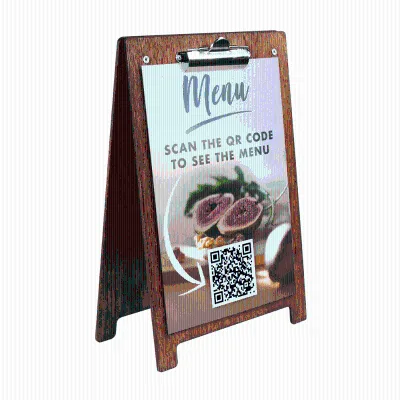
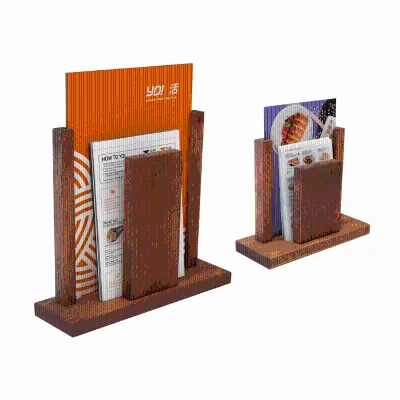
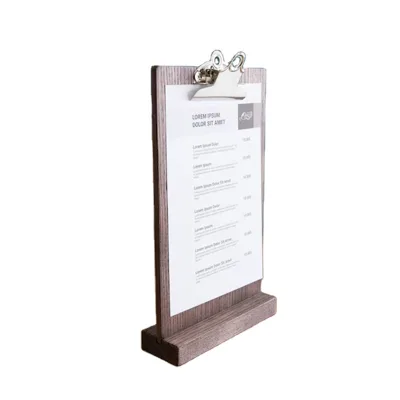
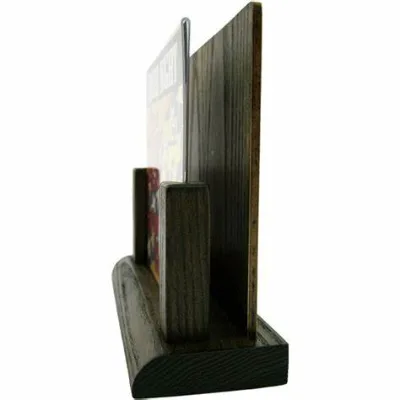
Custom Restaurant Table Top Sign Wood Holder Menu Covers Display Wooden Menu Holder Stand
$2.2081 - $3.3278
MOQ: 500 sets
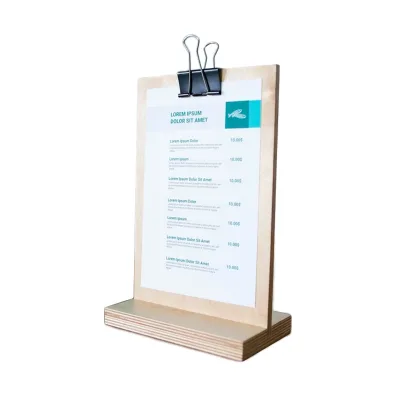
Shop Wooden Reserved Sign Clipboard Holder Restaurant Table Tent Menu Holder with Binder for Wedding
$1.00 - $1.20
MOQ: 200 sets
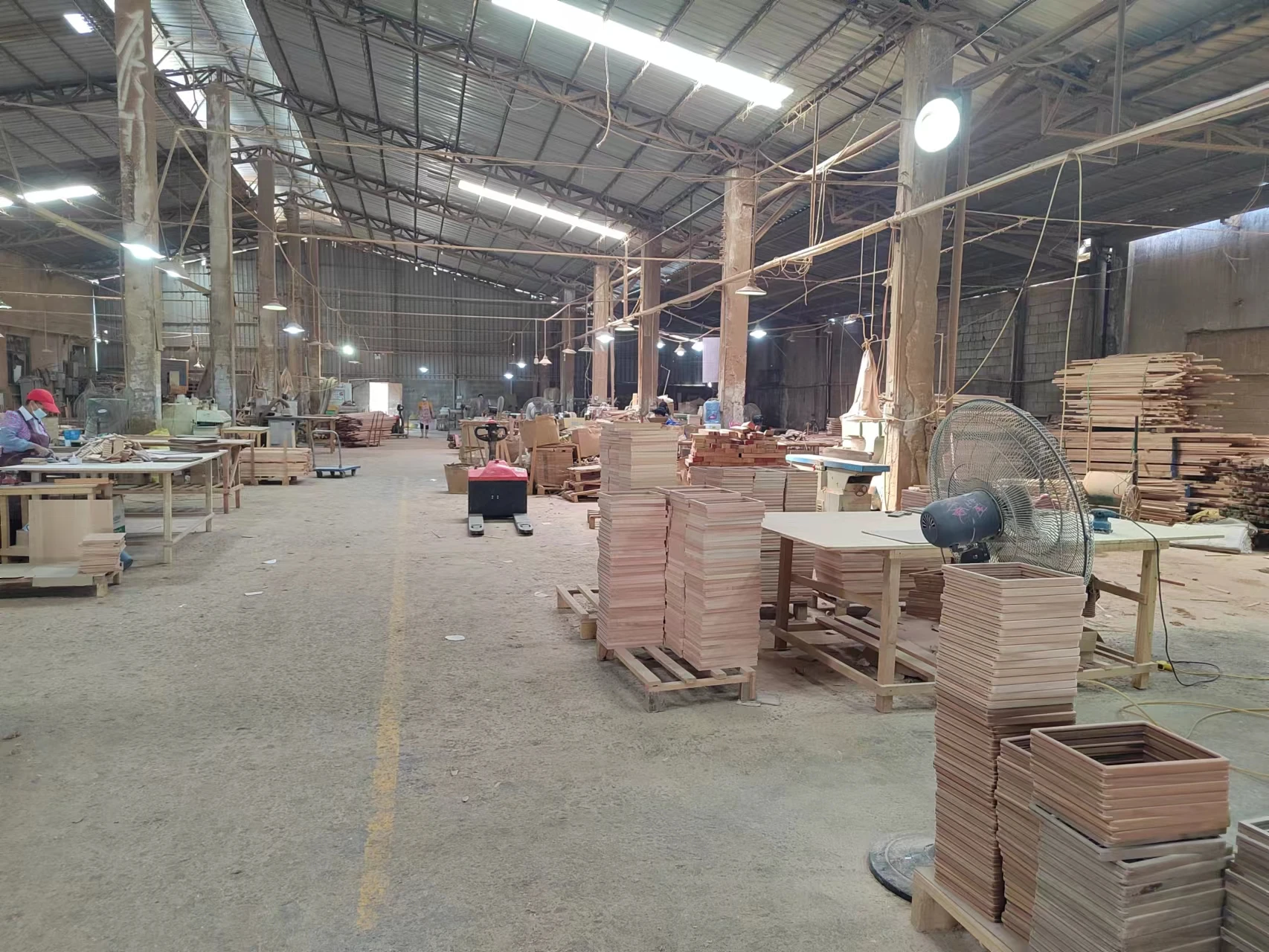
Dongguan Galaxy Wood Crafts Co., Ltd.
- Manufacturer, Trading Company
- Guangdong, China
- Lead time0 days
- Avg. response≤ 3h
Main productswood crafts,wood kitchen item,wood blocks,wooden dice,wooden cut out
Main marketsWestern Europe(20.00%), North America(16.00%), Eastern Europe(13.00%), Southern Europe(10.00%), Northern Europe(10.00%), Central America(5.00%), South America(5.00%), Eastern Asia(5.00%), Mid East(5.00%), Southeast Asia(5.00%), South Asia(2.00%), Africa(2.00%), Oceania(2.00%)
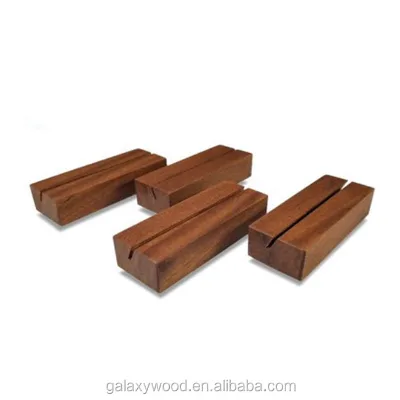
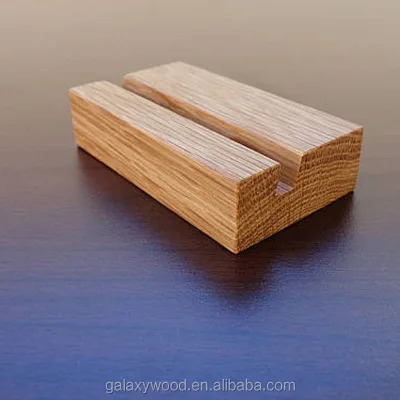
High Quality Various Size Natural Restaurant Menu Custom Oak Wood Wooden Table Holder
$1.3159 - $1.5239
MOQ: 500 pieces

- Verified by SGS
- Manufacturer/Factory
- China Zhejiang
- Lead time38 days
- Avg. response≤ 6h
Main productsBar Mat, Ice Bucket, Cocktail Shaker, Barware, Jigger, Mug, Ss Cup, Bar Spoon, Strainer, Muddler
Main marketsSouth America,Eastern Europe,Mid East,North America,Southeast Asia,Eastern Asia,Oceania,Western Europe,Africa

$0.72 - $1.08
MOQ: 500 Pieces

A1 A2 A3 A4 A5 A6 Pine Beech Desktop Menu Holder with Acrylic Board Restaurant Tabletop Menu Holder
$0.72 - $1.08
MOQ: 500 Pieces

$0.72 - $1.08
MOQ: 500 Pieces

$0.72 - $1.08
MOQ: 500 Pieces
Foshan Kylin Trading Company Limited.
- Trading Company
- Guangdong, China
- Lead time30 days
- Avg. response≤ 2h
Main productsnapkin dispenser,bottle opener,ice bucket,tray,can carrier
Main marketsWestern Europe(30.00%), Southern Europe(10.00%), Mid East(10.00%), Eastern Europe(8.00%), Africa(7.00%), North America(5.00%), Northern Europe(5.00%), South America(5.00%), Central America(5.00%), Eastern Asia(4.00%), South Asia(4.00%), Southeast Asia(3.00%), Domestic Market(2.00%), Oceania(2.00%)

Xiamen Le Young Imp. & Exp. Co., Ltd
- Verified by BV
- Trading Company,Manufacturer/Factory
- China Fujian
- Lead time23 days
- Avg. response≤ 4h
Main productsLeather Folder, Trave Wallet, Leather Notebook, Leather Compendium, Leather Portfolio, Leather Diary, Leather Journal, Hotel Supply, Leather Card Holder, Leather Wallet
Main marketsSouth America,Eastern Europe,Mid East,North America,Southeast Asia,Eastern Asia,Oceania,Western Europe,Africa

Customized Logo Leather Menu Holder Folder A4 Restaurant Food/Drink Menu Book Cover
$3.59 - $4.05
MOQ: 300 Pieces


Premium Leather Hotel Bar Wine List Menu Holder A4 Restaurant Menu Covers
$2.45 - $3.05
MOQ: 300 Pieces

PU Leather A4 Size Bill Menu Book Holder Custom Folder Menu Covers for Restaurants
$1.58 - $3.65
MOQ: 200 Pieces


Jiashan Vega Display Co., Ltd.
- Verified by SGS
- Trading Company
- China Zhejiang
- Lead time15 days
- Avg. response≤ 2h
Main productsData Strip, Plastic Divider, Candy Box, Plastic Pusher, Gravity Bin, Acrylic Table Holder, Sign Holder, Shelf Pusher, Label Tag, Food Dispenser
Main marketsSoutheast Asia/ Mideast

Custom Wholesale L Shape Clear Acrylic Display Stand Sign Holder Menu Holder
$1.63 - $1.75
MOQ: 1000 Pieces


Acrylic Clear Display Stand Business Card Holder Magazine Organizer Journals Menu Holder
$1.63 - $1.75
MOQ: 1000 Pieces


Caoxian Zhongyi Wooden Co.,Ltd
- Verified by BV
- Combined
- China Shandong
- Lead time30 days
- Avg. response≤ 14h
Main productsWoodwork
Main marketsEurope


FSC&BSCI Restaurants Hotels Stores Wooden Table Menu Display Stand Holder
$1.75 - $4.75
MOQ: 500 Pieces

Wooden Retail Sign Display Holder, Wedding Sign Holder Stand for Table, Menu Cover
$1.75 - $4.75
MOQ: 500 Pieces


Foshan Kylin Industry Company Limited
- Verified by TUVRHEINLAND
- Trading Company,Manufacturer/Factory
- China Guangdong
- Lead time90 days
- Avg. response≤ 6h
Main productsNapkin Dispenser, Bottle Opener, Ice Bucket, Blackboard, Menu Holder, Tray, Straw Dispenser, Toothpick Dispenser, Bottle&Can Carrier, Clock&Timer
Main marketsSouth America,Eastern Europe,Mid East,North America,Southeast Asia,Eastern Asia,Oceania,Western Europe,Africa

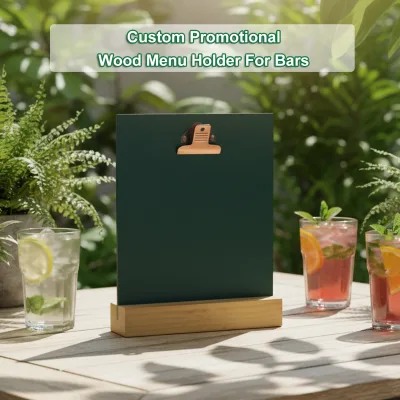
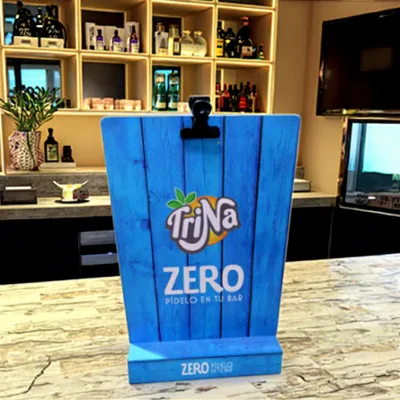
OEM Custom Factory Price Promotional Advertising Wood Menu Holder with Metal Clip
$3.80 - $4.60
MOQ: 500 Pieces

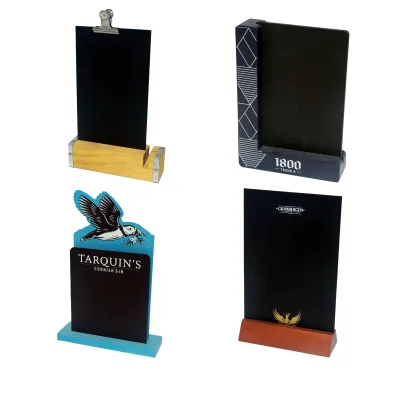
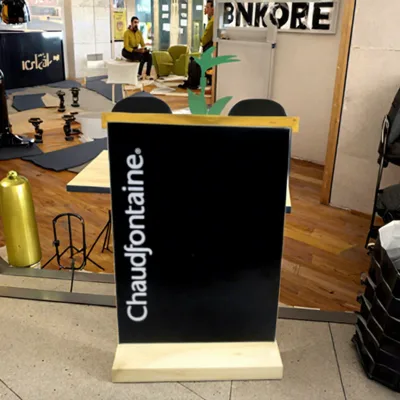
OEM Custom Factory Price A6 Size Wooden Table Stand Menu Holder with Chalk
$3.70 - $4.55
MOQ: 500 Pieces

Huizhou Yueniuniu Trading Co., Ltd.
- Trading Company
- Guangdong, China
- Lead time15 days
- Avg. response≤ 2h
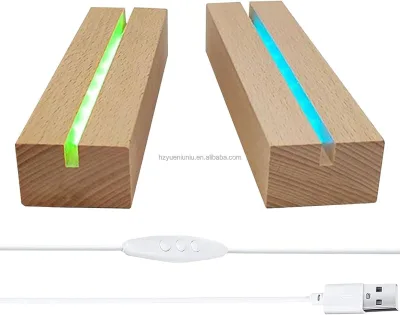
Main productswood base,wood night light,Wooden coaster,wooden stick,Wooden toys
Main marketsEastern Europe(20.00%), Southern Europe(20.00%), Western Europe(20.00%), Central America(15.00%), Oceania(10.00%), North America(10.00%), Eastern Asia(5.00%)
Shandong Junji Trading Co., Ltd.
- Verified by SGS Group
- Manufacturer, Trading Company
- Lead time15 days
- Avg. response≤ 2h
Main productsWood Crafts, Home Decor, Home Storage , Wall Shelf, Pet Product
Main marketsNorth America(25%), South America(15%), Western Europe(12%)
Caoxian Keyu Arts & Crafts Factory
- Verified by SGS Group
- Manufacturer, Trading Company
- Lead time30 days
- Avg. response≤ 3h
Main productsWood Crafts, Wooden Boxes, & Wall Signs, Wooden & Bamboo Packaging, Wooden Home & Garden Products
Main marketsNorth America(45%), Domestic Market(30%), Western Europe(10%)
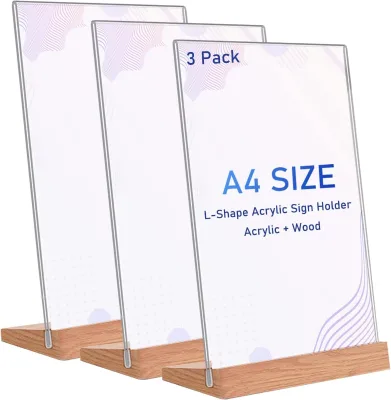
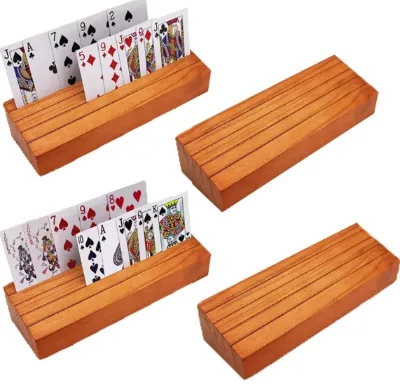
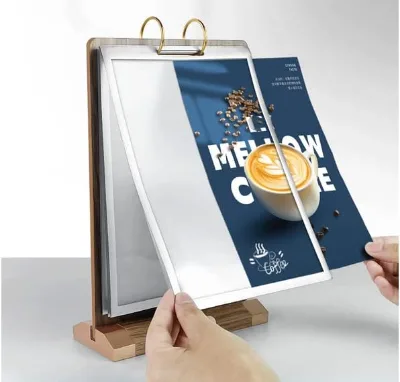
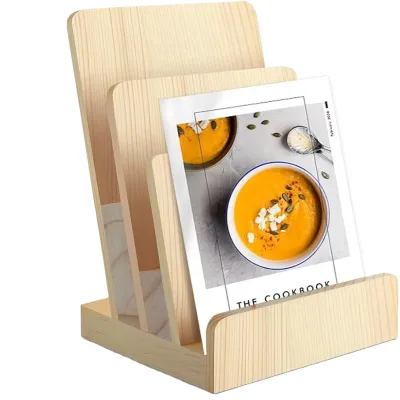
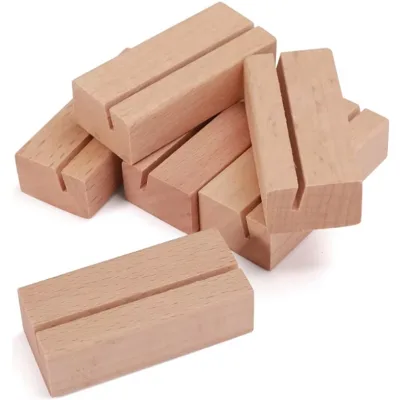
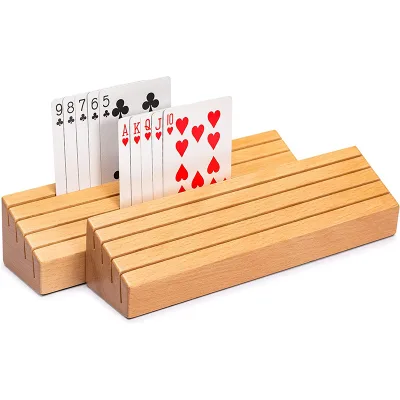
Factory Customize Wooden Menu Playing Cards Holder
$0.60 - $1.50
Shenzhen Pengyang Import And Export Co., Ltd.
- Manufacturer, Trading Company, Distributor/Wholesaler
- Guangdong, China
- Lead time0 days
- Avg. response≤ 5h
Main productsMenu Cover,Certificate Holder,home and out door products,office supplies,premium gifts
Main marketsNorth America(60.00%), Northern Europe(10.00%), Western Europe(10.00%), Africa(10.00%), South America(10.00%)

Heze Fengyuan Crafts Co., Ltd.
- Manufacturer, Trading Company
- Shandong, China
- Lead time30 days
- Avg. response≤ 1h
Main productswood box,wood tray,wood cutting board,bamboo tray,wood picture frames
Main marketsWestern Europe(20.00%), North America(20.00%), Northern Europe(10.00%), Central America(10.00%), Southern Europe(10.00%), Mid East(10.00%), Eastern Europe(10.00%), Domestic Market(5.00%), South America(5.00%)
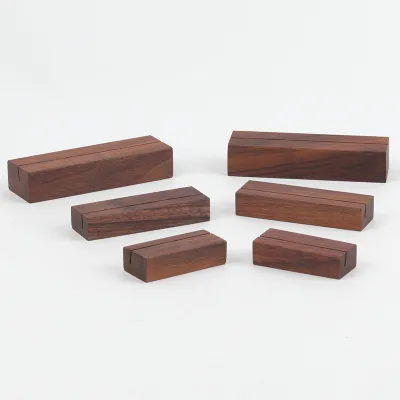
Wooden Name Card Holder Stand Mini Walnut Wood Table Menu Card Holder
$0.976 - $1.018
MOQ: 500 Minimum

- Trading Company,Manufacturer/Factory
- China Guangdong
- Lead time23 days
- Avg. response≤ 2h
Main productsAcrylic Display Stand, Acrylic Box, Acrylic Photo Frame, Acrylic Tray, Acrylic Makeup Organizer, Acrylic Menu Holder, Acrylic Award, Acrylic Case, Plexiglass Display, Plexiglass Shelf
Main marketsSouth America,Eastern Europe,Mid East,North America,Southeast Asia,Eastern Asia,Oceania,Western Europe,Africa

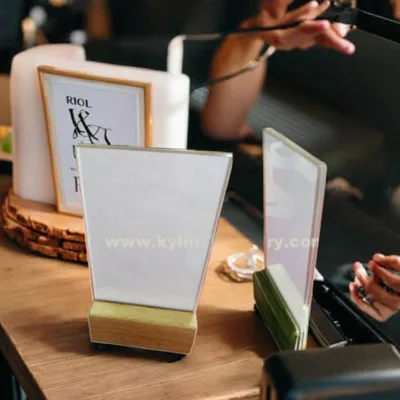
Acrylic Photo Display Frame Sign Holder Clear Menu Holder with Beech Wood Base
$1.36 - $3.58
MOQ: 100 Pieces

Custom Clear Luxury Acrylic Tabletop Menu Card Holder for Western Restaurant
$2.36 - $3.99
MOQ: 100 Pieces
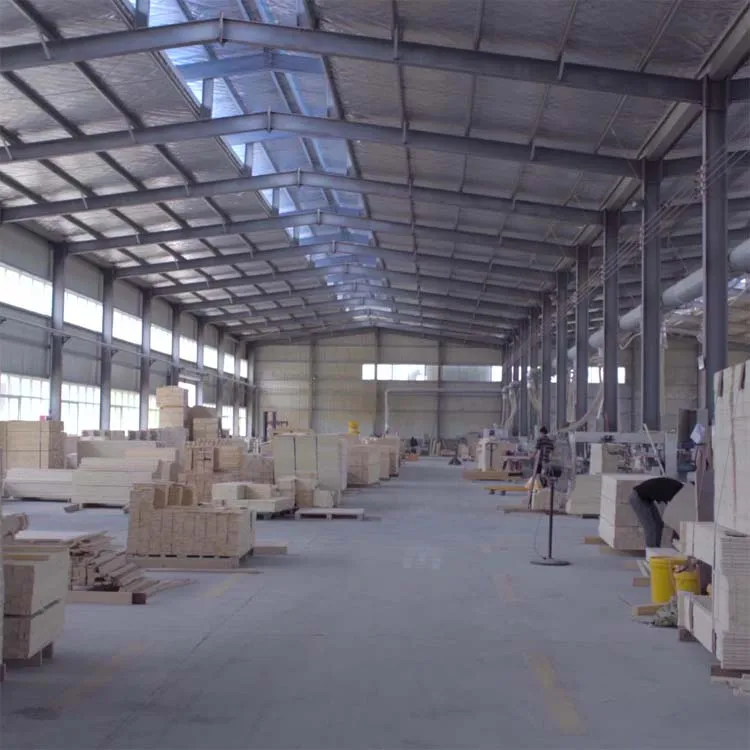
Caoxian Mingrui Crafts Factory
- Manufacturer, Trading Company
- Shandong, China
- Lead time0 days
- Avg. response≤ 6h
Main productsWooden bird house,Wooden packing box,Wooden scraping board,Wooden pendant,Wooden base
Main marketsNorth America(30.00%), Western Europe(20.00%), Domestic Market(18.00%), South America(10.00%), Oceania(8.00%), Africa(5.00%), Northern Europe(5.00%), Southeast Asia(2.00%), Eastern Asia(2.00%)
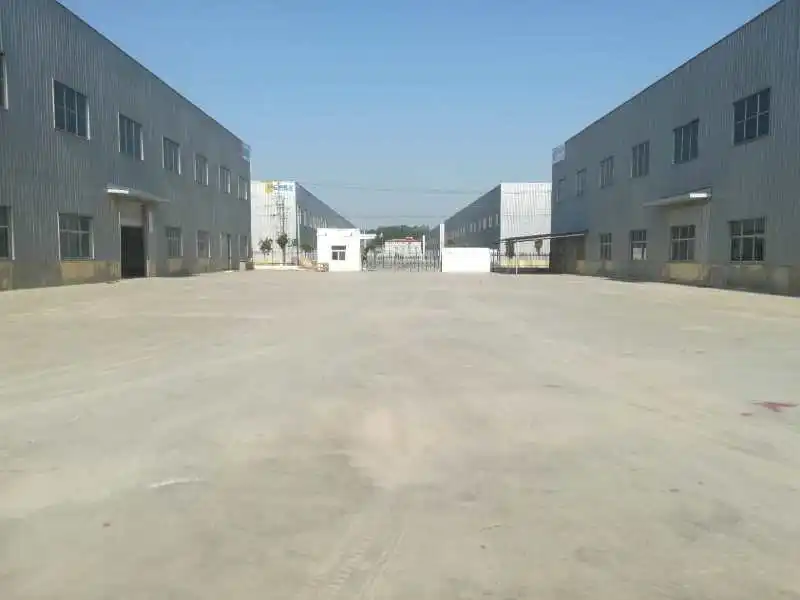
Cao County Dream Sun Furniture Co., Ltd.
- Manufacturer, Trading Company
- Shandong, China
- Lead time45 days
- Avg. response≤ 3h
Main productsWOODEN BOX,FURNITURE,WINE BARREL,Wall Storage Shelves,Kitchen&Bathroom Products
Main marketsDomestic Market(20.00%), Northern Europe(20.00%), Eastern Asia(10.00%), Mid East(10.00%), Western Europe(10.00%), Eastern Europe(10.00%), North America(5.00%), Southern Europe(5.00%), South Asia(5.00%), Central America(3.00%), South America(1.00%), Africa(1.00%)
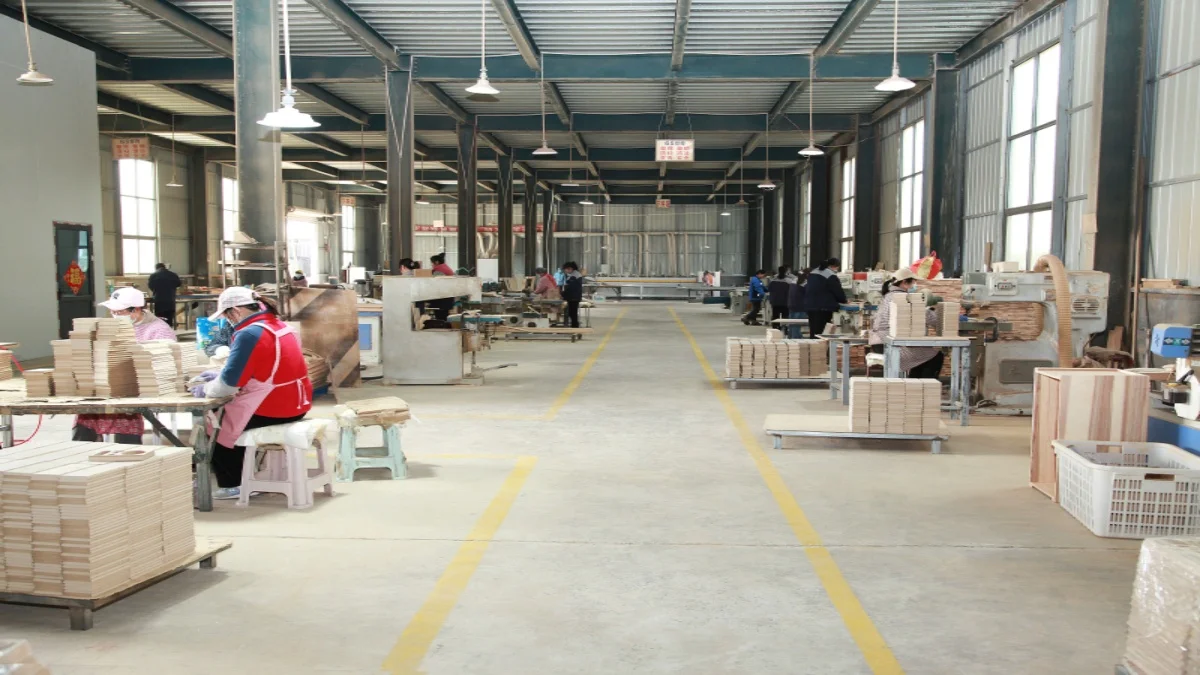
Caoxian Dongxing Arts And Crafts Co., Ltd.
- Manufacturer, Trading Company
- Shandong, China
- Lead time30 days
- Avg. response≤ 5h
Main productswooden craft,wooden tray,wooden box,wooden home decor,wooden shelf
Main marketsNorth America(50.00%), Eastern Asia(30.00%), Western Europe(20.00%)

Donegoods Industrial Co., Ltd.
- Combined
- China Guangdong
- Lead time30 days
- Avg. response≤ 7h
Main productsDisplay Rack, Store Fixture, Dish Rack, Shoe Rack, Kitchen Rack, Hooks, Retail Display Fixture, Storage Shelf, Coat Hanger, Building Material Products
Main marketsSoutheast Asia/ Mideast,Europe,North America
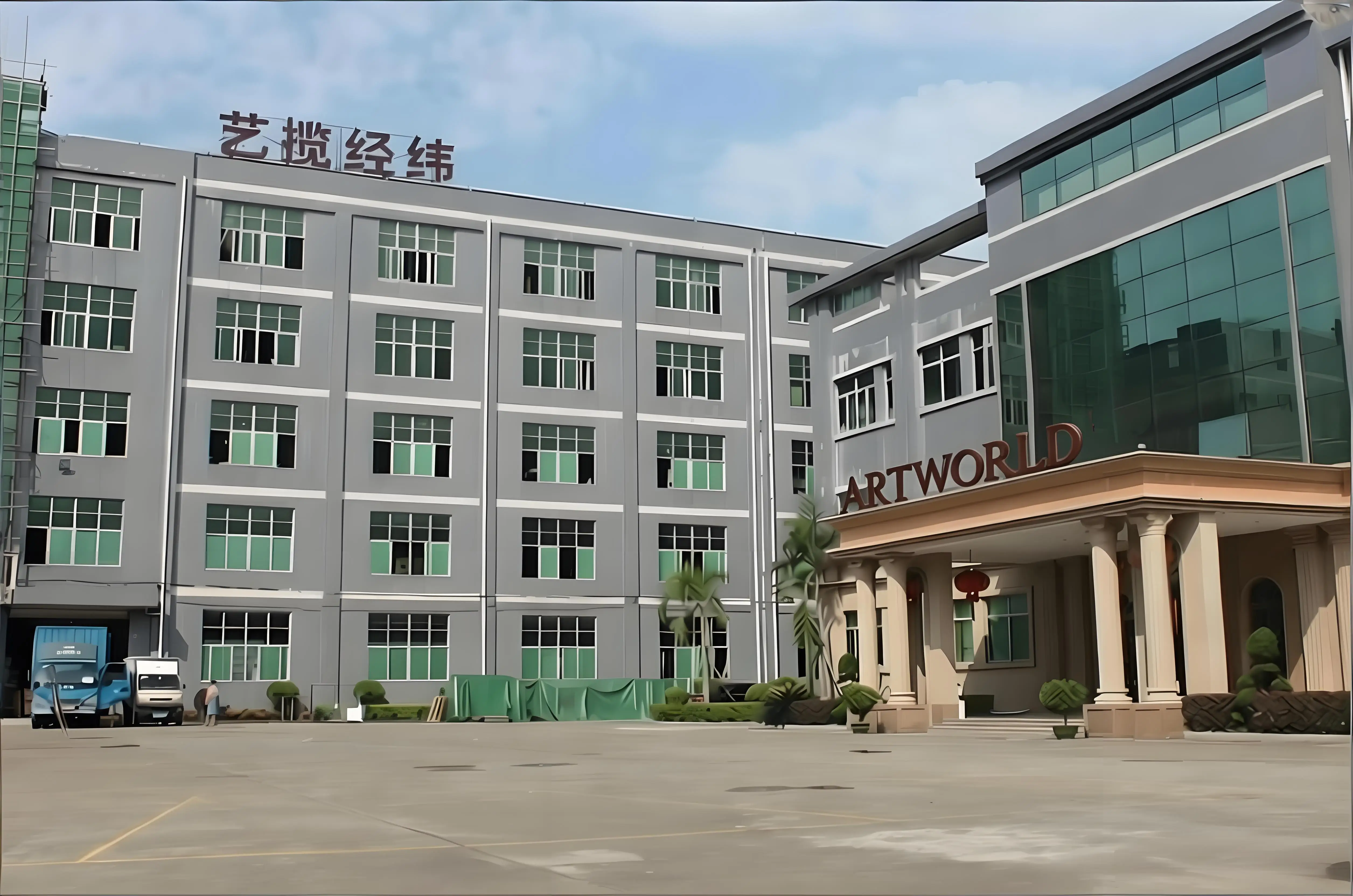
Shenzhen Artworld Display Product Co., Ltd.
- Manufacturer
- Guangdong, China
- Lead time20 days
- Avg. response≤ 2h
Main productsacrylic product,shop design with display furniture,home decorate furniture,MDF wood display furniture,metal display products
Main marketsEastern Europe(23.00%), North America(20.00%), Western Europe(10.00%), Africa(10.00%), Domestic Market(8.00%), Southeast Asia(5.00%), Northern Europe(5.00%), Mid East(5.00%), Oceania(5.00%), South America(3.00%), Southern Europe(2.00%), Central America(2.00%), Eastern Asia(1.00%), South Asia(1.00%)

$0.5165 - $3.0958
MOQ: 200 Minimum

acrylic menu holder with Wireless charging new design acrylic menu holder
$2.0509 - $8.2036
MOQ: 200 Minimum

Gondo Displays (Xiamen) Industry & Trade Co., Ltd.
- Verified by TUVRHEINLAND
- Trading Company
- China Fujian
- Lead time23 days
- Avg. response≤ 3h
Main productsAcrylic Display, Wood Display, Metal Display, Display Stand, Store Fixture, Jewelry Display, Cosmetic Display, Clothes Rack, Supermarket Rack, Furniture
Main marketsEurope,Australia,North America

Hangzhou Disheng Technology Co., Ltd.
- Verified by TUVRHEINLAND
- Trading Company
- China Zhejiang
- Lead time30 days
- Avg. response≤ 7h
Main marketsAustralia

Restaurant Table Menu Holder Stainless Steel Table Stand Menu Metal Card Holder for Bar
$1.00 - $10.00
MOQ: 100 Pieces

Cutomized Restaurant Table Menu Holder Stainless Steel Table Stand Menu Metal Card Holder for Bar
$1.00 - $10.00
MOQ: 100 Pieces

KKS Enterprises Co., Ltd. Hangzhou
- Verified by SGS
- Manufacturer/Factory
- China Zhejiang
- Lead time23 days
- Avg. response≤ 12h
Main productsBar Runner, Floor Mats, Bar Mats, Logo Mats, Carpet, Promotional Products, Ice Bucket, Dust Control Mats, Bar Tray, Bottle Openers
Main marketsSouth America,Eastern Europe,Mid East,North America,Southeast Asia,Eastern Asia,Oceania,Western Europe,Africa

Wenzhou Xybp Cultural Supplies Co., Ltd.
- Verified by SGS
- Combined
- China Zhejiang
- Lead time30 days
- Avg. response≤ 7h
Main productsAcrylic Photo Frame, Acrylic Display Stand, Acrylic Display, Acrylic Ornaments, Acrylic Sign Holder, Acrylic Box
Main marketsSoutheast Asia/ Mideast,Europe,North America


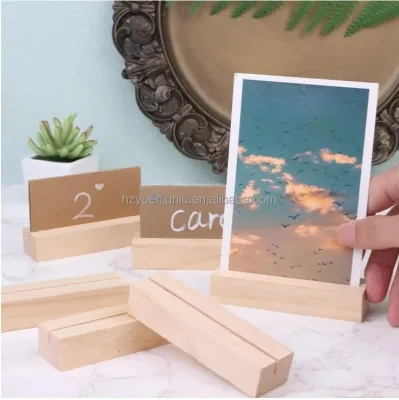
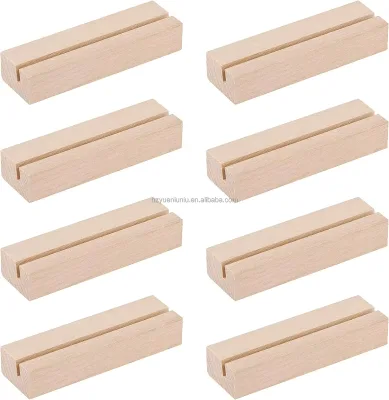
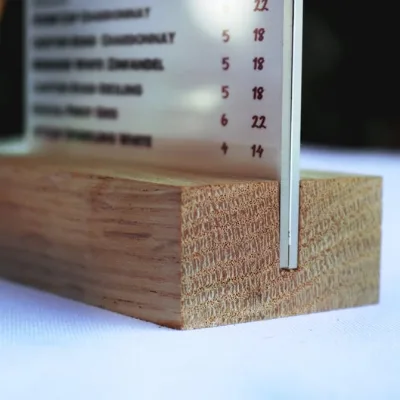
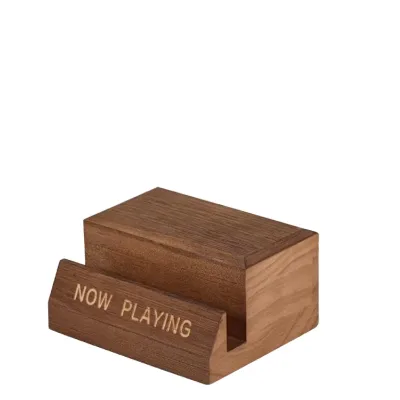


Comprehensive Sourcing Guide
Custom Logo Wood Menu Holder Supplier Concentration and Factory Types
The current supplier landscape for custom logo wood menu holders reveals a distinct concentration of manufacturing activity within Shandong, China. This regional clustering suggests a mature supply chain ecosystem where raw material access, specialized woodworking labor, and logistics infrastructure converge to support high-volume production. Buyers evaluating this market should recognize that Shandong serves as a primary hub for wooden home storage and organization products, including the specific niche of restaurant tableware and display racks. The presence of numerous suppliers in this geographic area indicates that sourcing from this region may offer advantages in terms of material consistency and production capacity, as local factories are accustomed to handling the specific demands of wooden goods export. However, buyers must remain vigilant about verifying the actual operational scope of each supplier, as geographic proximity does not automatically guarantee manufacturing capability. Some entities listed in this region may operate primarily as trading companies rather than direct manufacturers, which can impact communication efficiency and cost structure. Understanding this distinction is crucial for determining whether a supplier can provide the technical expertise required for complex custom logo applications or if they are merely intermediaries reselling goods from other workshops. The concentration also implies that competitive pricing is likely available due to the density of providers, but it necessitates rigorous due diligence to separate genuine factories from trading entities. Buyers should prioritize suppliers who can demonstrate direct control over the production process, particularly for items requiring specific wood types like paulownia, beech, or pine, as these materials have distinct handling requirements that only experienced local manufacturers can manage effectively.
Factory types in this sector vary significantly, ranging from small-scale artisanal workshops to large-scale industrial operations capable of handling mixed-item shipments. The data indicates that many suppliers identify as trading companies, which often aggregate products from multiple smaller factories to offer a broader catalog to international buyers. This model can be beneficial for buyers seeking variety, such as combining menu holders with other wooden storage solutions, but it introduces layers of complexity in quality control and lead time management. Direct factories, on the other hand, typically offer more transparency regarding production processes and material sourcing, which is critical for products involving custom branding and specific dimensional tolerances. The main products listed by these suppliers often include wooden crates, wall shelves, and trays, suggesting that many facilities possess versatile woodworking machinery capable of adapting to menu holder production. This versatility can be an advantage for buyers looking to consolidate orders across different wooden product categories. However, it also means that buyers must verify if the supplier’s primary expertise aligns with the precision required for menu holders, which often involve delicate finishing and logo application. The presence of both trading companies and potential manufacturers in the same regional cluster requires buyers to conduct thorough background checks to ensure they are engaging with the right entity for their specific needs. Understanding the operational model of each supplier is essential for predicting reliability, communication speed, and the ability to handle custom requests effectively.
How to Verify Custom Logo Wood Menu Holder Suppliers
Verifying the authenticity and capability of Custom Logo Wood Menu Holder suppliers requires a multi-layered approach that goes beyond surface-level profile reviews. Buyers should start by confirming the supplier’s company type, distinguishing between trading companies and actual manufacturing entities. This distinction is critical because trading companies may add margins and introduce communication delays, whereas factories offer direct control over production quality and timeline adherence. One effective method is to request detailed information about the factory floor, including photos or videos of the production line, specifically focusing on the woodworking and printing stations. For custom logo applications, verifying the availability of specific printing technologies such as silk screen, letterpress, or UV printing is essential. Buyers should ask for evidence of previous logo application work, including close-up images of finished products to assess print clarity, alignment, and durability. Additionally, checking the supplier’s response time is a practical indicator of their operational efficiency; a consistent response time of around five days may suggest a structured but potentially slower communication process, which buyers must factor into their project planning. It is also advisable to request references from previous international clients, particularly those who have ordered similar wooden products, to gain insights into the supplier’s reliability and after-sales support.
Another crucial verification step involves assessing the supplier’s product specifications and quality control measures. Buyers should examine the detailed product attributes provided, such as material type, dimensional tolerance, and weight tolerance, to ensure they align with the buyer’s quality standards. For instance, some suppliers specify a dimensional tolerance of less than ±1mm and a weight tolerance of less than ±1%, which indicates a high level of precision in their manufacturing process. Buyers should request samples to physically evaluate these tolerances and the overall finish quality. Furthermore, verifying the supplier’s establishment year and business history can provide insights into their stability and experience in the industry. Suppliers with a longer track record are often more reliable in terms of consistent quality and adherence to contractual obligations. Buyers should also check for any relevant certifications or standards that the supplier may hold, although these are not always explicitly listed in initial search results. If certifications are not mentioned, buyers should proactively ask for documentation related to quality management systems or environmental standards, especially if the wooden products are intended for markets with strict regulatory requirements. Finally, using secure payment methods and escrow services can provide an additional layer of protection during the verification and initial ordering phases, ensuring that funds are only released upon satisfactory delivery of the goods.
What to Compare Across Custom Logo Wood Menu Holder Suppliers
When evaluating multiple suppliers for custom logo wood menu holders, buyers must systematically compare key operational and commercial metrics to identify the most suitable partner. One of the primary dimensions for comparison is the minimum order quantity (MOQ) and its associated flexibility. Some suppliers require a minimum shipment value of USD 5000.00, even if mixed items are accepted, which can be a significant barrier for smaller buyers or those testing new product lines. In contrast, other suppliers may offer lower MOQs, such as 500 units, providing greater flexibility for initial orders. Buyers should also compare the sample time, which ranges from 3-5 working days to 5-7 working days, as this impacts the speed of product development and approval processes. A shorter sample time can accelerate the overall sourcing timeline, allowing for quicker iterations and faster time-to-market. Additionally, comparing the lead time for bulk production is essential; a lead time of 40 days is a common benchmark, but buyers should verify if this duration is consistent across different order sizes and product complexities. Suppliers with shorter and more predictable lead times are generally preferred for maintaining inventory stability and meeting customer demand.
Price and packaging efficiency are also critical factors in supplier comparison. The price range for custom logo wood menu holders can vary significantly, from as low as USD 0.80 to over USD 4.30 per unit, depending on the material, size, and customization level. Buyers should analyze the price in the context of the product specifications, such as the type of wood used (e.g., paulownia, beech, pine) and the printing method employed. Higher prices may correlate with superior material quality or more intricate logo applications, but buyers should ensure that the cost premium is justified by tangible benefits. Packaging details, including single package size and carton quantity, are vital for calculating shipping costs and storage requirements. For example, some suppliers pack 60 pieces per 0.04 cubic meters, while others may pack fewer items per carton, affecting the overall logistics efficiency. Buyers should also compare the supplier’s response time, as faster communication can facilitate smoother order processing and issue resolution. Finally, evaluating the supplier’s main product range can provide insights into their specialization; suppliers focusing on a narrow range of wooden products may offer deeper expertise and better quality control compared to those with a broad, generic catalog. By systematically comparing these dimensions, buyers can make informed decisions that balance cost, quality, and operational efficiency.
Common Custom Logo Wood Menu Holder Sourcing Risks
Sourcing custom logo wood menu holders from international suppliers, particularly those in concentrated manufacturing hubs like Shandong, China, involves several inherent risks that buyers must proactively manage. One significant risk is the potential discrepancy between the sample quality and the bulk production quality. While suppliers may provide high-quality samples with precise logo printing and smooth finishes, the mass production run might suffer from inconsistencies due to variations in raw materials or labor. This risk is exacerbated when dealing with trading companies that may not have direct oversight of the manufacturing process. Buyers should mitigate this by implementing strict quality control protocols, including third-party inspections before shipment, to ensure that the bulk order meets the agreed-upon standards. Another common risk is the delay in production or delivery, which can disrupt supply chains and lead to missed market opportunities. Lead times can be affected by factors such as raw material shortages, labor strikes, or logistical bottlenecks. Buyers should maintain open communication with suppliers and request regular production updates to anticipate and address potential delays early. Additionally, the complexity of custom logo applications can lead to errors in branding, such as incorrect colors, misaligned text, or poor print durability. Buyers should provide detailed and unambiguous artwork files and request pre-production proofs to verify the logo application before bulk manufacturing begins.
Intellectual property protection is another critical risk when sourcing custom branded products. Suppliers may inadvertently or intentionally share design files or logo concepts with competitors, leading to unauthorized replication of the buyer’s products. To mitigate this risk, buyers should sign non-disclosure agreements (NDAs) and clearly define intellectual property rights in their contracts. It is also advisable to use unique design elements or proprietary printing techniques that are difficult to replicate. Furthermore, buyers should be aware of the potential for hidden costs, such as additional charges for mold fees, sample shipping, or expedited production. These costs may not be explicitly stated in the initial quotation and can significantly impact the total cost of ownership. Buyers should request a comprehensive cost breakdown that includes all potential fees to avoid surprises later in the process. Finally, the risk of non-compliance with international standards or regulations, such as safety or environmental requirements, can lead to product recalls or legal issues. Buyers should verify that the suppliers adhere to relevant standards and request necessary documentation, such as material safety data sheets or test reports, to ensure compliance. By identifying and addressing these risks early in the sourcing process, buyers can protect their interests and ensure a successful procurement outcome.
Custom Logo Wood Menu Holder Regional Sourcing and Logistics
Sourcing custom logo wood menu holders from regional clusters like Shandong, China, offers distinct logistical advantages and challenges that buyers must navigate to optimize their supply chain. The concentration of suppliers in this region facilitates efficient material sourcing and production coordination, as factories are often located near raw material suppliers and specialized woodworking service providers. This proximity can reduce lead times and lower production costs, making it an attractive option for buyers seeking competitive pricing. However, buyers must also consider the logistical implications of shipping from this region, including transit times, freight costs, and customs clearance procedures. Shandong’s strategic location with access to major ports can streamline the export process, but buyers should work with experienced freight forwarders to ensure smooth transportation. The type of wood used in the menu holders, such as paulownia, beech, or pine, can also impact logistics, as different woods have varying densities and packaging requirements. Buyers should coordinate with suppliers to optimize packaging dimensions and weights to maximize container space and reduce shipping costs. For instance, some suppliers pack 225 pieces per carton, which can significantly improve loading efficiency compared to smaller pack sizes.
Buyers should also be mindful of the seasonal variations in production and logistics that can affect supply chain stability. Peak seasons, such as pre-holiday periods, may lead to increased demand and longer lead times, requiring buyers to plan their orders well in advance. Additionally, buyers should consider the environmental and sustainability aspects of sourcing from this region, as wooden products are subject to increasing regulatory scrutiny regarding
FAQs
What is the typical lead time for custom wood menu holders?
The standard production lead time is 40 days for bulk orders. Buyers should confirm specific timelines with suppliers before finalizing contracts. This duration accounts for material sourcing, manufacturing, and quality checks. Expedited options may be available for urgent needs, but they often incur additional costs. Always verify the current schedule with the supplier to ensure timely delivery for your event or restaurant opening.
What is the minimum order quantity for these products?
Many suppliers require a minimum order value of USD 5000.00 per shipment. Mixed items are often accepted to meet this threshold. Some listings show a unit MOQ of 500 pieces. Buyers should clarify whether the MOQ is based on value or unit count. Understanding these requirements helps in planning inventory levels and avoiding unnecessary storage costs for small batches.
How long does it take to receive a sample?
Sample preparation typically takes between 3 to 7 working days. Some suppliers offer faster turnaround times of 3-5 days for standard designs. Custom logos or specific wood types may extend this period. Buyers should request samples to verify quality before placing large orders. This step ensures the final product meets your aesthetic and functional requirements for your dining establishment.
What materials are commonly used for these menu holders?
Common materials include paulownia wood, beech wood, and pine wood. Some products use MDF with wood veneer for durability. The finish is often natural or unfinished to allow for custom branding. Buyers can choose based on weight preferences and aesthetic needs. Paulownia is lightweight, while beech offers a harder, more durable surface for high-traffic environments.
What printing methods are available for custom logos?
Available printing methods include silk screen printing, letterpress, digital printing, and UV printing. These options allow for high-quality logo application on various wood surfaces. Buyers should select a method that matches their brand colors and durability needs. Silk screen is popular for bold, vibrant designs, while UV printing offers detailed graphics. Confirm compatibility with your chosen wood type for the best result.
Where are these suppliers located?
The primary manufacturing location for these products is Shandong, China. This region is known for its wood processing capabilities and competitive pricing. Buyers can expect efficient logistics from this hub. Shipping times will vary based on the destination country. Understanding the origin helps in calculating total landed costs, including freight and customs duties, for accurate budgeting.
What is the typical response time from suppliers?
The average response time for suppliers is 5 hours. This ensures quick communication regarding quotes, samples, and order status. Buyers should expect timely replies during business hours. Prompt responses indicate a supplier's reliability and customer service quality. Fast communication helps resolve issues quickly and keeps the sourcing process moving efficiently without unnecessary delays.