Source Waterproof Expandable Document Organizer Bag for School, Office, Home
Find and compare 30 listings for the Waterproof Expandable Document Organizer Bag designed for school, office, and home use. These fireproof and water-resistant bags safeguard documents, electronic devices, and wallets with customizable logos and sizes.
Key considerations
Products List

Ultimate Waterproof and Fireproof Document Storage Organizer Bag for Safety
$9.00 - $13.00
MOQ: 500 Pieces


Portable Document Accordion Folders 13 Pockets Expanding File Organizer Bag
$0.80 - $1.00
MOQ: 1000 Pieces
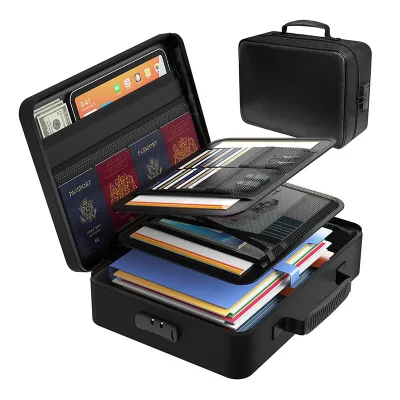


Promotional Waterproof Document Fireproof Bags Protect Organizers Storage Containers
$3.00 - $3.50
MOQ: 300 Pieces

Promotional Double Zip 13 Compartment Efficient Inspection File Holder Organizer Bags
$2.00 - $2.20
MOQ: 300 Pieces

Promotional 10PCS File Binder Pouches Document Bag Folder Portable Office School Organizer
$0.89 - $1.10
MOQ: 300 Pieces


Comprehensive Sourcing Guide
Strategic Sourcing Guide for Waterproof Expandable Document Organizer Bags
The global demand for secure, durable, and versatile storage solutions has elevated the category of waterproof expandable document organizer bags into a critical procurement segment for businesses, educational institutions, and government entities. Buyers seeking this specific product type must navigate a landscape where functionality, material integrity, and compliance standards intersect. The core objective is to secure a supply chain partner capable of delivering high-performance document protection without compromising on cost-efficiency or delivery timelines. This guide synthesizes available product attributes and industry best practices to provide a structured approach for evaluating potential suppliers and finalizing procurement strategies.
Technical Specifications and Material Composition
When sourcing a Waterproof Expandable Document Organizer Bag, the primary technical differentiator lies in the material composition and structural design. The product market features a distinct divergence between flexible fabric-based solutions and rigid or semi-rigid container options. A significant portion of the current market offers bags constructed from Silicone Coated Fiberglass Cloth, a material selected specifically for its exceptional thermal stability and resistance to extreme environmental conditions. This material allows the product to withstand short-term exposure to temperatures up to 2000°F (approximately 1100°C) and continuous resistance up to 1000°F (537°C), making it suitable for high-risk environments where fire protection is paramount.
In contrast, other variants in the supply chain utilize standard fabrics or leather-like materials, which may offer a more traditional aesthetic but lack the extreme thermal resistance of fiberglass composites. The expandable nature of these organizers is often achieved through specific folding mechanisms, allowing the bag to transition from a compact storage unit to a large-capacity organizer. Dimensions are a critical specification; while some models adhere to standardized sizes such as 403010 cm, others offer fully customized dimensions to accommodate specific document formats or electronic devices. Buyers must verify whether the "expandable" feature is a structural capability of the material or a design element of the zipper system, as the latter often relies on high-quality fasteners like heavy-duty zippers to maintain the integrity of the seal during expansion.
The hardness of the product also varies, ranging from medium soft to rigid structures. For applications requiring portability alongside protection, a medium soft hardness is often preferred, allowing the bag to conform to the user's back or fit into tight vehicle compartments. Conversely, rigid box-type organizers provide superior stacking capabilities and protection against crushing forces. The shape of the product, whether rectangular, horizontal square, or backpack-style, dictates the internal organization and the ease of access to contents. A horizontal square design is particularly noted for its business-oriented utility, offering a sleek profile that aligns with professional environments.
Compliance, Certification, and Safety Standards
Ensuring that the document organizer meets specific safety and performance standards is a non-negotiable aspect of B2B procurement. The most prominent standard observed in this sector is the EN13501 classification for flame retardancy. This standard categorizes the reaction to fire of construction products and is critical for verifying that the bag will not contribute to the spread of flames in an emergency. Buyers must explicitly request certification documentation proving that the specific batch of products has been tested and certified under EN13501. Relying on general claims of "fireproof" or "flame retardant" without third-party verification introduces significant risk.
Beyond fire resistance, the waterproof capability must be validated. While many products list "Waterproof" as a primary feature, the specific rating (e.g., IPX4, IPX7) is rarely standardized across all suppliers. The presence of silicone coating on fiberglass cloth inherently enhances water resistance, but the seam construction is equally vital. Buyers should verify that the stitching is sealed or that the design utilizes welded seams to prevent water ingress through needle holes. Additionally, the product's ability to safeguard electronic devices, wallets, and documents implies a need for protection against moisture, dust, and physical impact.
Compliance with regional regulations is another layer of due diligence. If the procurement is intended for the European market, adherence to EN13501 is essential. For other regions, local fire safety codes may dictate different testing protocols. It is crucial to confirm that the supplier can provide a Certificate of Analysis (CoA) or a test report from an accredited laboratory. The absence of such documentation should be treated as a red flag, regardless of the supplier's reputation or the product's visual appearance. The "Fireproof" and "Waterproof" labels on the product page are observations of the product's intended function, but they do not constitute a guarantee of compliance without the supporting test data.
Cost Drivers and Pricing Dynamics
The pricing of waterproof expandable document organizer bags is influenced by a complex interplay of material costs, customization requirements, and order volume. The observed market price range spans from $0.50 to $13.00 per unit, a variance that reflects the difference between basic fabric models and high-performance silicone-coated fiberglass solutions. The material cost is the primary driver; silicone-coated fiberglass is significantly more expensive to produce than standard woven fabrics or leather alternatives due to the specialized coating process and the inherent cost of the raw fiberglass.
Customization is a major factor in cost escalation. The availability of custom logos, specific color combinations (such as black, grey, or custom Pantone matches), and tailored dimensions adds to the production complexity. Suppliers offering "Custom Logo" services typically charge a setup fee or a higher unit price for smaller batches. The Minimum Order Quantity (MOQ) also plays a pivotal role in the final landed cost. The market shows an MOQ range from 100 to 1000 pieces, with some suppliers setting a baseline of 500 pieces for standard models. Orders falling below the MOQ threshold often incur a premium per unit to cover the fixed costs of machine setup and material cutting.
Lead times are another cost consideration. A typical lead time of 7–15 days is observed, depending on the quantity and the level of customization. Rush orders may require expedited shipping, which adds to the overall procurement cost. Furthermore, the packing method influences the final price; options such as OPP bags with carton boxes or bulk palletization affect the logistics and packaging costs. Buyers should request a detailed breakdown of costs, separating the base unit price from customization fees, tooling charges, and logistics, to ensure transparency and accurate budgeting.
Typical Applications and Usage Scenarios
The versatility of waterproof expandable document organizer bags makes them suitable for a wide array of applications across different sectors. The "All Season" attribute indicates that these products are designed for year-round use, regardless of environmental conditions. In educational settings, these bags serve as essential tools for students and faculty to protect important academic records, certificates, and electronic devices from accidental spills or fire hazards. The "School Office Home Outdoors" usage classification highlights their adaptability to diverse environments.
In the corporate and business sector, the "Business" style and "Horizontal Square" design are particularly relevant. Professionals require secure storage for sensitive financial documents, contracts, and identification papers during travel or in office environments. The "Unisex" gender attribute ensures that these products are suitable for a broad workforce. The "Large Capacity" feature is a key selling point for organizations that need to transport significant volumes of paperwork or multiple electronic devices simultaneously.
For emergency preparedness and disaster management, the fireproof and waterproof capabilities are critical. Government agencies, non-profits, and private organizations often stock these bags to safeguard critical data and assets in the event of natural disasters or fire incidents. The ability to withstand high temperatures makes them ideal for use in industrial settings where fire risks are elevated. Additionally, the "Folded" capability allows for efficient storage when the bag is not in use, making them practical for emergency kits that require compact storage until deployment.
Supplier Evaluation and Selection Criteria
Selecting the right supplier requires a rigorous evaluation process that goes beyond price comparison. Buyers should prioritize suppliers who demonstrate transparency in their production capabilities and quality control measures. The origin of the product is a key indicator; suppliers based in regions with established manufacturing hubs, such as Jiangxi or other parts of China, often have mature supply chains for textile and composite materials. However, the location alone is not a guarantee of quality; the supplier's specific expertise in handling silicone-coated fiberglass is more important.
The supplier's ability to handle customization is another critical evaluation point. Buyers should assess the supplier's design team, their experience with custom logo printing, and their flexibility in accommodating unique size requirements. A supplier that offers "Customized" sizes and "Custom Logo" options with a high success rate is preferable to one that only offers standard SKUs. The "Logo Printing" capability should be verified to ensure it meets the desired durability and aesthetic standards.
Communication and responsiveness are also vital. The lead time of 7–15 days suggests a need for efficient production scheduling. Buyers should evaluate the supplier's ability to provide timely updates and their willingness to share production samples or pre-shipment photos. The "Packing" and "prod_packing" details, such as the use of cartons or pallets, should be discussed to ensure they meet the buyer's logistical requirements. A supplier that can provide a clear packing list and secure packaging to prevent damage during transit demonstrates a commitment to quality.
Quality Control and Long-Term Procurement Considerations
Implementing a robust quality control (QC) protocol is essential to ensure that the received products meet the specified standards. Buyers should consider implementing a third-party inspection service to verify the material thickness, zipper functionality, and the integrity of the waterproof seals before shipment. The "Hardness" and "Shape" attributes should be physically measured against the agreed-upon specifications to ensure consistency across the batch. For fireproof products, random sampling for flame resistance testing may be necessary to validate the EN13501 claims.
Long-term procurement considerations involve building a sustainable relationship with the supplier. Buyers should look for suppliers who offer consistent quality over time and have the capacity to scale production as demand grows. The "Advantage" of being fireproof and waterproof should be maintained through consistent material sourcing and manufacturing processes. Regular audits of the supplier's facility can help identify potential risks in the supply chain and ensure that the production standards remain high.
Additionally, buyers should consider the lifecycle of the product. The "Weight" of 0.8kg for a large capacity bag indicates a balance between durability and portability. Over time, the wear and tear on zippers and seams should be monitored to ensure the product remains functional. A supplier that offers a warranty or a clear return policy for defective products adds value to the procurement process. By focusing on these long-term factors, buyers can secure a reliable supply of high-quality waterproof expandable document organizer bags that meet their evolving needs.
Comparative Analysis of Product Attributes
To facilitate a clearer understanding of the available options, the following table summarizes the key attributes observed in the market for waterproof expandable document organizer bags. This comparison highlights the variations in material, size, and functionality that buyers should consider when making a selection.
| Attribute | Option A: High-Performance | Option B: Standard Fabric | Option C: Rigid/Box Type |
|---|---|---|---|
| Primary Material | Silicone Coated Fiberglass Cloth | Standard Fabric | Leather / Composite |
| Fire Resistance | Up to 2000°F (Short-term) | Limited / Standard | Variable |
| Waterproof Rating | High (Sealed Seams) | Moderate | High |
| Shape | Horizontal Square / Rectangular | Backpack / Flexible | Box / Rigid |
| Size | Customized / 403010 cm | Medium / Large | Standard / Custom |
| Hardness | Medium Soft | Soft | Medium / Hard |
| MOQ | 500 PCS | 100 PCS | 100 PCS |
| Lead Time | 7–15 Days | 7–15 Days | 7–15 Days |
| Primary Use | Emergency / Industrial | Office / School | Storage / Transport |
This comparison underscores the importance of aligning product specifications with the specific needs of the procurement. While Option A offers superior protection for high-risk environments, Option B may be more cost-effective for general office use. Option C provides a different form factor for those requiring rigid storage. By carefully evaluating these attributes, buyers can make informed decisions that optimize both performance and budget.
FAQs
What material is used for fireproof document bags?
Silicone coated fiberglass cloth is the primary material used for fireproof document bags. This composition provides exceptional thermal stability and resistance to extreme environmental conditions, ensuring the bag can withstand high temperatures while protecting contents.
Can these bags withstand high fire temperatures?
Yes, the bags can withstand short-term exposure to temperatures up to 2000°F and continuous resistance up to 1000°F. This capability makes them suitable for high-risk environments where fire protection is paramount for safeguarding documents and electronic devices.
What is the minimum order quantity for these bags?
The minimum order quantity ranges from 100 to 1000 pieces depending on the supplier. Some standard models require a baseline of 500 pieces, while others may accept orders as low as 100 pieces for specific customization requests.
How long does it take to receive the order?
The typical lead time is between 7 to 15 days depending on the quantity ordered. This duration accounts for production scheduling and any necessary customization processes required to meet specific buyer specifications.
Which fire safety standard do these bags meet?
These bags meet the EN13501 flame retardant standard for construction products. Buyers should request certification documentation proving that the specific batch has been tested and certified under this standard to ensure compliance with safety regulations.
What sizes are available for document organizers?
Sizes range from standard dimensions like 40 by 30 by 10 cm to fully customized options. Some models offer large capacity designs while others are compact, allowing buyers to select dimensions that fit their specific document formats or storage needs.
Can I add a custom logo to the bag?
Yes, custom logo printing is available for these document organizer bags. Suppliers typically offer this service for an additional cost, allowing businesses to brand the product while ensuring the logo remains durable and aesthetically pleasing.