Delrin Spacer Suppliers and Manufacturers in China
Find 10 verified suppliers offering Delrin Spacer components with customizable options and international standards. Compare response times, lead times, and certifications like ISO9001:2015 to select the right partner for your agricultural or industrial needs today; review the available evidence before requesting comparable quotations from suitable candidates.
Suppliers List

Shandong Yuntai Machinery Co., Ltd.
- Verified by BV
- Combined
- China Shandong
- Lead time30 days
- Avg. response≤ 19h
Main productsDisc Plough, Disc Harrow, Disc Blade, Trailer, Cultivator, Agricultural Spare Parts, Plough Disc, Harrow Disc, Tractor Trailer, Ox Plough
Main marketsSouth America,Africa,Southeast Asia/ Mideast,Europe,Australia,North America

Yangzhong HaiTeng Fluorine Plastic Product Factory
- Verified by BV
- Combined
- China Jiangsu
- Lead time15 days
- Avg. response≤ 16h
Main productsPTFE, PTFE Sheet, PTFE Rod, PTFE Tube, Nylon, Silicon Rubber, Teflon, Nylon Rods, Nylon Tube, PU Rod/POM Rod
Main marketsSoutheast Asia/ Mideast,Domestic
South China Heavy Industry (Jiangxi) Co., Ltd
- Verified by BV
- Combined
- China Jiangxi
- Lead time23 days
- Avg. response≤ 17h
Main productsElectronic Component Manufacturing, Hydraulic Valve
Main marketsSoutheast Asia/ Mideast

Yuyao Xianghao Mold Technology Company Limited
- Verified by BV
- Trading Company
- China Zhejiang
- Lead time30 days
- Avg. response≤ 10h
Main productsInjection Mold, Plastic Mold, Injection Molding, Rapid Prototyping, 3D Pritting, Manhole Cover Mold, Silicone Rubber Mould, Wire Rack, Car Air Compressor, LED Light
Main marketsNorth America


MOQ: 1 Pieces

Rizhao Fenghua Scaffoldings Co., Ltd.
- Verified by BV
- Combined
- China Shandong
- Lead time45 days
- Avg. response≤ 15h
Main productsScaffolding, Scaffold, Forging, Formwork, Scaffold Couplers, Swivel Coupler, Frame System, Hand Tools, Scaffold Plank
Main marketsSouth America,East Asia(Japan/ South Korea),Europe,North America

MOQ: 1000 Pieces

MOQ: 200 Pieces

MOQ: 1000 Pieces

MOQ: 2000 Pieces
Changsha Shante Mine Equipment Co., Ltd.
- Verified by SGS
- Trading Company
- China Hunan
- Lead time15 days
- Avg. response≤ 4h
Main productsDrilling Rig Accessories
Main marketsAfrica,Others(foreignTradeCapacity.exportBusinessCapacityMarketOther)

87218939/872 189 39/87218939/872 189 39/U-Ring
MOQ: 1 Pieces

86752276/867 522 76/86752276/867 522 76/Stefan/Hc95
MOQ: 1 Pieces

Hunan Kemeida Electric Co., Ltd.
- Manufacturer/Factory
- China Hunan
- Lead time60 days
- Avg. response≤ 25h
Main productsLifting Magnet, Magnetic Separator, Electromagnetic Stirrer, Cable Reel, Mandrel, Slurry Magnetic Separator, High Gradient Vertical Ring Magnetic Separator, Electro Permanent Magnet, Tong Grabs, Magnetic Transporting Equipment for Rebar
Main marketsSouth America,Eastern Europe,Mid East,North America,Southeast Asia,Eastern Asia,Oceania,Western Europe,Africa

Changzhou HITEK Electronics Co., Ltd.
- Combined
- China Jiangsu
- Lead time30 days
- Avg. response≤ 23h
Main productsHDMI Cable, Connector, Antenna, RCA Cable, DVI Cable, AV Cable, Vedio Cable, Audio Cable, USB Cable, Network Cable
Main marketsDomestic

MOQ: 1000 Pieces

MOQ: 1000 Pieces

MOQ: 1000 Pieces

MOQ: 1000 Pieces

MOQ: 1000 Pieces
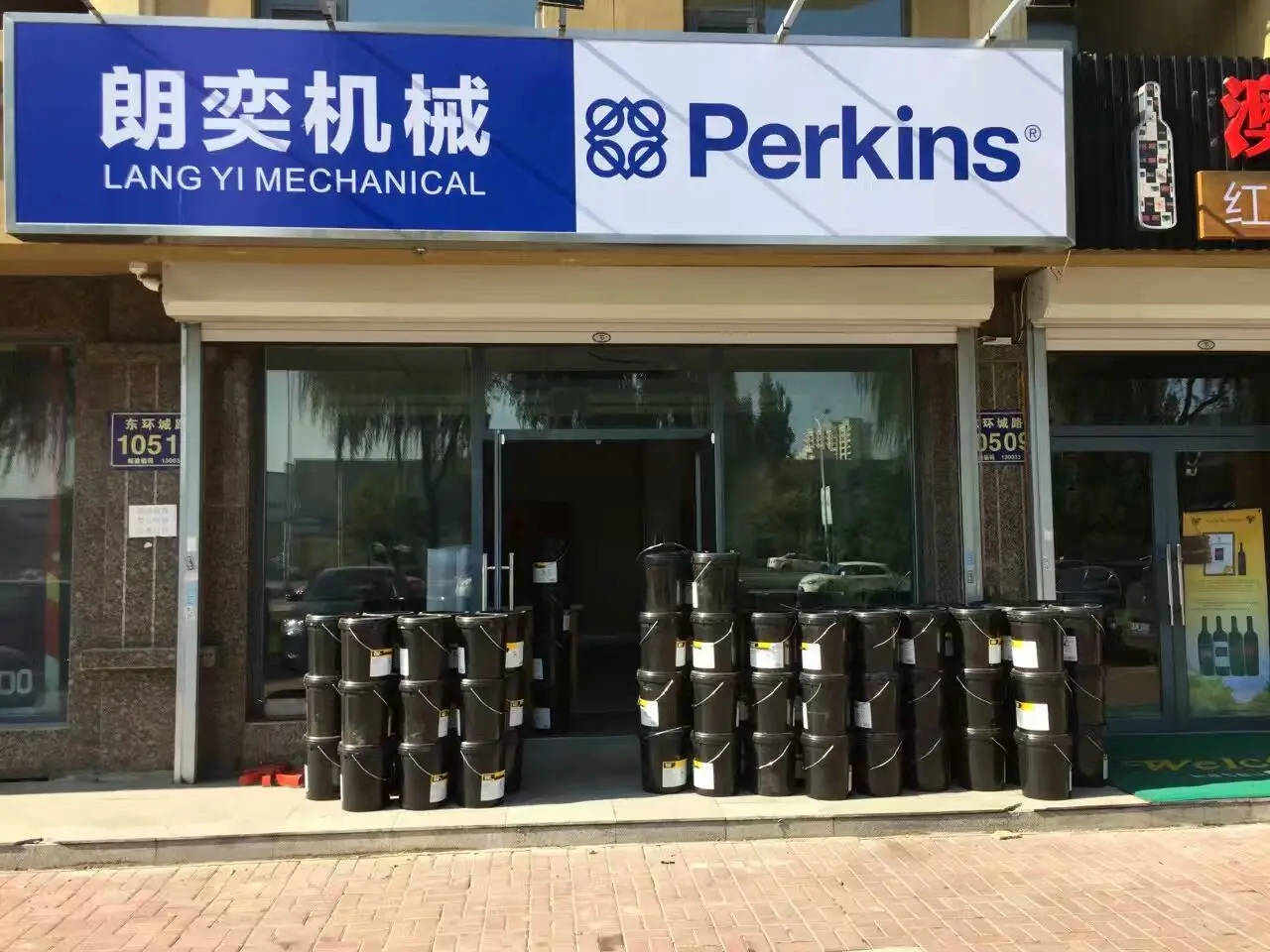
Jilin Langyi Mechanical Equipment Company Ltd.
- Trading Company
- Jilin, China
- Lead time3 days
- Avg. response≤ 3h
Main productsCaterplillar parts,Perkins Engines,Bridgestone OTR Tires,Techking OTR Tires,BLACK CAT GET
Main marketsDomestic Market(78.00%), North America(12.00%), Southeast Asia(10.00%)
$80.69
$197.56

YUYAO JIEMING SPRAYER CO., LTD.
- Verified by TUVRHEINLAND
- Combined
- China Zhejiang
- Lead time23 days
- Avg. response≤ 16h
Main productsLotion Pump, Fine Mist Sprayer, Threatment Pump, Airless Bottle, Foam Pump, Oil Pump, 0.6cc Cream Pump, Oral Sprayer, Nasal Sprayer, Trigger Sprayer
Main marketsSouth America,Domestic


18/410 Plastic Fine Mist Sprayer Pump Mini Spray Nozzle Custom Color Available
$0.02
MOQ: 30000 Pieces


Comprehensive Sourcing Guide
Delrin Spacer Supplier Concentration and Factory Types
When searching for Delrin Spacer suppliers, buyers will encounter several distinct factory and company types, and understanding these categories early prevents wasted inquiry time. On current B2B search results, one cluster of listings comes from Shandong-based agricultural machinery manufacturers whose main products include disc ploughs, disc harrows, cultivators and related spare parts; spacers appear among their part offerings, typically listed under construction machinery parts categories. These are combined-type manufacturers that also advertise ODM, OEM and own-brand capability, so they may produce spacers as complements to larger equipment lines rather than as a dedicated product focus.
A second relevant type is the plastics specialist. Jiangsu-based listings show suppliers whose main products center on PTFE, POM, nylon and silicone rubber stock shapes, including POM rods marketed under the Delrin name. Such suppliers are more likely to understand acetal machining behavior, moisture sensitivity and dimensional tolerance expectations than generalist hardware traders. Buyers should also expect trading companies, such as a Zhejiang listing focused on injection molds and molding services, which may broker parts rather than make them. Because search results mix these types, classify each candidate before contacting them: check whether the main-product list is dominated by acetal or engineering plastics, whether the spacer is a core catalog item, and whether the company describes itself as a manufacturer, combined producer or trading company. That classification determines which technical questions will be meaningful and how much sampling scrutiny each candidate deserves.
How to Verify Delrin Spacer Suppliers
Verification should begin with the credentials actually displayed in search results, then move to checks the buyer performs independently. One Shandong spacer listing carries an ISO9001:2015 system certification and is verified by BV (Bureau Veritas), which is meaningful third-party evidence for a supplier of machined agricultural spare parts. However, do not assume every Delrin Spacer candidate holds a certification: a Jiangxi hydraulic valve supplier in comparable results explicitly shows "NIL" for system certification, and plastics suppliers may display standards only at the product level, such as a POM rod listing citing SGS as its product standard. Read each listing's certificate field individually and ask for the underlying certificate number and scope.
Beyond paperwork, verify that the supplier genuinely works with acetal. Ask which grade they run (for example, whether their POM or Delrin stock is homopolymer or copolymer), request material datasheets, and confirm whether the listed attributes are realistic for a spacer application. A Jiangsu POM rod listing displays tensile strength of 41–50 MPa, water absorption of 0.1%–0.3% and a contraction percentage of 2.0%–5.0%; those are the kinds of figures a credible acetal supplier can quote from memory or datasheet. For suppliers presenting spacers alongside unrelated product families, verify manufacturing in person or through an inspection service rather than trusting catalog breadth. Finally, check responsiveness yourself: response-time figures such as roughly 9 to 18 hours across these listings are displayed averages, so a short test inquiry reveals actual speed.
What to Compare Across Delrin Spacer Suppliers
Build a comparison sheet from the attributes that search listings actually disclose, and resist filling gaps with assumptions. Useful displayed dimensions include lead time, minimum order quantity, response time, location, company type, main products, customization availability and verification status. In current results, lead times range from 15 days for a Jiangsu plastics supplier to 23 days for a Jiangxi components manufacturer and 30 days for a Shandong agricultural-parts producer; MOQs range from 100 pieces on the POM rod listing to 200 pieces on the spacer listing, with some component listings quoting a MOQ of one. These differences matter enormously for prototype versus production orders.
Compare customization depth as well. Multiple listings state customization is available, but the nature differs: the Shandong spacer listing offers customization on a defined carbon steel part with a stated 5 kg unit weight and iron-frame packing, while the Zhejiang molding supplier describes injection molding with multi-cavity tools, hot runners, PA66+GF material options and polishing finishes. If you need molded rather than machined spacers, tooling investment becomes part of the comparison. Also weigh product focus: a supplier whose main products include POM rods, PTFE sheets and nylon stock is structurally closer to your material than one whose catalog is dominated by hydraulic valves or farm implements. Finally, compare price bands where displayed—the POM rod listing shows roughly 2.30–2.50 per unit—while treating suppliers with no listed price as requiring quotation. Rank candidates on fit, not on any single number.
Common Delrin Spacer Sourcing Risks
The most common risk in this category is material substitution. Listings often label products with overlapping keywords—POM rod, Delrin rod, acetal round bar, plastic rod—and a supplier comfortable with generic POM may not distinguish homopolymer Delrin from copolymer acetal, or may quietly ship a lower-cost polyamide or polyethylene alternative. Because the Shandong spacer listing specifies carbon steel rather than acetal, buyers searching for Delrin spacers must read material fields on every result; spacer in this category can mean metal agricultural machinery parts as easily as plastic fasteners. Confirm the material in writing, including grade, before any deposit.
A second risk is dimensional and behavioral mismatch. Acetal has well-understood machining and moisture characteristics, and the contraction percentage of 2.0%–5.0% displayed on one plastics listing signals why tolerances must be specified at final, conditioned dimensions rather than as-molded or as-machined sizes. A third risk is capability overstated through trading intermediaries: the Zhejiang results include a trading company for molds and plastic parts, and a Jiangxi supplier's listings even span quality-control services, showing how unrelated categories coexist on one profile. Fourth, beware assuming uniform service levels: response times ranging from under ten to over eighteen hours and lead times from 15 to 30 days in the same results mean planning on the slowest observed figure is safer than the average. Finally, packing and export readiness vary—one listing promises export standard packing, another iron frames, another wooden boxes—so unverified packing choices can damage precision plastic parts in transit.
Delrin Spacer Regional Sourcing and Logistics
The search results point to three Chinese provinces with distinct sourcing profiles, and each shapes logistics differently. Shandong suppliers cluster around agricultural machinery and implement spare parts; their spacers ship alongside heavy components, with iron-frame packing and a 30-day lead time in the observed listing, suggesting consolidated but slower freight suited to volume part orders. Jiangsu suppliers specialize in engineering plastics and fluoropolymers, with a location in Yangzhong cited on the POM rod listing; a 15-day lead time and wooden-box packing indicate a faster, export-ready plastics supply chain where machined or extruded acetal stock is routine. Jiangsu's plastics heritage means local material supply and machining ecosystems are more developed for acetal work.
Zhejiang suppliers concentrate on tooling and molding services, relevant if your spacer design is best produced by injection molding rather than machining; their logistics profile depends on mold-making schedules plus production runs, so first-article timing will differ from stock-shape machining. Jiangxi appears in these results for electronic and hydraulic components rather than plastics, illustrating that adjacent-province searches surface unrelated industries. For logistics planning, note the packing methods actually declared—iron frames, export standard packing, wooden boxes—and ask each shortlisted supplier to confirm packing for your spacer geometry, since small precision plastic parts need protection that iron frames do not inherently provide. Also confirm origin markings: one listing states prod_origin of Shandong, China, which affects shipping documentation and any buyer-side import declarations you must prepare.
Delrin Spacer Commercial Terms and Order Planning
Order planning should anchor on the commercial figures displayed in listings, then be renegotiated for your specific specification. Working minimums in current results sit between 100 and 200 pieces, which is workable for both pilot and early production quantities; a hydraulic component listing showing a MOQ of one suggests some suppliers will sell samples, useful for material validation before committing to spacer volumes. Price bands where displayed—for example, roughly 2.30 to 2.50 on the POM rod listing, and mid-teens to low-twenties on hydraulic cartridge valves—show the range of quoting granularity; spacers themselves may require custom quotation, especially with customization explicitly available on multiple listings.
Plan lead times conservatively: the observed 15-, 23- and 30-day figures likely exclude tooling, so any molded approach via the Zhejiang-style molding suppliers will add mold fabrication before repeated lead times apply. Build your first order to cover material qualification plus a production buffer, since acetal grade switches between batches can shift dimensions. On payment protection, none of the current listings display escrow status, so treat trade assurance or escrow as something to verify directly with each supplier rather than assume; likewise, establishment years are not shown in these results and must be requested, along with business licenses matching the displayed ISO9001:2015 certificate or BV verification. Finally, confirm packing terms in the contract—iron frame, wooden box or export standard packing as offered—and tie payment milestones to inspection of first articles at final conditioned dimensions rather than shipment dates alone.
FAQs
What is a Delrin Spacer and where is it typically used?
A Delrin Spacer is a cylindrical or sleeve component made from POM (polyoxymethylene), commonly called acetal or Delrin. It provides insulation, spacing and wear resistance between parts in machinery and assemblies. Typical uses include agricultural equipment, cultivators, automotive components, household appliances and electronic housings, where low friction, dimensional stability and resistance to moisture and chemicals are important.
What material properties should I expect from a quality POM spacer?
Quality POM spacers typically show tensile strength in the 41 to 50 MPa range, low water absorption around 0.1 to 0.3 percent, and contraction within 2.0 to 5.0 percent. These values matter for tolerance retention and insulation performance. Ask suppliers for datasheets and confirm the grade, because homopolymer and copolymer POM behave differently under load and temperature.
What diameters and lengths can delrin spacers be produced in?
Extruded POM rod, the common feedstock for spacers, is generally available in diameters from 6 mm to 250 mm, and machined spacer lengths are usually customizable. Confirm whether your size is cut from standard rod or requires dedicated tooling, as this affects cost. Also request tolerance specifications, since extruded rod diameter tolerances differ from machined finished dimensions.
What is a typical MOQ for custom delrin spacers?
Minimum order quantities vary by supplier and process. Machined or finished plastic spacer products on B2B platforms commonly list MOQs from around 100 pieces, while carbon-steel spacer components for agricultural machinery may list 200 pieces. Small or specialized dimensions can carry higher MOQs. Always confirm MOQ in writing before sampling, because quoted trial quantities are not always the same as production MOQ.
How long does production and delivery usually take?
Lead times on listed plastic and machinery-parts products commonly range from about 15 to 30 days, depending on customization, order size and material stock. Prototype or sample production can be faster, while multi-cavity molded parts take longer. Add shipping time for your destination, and ask suppliers to confirm the lead time clock starts at order confirmation, not at artwork approval.
Can suppliers provide customization for spacer dimensions or materials?
Yes, customization is generally available, with suppliers offering ODM and OEM services on machined POM and spacer products. You can request custom lengths, diameters, tolerances, colors and packaging, including export standard packing or wooden boxes. Provide a technical drawing with tolerances and material grade. Confirm whether custom tooling fees apply and who owns the resulting mold or drawings.
How fast do suppliers usually respond to inquiries?
Listed response times on B2B supplier profiles commonly fall between roughly 9 and 19 hours, though this is an average and varies by season and inquiry complexity. Send a complete RFQ with drawings, quantities and target prices to reduce back-and-forth. If a quote is delayed more than two business days, follow up directly through the platform message channel.
What certifications or standards should I check before ordering spacers?
Check the supplier's system certifications and product-level standards separately. Some machinery-parts suppliers hold ISO9001:2015 certification, and some plastic products are produced to SGS-verified standards, but these are supplier-specific claims you must verify on the profile. For critical applications, also request material test reports, dimensional inspection reports and, where needed, third-party pre-shipment inspection before releasing final payment.