Laminated Stainless Steel Arbor Shims Suppliers and Manufacturers
Compare 22 verified suppliers offering Laminated Stainless Steel Arbor Shims with dimensions like tolerance, material grades, and lead times. Review certifications such as ISO and SGS to select the right partner for your precision needs; review the available evidence before requesting comparable quotations from suitable candidates.
Suppliers List

Ningbo Maxwell Mechanical and Electrical Co.,Ltd.
- Verified by TUVRHEINLAND
- Combined
- China Zhejiang
- Lead time30 days
- Avg. response≤ 18h
Main productsShaft
Main marketsSoutheast Asia/ Mideast
Shenzhen Xintu Precision Hardware Co., Ltd.
- Verified by BV
- Trading Company
- China Guangdong
- Lead time15 days
- Avg. response≤ 1h
Main marketsSouth America,Africa,Southeast Asia/ Mideast,East Asia(Japan/ South Korea),Europe,Australia,North America
- Verified by SGS
- Trading Company
- China Zhejiang
- Lead time23 days
- Avg. response≤ 7h
Main productsShock Absorber Part, Piston Rod, Shaft, Sintered Part, Shims, Coilover, Steel Tube, Coil Spring
Main marketsSouth America,Mid East,North America,Southeast Asia,Western Europe


Germany Quality Stainless Steel Shims for Shock Absorber/Suspension Shim/Flake Valve
$0.01 - $0.20
MOQ: 100 pieces

Manufacturer of Custom Metal Shims Shock Absorber Shims in Various Thicknesses
$0.05 - $0.20
MOQ: 100 pieces

Hebei Cloud Import And Export Co., Ltd.
- Trading Company
- Hebei, China
- Lead time10 days
- Avg. response≤ 4h
Main productsAuto parts and maintenance equipment,construction machinery equipments,instrumetation,Ductile steel part,Manhole cover grating
Main marketsDomestic Market(30.00%), North America(15.00%), Northern Europe(10.00%), South America(10.00%), Southern Europe(5.00%), Western Europe(5.00%), Eastern Europe(5.00%), Mid East(5.00%), Africa(5.00%), South Asia(4.00%), Southeast Asia(3.00%), Central America(2.00%), Eastern Asia(1.00%)

Jinan Sunrise New Material Technology Co., Ltd.
- Verified by SGS
- Trading Company
- China Shandong
- Lead time30 days
- Avg. response≤ 8h
Main productsCoating Steel Material, Stainless Steel Material, Anti-Noise Shim, FKM & NBR Coating Gasket, Steel Coil & Strip, Steel Materials, Steel Coil, Metallurgical Minerals and Energy, Back Plate, Abutment Hardware Kit
Main marketsOthers(foreignTradeCapacity.exportBusinessCapacityMarketOther),Southeast Asia/ Mideast,Europe
Qingdao Merid Machinery Co., Ltd
- Verified by CTI
- Combined
- China Shandong
- Lead time15 days
- Avg. response≤ 3h
Main productsMachining Part, Sheet Metal Fabrication, Mounting Bracket, Precast Lifting Parts, Metal Hardware, CNC Maching Part, Stamping Parts, Welding Parts, CNC Maching Parts
Main marketsDomestic,Europe,Australia,North America


High-Performance 304/316 Stainless Steel U-Type Shim Set for Machinery Leveling
$1.05
MOQ: 1000 Pieces
LUOYANG SHENGJIE NEW MATERIALS CO., LTD
- Verified by CTI
- Combined
- China Henan
- Lead time30 days
- Avg. response≤ 2h
Main productsrefractory castable
Main marketsSoutheast Asia/ Mideast,North America


Refractory Hot Selling Stainless Steel Material Shims Precision Flat Metal Gasket
$0.10 - $0.20
MOQ: 5000 Pieces

Shenzhen In-sail Precision Parts Co., Ltd.
- Verified by TUVRHEINLAND
- Combined
- China Guangdong
- Lead time15 days
- Avg. response≤ 1h
Main productsHardware, Fasteners, CNC Machining, Screws, Nuts, Turning Parts, Stamping Parts, Milling Parts, Plungers, Rivets
Main marketsDomestic

Nanpi County Bo Hao Hardware Manufacturing Co., Ltd.
- Verified by BV
- Combined
- China Hebei
- Lead time23 days
- Avg. response≤ 24h
Main productsbrake pad clip
Main marketsDomestic,North America
Jinan Sennai Machinery Co., Ltd
- Verified by CTI
- Trading Company
- China Shandong
- Lead time30 days
- Avg. response≤ 2h
Main productsBushing, Pin, Shim, Washer
Main marketsSouth America,Europe,Australia


High Precision 0.1mm Steel Customized Shock Absorber Shims C419-46-23210
$0.10 - $0.20
MOQ: 100 Pieces

High Precision Seal Customized Size Multi Specification Shims C419-22-12581
$0.10 - $0.20
MOQ: 100 Pieces

High Precision Metal Shims B12y-72-12c50 with High Temperature Resistance Made of Steel
$0.10 - $0.20
MOQ: 100 Pieces
Hangzhou Polang E-Commerce Co., Ltd.
- Trading Company
- Zhejiang, China
- Lead time7 days
- Avg. response≤ 4h
Main productsbell tents,tent stove,car awning tent,shower tent
Main marketsNorth America(30.00%), Eastern Asia(15.00%), Southeast Asia(10.00%), Western Europe(10.00%), Central America(5.00%), South Asia(5.00%), South America(5.00%), Mid East(5.00%), Northern Europe(5.00%), Eastern Europe(3.00%), Oceania(3.00%), Domestic Market(2.00%), Southern Europe(2.00%)
Anhui Feilong New Material Co., Ltd.
- Verified by TUVRHEINLAND
- Manufacturer/Factory
- China Anhui
- Lead time0 days
- Avg. response≤ 14h
Main productsDuctile Iron Manhole Cover, Composite Manhole Covers, SMC Drainage Channels, Trench Covers Gully Gratings, Stainless Steel Manhole Cover Grate, Smart Manhole Cover, Grass Basin Well Decorative Manhole Cover, Grass Lawn Manhole Cover, Tree Protection Board, Sponge City Products

SMC Composite/Ductile Iron/Stainless Steel Tree Frames and Tree Guards 500*500*30mm
$3.70 - $3.90
MOQ: 100 Pieces


Foshan Shensheng Building Material Technology Co., Ltd.
- Verified by BV
- Combined
- China Guangdong
- Lead time15 days
- Avg. response≤ 2h
Main productsTile Trims, Decorative Profile, Skirting, LED Aluminum Profile
Main marketsSouth America,Africa,Southeast Asia/ Mideast,East Asia(Japan/ South Korea),Europe,Australia,North America

Decorative Corner Profile Trims Polished Stainless Steel L Angle Shaped Protection Trim
$0.65 - $1.60
MOQ: 250 meters


Hebei Jinshi Industrial Metal Co., Ltd.
- Verified by TUVRHEINLAND
- Combined
- China Hebei
- Lead time15 days
- Avg. response≤ 5h
Main productsGabion
Main marketsOthers(foreignTradeCapacity.exportBusinessCapacityMarketOther),Domestic,Australia
Shanghai Dehuan Industry Co., Ltd.
- Verified by TüVRheinland
- Trading Company
- Lead time10 days
- Avg. response≤ 3h
Main productsHydroponic Fodder System, Ebb And Flow Table, NFT Hydroponic System, Plastic Plant Pots, Dutch Bucket
Main marketsNorth America(30%), Eastern Europe(20%), Eastern Asia(20%)
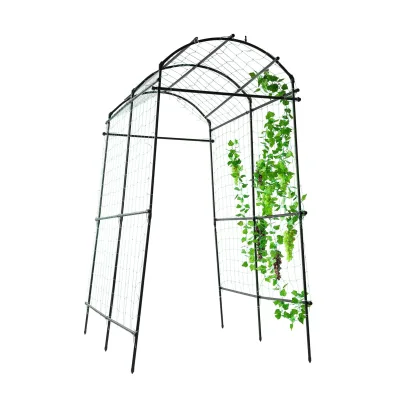
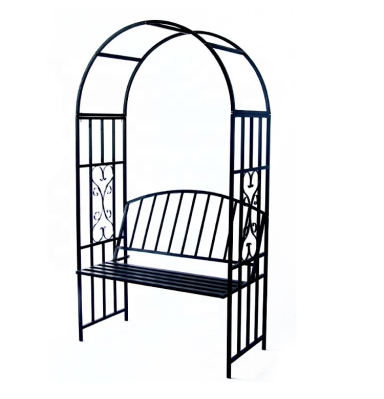
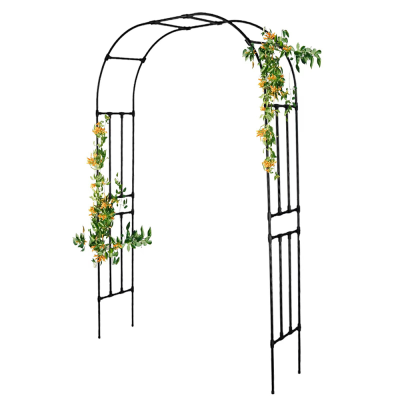
Stainless Steel Garden Arch Trellis for Climbing Plants Outdoor 180x120x210mm
$15.00 - $25.00
MOQ: 50 units
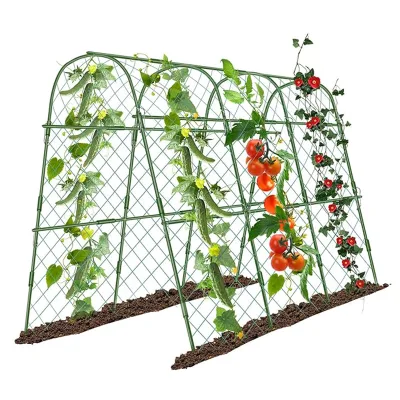
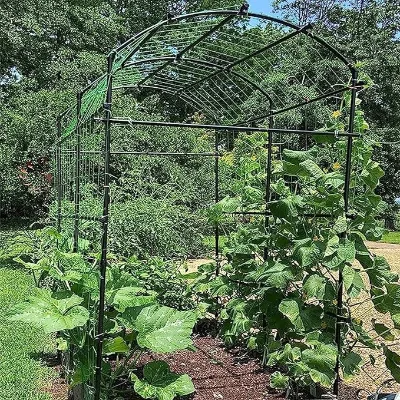
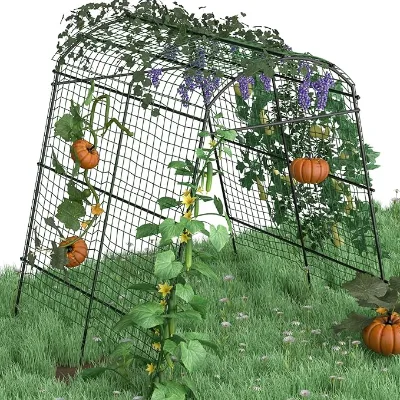
Large Garden Trellis Metal Arch Trellis Diy Vegetable
$15.00 - $25.00

- Trading Company,Manufacturer/Factory,Group Corporation
- China Zhejiang
- Lead time30 days
- Avg. response≤ 3h
Main productsScrewdriver, Handsaw, Fireplace, Plier, Hose Clamp, Aviation Snips, Hand Tools, Pruning Shear, Earmuff, Caulking Gun
Main marketsSouth America,Eastern Europe,Mid East,North America,Southeast Asia,Eastern Asia,Oceania,Western Europe,Africa
Ningbo Hugeleaf Gardening Products Co., Ltd.
- Verified by TüVRheinland
- Trading Company
- Lead time35 days
- Avg. response≤ 3h
Main productsGarden Tools, Plastic Products, Garden Decoration, Pet Product, Outdoor Products
Main marketsNorth America(30%), Western Europe(30%), South America(5%)
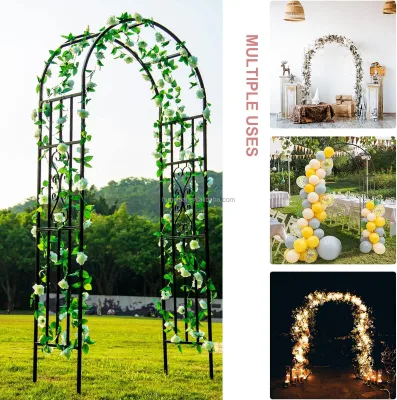
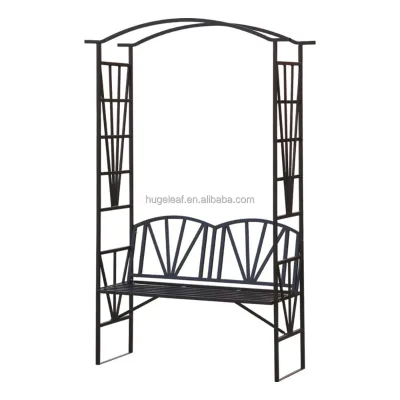
Sturdy Outdoor Decoration Rustproof Trellis Metal Garden Arbor for Climbing Plants
$42.01 - $43.23
MOQ: 500 pieces
Ningbo Gamry Import & Export Co., Ltd.
- Trading Company
- Zhejiang, China
- Lead time30 days
- Avg. response≤ 7h
Main productsGarden,thermometer,Pet items,Stationary
Main marketsNorth America(20.00%), Eastern Europe(15.00%), Northern Europe(10.00%), Western Europe(10.00%), Southern Europe(10.00%), South America(10.00%), Central America(6.00%), Oceania(5.00%), Mid East(4.00%), Southeast Asia(4.00%), Domestic Market(3.00%), Eastern Asia(2.00%), South Asia(1.00%)
Dongguan Zolink Craftworks Co., Ltd.
- Manufacturer, Trading Company
- Guangdong, China
- Lead time15 days
- Avg. response≤ 5h
Main productsGrow Bags,Fabric Pots,Plastic Pots,Grow tent,Garden Accessories
Main marketsNorth America(40.00%), South Asia(20.00%), Northern Europe(20.00%), Oceania(20.00%)

Hebei Teng Yang Steel Structure Co., Ltd.
- Verified by SGS
- Combined
- China Hebei
- Lead time23 days
- Avg. response≤ 7h
Main productsSteel Tower, Telecom Tower, Self Supporting Tower, Guyed Tower, Guard Tower, Antenna Pole, Lattice Tower, FRP Tank, Telescopic Mast, Camouflage Tower
Main marketsAfrica,Southeast Asia/ Mideast


Steel Galvanized Camouflaged Pine/Palm Large Outdoor Artificial Trees Towers
$1300.00 - $2000.00
MOQ: 1 Tons


Ningbo HY Communication Equipment Co., Ltd.
- Verified by BV
- Trading Company
- China Zhejiang
- Lead time30 days
- Avg. response≤ 4h
Main productsTelecom Tower, Transmission Line Tower, Angular Tower, Tubular Tower, RDS Tower, Monopole, Rooftop Tower, Camouflaged Tower, Guyed Mast/Tower
Main marketsSouth America,Africa,Southeast Asia/ Mideast,East Asia(Japan/ South Korea),Europe,Australia,North America

Hot-DIP Galvanized Camouflaged Tree, Ideal for Telecommunication Applications
$1180.00 - $1258.00
MOQ: 1 Tons


Elegant Palm Tree Tower with Unique Bark and Durable Hot-DIP Galvanized Finish
$1180.00 - $1258.00
MOQ: 1 Tons

HENAN JINBAILAI INDUSTRIAL CO., LTD.
- Verified by BV
- Trading Company
- China Henan
- Lead time23 days
- Avg. response≤ 3h
Main productsBBQ, Gas Fire Pit, Wood Fireplace, Stove, Steel Planter, Metal Decors, Garden Furniture, Garden Landscape
Main marketsEurope,North America








Comprehensive Sourcing Guide
Laminated Stainless Steel Arbor Shims Supplier Concentration and Factory Types
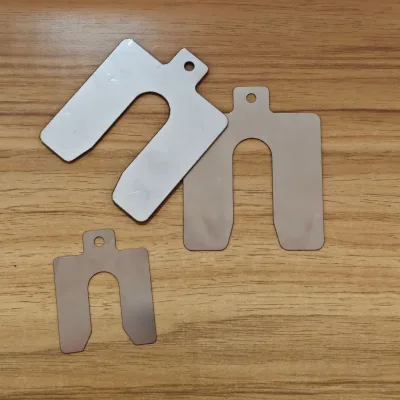
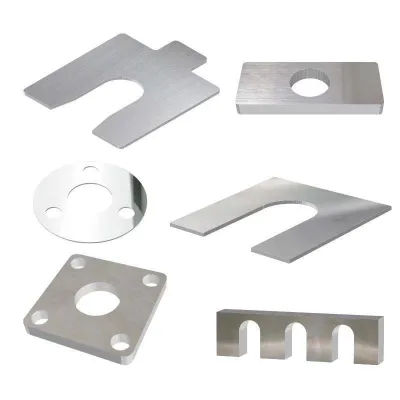
Current data indicates a concentration of manufacturing capabilities in China, specifically within the Zhejiang and Guangdong provinces. Factories in Zhejiang, such as those in Ningbo, often focus on combined company types that handle both production and trading, offering products like auto parts stainless steel plate shims and flat carbon spring steel precision shims. These entities frequently list main products including shafts, shock absorber parts, and various shim types, suggesting a specialized cluster for precision metal components. In contrast, suppliers in Guangdong, particularly in Shenzhen, appear more oriented toward trading companies or fabrication services that provide custom laser-cut solutions with high tolerance capabilities. This geographic split suggests that buyers seeking mass-produced standard sizes might find efficiency in Zhejiang, while those requiring fully customized dimensions and rapid prototyping may find better alignment with Guangdong-based fabrication services.
When assessing factory types, buyers should distinguish between combined entities and pure trading companies based on their stated capabilities. Some suppliers explicitly list OEM and ODM support alongside specific certifications like ISO 9001 or TS 16949, indicating a direct manufacturing relationship with quality control systems in place. Others may present as trading companies with shorter response times, potentially leveraging a network of factories rather than owning production lines directly. The presence of specific product attributes, such as sheet thickness ranges from 0.02 to 1.00 mm or material options including SUS304 and SUS316, serves as a proxy for factory capability. Buyers must verify if the supplier's stated main products align with the specific lamination and arbor requirements of their project, as a supplier specializing in shock absorber parts may not possess the specific tooling for complex arbor shims.
How to Verify Laminated Stainless Steel Arbor Shims Suppliers
Verification of supplier credibility relies heavily on third-party audit reports and specific certification claims found in product data. Several observed suppliers hold verification badges from recognized bodies such as TÜV Rheinland, BV, and SGS, which provide a baseline level of trust regarding their business operations. Additionally, system certifications like ISO 9001 and TS 16949 are critical indicators for automotive and industrial applications, ensuring that the manufacturing process adheres to strict quality management standards. Buyers should prioritize suppliers who explicitly display these certifications in their product attributes or company profiles, as these documents often validate the supplier's ability to maintain consistent quality for precision components like laminated shims.
Beyond certifications, buyers must scrutinize the specific product evidence provided to confirm technical competence. Detailed product attributes, such as tolerance levels of +/-0.005mm or +/-0.02mm, and material specifications like stainless steel or copper, demonstrate a supplier's technical depth. Evidence of quality control processes, including IQC, IPQC, and OQC inspections, further validates the supplier's commitment to defect prevention. Buyers should also check for customization availability and sample lead times, as a supplier offering samples within 1-7 days and mass production lead times of 15-35 days demonstrates operational agility. It is essential to confirm that the supplier's stated capabilities, such as maximum size capabilities up to 600 mm diameter, match the actual requirements of the laminated arbor shims being sourced.
What to Compare Across Laminated Stainless Steel Arbor Shims Suppliers
Comparing suppliers requires a systematic evaluation of key operational metrics including lead times, minimum order quantities, and response speeds. Observed data shows significant variation in lead times, ranging from 15 days to 35 days for mass production, with some suppliers offering faster turnaround for samples. Minimum order quantities also differ widely, with some suppliers requiring as few as 1 unit for custom laser-cut services, while others mandate 3000 units for standard stainless steel plate shims. Response times, measured in hours, can vary from under one hour to over 17 hours, indicating differences in customer service responsiveness and operational efficiency. Buyers should create a comparison matrix that weighs these factors against their specific project timelines and budget constraints to identify the most suitable partner.
Price and material options form another critical dimension for comparison across the supplier landscape. Unit prices for similar products can range from as low as $0.01 to over $200, depending on the complexity, material grade, and customization level. Suppliers offering fully customized dimensions and specific material options like SUS304 or SUS316 typically command higher price points compared to those providing standard OEM sizes. Buyers must also consider the total cost of ownership, including packaging standards and shipping logistics, which can vary from simple plastic bags to anti-static bags with foam protection. Evaluating the supply ability, such as 600,000 sets per month, helps determine if a supplier can scale to meet large volume demands without compromising on delivery schedules or quality consistency.
Common Laminated Stainless Steel Arbor Shims Sourcing Risks
One significant risk in sourcing Laminated Stainless Steel Arbor Shims involves the discrepancy between advertised capabilities and actual production capacity. While some suppliers claim high supply abilities and extensive customization options, the actual output may be limited by their specific machinery or workforce constraints. Buyers should verify the stated production capacity against their order volume requirements to avoid potential delays or quality compromises. Additionally, the reliance on third-party fabrication services by trading companies can introduce variability in quality control, as the final product may not undergo the same rigorous inspection processes as those manufactured in-house. This risk is particularly relevant when sourcing complex custom parts that require precise tolerances and specific surface finishes.
Another critical risk pertains to the accuracy of product specifications and material certifications. Suppliers may list standard materials like stainless steel, but the specific grade or treatment, such as drying antirust or oiled finishes, might not meet the buyer's exact application needs. Inconsistent documentation regarding certifications or lack of detailed test results can lead to non-compliance with industry standards. Furthermore, the variability in lead times, ranging from 15 to 35 days, poses a risk for projects with tight deadlines. Buyers must ensure that the supplier's stated lead times are realistic and include buffer periods for potential delays. Verifying the origin of materials and the specific manufacturing processes used is essential to mitigate these risks and ensure the final product meets all performance requirements.
Laminated Stainless Steel Arbor Shims Regional Sourcing and Logistics
Regional sourcing strategies should focus on the specific manufacturing clusters identified in the data, primarily in Zhejiang and Guangdong provinces. Suppliers in Zhejiang, particularly in Ningbo, often specialize in standard and semi-custom components with established logistics networks for bulk shipments. These regions are well-suited for sourcing high-volume orders of standard sizes where cost efficiency and established supply chains are paramount. Conversely, suppliers in Guangdong, especially in Shenzhen, are better positioned for custom, low-volume orders requiring rapid prototyping and specialized fabrication services. The proximity of these clusters to major ports facilitates efficient export logistics, but buyers must account for regional differences in shipping costs and transit times when planning their supply chain.
Logistics planning must also consider the specific packaging requirements and handling instructions provided by suppliers. Some suppliers offer standard packaging like plastic bags, while others provide more robust solutions such as anti-static bags with foam protection and export cartons to prevent damage during transit. The choice of packaging can significantly impact the condition of the shims upon arrival, especially for precision components that require strict tolerance maintenance. Buyers should evaluate the supplier's packaging standards against the fragility and sensitivity of their specific arbor shim requirements. Additionally, understanding the supplier's location relative to the buyer's destination helps in estimating accurate delivery times and calculating total landed costs, ensuring that the logistics strategy aligns with the project's timeline and budget constraints.
Laminated Stainless Steel Arbor Shims Commercial Terms and Order Planning
Commercial terms and order planning are pivotal for managing the financial and operational aspects of sourcing Laminated Stainless Steel Arbor Shims. Buyers must carefully review the minimum order quantities, which can range from single units for custom services to thousands for standard parts, to ensure alignment with their inventory and budget strategies. Payment terms, while not explicitly detailed in the provided data, should be negotiated based on the supplier's verification status and the order value. Establishing clear communication channels and response time expectations is crucial, as suppliers with faster response times, such as those under one hour, can facilitate quicker decision-making and issue resolution during the order process.
Order planning should also account for the specific lead times and production schedules provided by the supplier. With lead times varying from 15 to 35 days, buyers need to incorporate these durations into their overall project timeline to avoid delays. It is essential to confirm the sample lead times, which can be as short as 1-7 days, to allow for adequate testing and validation before committing to mass production. Buyers should also verify the supplier's capacity to handle custom orders, including the availability of specific materials and the ability to meet tight tolerance requirements. By aligning commercial terms with realistic production capabilities and lead times, buyers can mitigate risks and ensure a smooth procurement process for their Laminated Stainless Steel Arbor Shims.
FAQs
What are Laminated Stainless Steel Arbor Shims used for?
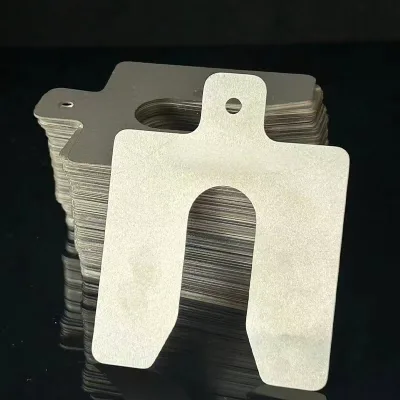
Laminated Stainless Steel Arbor Shims are used to set precise spacing and alignment on arbors, shafts, saws and machining setups. The laminated construction allows thin layers to be peeled off to reach an exact thickness during adjustment. Buyers typically use them where solid shims cannot provide fine incremental spacing, especially in metal processing machinery and precision assembly work.
What tolerance can I expect on custom precision shims?
Listed capabilities among suppliers in these results include tolerances of plus or minus 0.005 mm for laser-cut shims and plus or minus 0.02 mm for laminated shims, so achievable tolerance depends on the process. Confirm the tolerance class for your drawing before ordering. For fine arbors and saw-plate applications, request dimensional inspection reports with the shipment.
What is the typical MOQ for Laminated Stainless Steel Arbor Shims?
Minimum order quantities vary widely by supplier and product type. In the current results, custom laser-cut shims show an MOQ of 1 piece, laminated shims an MOQ of 5, shock absorber shims 500 pieces, and stamped plate shims 3,000 pieces. Confirm the MOQ for your specific thickness and size, since low-volume custom work usually carries a higher unit price.
How long is the lead time for custom shim orders?
Lead times in the current results range from 15 to 30 days depending on the supplier. One listing shows sample lead time of 1 to 7 days and mass production of 15 to 35 days for laminated shims. Lead time depends on material availability, thickness range and whether your design requires new tooling, so confirm both sample and production schedules in writing.
What stainless steel grades are available for shims?
SUS304 and SUS316 are the grades explicitly listed for custom laser-cut shims, with other listings confirming stainless steel construction for shim plates and shock absorber shims. Some suppliers also offer copper, nickel, aluminum and brass alternatives. Specify the grade you need for corrosion resistance and spring properties, and ask for material certificates to verify the alloy before production begins.
Can suppliers produce shims from my drawing or sample?
Yes, customization is explicitly available across the listings, including OEM and ODM support based on drawing or sample. Supplied dimensions can be fully customized in round, square or irregular shapes, with laminated shims available up to roughly 600 mm diameter. Send a dimensioned drawing with tolerances, material grade and thickness, and request a sample approval before mass production.
What certifications should I verify when sourcing shims?
The current results show suppliers holding ISO 9001 and TS 16949 system certifications, plus third-party verification from TUV Rheinland, BV and SGS. Product listings also reference ISO certification on specific shim products. For automotive or safety-critical arbor applications, prioritize suppliers with TS 16949 and request material test reports and dimensional inspection records with each production batch.
How are shims typically packaged for export?
Packaging methods listed include plastic bags, anti-static bags with foam protection and export cartons, and PE bags with inner boxes and cartons or custom packaging. Shock absorber shims are packed drying antirust or oiled, then 100 to 500 pieces per package. For thin laminated shims, request edge protection and moisture barrier packaging to prevent corrosion and layer damage in transit.