DIN Rail Fuse Interface Module Suppliers and Manufacturers
Explore 21 verified DIN Rail Fuse Interface Module suppliers from China Zhejiang and Jiangsu. Compare response times, lead times, and product specifications like voltage and customization options. Contact suppliers directly to request quotes; review the available evidence before requesting comparable quotations from suitable candidates.
Suppliers List

Yueqing Barfuse Electric Co., Ltd.
- Combined
- China Zhejiang
- Lead time15 days
- Avg. response≤ 13h
Main productsfuse switch disconnector
Main marketsSoutheast Asia/ Mideast
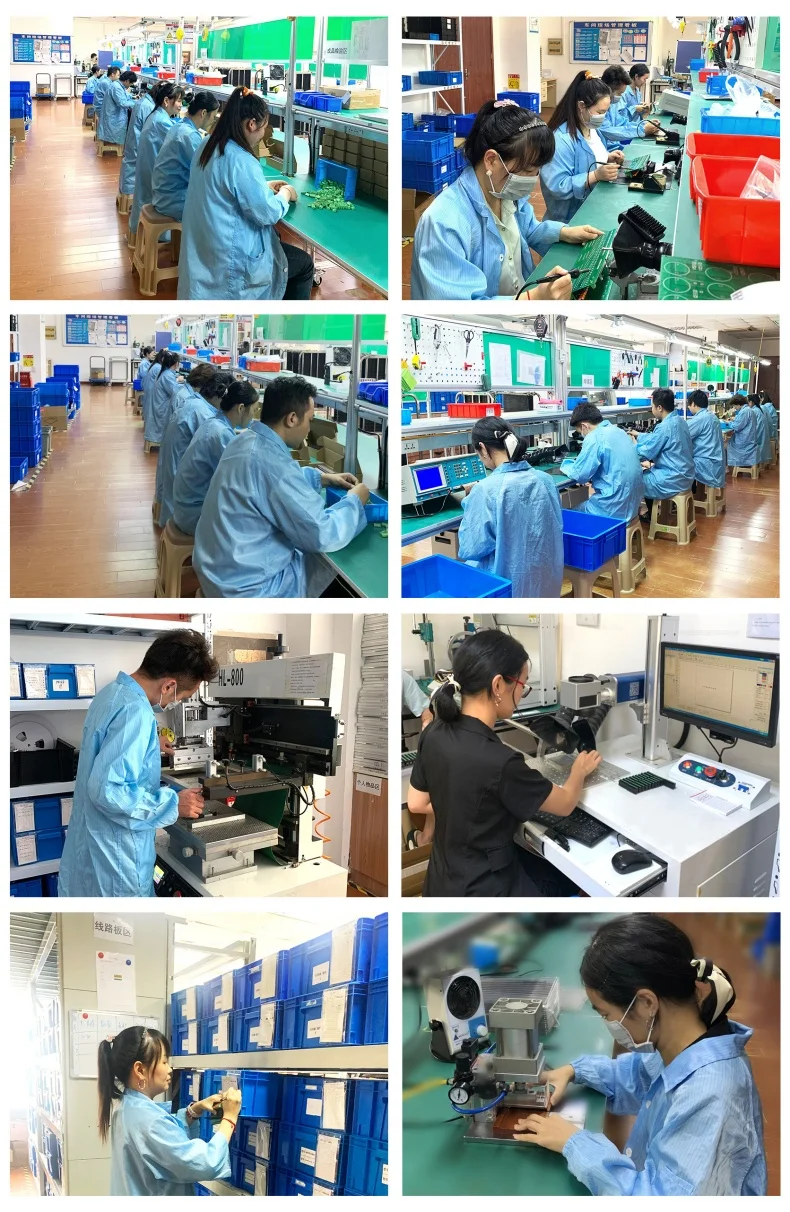
Suzhou Smaide Electric Co., Ltd.
- Manufacturer
- Jiangsu, China
- Lead time0 days
- Avg. response≤ 2h
Main productsTerminal block,Relay module,Connector,Cable,Fireproof materials
Main marketsNorth America(50.00%), Southeast Asia(30.00%), South America(10.00%), Eastern Europe(10.00%)
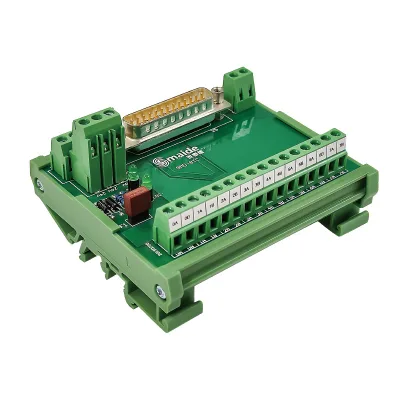
8-Channel Analog Input Thermocouple Module with Fuse 24VDC Screw Terminal and Din Rail Blocks
$23.00 - $23.50
MOQ: 5 pieces
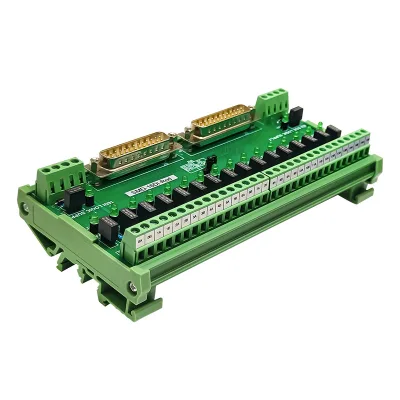
$26.86 - $27.37
MOQ: 5 pieces
Yueqing Zhijiu Electric Co., Ltd.
- Verified by SGS
- Trading Company
- China Zhejiang
- Lead time15 days
- Avg. response≤ 5h
Main marketsAfrica,Southeast Asia/ Mideast,East Asia(Japan/ South Korea),Europe,North America
Shenzhen Hualian Technology Co., Ltd.
- Manufacturer, Agent, Distributor/Wholesaler
- Guangdong, China
- Lead time7 days
- Avg. response≤ 6h
Main productscable ID pinter,PCB Carrier,Cable,Terminal Block,Relay Module
Main marketsDomestic Market(30.00%), South America(15.00%), Southeast Asia(12.00%), Mid East(10.00%), Eastern Asia(10.00%), South Asia(9.00%), Western Europe(5.00%)
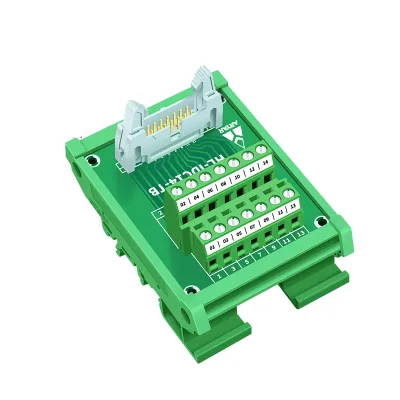
IDC14 DIN Rail Mounted Interface Module, Breakout Board, Terminal Block IDC14 Spliter Module
$5.09 - $6.11
MOQ: 1 units
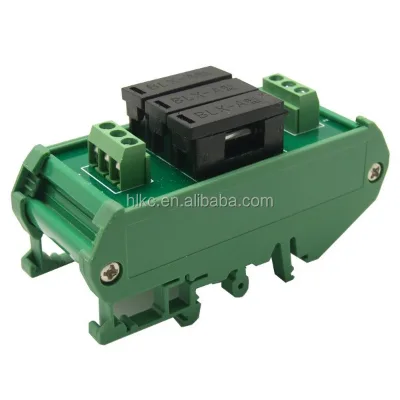
3 Channel Fuse Interface Module, Fuse Holder, Din Rail Mount, for 5x20mm Tube Fuse. HL-FU-01
Contact supplier
MOQ: 1 Minimum
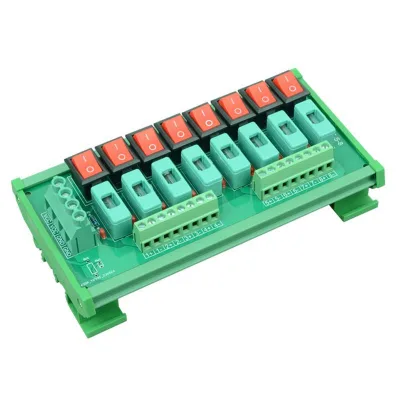

- Combined
- China Zhejiang
- Lead time23 days
- Avg. response≤ 10h
Main productsElectrical & Electronics, Terminal Block, Pushbutton, Indicator, PCB Terminal, PCB, Circuit Board
Main marketsSouth America,Southeast Asia/ Mideast,Europe

Fuse Terminal Block Electrical Industrial DIN Rail Screw Fuse Wiring Terminal Blocks
$0.10 - $0.50
MOQ: 1000 Pieces


- Combined
- China Zhejiang
- Lead time15 days
- Avg. response≤ 11h
Main productsTerminal Block, Fan Filter, Ferrules
Main marketsSouth America,Southeast Asia/ Mideast,Europe
Shanghai Gkoncy Electric Co., Ltd.
- Verified by BV
- Combined
- China Shanghai
- Lead time30 days
- Avg. response≤ 2h
Main productsElectrical Connector, Terminal Block, Industrial Connector, DIN Rail Terminal Block, Heavy Duty Connector, Power Distribution Block, Crimp Terminal, High Current Terminal Block
Main marketsSouth America,Domestic,Europe


DIN Rail Screw Type Fuse Terminal Block, Black Copper Modular Circuit Protection Wiring Connector
$0.38 - $0.44
MOQ: 1000 Pieces

$0.92 - $1.07
MOQ: 1000 Pieces

$1.08 - $1.25
MOQ: 1000 Pieces

$0.92 - $1.07
MOQ: 1000 Pieces
Zhejiang Weide Electric Co., Ltd.
- Trading Company
- China Zhejiang
- Lead time15 days
- Avg. response≤ 5h
Main productsTerminal Block, Relay Module, Botton, Pilot Lamp, Cable, Cold-Pressed Terminal
Main marketsEastern Europe,North America,Western Europe

DIN Rail Fuse Terminal Block Push in Terminal Block 4mm Connector Terminals
$0.82 - $0.96
MOQ: 25 Pieces


Filter Fuse Terminal Module with 10A/20A Anti-Interference Filtering Module
$10.88 - $24.88
MOQ: 1 Pieces

in Rail Terminal Block Fuse Terminal Block Connector Terminals for Wire Connector
$0.54 - $0.58
MOQ: 25 Pieces
Shenzhen Guoxin Automation Technology Co., Ltd.
- Verified by SGS
- Trading Company
- China Guangdong
- Lead time15 days
- Avg. response≤ 6h
Main productsPLC, Controller, Inverter, Sensor, Module
Main marketsSoutheast Asia/ Mideast

Dongguan Tianrui Electronics Co., Ltd.
- Combined
- China Guangdong
- Lead time15 days
- Avg. response≤ 6h
Main productsFuse, Thermal Fuse, Auto Fuse, Thermal Protector, Fuse Holder, Auto Circuit Breaker
Main marketsSouth America,Africa,Others(foreignTradeCapacity.exportBusinessCapacityMarketOther),Southeast Asia/ Mideast,Domestic,Europe,Australia,North America

Terminal Fuse Block Bolt in Anm Mega Fuse Holder Module for Single Multi Fuse
$41.99 - $43.99
MOQ: 50 Pieces


Shenzhen Penghaida Electronics Co., Ltd.
- Verified by CTI
- Trading Company
- China Guangdong
- Lead time15 days
- Avg. response≤ 7h
Main productsIntegrated Circuits (Ics), Memory IC DDR3 / DDR4 / DDR5 DRAM, Semiconductors, IC Devices & Components, Active Components, Passive Components, Connectors, Automotive Grade Ics, Industrial & Computer Electronics, Obsolete / Eol / Hard-to-Find Ics
Main marketsDomestic

- Manufacturer/Factory,Group Corporation,Other
- China Zhejiang
- Lead time0 days
- Avg. response≤ 25h
Main productsDropout Fuse, Insulators, Poleline Hardwares, Arrester, LV Fuses, Distribution Box, Plugs&Sockets, Disconnector Switches, Junction Boxes, Fuse Links
Main marketsSouth America,Eastern Europe,Mid East,North America,Southeast Asia,Eastern Asia,Oceania,Western Europe,Africa
Shenzhen Dongheng Electronic Technology Co., Ltd.
- Trading Company, Distributor/Wholesaler
- Guangdong, China
- Lead time0 days
- Avg. response≤ 1h
Main productsElectronic Components,Cables,Integrated Circuit,Development Boards,3D Printer Parts
Main marketsNorth America(40.00%), Southeast Asia(30.00%), South Asia(10.00%), Central America(10.00%), Mid East(10.00%)
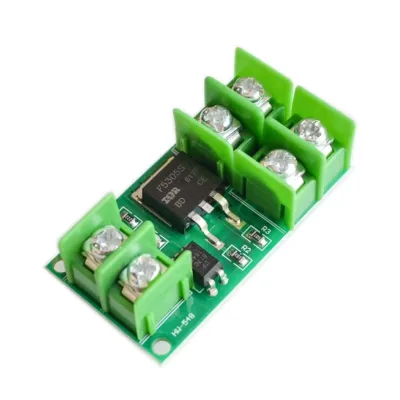
Electronic switch control board, pulse triggered switch module, DC controlled MOSFET optocoupler
$0.49 - $0.53
MOQ: 10 pieces

Beijing Zhonglian Yuanyang Technology Co., Ltd.
- Verified by TUVRHEINLAND
- Trading Company
- China Beijing
- Lead time0 days
- Avg. response≤ 9h
Main productsSwitch, Server, Module, CPU, RAM, Barrty

ZHEJIANG SMICO ELECTRIC POWER EQUIPMENT CO., LTD.
- Trading Company,Manufacturer/Factory
- China Zhejiang
- Lead time15 days
- Avg. response≤ 15h
Main productsInsulation Piercing Connector, Heavy Duty Connector, Change-Over Switch, Dead End Clamp, Fuse Switch Disconnector, Suspension Clamp, Anchor Clamp, Parallel Groove Clamp
Main marketsSouth America,Eastern Europe,Mid East,North America,Southeast Asia,Eastern Asia,Oceania,Western Europe,Africa

ZHEJIANG FUERTE ELECTRICAL APPARATUS CO., LTD.
- Verified by SGS
- Trading Company,Manufacturer/Factory
- China Zhejiang
- Lead time23 days
- Avg. response≤ 5h
Main productsFuse Cutout, Lightning Arrester, Load Break Switch, Insulator, Disconnecting Switch, Fuse Link, Bar Fuse Type Switch, Fuse Holder, Electrical Fitting Series, Bar Fuse Type Switch Series
Main marketsSouth America,Eastern Europe,Mid East,North America,Southeast Asia,Eastern Asia,Oceania,Western Europe,Africa

High-Amperage Fuse Components for Flexible Configurations with Enhanced Conductivity
$0.60 - $6.00
MOQ: 200 Pieces

Flame Retardant Fuse Components Flame Retardant for Cable and Conductor Protection
$0.60 - $6.00
MOQ: 200 Pieces

Guangzhou Ruihu Electric Co., Ltd.
- Trading Company,Individuals/Soho,Manufacturer/Factory,Other
- China Guangdong
- Lead time15 days
- Avg. response≤ 22h
Main productsPower Capacitor, Cable Accessories, Transformer Components, Pad Mounted Transformer Componesnts, Rmu, Bushing, Arrest, Gis Rmu, AIS Rmu, Battery
Main marketsMid East,North America,Africa

Shenzhen Dulcimer Technology Co., Ltd.
- Verified by TUVRHEINLAND
- Trading Company
- China Guangdong
- Lead time30 days
- Avg. response≤ 6h
Main productsLight-Emitting Diode Chip, Lto Tape Drive, Avaya IP Phones, Electrolytic Capacitors, Tantalum Capacitors, Transistors, IC, Resistors, Paste Capacitors, Network Products
Main marketsNorth America

Huatong (FATO) Group Co., Ltd.
- Group Corporation
- China Zhejiang
- Lead time0 days
- Avg. response≤ 16h
Main productsLow Voltage Electrical Apparatus, MCB, AC Contactor, Cabinet, Cable Accessories, RCCB MCCB

Yueqing Greenwich Imp & Exp Co., Ltd.
- Manufacturer/Factory
- China Zhejiang
- Lead time45 days
- Avg. response≤ 10h
Main productsMCCB, Contactor, Starter, Connector, Relay, Magnetic Starter, MCB, Circuit Breaker, DC Contactor, Vacuum Breaker
Main marketsSouth America,Eastern Europe,Mid East,North America,Southeast Asia,Eastern Asia,Oceania,Western Europe,Africa

ORIENT ELECTRIC INTERNATIONAL GROUP LIMITED
- Verified by BV
- Combined
- China Hubei
- Lead time30 days
- Avg. response≤ 4h
Main productsDistribution Fuse Cutouts, Surge Arrester, Disconnector Switch, Gang Insulator, Insulator, Expulsion Fuses, Polymer Insulator, Load Interrupter Air Switchs, Pole Line Hardware, Fuse Link
Main marketsSoutheast Asia/ Mideast


Comprehensive Sourcing Guide
DIN Rail Fuse Interface Module Supplier Concentration and Factory Types
When you search for a DIN Rail Fuse Interface Module, the visible results show suppliers clustered in eastern China. One set of listings originates from Zhejiang, where the supplier positions itself as a combined manufacturer and trader whose main product line is the fuse switch disconnector. Its catalog extends into DIN rail fuse bases, HRC fuse holders, fuse blocks and multi-pole fuse rail switch disconnectors, which tells you the factory ecosystem there is oriented around low-voltage fuse hardware rather than generic electronics. A second cluster appears in Jiangsu, where the supplier is classified as a manufacturer whose main products are terminal blocks, relay modules, connectors, cable and fireproof materials, with fuse-protected terminal modules sold as DIN rail devices.
The results also include a trading company type, which matters for how you plan factory audits. Trading intermediaries in this category typically resell items such as multi-channel DC fuse distribution modules with DIN rail mounting, while manufacturers control tooling for terminal blocks and fuse bases. Before shortlisting, classify each result by company type, main products and whether the listing products match the module format you need. If cluster information is missing for a given result, identify the cluster indirectly by checking the product origin attribute on the listing, the province named in company details, and whether the product line breadth suggests a factory or a reseller profile.
How to Verify DIN Rail Fuse Interface Module Suppliers
Verification starts with the labels the platform already displays, then moves to evidence you request. In the current results, one supplier is flagged as an SGS-verified trading company, which gives you a third-party verification signal on the entity itself, though it does not certify the products. Other results show a company type, a location, and a system certification field that is empty or listed as NIL. Treat an empty certification field as unverified rather than as a negative: ask the supplier directly for certificates applicable to your market and confirm them against the issuing body's database before relying on them.
Go deeper with document and sample checks. For manufacturers, request the business license scope to confirm fuse or low-voltage electrical production is inside it, and ask whether ODM and OEM capability is real; at least one Zhejiang result explicitly lists own brand, ODM and OEM capacity, which you should confirm with references or tooling evidence. For product-level verification, match the listing attributes against your specification: one module listing declares a 24VDC rated voltage, plastic construction and an operating temperature range of -20°C to +55°C, while a fuse base listing declares a national execution standard and panel-installed type. Ask for declaration of conformity documents matching those claims, then order samples from each shortlisted source and inspect terminal contact material, fuse holder retention and rail clipping before any deposit.
What to Compare Across DIN Rail Fuse Interface Module Suppliers
Build a comparison table from the attributes visible per result, since not every supplier displays every field. Useful dimensions in this category include lead time, minimum order quantity, average response time, company type, location, verification status and main products. The spread in the current results is instructive: quoted lead times range from a stated 15 days on one Zhejiang listing to zero or unspecified on others, and response times range from roughly two hours to more than twelve hours. A fast response time often signals an active export sales team, while a slow one may mean you are writing to a mailbox checked occasionally.
Compare commercial parameters next. One fuse base listing shows a MOQ of 100 pieces with a single displayed price point, while a terminal-block module from the Jiangsu manufacturer shows a MOQ of only 5 pieces and a small price band between its minimum and maximum. That difference tells you the Zhejiang source is structured for bulk fuse hardware and the Jiangsu source for lower-volume electronics purchases. Also compare product positioning: a 400A DIN rail fuse rail rated 250/400/630A for power plants is a different procurement from a 4-channel DC fuse distribution module accepting 1-72V input with indicator lights. Rank suppliers on fit to your electrical specification first, then on commercial terms, and weight verified status and manufacturer type ahead of price alone.
Common DIN Rail Fuse Interface Module Sourcing Risks
The most common risk is buying from a listing whose product class does not match your need. This category mixes genuine DIN rail fuse bases, fuse switch disconnectors, fuse-protected terminal block modules and DC distribution modules on the same results page. Ordering a thermocouple input terminal module with an onboard fuse when you needed a fuse base for HRC links wastes a sampling cycle. Mitigate this by requiring the supplier to confirm the exact product model, rated voltage, number of channels or poles, and fuse size in writing before payment, referencing the listing attributes they published.
Certification and consistency risks follow. One result openly shows no system certification, and several listings cite only a national execution standard, which may not satisfy your destination market's requirements; never assume CE, UL or equivalent compliance from a listing. A second risk is the intermediary gap: when a trading company resells a factory's fuse distribution module, warranty responsibility and spare fuse availability can become unclear. Third, watch for attribute inconsistencies between the product description and the specification table, such as a protection-grade field that is incomplete. Finally, protect cash flow by avoiding large first orders where the MOQ is high relative to the unit price, and use staged payments tied to sample approval, production photos and pre-shipment inspection rather than full prepayment.
DIN Rail Fuse Interface Module Regional Sourcing and Logistics
The evidence places these suppliers in Zhejiang and Jiangsu, two adjacent eastern-China provinces with dense electrical-component supply chains. Sourcing both provinces together is practical: Zhejiang results center on fuse bases and fuse switch disconnectors with carton packing, while Jiangsu results cover terminal block modules in small cartons of roughly 12 by 11 by 8 centimeters per unit, with single gross weights of 0.4 to 0.5 kilograms. Small, dense cartons mean air freight is viable for sampling and pilot orders, while sea freight consolidations work for bulk fuse hardware pallets; one switch disconnector listing even specifies a carton dimension of 73.5 by 29 by 25 centimeters, which you can use for container load calculations.
Plan logistics around declared lead times and packing formats. A stated 15-day lead time on one result is a useful anchor, but other listings do not display lead time, so request confirmation per item and per quantity. Pallet or carton options appear on the three-pole fuse rail listing, so ask whether export pallets are available to reduce handling damage on ceramic and plastic parts. When origin details are missing from a result, verify the origin attribute printed on the listing, which in several cases states China, and confirm the dispatching province with the supplier before quoting freight. Match incoterms to whether the supplier is a manufacturer with its own export license or a trading company arranging shipment.
DIN Rail Fuse Interface Module Commercial Terms and Order Planning
Order planning should begin with the MOQ and price structure each listing discloses. The fuse base results show MOQ 100 at a flat displayed unit price, the 400A fuse rail lists a single price point, the three-pole switch disconnector lists its own price, and the Jiangsu terminal modules show MOQ 5 with a narrow price band. Use these as opening references, then negotiate based on annual volume, customization requirements and packaging. Where customization is marked as available, as several listings state, expect the supplier to quote separately for modified ratings, marking or packaging, and get that quote in writing with a tooling or setup cost breakdown.
Structure payments and timelines defensively. For a first order, a common structure is a deposit with the balance after inspection, sized so your exposure is limited if the lead time slips beyond the stated 15 days or another figure the supplier confirms. Tie the balance to a pre-shipment inspection covering rated voltage, contact material such as nickel-plated copper where specified, rail mounting fit and fuse retention. Confirm incoterms, carton or pallet packing, and spare fuse availability before signing. For repeat purchasing, consolidate fuse bases, fuse rails and terminal modules with the suppliers whose lead times and response speeds have proven reliable, and renegotiate price bands annually against the volumes you can document from the first year's orders.
(Word count: approximately 1,410 including headings.)
FAQs
What is a DIN Rail Fuse Interface Module used for?
A DIN Rail Fuse Interface Module provides fused, clip-on termination between field wiring and system I/O, protecting low-voltage circuits from overcurrent. It snaps onto standard DIN rails inside control cabinets and distribution boxes. Buyers typically use it for 24VDC signal circuits, thermocouple inputs, and digital input modules where each channel needs independent fuse protection.
What channel counts and voltage ratings are commonly available?
Listed modules include an 8-channel thermocouple input version rated 24VDC with 250mA per channel, a 16-digit screw terminal block module rated 24V, and a 4-channel DC fuse distribution module accepting 1-72V DC input with 15A and 3A fuses. Some listings also reference 6, 8, 12, and 16 channel configurations, so confirm exact counts per model before ordering.
What is the typical MOQ for DIN rail fuse modules?
Minimum order quantities vary by supplier and product type. Observed listings show MOQs as low as 5 pieces for fuse-equipped terminal block modules, while panel-installed fuse holders list an MOQ of 100 pieces. Low-volume buyers should filter for low-MOQ listings, and always confirm the current MOQ with the supplier before requesting a quotation.
How fast do suppliers of these modules usually respond?
Response times differ significantly between supplier types in the current results. One Jiangsu manufacturer advertises an average response time of about 2 hours, while a Zhejiang combined manufacturer and trader shows roughly 12 hours, and an SGS-verified trading company shows under 5 hours. If your project timeline is tight, prioritize suppliers quoting the fastest average response time.
Where are DIN Rail Fuse Interface Module suppliers mainly located?
The suppliers represented in these results are concentrated in eastern China. One manufacturer of fuse-equipped terminal block modules is based in Jiangsu, while suppliers of fuse bases, fuse switch disconnectors, and DIN rail fuse rails are located in Zhejiang. Both provinces are established electronics and low-voltage electrical manufacturing regions, making either a practical sourcing destination.
What customization options can buyers request?
Several listed products state that customization is available, including DIN rail fuse bases, fuse rails, and DC fuse distribution modules. Observed capabilities include own-brand, ODM, and OEM production from one Zhejiang supplier. Practical requests include channel count, fuse rating, connection method such as screw terminals, labeling, and packaging in cartons or pallets, so state requirements clearly in inquiries.