Diode Soldering Station Suppliers and Manufacturers in China
Explore 21 verified Diode Soldering Station suppliers and manufacturers in Guangdong, China. Compare response times, lead times, certifications, and prices to find the right partner. Contact suppliers directly to request quotes and verify specifications; review the available evidence before requesting comparable quotations from suitable candidates.
Suppliers List
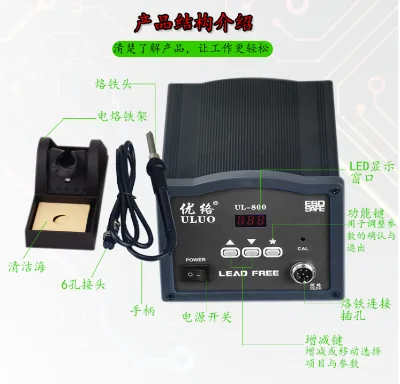
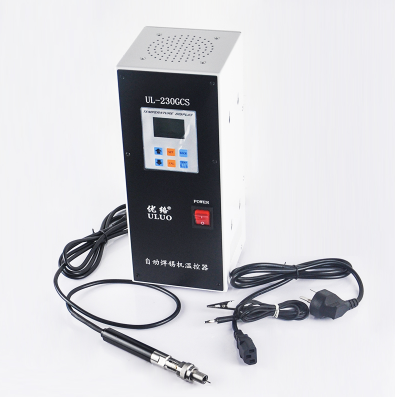
Dongguan Uluo Electronic Co., Ltd.
- Manufacturer, Trading Company
- GUANGDONG, China
- Lead time7 days
- Avg. response≤ 10h
Main productsSoldering Tips,Soldering Station,soldering robot,selective Soldering,fume extractor
Main marketsSoutheast Asia(30.00%), Eastern Asia(12.00%), South Asia(10.00%), North America(5.00%), Central America(5.00%), South America(5.00%), Mid East(5.00%)
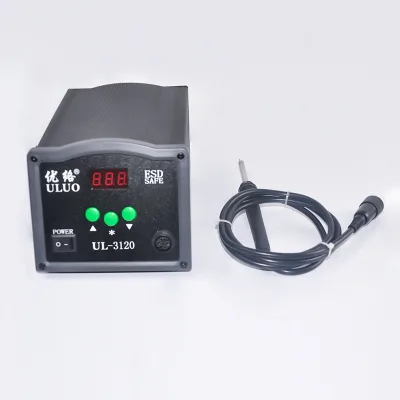
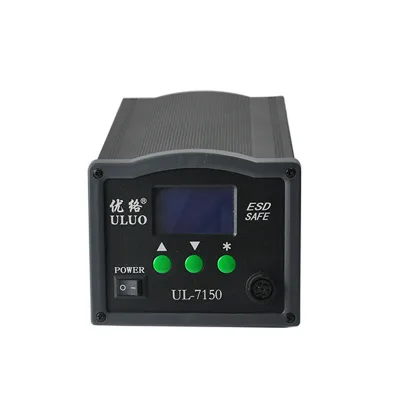
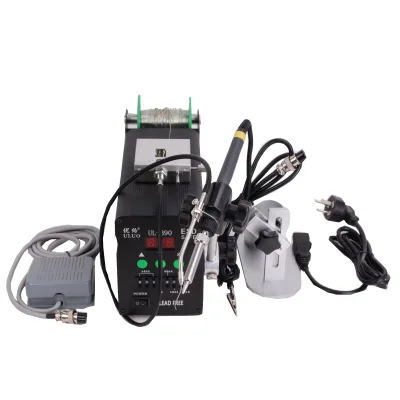
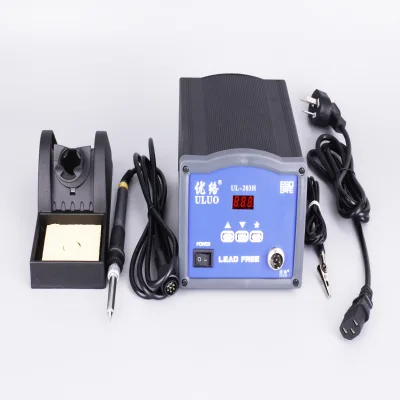
Factory Wholesale Price Soldering Station
$78.00 - $88.00
Hefei Chegongshe Hardware Technology Co., Ltd.
- Verified by Intertek
- Manufacturer, Trading Company
- Lead time7 days
- Avg. response≤ 2h
Main productsJack, Grease Gun, Tool Sets, Dent Repairing Machine, Snow Chain
Main marketsNorth America(20%), South America(20%), Eastern Asia(20%)
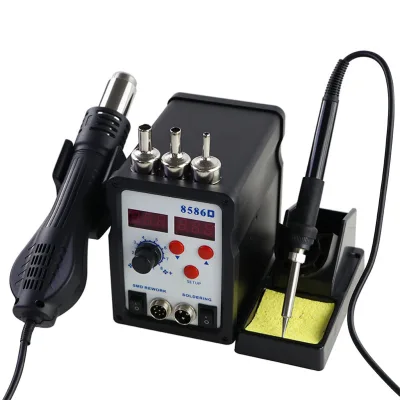
Good Service Supplier T245 Soldering Station Soldering Station Digital Mini Soldering Station
$23.13 - $28.25
MOQ: 20 pieces
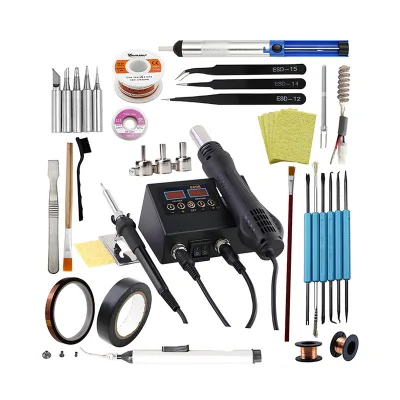
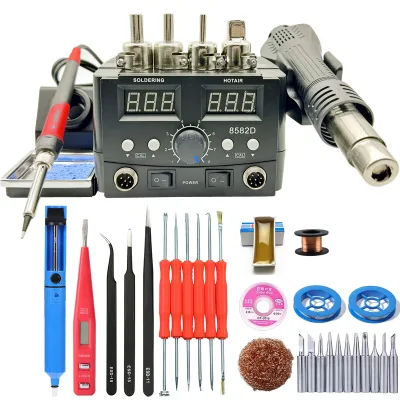
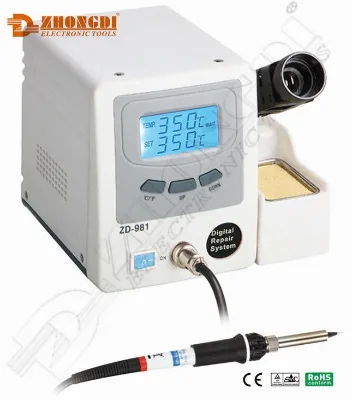
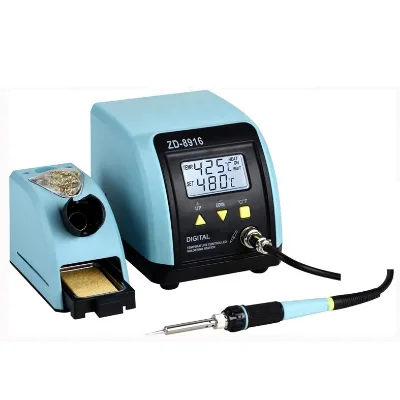
Ningbo Zhongdi Industry And Trade Co., Ltd.
- Verified by TüVRheinland
- Manufacturer, Trading Company
- Lead time35 days
- Avg. response≤ 6h
Main productsSoldering Station, Soldering Iron, Fume Extractor, Heat Guns, Magnifying Lamps
Main marketsWestern Europe(25%), South America(12%), Eastern Europe(10%)
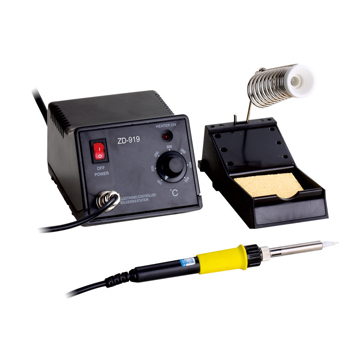
$22.58 - $24.63
MOQ: 500 Minimum
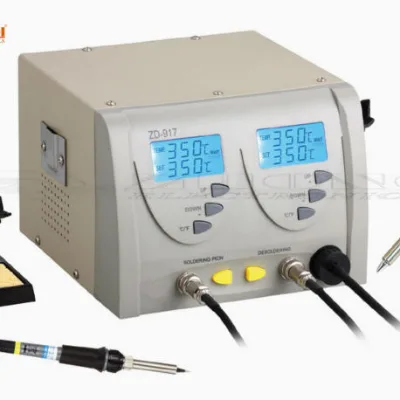
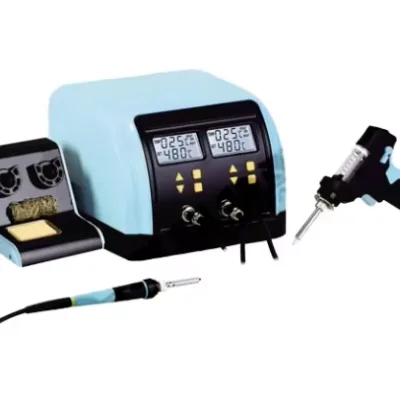

Juhuaxin (Foshan) Technology Co., Ltd.
- Trading Company
- China Guangdong
- Lead time0 days
- Avg. response≤ 9h


Professional Multi-Function Soldering Station - Adjustable 200-480° C Control
$60.00 - $63.00
MOQ: 5 Pieces

Shenzhen Zhongtu Automation Technology Co., Ltd.
- Verified by BV
- Combined
- China Guangdong
- Lead time23 days
- Avg. response≤ 4h
Main productsAutomated Soldering Machine, Automated Dispensing Machine, Automated Screw Locking Machine, Semi Automatic Soldering Machine, Vacuum Oca Lamination Machine, Automatic Locking Screw Machine, Mechanical Equipment, Soldering Machine, Glue Dispensing Machine, Automated Machine
Main marketsSoutheast Asia/ Mideast,East Asia(Japan/ South Korea),Europe,North America

Good Quality Popular Automatic Soldering Machine with Dual Soldering Stations
$3500.00 - $4200.00
MOQ: 1 SET

Two Heads Soldering Equipment Desktop Solder Robot Automatic Soldering Robot Soldering Machine
$3500.00 - $4200.00
MOQ: 1 SET


Tabletop Multiple Axis 2 Platforms Automatic Soldering Machine with Single Soldering Tip
$3100.00 - $3800.00
MOQ: 1 SET

New Efficient Automatic Dual Working Stations Soldering Machine for PCB
$3100.00 - $3800.00
MOQ: 1 SET


Shenzhen City Yixin Technology Co., Ltd.
- Manufacturer, Agent, Distributor/Wholesaler
- Guangdong, China
- Lead time5 days
- Avg. response≤ 3h
Main productsCellphone Repair,Tablet fix,Cellphone Accessories Retail,Cellphone accessories wholesale,Phone refurbish
Main marketsNorth America(55.00%), Western Europe(25.00%), Eastern Europe(5.00%), South America(2.50%), Northern Europe(2.50%), Southern Europe(2.50%), Southeast Asia(1.75%), Oceania(1.50%), Domestic Market(1.50%), Eastern Asia(1.00%), Mid East(1.00%), Africa(0.25%), South Asia(0.25%), Central America(0.25%)
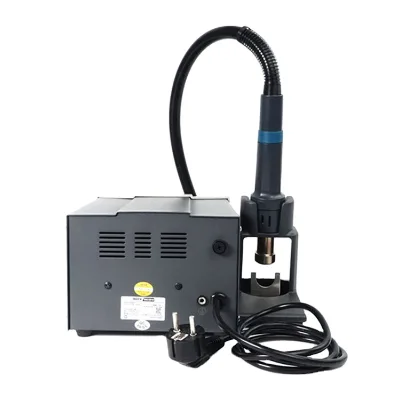
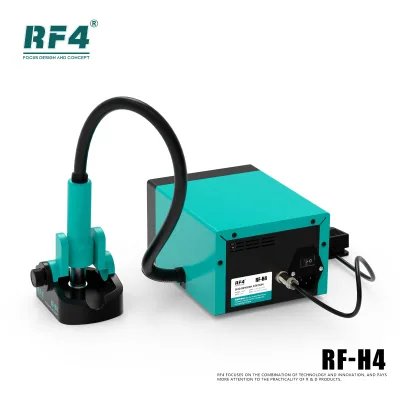
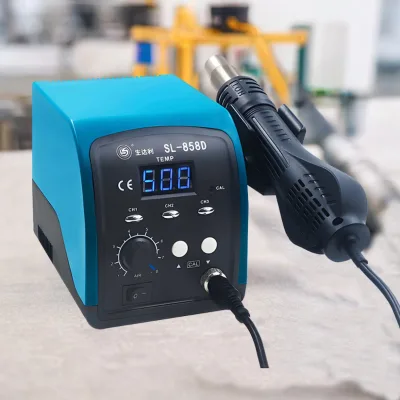
Best Selling Temperature Adjustment Lead-free Soldering Station air Gun Handle Soldering Station
$215.96 - $226.24
MOQ: 1 pieces

Dongguan Rongan Electromechanical Equipment Co., Ltd.
- Verified by TUVRHEINLAND
- Manufacturer/Factory
- China Guangdong
- Lead time15 days
- Avg. response≤ 2h
Main productsAutomatic IC Programming Machine, Automatic Screw Fastening Machine, Automatic Eyewear Bending Machine, Automatic Welding Machine, Automatic Laser Marking Machine, Automatic Despensing Machine, Automatic Eyewear Screw Fastening Machine, Automatic Foot Cutting Machine, Glasses Lens Cutting Machine
Main marketsSouth America,North America,Southeast Asia,Eastern Asia,Western Europe

- Combined
- China Guangdong
- Lead time15 days
- Avg. response≤ 5h
Main productsAutomatic Assembly Line, Handheld Auto Screw Locking Machine, Automatic Screw Locking Machine, Automatic Solderring Machine, Automatic Glue Dispenser, SMT Stencil Processing, FPC Laser Machine, Stencil Laser Machine, Laser Marking Machine, Non-Standard Automatic Electronic Equipment
Main marketsSoutheast Asia/ Mideast,Europe,Australia,North America
Shenzhen Jingshengda Technology Co., Ltd.
- Trading Company, Distributor/Wholesaler
- Guangdong, China
- Lead time0 days
- Avg. response≤ 11h
Main productsMobile phone digital products,Computer notebook,Maintenance tools,Auxiliary products for welding accessories,Mobile Phone Computer Laptop Accessories
Main marketsDomestic Market(40.00%), Southeast Asia(30.00%), Eastern Europe(30.00%), Mid East(20.00%), Africa(20.00%), North America(10.00%), South Asia(10.00%)

Dongguan City Bobang Intelligent Technology Co., Ltd
- Verified by SGS
- Combined
- China Guangdong
- Lead time15 days
- Avg. response≤ 2h
Main productsScrew Locking Machine, Screwing Machine, Screw Dispenser Machine, Screw Fastening Robot, Automatic Screw Machine, Screwdriver Machine, Soldering Machine, Solder Robot, Screw Fastening Machine, Screw Feeder Machine
Main marketsSoutheast Asia/ Mideast,Europe,North America

Hebei Fadetong Machinery Manufacturing Co., Ltd.
- Verified by TUVRHEINLAND
- Manufacturer
- China Hebei
- Lead time15 days
- Avg. response≤ 2h
Main productsWelding Table


180*50 Heavy Pressure Head-Soldering Station Accessories Auxiliary Device
$13.00 - $18.00
MOQ: 1 Pieces

Shaanxi Sibeier(Sbe) Electronic Technology Co., Ltd.
- Verified by TUVRHEINLAND
- Trading Company
- China Shaanxi
- Lead time15 days
- Avg. response≤ 2h
Main productsDigital Multimeter, Resistance Meter, Wood Moisture Meter, Digital Thermometer, Digital Anemometer, Rotary Resistance Box, Earth Resistance Meter, Voltage Voltmeter, True RMS AC/DC Clamp Meter
Main marketsDomestic

Professional Double Digital Soldering Station for Precision Electronics Repair2.
$40.00
MOQ: 10 Pieces

Shenzhen Jinliyang Technology Co., Ltd.
- Manufacturer, Trading Company
- Guangdong, China
- Lead time8 days
- Avg. response≤ 4h
Main productsSoldering Station/Hot Air Rework Station/DC Power Supply/Test Leads/Screwdriver Set
Main marketsNorth America(15.00%), Western Europe(15.00%), South America(10.00%), Eastern Asia(8.00%), Domestic Market(8.00%), Eastern Europe(7.00%), Mid East(7.00%), Southeast Asia(6.00%), South Asia(5.00%), Southern Europe(5.00%), Central America(5.00%), Northern Europe(5.00%), Oceania(2.00%), Africa(2.00%)
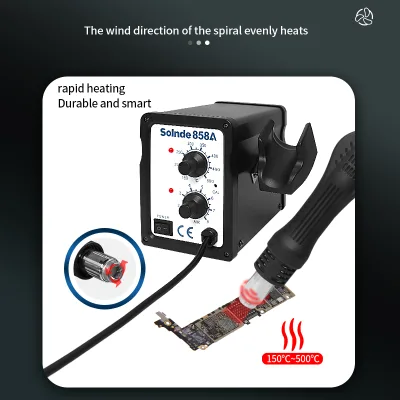
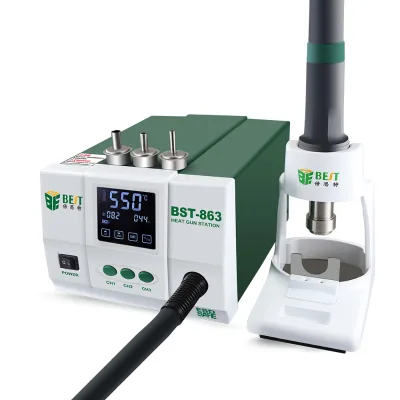
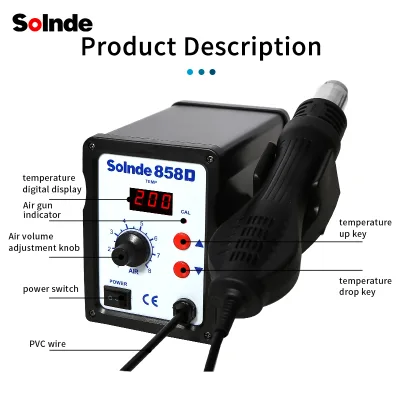
$14.54 - $16.97
MOQ: 12 pieces

Dongguan Mingrui Technology Co., Ltd.
- Verified by SGS
- Trading Company
- China Guangdong
- Lead time30 days
- Avg. response≤ 1h
Main productsSMT Line, DIP Line, SMT Printer, X-ray, PCB Conveyor, Laser Marking, Wave Soldering Machine, Pick and Place, Reflow Oven, Coating Machine
Main marketsOthers(foreignTradeCapacity.exportBusinessCapacityMarketOther)

$6000.00 - $7000.00
MOQ: 1 Pieces

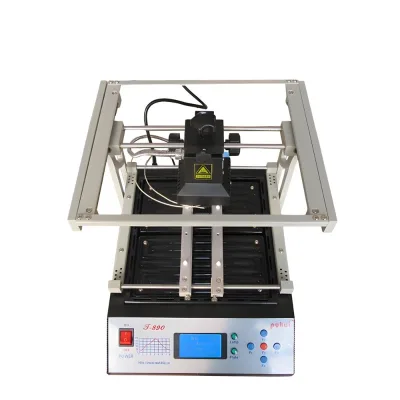
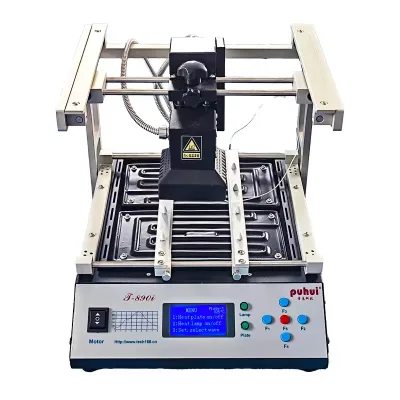
PCB BGA Rework Station Factory Hot Sale BGA Soldering Rework Station
$5000.00 - $7000.00
MOQ: 1 Pieces

Guangzhou Minder-Hightech co.,Ltd
- Trading Company
- China Guangdong
- Lead time30 days
- Avg. response≤ 6h
Main productsWire Bonder, Soldering Machine, Bond Tester, Grinder and Polisher, Dicing Saw, Die Bonder, Plasma Surface Treatment Machine, Ultrasonic Metal Welder, Glue Dispenser, Parallel Sealing Welder
Main marketsEurope,North America

Automatic Double Head/ Double Station Desktop PCB Soldering Machine/ Soldering Robot
$2000.00 - $6000.00
MOQ: 1 Pieces

PCB PCBA Automatic Desktop Soldering Machine Solder Robot Soldering Pot Welder
$2600.00 - $6000.00
MOQ: 1 Set

Automatic PCB Soldering Machine PCB Soldering Welder for Electronics Assembly
$2000.00 - $6000.00
MOQ: 1 Pieces

Automatic PCBA Electronics Assembly Soldering Machine PCB Soldering Robot Welder
$2500.00 - $6000.00
MOQ: 1 Pieces

- Verified by BV
- Combined
- China Guangdong
- Lead time23 days
- Avg. response≤ 4h
Main productsSoldering Machine, Wire Harness Processing Machine, Customize Automatic Machine, Wire Stripper, Terminal Crimping Machine, Automatic Wire Cutting and Stripping Machine, Winding and Binding Machine, Tinning Machine, Automatic Cutting Stripping Crimping Machine, Cable Testing Machine
Main marketsSouth America,Southeast Asia/ Mideast,East Asia(Japan/ South Korea),Europe,Australia,North America


Semi Automatic Wire Soldering Iron Stations Solder Cable Machine
Contact supplier

Shenzhen High-Flyer Motor Equipment Co., Ltd.
- Verified by SGS
- Manufacturer
- China Guangdong
- Lead time23 days
- Avg. response≤ 1h
Main productsWinding Machine, Assembly Line, Soldering Machine, Automated Production Line, Hot Sale Factory Price Fiberglass Mesh Weaving M, Coil Winding, Electric Motor Winding Machine, Transformer Winding Machine, Motor Winding Machine, Electric Motor Coil Winding Machine
Main marketsDomestic

Advanced Custom Soldering Station with Customized Production According to Drawings
$100000.00
MOQ: 1 Sets


- Trading Company
- Hong Kong S.A.R.
- Lead time5 days
- Avg. response≤ 4h
Main productsSolar power bank,Solar camera,Solar lamp,Solar alarm,Rechargeable battery
Main marketsSouth America(20.00%), Eastern Europe(15.00%), North America(10.00%), Domestic Market(5.00%), South Asia(5.00%), Southern Europe(5.00%), Northern Europe(5.00%), Central America(5.00%), Western Europe(5.00%), Eastern Asia(5.00%), Mid East(5.00%), Oceania(5.00%), Africa(5.00%), Southeast Asia(5.00%)

Shenzhen Shengdian Electronic Equipment Co., Ltd.
- Combined
- China Guangdong
- Lead time15 days
- Avg. response≤ 5h
Main productsSMT Machine, Reflow Soldering Oven, Ng /Okfully Automatic Loading Machine., Conveyor, Pick and Place Machine, Wave Soldering, Solder Paste Printing Machine, SMT Loader/ Unloader, Semi-Automatic Printing Press, Shuttle
Main marketsSouth America,Africa,Southeast Asia/ Mideast,East Asia(Japan/ South Korea),Domestic,Europe,Australia,North America

BGA Rework Station Wholesale Automatic Soldering PCB BGA Chip Rework SMD Rework Stations
$5600.00 - $11850.00
MOQ: 1 Set

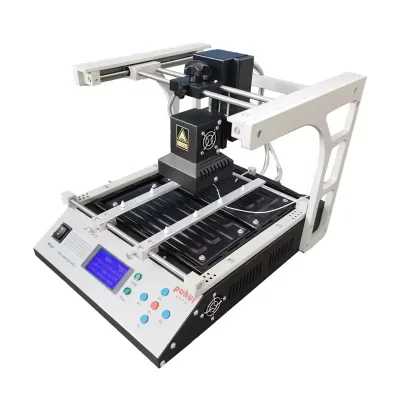
Rework Station Automatic Soldering/Welding PCB BGA Chip Rework SMD Rework Stations
$3660.00 - $3800.00
MOQ: 1 Set

$3700.00 - $4800.00
MOQ: 1 Pieces
Shenzhen Chengxiang Technology Co., Ltd.
- Verified by Intertek
- Trading Company
- Lead time0 days
- Avg. response≤ 4h
Main productsSoldering Stations, Spot Welders, Screen Removal Separator, SMT Machine, Heat-transfer Machine
Main marketsSouthern Europe(20%), Eastern Europe(18%), North America(15%)
Shenzhen Feng Chipsource Electronic Co., Ltd.
- Manufacturer, Trading Company, Distributor/Wholesaler
- Guangdong, China
- Lead time2 days
- Avg. response≤ 7h
Main productsIntegrated Circuit,Electronic Components,Development Board,Wifi module,Bluetooth module
Main marketsNorth America(20.00%), Northern Europe(16.00%), Southern Europe(10.00%), South America(10.00%), Western Europe(10.00%), Eastern Europe(10.00%), Domestic Market(3.00%), South Asia(3.00%), Oceania(3.00%), Africa(3.00%), Central America(3.00%), Southeast Asia(3.00%), Eastern Asia(3.00%), Mid East(3.00%)




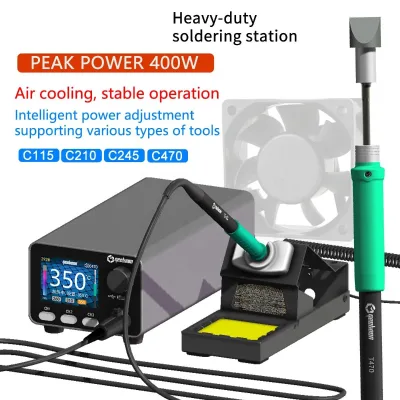
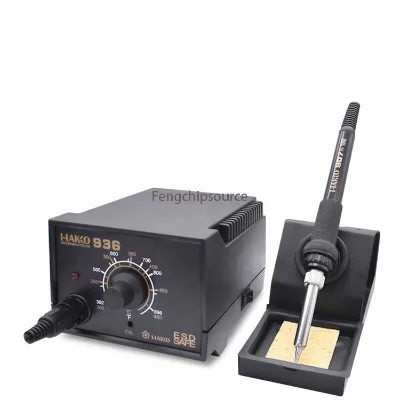
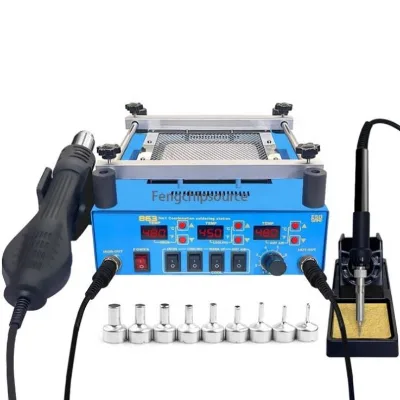
Comprehensive Sourcing Guide
Diode Soldering Station Supplier Concentration and Factory Types
The available data indicates a specific concentration of manufacturing activity within Guangdong, China, for suppliers offering soldering stations and related equipment. This region serves as a primary hub for the production of digital soldering stations, fume extractors, and selective soldering robots. When evaluating potential partners, buyers should prioritize verifying if the supplier's physical operations align with this established industrial cluster, as proximity to component supply chains often influences production efficiency and cost structures. The presence of manufacturers in this area suggests a mature ecosystem for electronics assembly tools, though buyers must confirm the specific factory location rather than assuming all listed entities operate from this single province.
Supplier types in this category vary between direct manufacturers and trading companies, a distinction that impacts pricing and communication channels. The observed results include entities classified as both manufacturers and trading companies, each offering different value propositions regarding customization and inventory depth. Manufacturers typically provide direct access to production lines for OEM and ODM support, allowing for specific modifications to the soldering station's aluminum frame or digital control systems. Trading companies may aggregate products from multiple factories, potentially offering a broader range of main products like jack tools or grease guns alongside soldering equipment, but buyers must verify the actual source of the Diode Soldering Station to ensure quality control standards are met directly from the production floor.
How to Verify Diode Soldering Station Suppliers
Verification of supplier credentials requires a rigorous check against the specific certifications and verification badges displayed in the current results. Several products listed carry CE and RoHS certifications, which are critical for ensuring compliance with international safety and environmental standards for electrical equipment. Buyers should explicitly request the valid certificate documents for the specific model number, such as the UL-3120 or UL-7150, to confirm that the CE marking applies to the Diode Soldering Station being purchased and not just a generic product line. Additionally, the presence of Intertek verification on some supplier profiles offers an external layer of trust, but this status must be confirmed as active and applicable to the specific facility producing the soldering equipment.
Response time and communication reliability are vital metrics for assessing supplier readiness and operational stability. The data shows response times ranging from 2 to 10 units, indicating a variance in how quickly different suppliers engage with potential buyers. A faster response time often correlates with a more active sales team and better logistical coordination, which is essential when discussing technical specifications like temperature control accuracy or voltage compatibility. Buyers should test the responsiveness of a supplier before placing an order, asking specific questions about the 1-year warranty terms or the automatic sleep function features to gauge the depth of their technical knowledge. This interaction helps distinguish between active manufacturers and passive intermediaries who may not fully understand the product's digital or manual welding modes.
What to Compare Across Diode Soldering Station Suppliers
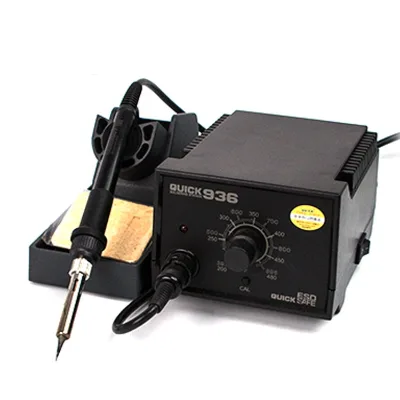
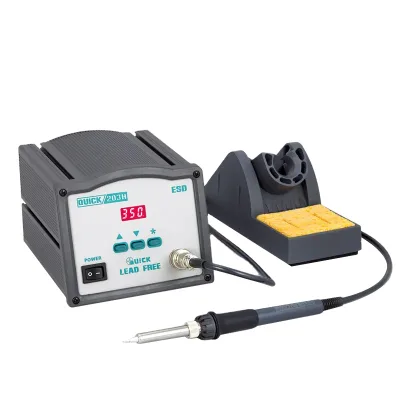
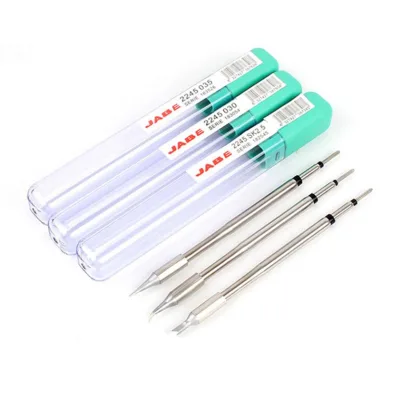
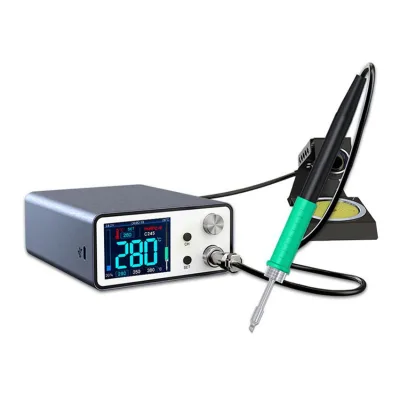
Comparing suppliers requires a detailed analysis of product specifications, particularly power ratings, temperature ranges, and tip compatibility. The observed product data reveals a wide spectrum of power outputs, from 90W to 230W, with temperature ranges consistently spanning from 50 to 600 degrees Celsius. Buyers must match these technical parameters to their specific diode soldering requirements, ensuring the selected station can handle the thermal demands of their components without overheating or failing to reach necessary temperatures. The availability of different tip types, such as the 500 series, 800 series, or needle tips, further necessitates a comparison to ensure the station supports the specific soldering techniques required for the intended application.
Pricing structures and minimum order quantities (MOQ) vary significantly across the available supplier results, influencing the total cost of ownership. Prices for soldering stations range from approximately $60 to $420, depending on the model's complexity, power output, and included features like 485 communication functions or password locking. The MOQ is listed as low as 1 unit for some items, which is advantageous for small-scale prototyping or initial testing phases. However, buyers should also consider the single package size and gross weight, as these factors directly impact shipping costs and logistics planning. A comprehensive comparison must weigh the unit price against the included warranty period, which is frequently listed as one year, and the availability of OEM or ODM support for custom branding or design modifications.
Common Diode Soldering Station Sourcing Risks
One significant risk in sourcing soldering stations involves the discrepancy between advertised specifications and actual product performance, particularly regarding temperature control accuracy. While some listings claim a precision of plus or minus 2 degrees Celsius, buyers must verify this through independent testing or by requesting detailed calibration reports from the supplier. The reliance on digital control systems introduces potential points of failure, such as the stability of the heat output or the reliability of the automatic sleep function. Without rigorous quality assurance checks, a supplier might deliver units that do not maintain the stated temperature range of 50 to 600 degrees Celsius under continuous operation, leading to poor soldering joints and potential damage to sensitive diode components.
Another critical risk is the ambiguity surrounding the supply chain and the actual origin of the components used in the soldering station. Although the place of origin is listed as Guangdong, China, for many products, the distinction between a manufacturer and a trading company can obscure the true source of the aluminum frames, circuit boards, and heating elements. Buyers should be wary of suppliers who cannot provide clear documentation on the manufacturing process or the origin of critical sub-components. The presence of multiple main products, such as dent repairing machines or snow chains, alongside soldering equipment, may indicate a diversified trading company rather than a specialized factory, which could affect the depth of technical support and the consistency of quality control standards for the specific Diode Soldering Station model.
Diode Soldering Station Regional Sourcing and Logistics
Logistics planning for diode soldering stations must account for the specific dimensions and weight of the packaging, which vary by model. The data indicates single package sizes ranging from 16x20x16 cm to 34x27x27 cm, with gross weights between 4.0 kg and 15.0 kg. These physical attributes directly influence shipping costs and the selection of freight forwarders, especially when importing from the Guangdong region. Buyers should calculate the total landed cost by including freight charges based on the single gross weight and the volume of the package, as larger units like the 230W high-power stations will incur higher shipping fees compared to the more compact 90W models.
Lead times are another crucial factor in regional sourcing, with observed data suggesting a standard lead time of 7 days for production and delivery preparation. However, this timeline can fluctuate based on the supplier's current order volume and the complexity of any customizations requested, such as specific voltage requirements or branding. Buyers should confirm the exact lead time for their specific order, as the 7-day figure may apply only to standard stock items. For orders requiring OEM support or specific modifications to the digital interface, the production timeline may extend beyond the standard window. Planning for potential delays is essential to ensure that the diode soldering stations arrive in time for production schedules, particularly when dealing with international shipping from China to other regions.
Diode Soldering Station Commercial Terms and Order Planning
Commercial terms for diode soldering stations often include specific warranty provisions and voltage compatibility options that must be clearly defined before finalizing an order. The available data shows a standard warranty period of 1 year for many models, covering defects in materials and workmanship. Buyers should verify the scope of this warranty, including whether it covers the heating elements and digital control boards, and understand the process for claiming repairs or replacements. Additionally, voltage compatibility is a key commercial consideration, with options available for 110V-240V or specific 220V/50Hz configurations, ensuring the equipment can be used safely in the buyer's local electrical environment without requiring additional transformers.
Order planning should also consider the payment terms and the availability of escrow services to protect the buyer's financial interests. While specific payment terms are not detailed in the current data, the use of escrow is a recommended practice for securing transactions with international suppliers. Buyers should negotiate terms that align with their cash flow needs, potentially requesting a portion of the payment upon shipment and the remainder upon delivery. The low MOQ of 1 unit allows for flexible ordering strategies, enabling buyers to test the product quality before committing to larger volumes. However, for bulk orders, buyers should inquire about volume discounts and the potential for reduced lead times, ensuring that the commercial agreement supports their long-term supply chain stability and operational efficiency.
FAQs
What temperature range should a Diode Soldering Station cover?
A Diode Soldering Station should cover roughly 50-600°C so you can match the heat to each joint. Diodes are heat sensitive, so most work happens at moderate settings with short dwell times. Look for digital temperature control with tight accuracy, automatic sleep between joints, and stable heat recovery when soldering repeatedly on small boards.
What is the typical MOQ when buying soldering stations from manufacturers?
Many manufacturers list a minimum order of just one unit for soldering stations, which suits testing before bulk purchasing. Sample orders let you verify temperature stability and tip quality first. For production volumes, confirm whether tiered pricing applies and whether the MOQ changes for customized branding, packaging, or OEM and ODM configurations.
How fast should a supplier respond to a sourcing inquiry?
Response times on sourcing platforms vary, with some verified suppliers replying within about two hours and others within ten. Fast replies matter when you need quotes, samples, or lead-time confirmation quickly. Test responsiveness with a detailed technical inquiry before committing, since slow pre-sale communication usually predicts slow handling of warranty and spare-part requests.
Which certifications should a soldering station have for export?
For electronics assembly and export, CE and RoHS certifications are the most commonly listed credentials on soldering stations sold from China. CE covers safety compliance for European markets, while RoHS restricts hazardous substances. Some suppliers also hold third-party verification through independent inspection firms, so always request current certificate copies and match them to the exact model you plan to order.
How long does production and delivery take for soldering stations?
Listed lead times for soldering stations from Guangdong manufacturers are around seven days for production, before transit time to your destination. Actual schedules depend on order quantity, customization, and season. Confirm the lead time in writing for your specific configuration, and ask whether standard models ship faster than OEM or ODM variants that require new tooling or branding.
Can soldering stations be customized with OEM or ODM support?
Yes, many manufacturer-type suppliers in Guangdong list OEM and ODM support for their soldering stations. Customization can include branding, model configurations, packaging, and firmware or feature options such as password locking. Expect customization to affect price, minimum order quantity, and lead time, so request a written specification sheet and a sample before approving a production run.
What power ratings are available for professional soldering stations?
Professional digital stations commonly range from about 90W to 230W, with economical 120W to 150W models covering most diode and PCB work. Higher wattage gives faster heat recovery on larger joints or repeated soldering. Check the temperature control accuracy, voltage compatibility for your market, sleep function, and warranty terms alongside the wattage when comparing models.