Eco-Friendly Dried Pine Cone Suppliers and Manufacturers
Source Eco-Friendly Dried Pine Cone from 20 verified suppliers in China. Compare lead times, certifications, and MOQs to find the right partner. Contact suppliers directly to request quotes and samples for your specific needs; review the available evidence before requesting comparable quotations from suitable candidates.
Suppliers List

- Verified by BV
- Manufacturer/Factory
- China Shandong
- Lead time23 days
Main productsDried Fruit, Vf Vegetables&Fruits, Pumpkin Seeds, Pumpkin Seed Kernels, Walnuts, Pine Nuts, Sunflower Seeds, Sunflower Seed Kernels, Watermelon Seeds, Watermelon Seed Kernels
Main marketsSouth America,Eastern Europe,Mid East,North America,Southeast Asia,Eastern Asia,Oceania,Western Europe,Africa

Shandong Samson Wood Industry Co., Ltd.
- Verified by SGS
- Trading Company,Manufacturer/Factory
- China Shandong
- Lead time15 days
Main productsDoor Skin Size Plywood Moudled Door Skin HDF, Fancy Plywood/ MDF /Blockboard, Commercial Plywood/ Birch Plywood, Pencil Ceder Plywood/ Okoume Plywood, Full Poplar and Hardwood Plywood LVL, Melamine Panels Particle Board, Grooved Panels, OSB, Wooden Products, Steel Straps and Hardware
Main marketsSouth America,Eastern Europe,Mid East,North America,Southeast Asia,Eastern Asia,Oceania,Western Europe,Africa

Bozhou Swanf Commercial And Trade Co., Ltd.
- Trading Company
- Anhui, China
- Lead time7 days
- Avg. response≤ 3h
Main productsherb medicine,flower tea,dried Mushrooms,chinese herbs,Green tea
Main marketsNorth America(24.00%), Western Europe(19.00%), Oceania(14.00%), Eastern Asia(13.00%), Northern Europe(9.00%), South Asia(9.00%), Southeast Asia(5.00%), Eastern Europe(2.00%), Africa(2.00%), Central America(1.00%), Mid East(1.00%), Southern Europe(1.00%)
Shanxi Fret International Trade Co., Ltd
- Verified by BV
- Combined
- China Shanxi
- Lead time15 days
Main productsDried Apples, Dried Pears, Dried Peaches, Preserved Pear and Peach Halves, Sweet Corns, Hawthorn Snacks, Food Ingredients, Dried Shiitake Mushrooms
Main marketsNorth America
- Trading Company
- Anhui, China
- Lead time10 days
- Avg. response≤ 2h
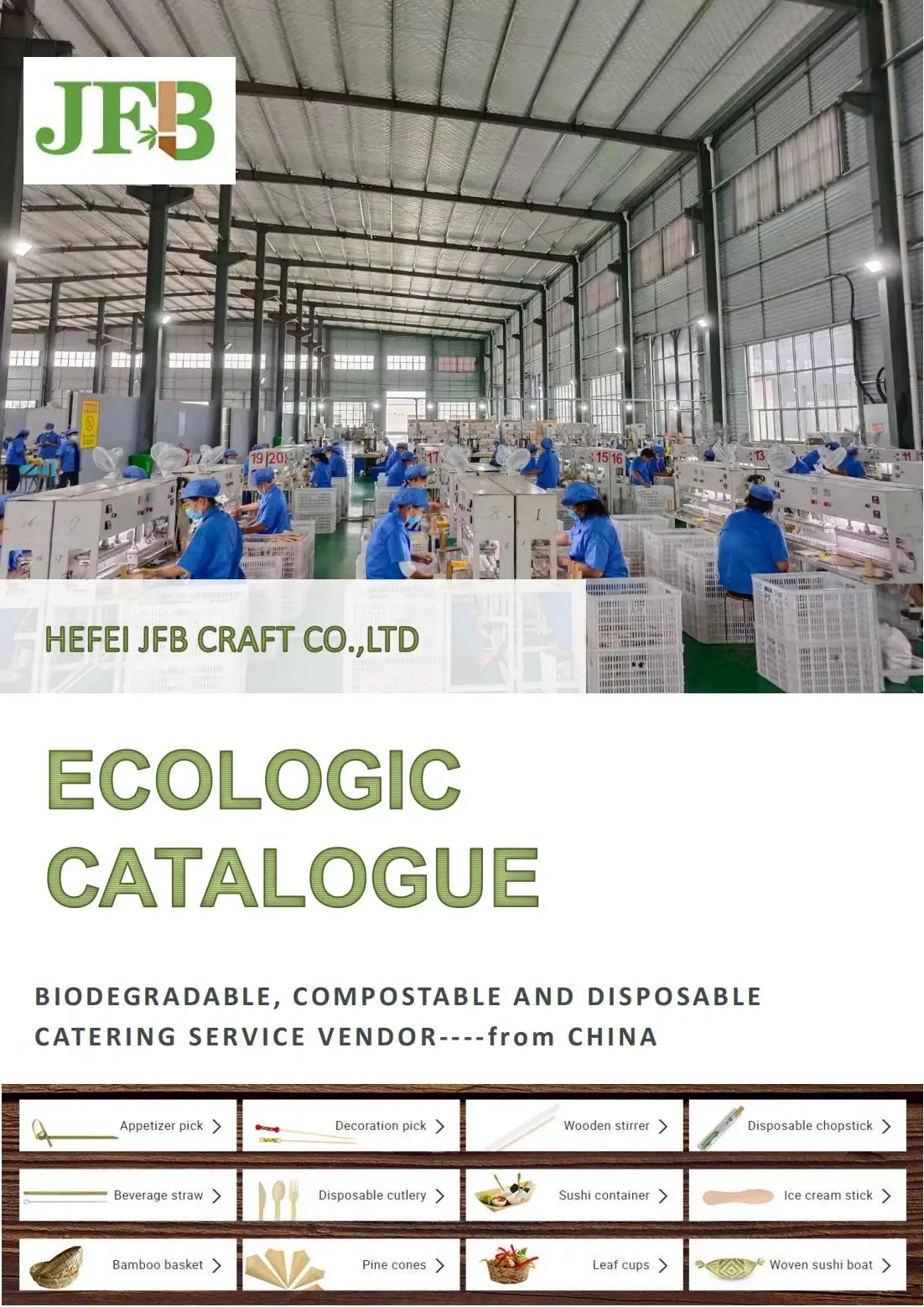
Main productsBamboo Picks,Bamboo Skewers,Disposable Cocktail Picks,Disposable Tableware,Kitchen Supplies
Main marketsOceania(20.00%), Western Europe(20.00%), North America(20.00%), Eastern Europe(15.00%), Southern Europe(10.00%), Northern Europe(10.00%), Mid East(5.00%)
Xuzhou Tuosen Bamboo Wood Products Co., Ltd.
- Verified by CTI
- Combined
- China Jiangsu
- Lead time23 days
Main productsIce Cream Stick
Main marketsSoutheast Asia/ Mideast

Shandong Guanghua Agricultural Product Co., Ltd.
- Combined
- China Shandong
- Lead time15 days
Main productsPeanut, Peanut Butter, Pumpkin Seeds, Sunflower Seeds, Dried Fruits, Beans, Spices, Foods, Peanuts, Peanut in Shell
Main marketsSouth America,Africa,Southeast Asia/ Mideast,East Asia(Japan/ South Korea),Domestic,Europe,Australia,North America
Hefei Craft Tableware Co., Ltd.
- Verified by SGS Group
- Manufacturer, Trading Company
- Lead time30 days
- Avg. response≤ 2h
Main productsWooden Cutlery, Bamboo Skewers, Sugarcane Bagasse Containers, Wooden Stirrers, Bamboo Cutlery
Main marketsWestern Europe(30%), North America(16%), Oceania(12%)

Hefei Wang Qin Spring Co., Ltd.
- Verified by SGS
- Combined
- China Anhui
- Lead time15 days
Main productsGarage Door Torsion Spring, Commercial /Industrial Door Torsion Spring, Garage Door Extension Spring, Roller Shutter Door Spring, Garage Spring Cone Die Casting Spring Fitting, Lift Door Cable Drum, Hardware Parts Accessories, Hinge Stes, Industrial Bracket, Garage Door Cables
Main marketsDomestic,Europe,North America
Richer Paper (Shenzhen) Co.,Ltd.
- Verified by BV
- Trading Company,Manufacturer/Factory
- China Guangdong
- Lead time45 days
Main productsThermal Paper Jumbo Roll, Thermal Paper, Cash Register Paper, ATM Paper, Medical Recording Paper, Fax Paper, Thermal Label, Carbonless Paper
Main marketsSouth America,Eastern Europe,Mid East,North America,Southeast Asia,Eastern Asia,Oceania,Western Europe,Africa

Cangnan Shengju Smoking Factory
- Verified by SGS
- Combined
- China Zhejiang
- Lead time23 days
Main productsCigarette Roling Paper, Olling Trays, Grinder, Cigar Cutter, Metal Pipes, Water Pipe, Asthrays, Cigarette Rolling Machine, Metal Smoking Pipe, Lighter
Main marketsDomestic

SHENGZHOU CITY ESOUND ELECTRONIC CO., LTD.
- Verified by TUVRHEINLAND
- Trading Company
- China Zhejiang
- Lead time30 days
Main productsSpeaker, Speaker Cabinet, Speaker Parts
Main marketsSoutheast Asia/ Mideast

Mudanjiang Hengfeng Paper Co., Ltd.
- Verified by TUVRHEINLAND
- Combined
- China Heilongjiang
- Lead time30 days
Main productsBible Paper, Thin Printing Paper, Ryo Paper, Gummed Paper, Rolling Paper, Straw Paper, Straw Base Paper, Food Wrapping Paper, Mg Paper, Decorative Base Paper
Main marketsAfrica,Southeast Asia/ Mideast,Europe,North America

Chengdu Rongxiang Technology Co., Ltd.
- Trading Company,Manufacturer/Factory
- China Sichuan
- Lead time15 days
Main productsConvex Mirror, Speed Hump, Traffic Sign, Road Working Light, Cable Protector, Road Stub, Wheel Stopper, Traffic Cone, Safety Vest, Warning Signage
Main marketsSouth America,Eastern Europe,Mid East,North America,Southeast Asia,Eastern Asia,Oceania,Western Europe,Africa

Richer Industry (Shanghai) Co., Ltd.
- Trading Company,Manufacturer/Factory
- China Shanghai
- Lead time23 days
Main productsRolling Paper, White Mf/Mg Colored Tissue Paper, Custom Printed Tissue Paper, Gift Bag Gift Box, Thermal Label, Kraft Paper Bag, Release Paper, Silicone Paper
Main marketsSouth America,Eastern Europe,North America,Southeast Asia,Eastern Asia,Oceania,Western Europe,Africa

Fujian Xinli Yuan Reflective Material Co., Ltd.
- Verified by TUVRHEINLAND
- Combined
- China Fujian
- Lead time23 days
Main productsReflective Film, Reflective Printing Material, Reflective Sheeting, Reflective Tape, Reflective Sticker, Reflective Product, Reflective, Photo Luminescent Film, Reflective Sign, Reflective Safety Sign
Main marketsDomestic

Hunan Reborn Medical Science and Technology Development Co., Ltd.
- Manufacturer/Factory
- China Hunan
- Lead time15 days
Main productsUreteral Access Sheath, Stone Basket, Stone Cone, Zebra Guidewire, Hydrophilic Guidewire, Mixed Guidewire, Pcnl Set, Balloon Dilatation Catheter
Main marketsSouth America,Eastern Europe,Mid East,North America,Southeast Asia,Oceania,Western Europe,Africa


Stone Cone with Ec Certificate
MOQ: 10 Pieces
- Trading Company
- China Shanghai
- Lead time0 days
Main productsRolling Paper, Rolling Tray, Grinder, Cone, Filter, Smoke Accessories


Ultra-Thin Additive-Free Variety of Sizes Customized Raw Rolling Paper Cone
$0.08 - $0.50
MOQ: 1000 Pieces
Guangdong ACE Rolling New Materials Technology Co., Ltd.
- Verified by TUVRHEINLAND
- Combined
- China Guangdong
- Lead time30 days
Main marketsSouth America,Domestic

Certified Rolling Paper Cone Kingsize Organic Smoking Paper Pre-Rolled Cone
$0.03 - $0.11
MOQ: 2000 Pieces

Food-Grade Pre Rolled Cone Custom Rolling Paper Cone Smoking Kingsize Organic
$0.03 - $0.11
MOQ: 2000 Pieces

GUANGZHOU RICHER IMPORT AND EXPORT TRADE CO.,LTD.
- Verified by SGS
- Trading Company,Manufacturer/Factory
- China Guangdong
- Lead time45 days
Main productsWhite Cigarette Rolling Paper, Machine Glazed Paper, Typewriter Paper, Mf Bleached Acid Free Tissue Paper, Food Packing Paper, Kraft Paper, Carbonless Base Paper
Main marketsSouth America,Eastern Europe,Mid East,North America,Southeast Asia,Eastern Asia,Oceania,Western Europe,Africa









Comprehensive Sourcing Guide
Eco-Friendly Dried Pine Cone Supplier Concentration and Factory Types
The current search results indicate a concentration of suppliers in specific Chinese provinces, with verified locations including Shandong and Anhui. Some entities operate as manufacturers or factories, while others function as trading companies. For instance, one verified manufacturer in Shandong lists dried fruit and vegetable products alongside pine nuts, suggesting a potential capability in dried botanical items. Another supplier in Anhui focuses on herbal medicines and dried mushrooms, which aligns with the category of dried pine cones used for decoration or tea. These distinct company types imply different operational structures; factories often manage the drying and processing directly, whereas trading companies may aggregate goods from various sources.
When evaluating the factory types, buyers should note that some suppliers hold certifications like BRC and HACCP, which are critical for food-grade dried products. Others possess broader industrial certifications such as ISO 9000 or BSCI, indicating a focus on quality management systems and social compliance. The presence of OEM and ODM capabilities in some profiles suggests that customization of the pine cone product, such as specific sizing or packaging, might be available. However, not all suppliers in the results list these capabilities, so buyers must verify if a specific factory can handle custom orders for eco-friendly dried pine cones. The diversity in company types requires careful selection based on whether the buyer needs direct manufacturing control or a broader sourcing network.
How to Verify Eco-Friendly Dried Pine Cone Suppliers
Verification of suppliers relies heavily on third-party audit reports and specific platform verification badges. The available data shows that some suppliers have been verified by BV or SGS, which provides a layer of confidence regarding their business legitimacy and operational capacity. For example, a manufacturer in Shandong holds BV verification, while another entity in the same region has SGS verification. These badges indicate that an independent agency has inspected the company's facilities or business license. Buyers should prioritize suppliers with these specific verification marks when sourcing eco-friendly dried pine cones to ensure the entity exists and operates as claimed.
Beyond verification badges, buyers must examine the specific certifications listed in the supplier profile. Some suppliers display system certifications like HACCP, BRC, or ISO 9000, which are essential for food and herbal products. A supplier listing BRC and HACCP suggests adherence to food safety standards, which is relevant if the pine cones are intended for consumption or close contact with food. Conversely, other suppliers may list QHSE or OHSAS standards, which focus more on health and safety management. Buyers should cross-reference these certifications with the specific product being sourced, as a certification for general manufacturing does not automatically guarantee the quality of dried botanical goods. Always request current certificates to confirm they have not expired.
What to Compare Across Eco-Friendly Dried Pine Cone Suppliers
Comparing suppliers requires a detailed analysis of lead times, minimum order quantities, and response speeds. The data reveals significant variation in lead times, with some suppliers indicating a 23-day production window while others offer a 7-day turnaround. This difference is crucial for inventory planning and meeting delivery deadlines. Additionally, minimum order quantities vary widely; one supplier lists an MOQ of 1 unit, while another requires 100,000 units. Buyers must align these figures with their actual demand to avoid excessive inventory costs or inability to meet minimum thresholds. Response times also differ, with some suppliers committing to a 3-day response window, which impacts the speed of negotiation and order confirmation.
Price and product specifications are another critical comparison point. The observed price ranges for related dried products span from 2,900 to 5,200 units of currency, though specific pricing for pine cones may differ. Buyers should compare the unit price against the specified packaging and model numbers to ensure value. Product attributes such as moisture content, shelf life, and drying processes (like AD drying) must be consistent across suppliers to maintain product quality. Some profiles mention a shelf life of 12 months, while others indicate 3 months for herbal products. Comparing these technical specifications ensures the selected supplier can meet the specific quality standards required for the eco-friendly dried pine cones.
Common Eco-Friendly Dried Pine Cone Sourcing Risks
One significant risk involves the discrepancy between product descriptions and actual specifications. Some supplier profiles list pine cones under categories like spices or herbs, while others classify them as decorative items. This inconsistency can lead to confusion regarding the intended use and required quality standards. For example, a product listed as a "Single Herb & Spice" might have different safety requirements compared to a decorative item. Buyers must carefully review the product attributes, such as the presence of sulfur dioxide or citric acid, to ensure the product meets safety expectations. Misclassification can result in receiving goods that are unsuitable for the intended application, whether for decoration, tea, or other uses.
Another risk is the variability in storage and shelf life claims. The data shows shelf life figures ranging from 3 months to 12 months, depending on the product type and storage conditions. If a supplier claims a long shelf life but the product is stored in non-ideal conditions, the quality may degrade rapidly. Additionally, the origin of the product, such as Chongqing or Bozhou, affects the climate conditions during storage and transport. Buyers should verify the storage type, such as "cool and dry," to ensure the supplier has the infrastructure to maintain product integrity. Failure to confirm these storage conditions can lead to mold growth or spoilage, rendering the eco-friendly dried pine cones unusable.
Eco-Friendly Dried Pine Cone Regional Sourcing and Logistics
Regional sourcing impacts logistics costs and lead times significantly. The current results highlight suppliers located in Shandong and Anhui, with some product origins listed as Chongqing. These locations dictate the shipping routes and transit times. For instance, a supplier in Shandong may have different port access compared to one in Anhui, affecting the efficiency of international shipping. Buyers should consider the proximity of the supplier to major logistics hubs to minimize freight costs. Additionally, the specific province of origin can influence the availability of raw materials, as pine cones are often harvested locally. Understanding the regional distribution helps in predicting potential supply chain disruptions.
Logistics planning must also account for the specific packaging requirements of dried pine cones. Some suppliers use plastic bags and cartons, while others may have different packing standards. The product attributes indicate a single package size of 20x22x22 cm for certain items, which affects container loading efficiency. Buyers should verify the packing details to ensure the goods can be transported safely without damage. Furthermore, the supply period, noted as "All Year Around" for some dried fruits, suggests consistent availability, but this may vary for seasonal pine cones. Confirming the supply period and packaging with the supplier ensures that logistics can be planned effectively to meet delivery schedules.
Eco-Friendly Dried Pine Cone Commercial Terms and Order Planning
Commercial terms such as payment methods and escrow services are vital for securing transactions. While specific escrow details are not explicitly detailed in the provided facts, the presence of verified suppliers suggests that platform-protected payment options are likely available. Buyers should confirm the availability of escrow services to protect their funds until the goods are delivered as described. Additionally, the response time of 3 days for some suppliers indicates a level of engagement that can facilitate smoother negotiations. Understanding the commercial terms early helps in avoiding disputes and ensures a clear agreement on delivery and payment conditions.
Order planning must consider the customization options and production capacity. Some suppliers offer OEM and ODM services, allowing for tailored packaging or branding. However, the minimum order quantities can be high, such as 100,000 units for certain products, which may not suit small buyers. Buyers should assess their volume needs against the supplier's capacity to avoid over-ordering. The supply period, often listed as year-round, supports continuous ordering, but buyers must verify if this applies to the specific pine cone product. Planning orders around the supplier's lead time and capacity ensures a steady supply chain without unexpected delays or stockouts.
FAQs
Where are eco friendly dried pine cones sourced from?
Suppliers offering dried pine cones are located in China, specifically in regions like Shandong and Anhui. Some listings indicate origins in Chongqing. Buyers should verify the specific place of origin for each product listing to ensure it matches their sourcing requirements and logistics plans.
What certifications do suppliers of dried pine cones hold?
Manufacturers in this category often hold BRC and HACCP certifications for food safety. Other suppliers may possess ISO 9000, ISO 14000, or BSCI standards. Verification bodies like BV and SGS also confirm supplier status. Buyers must check individual product pages for the specific certifications applicable to their order.
How long does it take to receive dried pine cone orders?
Lead times for these products vary by supplier and product type. Some manufacturers report a lead time of 7 days, while others may require up to 23 days. The specific delivery window depends on the supplier's current capacity and the complexity of the order placed with the vendor.
What is the minimum order quantity for dried pine cones?
Minimum order quantities differ significantly across listings. Some suppliers accept orders as low as one unit, while others require a minimum of 100,000 units. Buyers need to review the specific product details to find a supplier whose MOQ aligns with their purchasing volume and budget constraints.
Are dried pine cones available for customization?
Customization is available for many dried fruit and pine cone products listed. Suppliers offer options for specific drying processes and packaging. Buyers should confirm if the supplier supports OEM or ODM services to ensure the final product meets their unique branding and specification requirements before placing an order.
What is the shelf life of dried pine cones?
The shelf life for dried pine cones is typically listed as three months or twelve months depending on the product. Storage conditions usually require a cool and dry environment or room temperature. Buyers should verify the specific shelf life stated on the product page to ensure it meets their inventory needs.
How quickly do suppliers respond to inquiries?
Response times for suppliers vary, with some indicating a response time of three days. This metric helps buyers gauge communication efficiency. It is advisable to contact multiple suppliers to compare their responsiveness and ensure timely updates regarding order status and product availability for your specific sourcing project.