Foliar Application Plant Nutrient Solution Suppliers and Manufacturers
Source 14 verified suppliers for Foliar Application Plant Nutrient Solution. Compare key dimensions including location, lead time, MOQ, response time, and pricing. Review product specifications and request quotes directly to streamline your procurement process; review the available evidence before requesting comparable quotations from suitable candidates.
Suppliers List

Changsha New-Nutri Agriculture & Technology Co., Ltd
- Verified by SGS
- Trading Company
- China Hunan
- Lead time15 days
- Avg. response≤ 1h
Main productsOrganic Fertilizer, Potassium Humate, Humic Acid, Fulvic Acid, Amino Acid, Seaweed Extract
Main marketsSouth America,Africa,Southeast Asia/ Mideast,North America


High Quality Humic Acid Bio Organic Fertilizer Solution for Improved Crop Yield
$180.00 - $220.00
MOQ: 5 Tons

Guangxi Rishengchang Supply Chain Management Co., Ltd.
- Verified by SGS
- Trading Company
- China Guangxi
- Lead time30 days
- Avg. response≤ 10h
Main marketsSoutheast Asia/ Mideast

Water Soluble Potassium Sulphate (SOP) Fertigation Hydroponic Nutrient Solution
$0.78 - $0.91
MOQ: 1000 kg

Natural Nutrients Plant Growth Fertilizer Foliar Biostimulant Fertilizer for Vegetables
$0.63 - $0.85
MOQ: 1000 kg

Premium Hydroponic Plant Nutrient Solution for Soil Healthy and Crop High Yield
$0.63 - $0.85
MOQ: 1000 kg

Factory Wholesale Organic Nutrient Solution Water Soluble Fertilizer for Hydroponic Vegetable Plant
$0.65 - $0.86
MOQ: 1000 kg


Water Soluble Agricultural Fertilizer Organic Compound Fertilizer Security Fertilizer
$0.87 - $0.96
MOQ: 1000 kg

Wuhan Kangzheng Science and Technology Co., Ltd.
- Verified by SGS
- Trading Company
- China Hubei
- Lead time15 days
- Avg. response≤ 4h
Main productsEDTA, Ammonium Thiosulfate, Potassium Thiosulfate, Calcium Thiosulfate, Magnesium Thiosulfate, Ferrous Sulphate, Sulfuric Acid, Hydrochloric Acid, Phosphorous Acid, Monocalcium Phosphate
Main marketsSouth America,Southeast Asia/ Mideast,Domestic,Europe,Australia,North America


Ammonium Sulfate Solution Used as a Fertilizer Provide Nitrogen and Sulfur for Plants
$220.00 - $250.00
MOQ: 1 Tons


Shijiazhuang Han Hao Trade Co., Ltd.
- Verified by TUVRHEINLAND
- Trading Company
- China Hebei
- Lead time15 days
- Avg. response≤ 10h
Main productsContainer Bag, Jumbo Bag, Big Bags, PP Woven Bags, Flexible Container, 1 Tonne Bulk Bags, FIBC Bags, 100% New PP Bulk Bags, Jumbo Garbage Bag, Jumbo Bag for Coal
Main marketsSouth America,Africa,Southeast Asia/ Mideast,East Asia(Japan/ South Korea),Domestic,Europe,Australia,North America

Shandong Yurun Chemical Co., Ltd.
- Manufacturer/Factory
- China Shandong
- Lead time15 days
- Avg. response≤ 22h
Main productsAdblue Urea, Sodium Bicarbonate, Calcium Chloride, Magnesium Chloride, Urea Ammonium Nitrate, Ammonium Chloride, Sodium Metabisulphite, Magnesium Sulphate, Urea Formaldehyde, Magnesium Silicate
Main marketsSouth America,Eastern Europe,Mid East,North America,Southeast Asia,Eastern Asia,Oceania,Western Europe,Africa

Henan Bingsheng Industrial Co., Ltd.
- Verified by SGS
- Combined
- China Henan
- Lead time15 days
- Avg. response≤ 2h
Main productsSensor
Main marketsSouth America,Southeast Asia/ Mideast,Domestic,Europe,North America

Premium Hydroponic Nutrient Solution for Vibrant Plant Growth Hydroponic Nutrient Fertilizer
$1.99 - $2.50
MOQ: 10 Pieces


- Verified by TUVRHEINLAND
- Trading Company
- China Shanxi
- Lead time30 days
- Avg. response≤ 6h
Main productsPotassium Humate, Calcium Ammonium Nitrate, Urea, Uan, Ammonium Sulfate, Potassium Carbonate, Calcium Magnesium Nitrate, Calcium Salt, Map, EDTA
Main marketsEast Asia(Japan/ South Korea),Australia

Qingdao Seawin Biotech Group Co., Ltd.
- Combined
- China Shandong
- Lead time23 days
- Avg. response≤ 17h
Main productsOrganic Fertilizer, Seaweed Fertilizer, Fertilizer, Fertilizer Equipment, NPK Fertilizer, NPK Fertilizer Equipment, Organic Fertilizer Equipment, Compound Fertilizer Production Line
Main marketsSouth America,Europe,North America


Root Fertilizer- Winner Seaweed Fertilizer
MOQ: 2000 L

Qingdao Haidelong Biotechnology Co., Ltd.
- Manufacturer
- China Shandong
- Lead time15 days
- Avg. response≤ 7h
Main productsSeaweed Extract, Water Soluble Fertilizer, Microbial Fertilizer, Chelate Trace Fertilizer, Amino Acid
Main marketsSouth America,Africa,Southeast Asia/ Mideast


Hot Selling Watersoluble Agriculture Foliar Fertilizer Formulation with Trace Elements
$5.70 - $6.00
MOQ: 1 kg

Yuncheng Tianhua Chemical Co., Ltd.
- Verified by SGS
- Trading Company
- China Shanxi
- Lead time15 days
- Avg. response≤ 25h
Main productspotassium salt
Main marketsDomestic

Factory Supply Agriculture Liquid Fertilizer Urea Ammonium Nitrate Solution
$362.26 - $376.75
MOQ: 1 Tons

Agriculture Grade Liquid Fertilizer Urea Ammonium Nitrate Solution with Factory Price
$362.26 - $376.75
MOQ: 1 Tons

High Quality Agricultural Fertilizer Urea Ammonium Nitrate Solution for Crop Growth
$362.26 - $376.75
MOQ: 1 Tons


Long Lasting Nutrition Liquid Urea Ammonium Nitrate Solution for Farming
$362.26 - $376.75
MOQ: 1 Tons

Water Soluble High Efficiency Urea Ammonium Nitrate Solution for Agriculture
$362.26 - $376.75
MOQ: 1 Tons
Shandong Dayi Biotechnology Group Co., Ltd.
- Manufacturer, Trading Company
- Shandong, China
- Lead time0 days
- Avg. response≤ 11h
Main productsFertilizers,Plant Nutrition,Animal Health products,Feed Additive,biostimulants
Main marketsSouth America(50.00%), North America(50.00%)
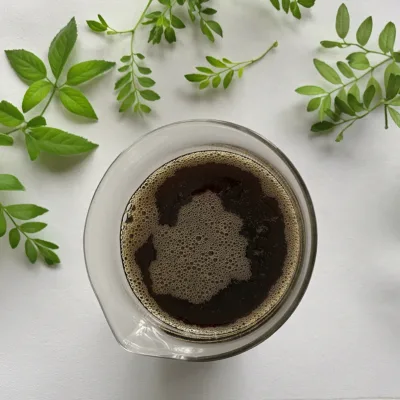
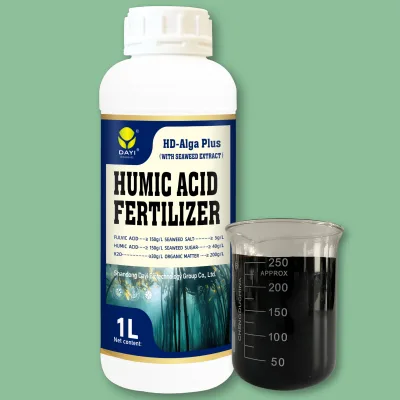
$2.43 - $2.64
MOQ: 1000 liters

Wuhan Lvyin Chemical Co., Ltd.
- Manufacturer
- China Hubei
- Lead time23 days
- Avg. response≤ 13h
Main productsUrea Formaldehyde, Slow Release Fertilizer, Ibdu, Methylene Urea, Isobutylidene Diurea, Water Soluble Fertilizer, Garden Fertilizer, Turf Fertilizer, Golf Course Fertilizer, Slow Release Nitrogen Fertilizer
Main marketsDomestic,Europe,Australia,North America

Bolin International Trade (Tianjin) Co., Ltd.
- Trading Company
- China Tianjin
- Lead time0 days
- Avg. response≤ 9h
Main productsDetergent Raw Materials, Detergent Material, Detergent Masterbatch, Chemical Fertilizer, Compound Fertilizer, Nitrogen Phosphorus and Potassium Compound Fert, Citygreen Artificial Grass, NPK Compound Fertilizer

Best Watersoluble Chemicals Organic Foliar Fertilizer Formulation Used in Agriculture NPK
$220.00 - $290.00
MOQ: 25 Tons

100% Watersoluble Chemicals Organic Foliar Fertilizer Formulation Used in Agriculture
$260.00 - $580.00
MOQ: 20 Tons


Fruit Tree Fertilizer Special Fertilizer Water Soluble Compound Fertilizer
$330.00 - $580.00
MOQ: 20 Tons

Water-Soluble Compound Fertilizer Flowers, Green Plants, Vegetables, Melons and Fruits
$300.00 - $490.00
MOQ: 20 Tons


SHANDONG EVERGROW BIO-CHEMICAL CO.,LTD.
- Verified by TUVRHEINLAND
- Trading Company,Manufacturer/Factory
- China Shandong
- Lead time15 days
- Avg. response≤ 6h
Main productsFertilizer, NPK Fertilizer, Water Soluble Fertilizer, Ammonium Sulpahte, Humic Acid, Calcium Ammonium Nitrate, Organic Fertilizer, Cat Litter, Pet Food, Freeze Dried Pet Food
Main marketsSouth America,Eastern Europe,Mid East,North America,Southeast Asia,Eastern Asia,Oceania,Western Europe,Africa

Efficient Water-Soluble Fertilizer for Enhanced Plant Growth - Quick Absorption, Balanced Nutrients
$206.00 - $1200.00
MOQ: 27 Tons

Bulk Supply Water Soluble Fertilizer, Chinese Quality, High Performance, Competitive Price
$800.00 - $1200.00
MOQ: 27 Tons


Comprehensive Sourcing Guide
Foliar Application Plant Nutrient Solution Supplier Concentration and Factory Types
Buyers searching for Foliar Application Plant Nutrient Solution suppliers will encounter two broad categories of companies: manufacturers that operate their own production lines for humic acid, amino acid, seaweed extract and water-soluble fertilizer products, and trading companies that consolidate output from multiple factories. Both types can be legitimate partners, but they serve different needs. Manufacturers are generally better positioned when you need custom formulations, consistent raw material sourcing, or private-label production at scale. Trading companies can be useful when you want to combine several fertilizer SKUs in one shipment or when you need flexibility across product types, but they add a layer between you and the actual production floor.
The listings you review should make the company type visible. Some supplier profiles display a company-type label such as manufacturer or trading company, and this distinction should influence your first shortlisting decisions. Location matters as well. Where a listed location is confirmed, treat it as a starting point for understanding the regional supply base rather than a guarantee of factory ownership. In this category, one supplier is located in China Hunan and lists main products including organic fertilizer, potassium humate, humic acid, fulvic acid, amino acid and seaweed extract, which aligns directly with foliar nutrient production. Verify whether that entity owns or contracts its production, because the difference determines who controls your formulation, your quality checks and your replacement capacity if a batch fails.
How to Verify Foliar Application Plant Nutrient Solution Suppliers
Verification starts with the credentials actually displayed on a supplier profile and ends with evidence you request directly. Look first at verification status: some listings show third-party verification such as an SGS mark, which indicates the company's identity and business information was audited by an external body. That is a useful floor, not a ceiling. A verified trading company is still a trading company. Check whether system certifications are listed; where a profile shows no system certification, ask directly for ISO documentation, product registration in your market, or third-party lab reports for nutrient content, pH, heavy metals and solubility before relying on specification claims.
Second, verify the products themselves against the profile. If a listing advertises an all-natural plant nutrient solution for hydroponic and foliar use, ask for the technical data sheet matching the displayed model number and standard, such as an alginic acid percentage. Request a certificate of analysis for the specific batch you would buy, not a generic brochure. Third, verify operational responsiveness. Some suppliers display a response-time metric measured in hours; a supplier showing sub-one-hour average response is signaling capacity for active order management, while slower averages suggest you should build more lead time into your planning. Finally, confirm the production relationship: ask which products are made in-house, which are sourced, and whether you can audit or video-inspect the facility. A supplier unable to connect you to production should be treated as a sourcing intermediary and managed accordingly.
What to Compare Across Foliar Application Plant Nutrient Solution Suppliers
Build a comparison table using the attributes suppliers actually display, and record "not stated" honestly rather than assuming a value. Core comparison dimensions for this category include lead time, minimum order quantity, response speed, company type, location, verification status and main product range. Lead times vary widely: one supplier in this results set shows a fifteen-day lead time while another shows thirty days, a two-week difference that directly affects your reorder planning during peak spray seasons. MOQ also matters — listings in this category range from a five-unit minimum on a nutrient solution product to a thousand-unit minimum on a water-soluble potassium sulphate product, so your trial-order strategy depends on which supplier you approach.
Compare product fit, not just company attributes. One supplier lists an all-natural plant nutrient solution for hydroponic and foliar applications with customizable packaging, while others concentrate on liquid humic acid, water-soluble amino acid powder, granular humic products or biostimulant powders. Match the physics state — solid, liquid, powder or granular — to your application method and existing spray equipment. Compare customization capability: some profiles display OEM or ODM capacity, which matters if you need your own label, formula or packaging. Weigh response-time figures as a proxy for service quality, and treat price quotes in context of the specification, since a lower price per unit on a humic granule with a lower active-acid standard may not be the better deal. Never compare across suppliers using blank fields you filled with guesses.
Common Foliar Application Plant Nutrient Solution Sourcing Risks
The most common risk in this category is specification drift: the product you receive differs from the sample in active ingredient content, solubility or pH. Listings display standards such as amino acid content, free humic acid percentage, alginic acid percentage or NPK and fulvic acid values, but these are supplier-stated figures. Without batch-level certificates of analysis and independent lab testing of received goods, you have no protection against diluted or mislabeled concentrate. This risk is amplified with liquid products, where concentration errors are hard to detect visually and can burn foliage or deliver no benefit.
A second risk cluster involves product-state and labeling mismatches. Some profiles list a solid product with keywords spanning hydroponic and foliar applications; confirm the physical form matches your spray program before ordering, and confirm whether the product is described as quick-acting or long-term release. A third risk is inconsistency across reorder cycles — a supplier whose nutrient solution varies batch to batch will undermine field trial results you rely on for agronomic decisions. Fourth, watch for role confusion: a trading company with no listed system certification may subcontract production without disclosure, leaving you exposed to undisclosed factory changes. Finally, condition and storage attributes matter; one listing notes a thirty-six-month shelf life under cool, dry storage, but you must confirm your climate and warehouse conditions support that. Mitigate each risk contractually: agree on reference samples, retention samples, testing methods and remedies before depositing funds.
Foliar Application Plant Nutrient Solution Regional Sourcing and Logistics
Regional sourcing decisions in this category start from verified location data. The suppliers represented in this results set are located in China, with one in Hunan and one in Guangxi, and one Guangxi product listing cites Liuzhou as its origin. These provincial distinctions matter for logistics more than marketing: inland provinces such as Hunan typically move goods by truck or rail to coastal ports, which adds domestic transit time before ocean freight begins. When comparing a fifteen-day lead time against a thirty-day lead time, ask whether both figures include inland transit and port cut-off times, or only production.
Product physical form drives logistics cost. Liquid humic acid concentrate, sold at a price point around the five-hundred mark per unit in one listing, ships heavy and non-compressible, so freight per active kilogram is high; powders and granules are lighter and container-efficient. Check packing options displayed on listings — one supplier offers packaging from one kilogram up to five hundred kilograms, another offers woven or neutral kraft bags at forty-kilogram packing — and confirm palletization, moisture protection and label compliance for your destination market. Liquid products also face stricter dangerous-goods and documentation checks on some routes, so ask your forwarder early. Build a realistic total timeline: production lead time, inland transit, export documentation, ocean transit and customs clearance. For time-sensitive foliar programs tied to crop stages, the thirty-day-lead-time supplier may still be viable if you order two cycles ahead, while the fifteen-day supplier supports shorter reorder windows.
Foliar Application Plant Nutrient Solution Commercial Terms and Order Planning
Commercial terms should be structured around the trial-to-scale path. Start with a small paid trial order at the supplier's displayed minimum — in this results set that ranges from five units on a nutrient solution listing to one thousand units on a potassium sulphate listing — and use it to test not just the product but the supplier's documentation, packing accuracy and communication. Only after a verified trial should you move to contracted volumes. Where prices are displayed, treat them as opening positions: one amino acid powder listing spans a price band from roughly four hundred fifty to five hundred fifty, and a humic granule listing spans one hundred eighty to two hundred twenty, so the final price depends on your specification, packaging and volume.
Order planning should anchor on confirmed lead times rather than optimistic ones. With displayed lead times of fifteen and thirty days in this category, plan reorder points at least one full lead time plus inspection and shipping ahead. Confirm payment protection options before transferring funds; ask whether the transaction can be structured through a trade-assurance or escrow-style arrangement with defined inspection windows, and never pay full value against only a proforma invoice. Agree in writing on: specification standard and model number, packaging and labeling, certificate-of-analysis requirements, retention samples, remedies for failed batches, and shelf-life guarantees for liquid products. Suppliers advertising OEM or ODM capability should provide artwork approval and formula lock steps in the timeline. Finally, schedule orders against your crop calendar, not the supplier's convenience.
FAQs
What is a Foliar Application Plant Nutrient Solution used for?
It supplies nutrients directly through plant leaves, allowing fast absorption when roots cannot deliver enough elements quickly. Growers apply it to correct deficiencies, support flowering and fruiting, or boost crops during stress periods. Listings typically cover fruit, flowers, and vegetable crops, and products are often water soluble for easy spray-tank mixing.
How quickly can foliar nutrient solutions be shipped after ordering?
Lead times vary by supplier and order size, so confirm production schedules before placing a purchase order. On this page, listed lead times range from around 15 days to about 30 days, depending on the seller and product. Ask each supplier to confirm current lead time, packaging, and shipping terms in writing before you commit.
What minimum order quantities apply to foliar nutrient solutions?
MOQs differ widely between product types and suppliers, so always verify terms before negotiating. On this page, one listed product shows an MOQ of 5 units, while another granular fertilizer lists 1000 units. Smaller trial quantities let you test performance, but unit pricing usually improves significantly at higher volumes.
Do suppliers offer OEM or custom packaging for foliar fertilizers?
Many trading suppliers on this page advertise OEM capability, ODM support, and customizable packaging for their nutrient products. Options typically include private labels, tailored bag or bottle sizes, and formulations built to your specification. Confirm customization fees, artwork requirements, and minimum volumes per design directly with each supplier before ordering.
What active ingredient levels should buyers check in foliar fertilizers?
Check declared actives such as alginic acid, amino acid, humic acid, fulvic acid, or potassium oxide percentages against your crop program. Listings here cite examples like 16 percent alginic acid, 40 percent amino acid, and 50 percent free humic acid. Always request a certificate of analysis to verify claims before shipping.
Are foliar nutrient products available in liquid, powder, and granular forms?
Yes, this page shows all three physical states. Liquid humic acid concentrates suit drip irrigation and fertigation, water soluble amino acid powders dissolve fully for sprays, and granular products suit soil incorporation. Choose the form matching your equipment, since liquids store for around 36 months while powders ship more economically.
How responsive are suppliers of foliar nutrient solutions to buyer inquiries?
Response times on this page vary considerably, with one supplier averaging under one hour and another closer to ten hours. Faster responders simplify sampling, negotiation, and production follow-up. Contact several suppliers with the same technical questions and compare reply speed and detail before shortlisting a partner.
Which certifications or verifications should buyers confirm before ordering?
Some suppliers on this page hold third-party verification such as SGS, while system certifications may not be listed at all. Request current certificates for quality management, organic input approval, or product registration relevant to your market. Verify documents directly with the issuing body rather than relying on platform badges alone.